
Weil research teams land major Department of Defense grants to reshape brain injury care
Originally catalyzed through Weil's Massey Grand Challenge program, two unique approaches are addressing critical challenges in the diagnosis, monitoring and management of traumatic brain injury (TBI).
Author |
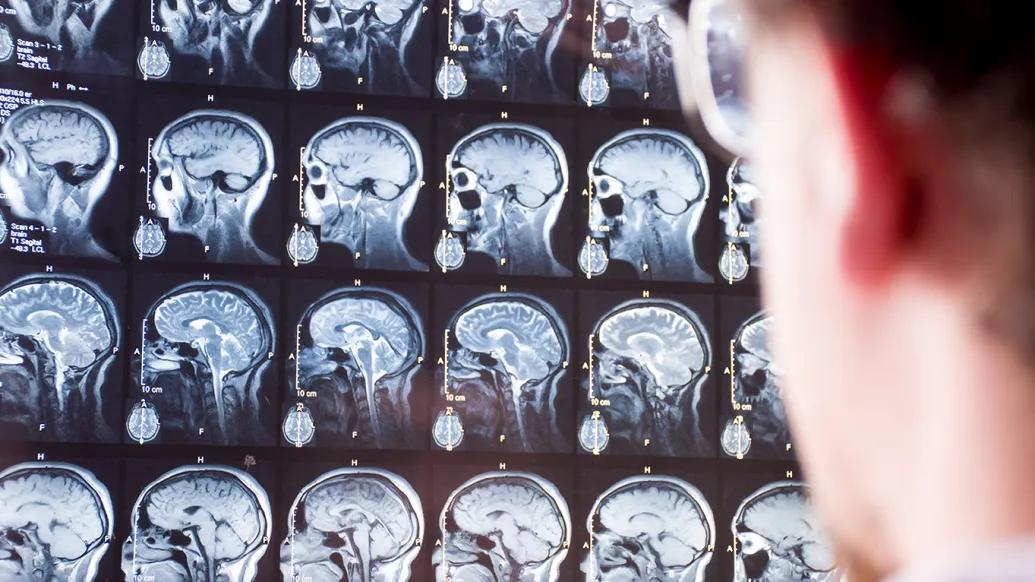
ANN ARBOR – The Max Harry Weil Institute for Critical Care Research and Innovation is thrilled to announce that two projects catalyzed through Weil’s Massey Traumatic Brain Injury (TBI) Grand Challenge program have been awarded nearly $8.3 million in funding across two grants from the United States Department of Defense (DoD).
The projects—which include a new method of monitoring cerebral blood flow and a program aimed at increasing the use of FDA-cleared biomarkers—apply unique approaches to addressing critical challenges in the diagnosis, monitoring and management of TBI. They also represent the breadth of the over 50 diagnostic, device, therapeutic and health IT solutions empowered by the Weil Institute’s Massey Grand Challenge program since its inception in 2014.
Ultrasound-Based Volume Blood Flow Index Monitoring for the Assessment of Cerebral Autoregulation
Following a TBI, the brain can lose its ability to autoregulate blood flow to itself. This loss in cerebrovascular autoregulation (CA) is a key contributor to secondary brain injury, so having a continuous and accurate read on a patient’s CA is vital to prevent worsening outcomes.
Currently, the gold-standard method for measuring CA is difficult to perform as it requires the placement of invasive devices to measure a patient’s intracranial pressure (ICP) and mean arterial pressure (MAP).
Dr. J. Brian Fowlkes, a member of the Weil Institute and Professor of Radiology and Biomedical Engineering, and his team are developing an alternative method of monitoring CA that looks at middle cerebral artery blood flow (MCA) as a potential replacement for invasive ICP. Using an ultrasound technology developed at the University of Michigan, Dr. Fowlkes and his team are exploring the combination of MCA with MAP as well as with peripheral blood flow to develop new indices that could enable non-invasive measurement of CA.
“The $1.5 million grant from the DoD will allow us to develop a monitoring system that will compare blood flow in the brain to that at a peripheral location to examine trends during the treatment of TBI patients,” said Dr. Fowlkes. “Cerebral autoregulation is critical for ensuring that, when interventions are needed in these patients, blood flow to the brain is appropriately maintained. We are planning to build a dedicated system that would be easy to apply to the patient and can be integrated with other monitors in the critical care environment.”
The success of Dr. Fowlkes’s latest DoD grant was built upon a foundation established through the Massey TBI Grand Challenge, which supported the project from its earliest stages. The program first awarded funding to the team in 2023, which enabled them to construct a prototype of their monitoring device and conduct a proof-of-concept study of both the device and the team’s proposed indices in a preclinical model of TBI. The team then received a follow-on competitive renewal grant as part of the 2024 Massey Grand Challenge, through which they conducted further preclinical validation of their work before moving into an initial demonstration in humans.
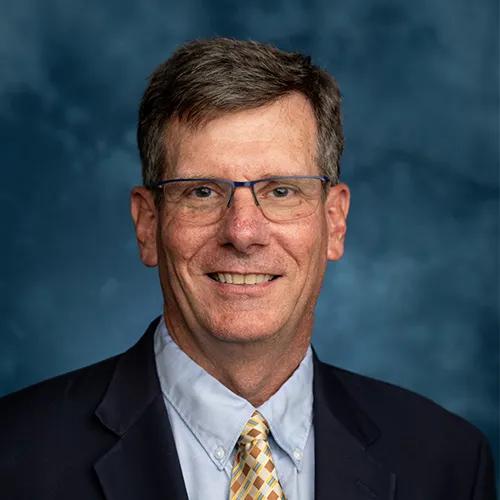
As a basic scientist in radiology, I had not been working on solving the monitoring issues needed in the critical care of TBI patients. ... Having the support of the Massey funds allowed me to branch into this new topic and do so with the requisite team of experts that made it all possible.
J. Brian Fowlkes, PhD
Professor, Radiology and Biomedical Engineering
True to the Massey Grand Challenge mission of supporting multidisciplinary team-science, Dr. Fowlkes’s project is empowered by co-investigators across various areas of expertise including Dr. Jonathan Rubin, Professor Emeritus of Radiology and Weil Institute member, who is working with Dr. Fowlkes to develop the ultrasound technology; Dr. Venkatakrishna Rajajee, Clinical Professor of Neurosurgery and Weil Institute member, who is supporting the team’s clinical assessments of the ultrasound technology; and Dr. Paul Picton, David W Learned Collegiate Professor and Chair of Anesthesiology and Weil Institute Member, who is also supporting clinical studies of the tech as well as examining how its potential applications could be expanded to surgical monitoring.
“As a basic scientist in radiology, I had not been working on solving the monitoring issues needed in the critical care of TBI patients,” said Dr. Fowlkes. “[Weil’s executive director] Dr. Kevin Ward spoke to me about the challenges being faced and asked if we could come up with an innovative, non-invasive solution for monitoring cerebral autoregulation in these patients. Having the support of the Massey funds allowed me to branch into this new topic and do so with the requisite team of experts that made it all possible.”
Dr. Fowlkes also credits Weil’s Preclinical Critical Care Laboratory team, led by project co-investigator Dr. Hakam Tiba, for the wealth of support they provided throughout the project’s lifespan.
“The biggest part of what we have done so far was made possible by the Preclinical Critical Care Lab,” said Fowlkes. “They provided the model we needed to do the initial testing of the concept we are developing. This model will also be key to assessing the monitoring device we are developing for clinical application. We could not have done this work without them.”
Prospective Implementation of Novel Evidence-Based Biomarkers for Evaluating Traumatic Brain Injury (The PIONEER Studies)
Dr. Frederick Korley, Scientific Director of the Weil Institute’s Massey Grand Challenge and Professor and Associate Chair of Research in Emergency Medicine, is taking a multipronged, multinational approach to transforming TBI care. His team’s nearly $6.8 million DoD grant is funding a series of four separate but concurrent studies collectively called the “PIONEER” (Prospective Implementation Of Novel Evidence-Based Biomarkers for Evaluating TRaumatic Brain Injury) program.
Each of the PIONEER studies is aimed at spurring the widespread use of FDA-cleared biomarkers to improve care and outcomes for TBI patients and promote more efficient use of medical resources on a global scale.
The first study will focus on identifying barriers that currently limit the adoption of TBI biomarkers in both military and civilian emergency departments (EDs), with the end goal of developing strategies to increase biomarker adoption and use in these settings. The second study will evaluate the effectiveness of a biomarker-guided algorithm in decreasing the use of brain computed tomography (CT) imaging in adults with suspected TBI, ideally reducing the amount of unnecessary CT scans patients receive in the ED. The third study, performed in collaboration with the Komfo Anokye Teaching Hospital in Ghana, will focus on the development of a biomarker-guided algorithm, leveraging blood-based biomarkers and the infrascanner, to improve identification of high-risk TBI patients in low-resource settings who require evacuation for CT. Finally, the fourth study aims to develop and evaluate the efficacy of a new biomarker-informed TBI classification framework in predicting the recovery of patients with mild TBI.
The leads in each project will collaborate with each other and share data and resources throughout the program’s duration. Ultimately, the findings from the PIONEER program will inform an implementation toolkit to help others facilitate the adoption of TBI biomarkers in EDs, guide decision-making around brain CT imaging and patient management and inform discussions in the ED regarding TBI prognosis and treatment.
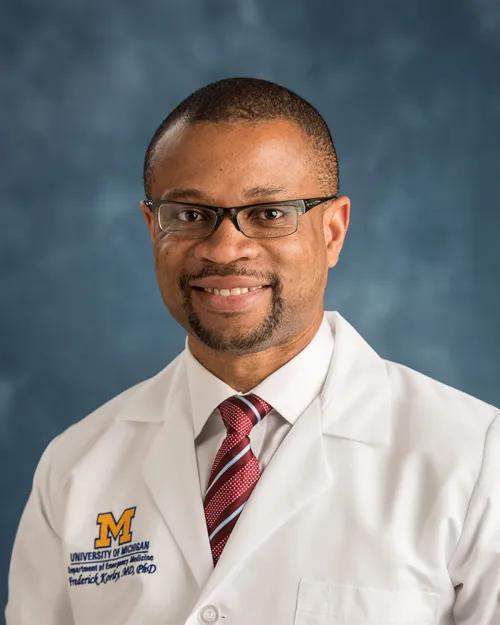
Our goal now is to accomplish everything we promised in the grant and do it with a very high standard of excellence and rigor, so we can have maximal impact on TBI patients. This work will also allow us to establish a network of TBI research sites that can be leveraged by the Massey Grand Challenge to increase our reach to populations suffering from TBI for future studies.
Frederick Korley, MD, PhD
Professor and Associate Chair of Research, Emergency Medicine
According to Dr. Korley, the Massey Grand Challenge provided vital support to his team through funding an initial pilot study of the team’s algorithm, which empowered a $1.5 million DoD grant in 2023. This earlier work then enabled the researchers to secure their latest DoD award.
“Part of the reason for our success is that we accomplished a lot during our first round of DoD funding,” said Dr. Korley. “Our goal now is to accomplish everything we promised in the grant and do it with a very high standard of excellence and rigor, so we can have maximal impact on TBI patients. This work will also allow us to establish a network of TBI research sites that can be leveraged by the Massey Grand Challenge to increase our reach to populations suffering from TBI for future studies.”
Dr. Korley also credits Weil’s Proposal Development Unit, led by Dr. Meagan Ramsey, as being a key factor in the grant’s success. “This large project grant is comprised of four separate project grants, and the Proposal Development Unit was instrumental in helping us put it all together.” said Dr. Korley.
About the Massey Grand Challenge
Launched at the Weil Institute in 2014 through a generous gift from the Joyce and Don Massey Family Foundation, the Massey Grand Challenge is a powerful funding mechanism that supports multidisciplinary teams developing high-risk, high-reward solutions targeting the “golden hours” of care after severe TBI. The program funds milestone-driven proposals through a process involving two rounds of project reviews culminating in a “Shark Tank”-style event in which competing teams pitch their research before a panel of field and industry experts.
Since its launch, the Massey Grand Challenge has funded dozens of teams that would go on produce various novel solutions, receive follow-on federal funding, and even form spin-off companies targeting research opportunities and knowledge gaps in TBI.
“Typically, you can’t approach a funding agency like the DoD and say, ‘I have a great idea,’ and have no proof-of-concept,” said Dr. Korley. “That sort of work can’t begin without start-up funds. You need someone, like the Weil Institute’s Massey Grand Challenge, to take a chance on your idea and provide that initial support, essentially de-risking it for further funding.”
Grand Challenge support isn’t just monetary, however. Every team that participates in a Grand Challenge—and even those who are not awarded funding—are provided access to all of Weil’s services including its Proposal Development Unit, Preclinical Laboratory, Clinical Research Team, Data Science Team, and Product Commercialization.
The 2025 Massey TBI Grand Challenge concluded in early June and awarded over $758,000 in total research funding across 5 projects. The Weil Institute also directs a Grand Challenge for pediatric critical care, which funded 4 teams totaling $400,000 in May.
For more information about the Weil Institute’s Grand Challenges, please visit the Funding Opportunities page on our website.
Project Teams
“Ultrasound-Based Volume Blood Flow Index Monitoring for the Assessment of Cerebral Autoregulation”
J. Brian Fowlkes, PhD (PI; Radiology, University of Michigan); Paul Picton, MD (CO-I; Anesthesiology, University of Michigan); Venkatakrishna Rajajee, MD (CO-I; Neurosurgery, University of Michigan); Jonathan Rubin, PhD (CO-I; Radiology, University of Michigan); Hakam Tiba, MD, MS (CO-I; Emergency Medicine, University of Michigan); Kevin Ward, MD (CO-I; Emergency Medicine, Biomedical Engineering, University of Michigan); Sheng Xu, PhD (CO-I; Chemical and Nano Engineering, University of California San Diego)
“Prospective Implementation Of Novel Evidence-Based Biomarkers for Evaluating Traumatic Brain Injury (The PIONEER Studies)”
Frederick Korley, MD, PhD (Program PI; Emergency Medicine, University of Michigan)
Study 1: Jeremy Sussman, MD, MSc (Co-Lead; Internal Medicine, University of Michigan); Jesse M. Pines, MD, MBA, MSCE (Co-Lead; Emergency Medicine, Drexel University, George Washington University; Chief of Clinical Innovation, US Acute Care Solutions); Lori Uscher-Pines, PhD (Co-I; Senior Policy Researcher, RAND); Rama Mwenesi Musalia, MSE, PhD (Assistant Professor, Learning Health Sciences, University of Michigan; Innovator-in-Residence, Michigan Medicine); Matthew Schipper, PhD (Co-I; Biostatistics, University of Michigan)
Study 2: Bory Kea, MD, MCR (Co-Lead; Emergency Medicine, Oregon Health & Science University); Joseph Miller, MD, MS (Co-Lead; Emergency Medicine, Henry Ford Health); Kabir Yadav, MDCM, MS MSHS (Co-Lead; Emergency Medicine, University of California Los Angeles); Matthew Schipper, PhD (Co-I; Biostatistics, University of Michigan)
Study 3: Rockefeller Oteng, MD (Co-Lead; Emergency Medicine, University of Michigan); Bradley Dengler, MD (Co-Lead; Neurosurgery Consultant to the Surgeon General); Daniel Osei-Kwame, MBChB, FGCS (Co-I; Emergency Medicine, Komfo Anokye Teaching Hospital); Matthew Schipper, PhD (Co-I; Biostatistics, University of Michigan)
Study 4: Katharine Seagly, PhD (Co-Lead; Physical Medicine and Rehabilitation, University of Michigan); Kabir Yadav, MD, MS, MSHS (Co-Lead; Emergency Medicine, University of California Los Angeles); Michael McCrea, PhD (Co-Lead; Neurosurgery, Medical College of Wisconsin); Matthew Schipper, PhD (Co-I; Biostatistics, University of Michigan); Hayley Falk, PhD (Co-I; Computational Medicine and Bioinformatics, University of Michigan)
Disclosures
Dr. Korley is Scientific Director of the Massey TBI Grand Challenge.
Drs. Korley and Ward have intellectual property on blood biomarker technology filed with the University of Michigan.
Drs. Fowlkes, Rubin, Tiba and Ward have intellectual property on cerebral blood flow and cerebral autoregulation monitoring filed with the University of Michigan.
About the Weil Institute
The team at the Max Harry Weil Institute for Critical Care Research and Innovation is dedicated to pushing the leading edge of research to develop new technologies and novel therapies for the most critically ill and injured patients. Through a unique formula of innovation, integration and entrepreneurship that was first imagined by Weil, their multi-disciplinary teams of health providers, basic scientists, engineers, data scientists, commercialization coaches, donors and industry partners are taking a boundless approach to re-imagining every aspect of critical care medicine. For more information, visit weilinstitute.med.umich.edu.
In This Story
J Brian Fowlkes, PhD
Professor

Frederick Korley, MD, PhD
Professor
Featured News & Stories
Into the Current: Dr. Nate Hunt Brings Specialized Water Rescue Expertise Back to Michigan Medicine

Emergency room intervention pairs smartphone, telehealth counseling to reduce risky firearm behavior
Meet Our New Emergency Medicine Fellows and Faculty

E-Bikes are everywhere, but most parents say they don’t know enough about them
From walk-in clinic to national leader: How Michigan Medicine’s Pediatric Emergency Division was built

