
Kelly Malcom
Lead Research Communicator
Malcom is a lead research communicator for Michigan Medicine and research communications strategist for the U-M Medical School, with more than 20 years of experience in strategic communications, marketing, and health and science writing. She covers the basic science departments, pulmonary and critical care medicine, infectious disease, pathology and anesthesiology. Contact: [email protected]

Health Lab
How a common virus's hijack of cell repair processes may promote cancer
Researchers at the University of Michigan look at details surrounding EBV’s reactivation from latent infection, known as the lytic phase of viral replication.

Health Lab
Study overturns 100-year-old assumption about common bacteria in the lungs
A new U-M study overturns a 100-year-old assumption about one common bacterial resident of the lungs, Prevotella melaninogenica.

Health Lab
Mutations attracted to the X chromosome amplify disease risk
Researchers have discovered that the human X chromosome attracts an unusual kind of DNA mutation, potentially doubling the associated risk of certain genetic disorders, including haemophilia and muscular dystrophy.

Health Lab
Lung health expert weighs in on Zyn and other nicotine pouches
Michigan Medicine’s MeiLan Han, M.D., provides her professional and medical thoughts on the use of nicotine pouches.
Health Lab
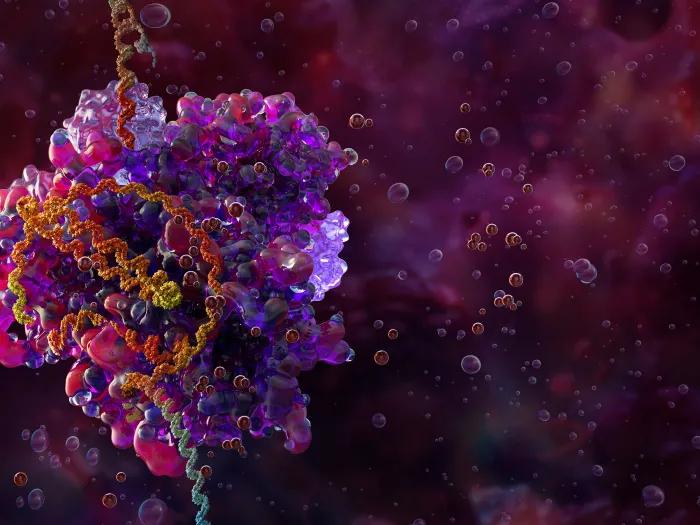
CRISPR acts as commander-in-chief for backup defenses in bacteria
A new study uncovers a previously underrecognized feature of the type I CRISPR-Cas system in the bacteria Neisseria: the presence of additional embedded innate immunity genes.

Health Lab
Scientists discover that bacteria use an understudied polymer found in all life to protect cell functions during stress
New study discovers that polyphosphate, a molecule that exists in all lifeforms but has to date been hard to study, could be a fundamental element worth exploring, say Michigan Medicine researchers.

Health Lab
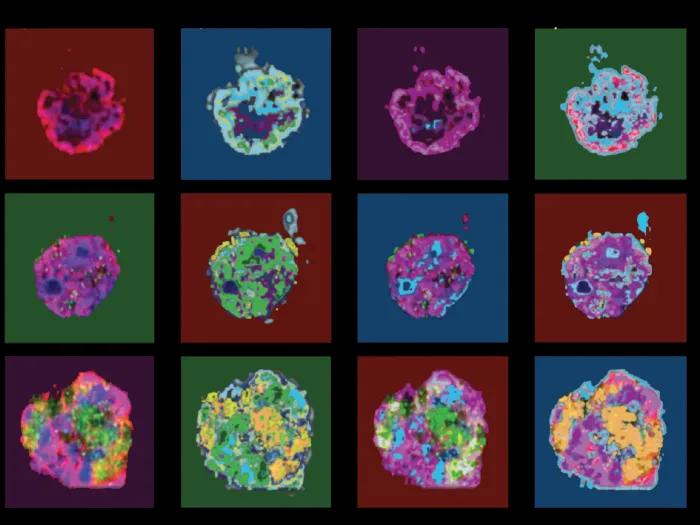
New algorithmic tool enables to scientists to see cells “talk” to one another
A new U-M study, featured in Nature Genetics, details a technique to infer cell-cell communication using spatial transcriptomics

Health Lab
The Y chromosome is home to surprising jumping genes
Researchers at Michigan Medicine are studying deer mice to outline how the Y chromosome defends itself against decay by acquiring gene families while holding its own to maintain fertility.
Health Lab
Supplementing with peptides: Good for extra pep or a needless step?
Health Lab talks to Jorge Ruas, Ph.D., of the U-M Department of Pharmacology, about peptides, how they work and whether supplementing them lends any benefit.

Health Lab
New study reveals a missing step in a weight control pathway that could be targeted for obesity treatment
New research led by Liangyou Rui, Ph.D., of the Department of Molecular & Integrative Physiology at the University of Michigan Medical School outlines a missing step in one of these alternative pathways, an important discovery in the fight against obesity.
Health Lab
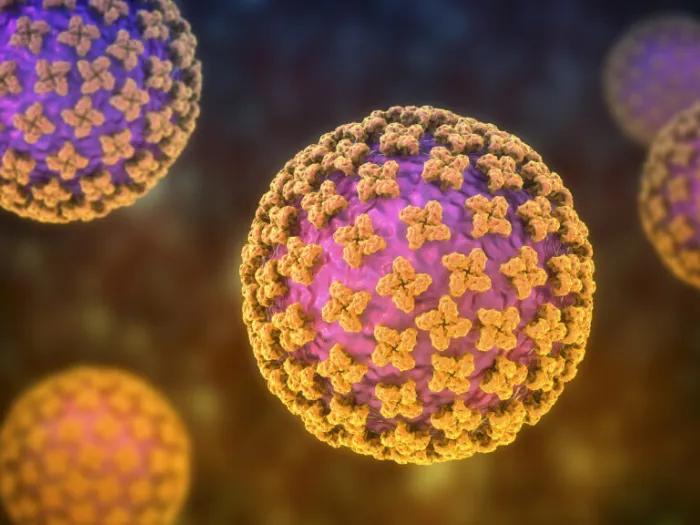
Hantavirus: Do we need to worry about this rare infection?
Emily Abdoler's message to the public about hantavirus is to not panic–and to acknowledge that public health is vital to managing the ever-present threat posed by communicable diseases.

Health Lab
New study hints at cause of pachyonychia congenita and a long-awaited potential treatment
New University of Michigan-led offers much needed answers about a specific protein, called keratin 16 (K16), implicated in pachyonychia congenita and other skin conditions.

Health Lab
New study hints at the cause of a painful skin condition—and at a long-awaited potential treatment
New University of Michigan-led research from the lab of Pierre Coulombe, Ph.D. offers much needed answers about a specific protein, called keratin 16 (K16), implicated in pachyonychia congenita (PC) and other skin conditions.

Health Lab
Surviving sepsis: New guidelines harness life saving evidence for treating adults
An updated clinical guideline for treating sepsis in adults emphasizes pre-hospital care and judicious use of antibiotics and antifungals

Health Lab
Post-operative prescription-fill patterns differ amongst patients on high dose opioids
A team at University of Michigan Medical School noted a lack of evidence around prescription practices for patients who come to surgery on high doses of opioids for chronic conditions.
