
Noah Fromson
Public Relations Representative
Fromson joined Michigan Medicine in March 2021. He covers the neurosciences and cardiovascular medicine. He spent three years as a television reporter in West Michigan and is passionate about multimedia storytelling. Contact: [email protected] Twitter: @noahfromson


Health Lab
Women stroke survivors believe they will receive worse care in the emergency room
National study examined health care perceptions of approximately 3,500 women, including those with and without a history of stroke

Research News
Drawing a tube of blood could assess ALS risk from environmental toxin exposure
Over the last decade, research at Michigan Medicine has shown how exposure to toxins in the environment, such as pesticides and carcinogenic PCBs, affect the risk of developing and dying from amyotrophic lateral sclerosis.

Health Lab
Drawing a tube of blood could assess ALS risk from environmental toxin exposure
Investigators have developed an environmental risk score that assesses a person’s risk for developing ALS, as well as for survival after diagnosis, using a blood sample.
Health Lab
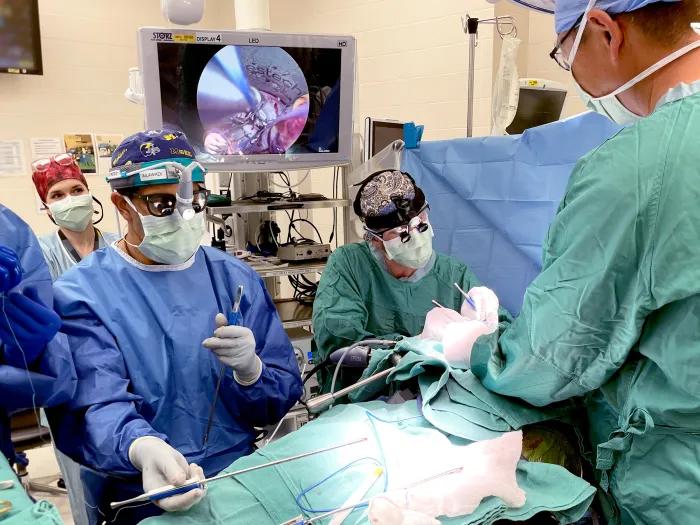
Treating heart valve disease: What are your options?
Michigan Medicine’s head of cardiac surgery, Gorav Ailawadi, M.D, M.B.A., answers questions about different treatment options for heart valve disease.

Health Lab
Older adults from distressed communities attend less cardiac rehab after heart procedures
Older adults who live in disadvantaged communities are less likely to attend cardiac rehabilitation after common heart procedures, a Michigan Medicine-led study finds.

Health Lab
TAVR: Less than one-third of patients enter cardiac rehab after heart procedure
The vast majority of people who have a minimally invasive heart valve replacement procedure do not participate in recommended cardiac rehabilitation, a Michigan Medicine-led study finds.

Health Lab
Tailored text messages not enough to improve mobility after heart issues
A Michigan Medicine report shows that adding a mobile health application to such devices yields mixed results. Tailored text messages to encourage high-risk people to move more may improve some short-term outcomes but doesn’t always improve physical activity levels for everyone.

Health Lab
Nearly one-fifth of older adults travel 50-plus miles to see a neurologist
A Michigan Medicine study finds older Americans with complex neurologic conditions travel may travel great distances for care, many of whom live in rural areas or regions with a limited number of specialists.
Health Lab
Pulmonary embolism deaths, disparities high despite advancements in care
Despite these innovations, a Michigan Medicine study finds that the death rate for pulmonary embolism remains high and unchanged in recent years – more often killing men, Black patients and those from rural areas. The results are published in the Annals of the American Thoracic Society.

Health Lab
Nearly three-quarters of stroke patients requiring higher level of care wait over two hours for transfer
More than 70% of people experiencing a stroke who require a transfer wait longer than two hours to be transferred from the initial emergency department to hospitals with higher levels of care to receive time-sensitive care, a study finds.

Health Lab
Diabetes linked to functional and structural brain changes through MRI
A Michigan Medicine study finds Diabetes linked to functional and structural brain changes through MRI.

Health Lab
Increased step count linked to better health for people with heart failure
Using these wearable devices, a study led by Michigan Medicine and the University of Missouri with Saint Luke’s Mid America Heart Institute finds that taking more daily steps is associated improved health, including fewer symptoms and physical limitations, for people with heart failure.

News Release
University of Michigan Health named to Spastic Paraplegia Centers of Excellence Research Network
The Spastic Paraplegia Foundation, Inc., has named University of Michigan Health to the Spastic Paraplegia — Centers of Excellence Research Network. The health system is one of nine to achieve the designation for newly created network, which aims to “accelerate the understanding, diagnosis, and treatment of hereditary spastic paraplegia and primary lateral sclerosis”, which represent the most common cause of inherited spasticity, according to the foundation.

Health Lab
Majority of older adults with cognitive impairment still drive
The majority of older adults with cognitive impairment are still driving, despite concerns raised by caregivers and others, a Michigan Medicine study in a South Texas community finds.
Health Lab
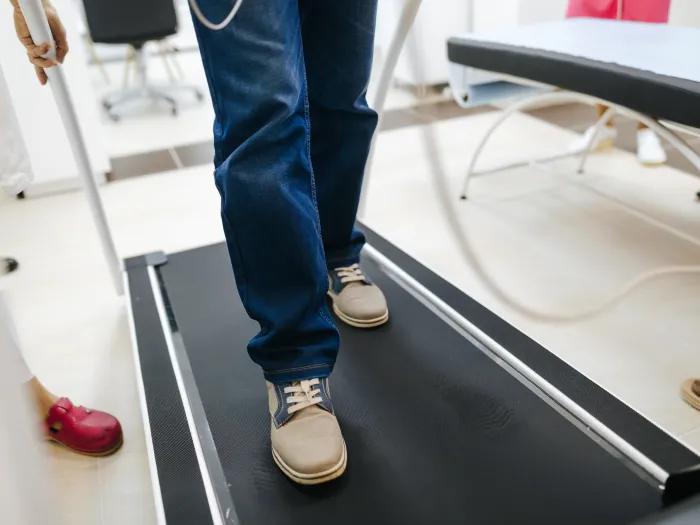
Cardiac rehabilitation reduces risk of death years after heart surgery, still underutilized
A Michigan Medicine study finds people who participate in cardiac rehabilitation have a decreased risk of death years after surgery, with a trend towards better outcomes in patients who attend more sessions.
