Neurology Fellowships & Advanced Training Programs

Woman sits at computer to monitor sleep movement disorder patients

Next Steps with Neurology

The U-M Medical School Department of Neurology offers several fellowship opportunities as well as advanced training programs to continue your education and begin your career in academic medicine.

ACGME FELLOWSHIPS

The U-M Medical School Department of Neurology offers five ACGME board-certified fellowship programs. Click on the links below to learn more about each of our fellowships.

Epilepsy | Clinical Neurophysiology

Epilepsy fellowship and Clinical Neurophysiology fellowship are twelve-month ACGME accredited programs.

Neuromuscular

Neuromuscular Fellowship is a one-year, ACGME accredited program of advanced training in diagnosis, management and pathology of neuromuscular disorders.

Sleep Medicine

Sleep Medicine fellowship is an ACGME accredited program devoted to the development of fellows’ expertise in the diagnosis and management of sleep-wake disorders.

Vascular Neurology | Stroke

Our goal is to attract highly qualified and motivated candidates interested in pursuing a career in clinical, health service, or basic science stroke research.

Advanced Training Programs

The U-M Medical School Department of Neurology offers five non-ACGME accredited advance training programs. Follow the links below to learn more about each of our programs.
Cognitive Neurology & Neurodegenerative Disease

Train at the intersection of cognitive/behavioral neurology, neurodegenerative disease and clinical/translational research during the two-year program.

Headache Medicine

The Headache Medicine Advanced Training Program is a one-year program accredited by UCNS, focusing on diagnosing and treating head and face pain.

Movement Disorders

We are proud to offer a two year, comprehensive movement disorders training program that draws from a wealth of clinical, research and educational opportunities made available here at the university.

Multiple Sclerosis & Clinical Neuroimmunology

The program focuses on the diagnosis and longitudinal management of multiple sclerosis and related inflammatory disorders of the central nervous system.

Neuro-Oncology

The Neuro-Oncology program provides training for neurology residents or internal medicine candidates with oncology fellowship training aiming for a career in academic or clinical neuro-oncology.

Sports Neurology

The goal of the training is to provide an environment for acquiring the knowledge, skills and clinical judgment essential to the practice of Sports Neurology.

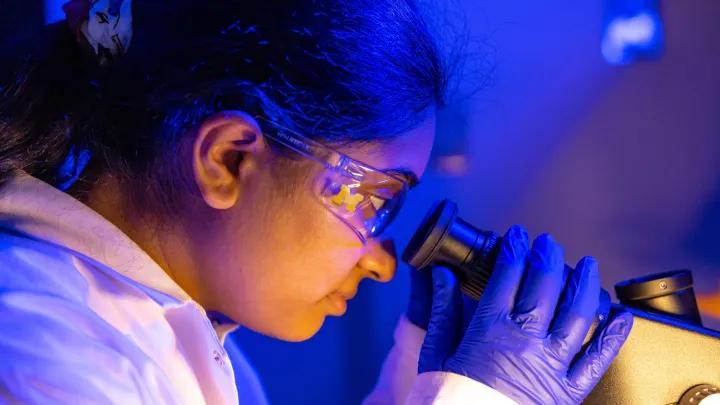
Zoomed in view of scientist looking through microscope

See Where Training Takes Place

We have a long tradition of providing world-class training in clinical neurology. Your experience at the University of Michigan Department of Neurology will afford you many opportunities and prepare you to be an educator and a leader in our health care community.

  • See Training Locations
  • Nightlife downtown Ann Arbor

    Life in Ann Arbor

    We find a new reason to love Ann Arbor nearly every day — year-round outdoor activities, cultural experiences, a growing food scene, and a welcoming, family-friendly atmosphere are just a few that come to mind. Explore all that Ann Arbor and our surrounding communities have to offer. 

  • Explore Ann Arbor
  • FEATURED NEWS & STORIES

    Minding Memory with a microphone and a shadow of a microphone on a blue background
    Minding Memory

    What Can a Blood Test Really Tell Us About Alzheimer’s Disease?
    In this episode, Lauren & Matt talk to Suzanne Schindler MD, PhD. Dr. Schindler is an associate professor of neurology at Washington University in St. Louis. She's a neurologist and a neuroscientist whose laboratory develops and validates blood and cerebral spinal fluid biomarkers for Alzheimer's disease and related dementia. Dr. Schindler talks about the use of biomarkers in Alzheimer's disease and related dementia. Specifically, Dr. Schindler focuses on the rapidly changing research on blood-based biomarkers, including how they detect proteins associated with dementia, how accurate the tests are and their limitations, and how they may ultimately be used to improve diagnosis and treatment.
    Minding memory above a microphone on a blue background
    Minding Memory

    Giving Voice to Lived Experience in Dementia Research

    In this episode, Lauren & Matt talk to Brenda Roberts and Steven Barbieri from the National Council of Dementia Minds. The National Council of Dementia Minds is the first national not-for-profit organization founded and governed by people living with dementia. Its work focuses on education, advocacy, peer support, and changing public perception of what it means to live with dementia. Brenda and Steven talk about the National Council of Dementia Minds, the importance of peer support and education for people living with dementia. They focus on how better understanding the lived experiences of people living with dementia can help shape research, policy, and advocacy.
    Department News

    ALS is on the rise, tracking cases could tell us why

    Dr. Goutman has seen people living with ALS for 14 years and has cared for more than a thousand people with the disease and the clinic follows close to 300 people.
    David Diebold smiles as he rings the bell at the end of the HURT100.
    Philanthropy News

    Going the extra 100 miles

    U-M Medical School student runs the HURT100 ultramarathon to raise funds for the Michigan Alzheimer's Disease Center and the Alzheimer's Association.
    2026 Faculty and Staff Awards
    Medical School News

    Nine from Medical School honored as part of annual Faculty and Staff Awards

    Michigan Medicine recently announced its 2026 Faculty and Staff Awards. This year’s recipients include nine winners with Medical School appointments, including seven faculty and two staff members. This year’s Faculty and Staff Awards ceremony will be Dec. 3 at the Jack Roth Stadium Club in Michigan Stadium
    Department News

    A spouse says it’s early dementia. The patient looks fine.

    A companion who says the patient is not fine deserves to be heard, not dismissed and not simply believed.