
-
About -
Research -
CSR: Cardiac Sarcoidosis Registry -
FMD: Fibromuscular Dysplasia -
IRAD: International Registry of Acute Aortic Dissection -
MAQI2: Michigan Anticoagulation Quality Improvement Initiative -
MHYH: Project My Heart Your Heart -
PERT: Pulmonary Embolism Response Team -
PH: Pulmonary Hypertension -
PHS: Project Healthy Schools -
WMR: World Medical Relief
-
-
Education -
People
Project Healthy Schools

Project Healthy Schools Fights Youth Obesity
PHS Donations
Support our Project Healthy Schools
Obesity is a national epidemic. In the past 40 years, obesity rates have nearly quadrupled among youth in the United States. Currently, 19.7% of U.S. youth, aged 2-19 years, are obese . Childhood obesity and cardiovascular risk factors can lead to severe long-term health risks, including diabetes and heart disease. Project Healthy Schools (PHS) is a community-university collaborative that aims to curb poor lifestyle habits developed in childhood. The program encourages healthy habits through education and environmental change.
PHS aims to inspire kids to:
(1) eat more fruits and vegetables
(2) choose less sugary foods and beverages
(3) eat fewer fast and fatty foods
(4) be active every day
(5) spend less time in front of a screen
These goals are promoted through 10 standardized, interactive lessons. PHS also works with school policy-makers to change vending machine and cafeteria food options, set up after-school activity programs, host field days, and coordinate many other environmental changes. Recent additions to the PHS curriculum include lessons on infectious disease (motivated, in part, by the COVID-19 pandemic), vaping, and kidney health.
In 2004, PHS was piloted at Clague Middle School in Ann Arbor. The program spread to five additional Ann Arbor middle schools by 2006. Through the help of many donors, PHS has being implemented in over 175 Michigan schools, including schools in rural and low-income communities, and is expanding to other states and internationally.
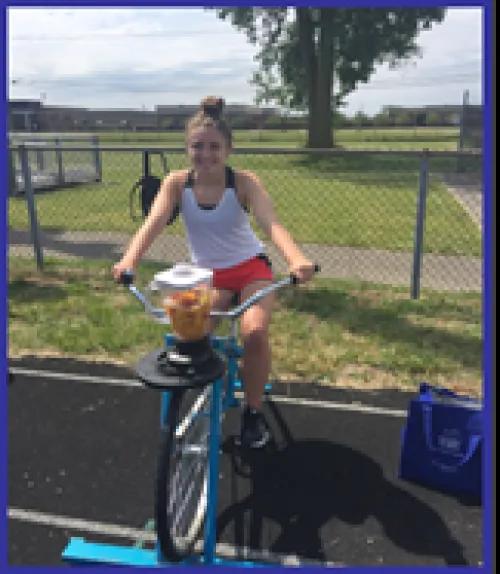
To date, behavioral survey data from over 28,700 students and physiological data from over 3,100 students has been collected. With this continuously growing dataset, PHS has published 22 manuscripts and over 70 abstracts. This research has primarily focused on the program’s effectiveness, and the resulting publications have demonstrated immediate and lasting improvements in participants’ health. These improvements include decreased total cholesterol, LDL cholesterol, triglycerides, and blood pressure, as well as increased physical activity and decreased sedentary behaviors.
Data variables were updated in Fall 2025 to align with validated survey and to address safety issues, social-emotional learning and food insecurity. Additionally, new benchmarking reports have been developed to individualize the PHS program by identifying top areas for health improvement in each participating school.
Site Map
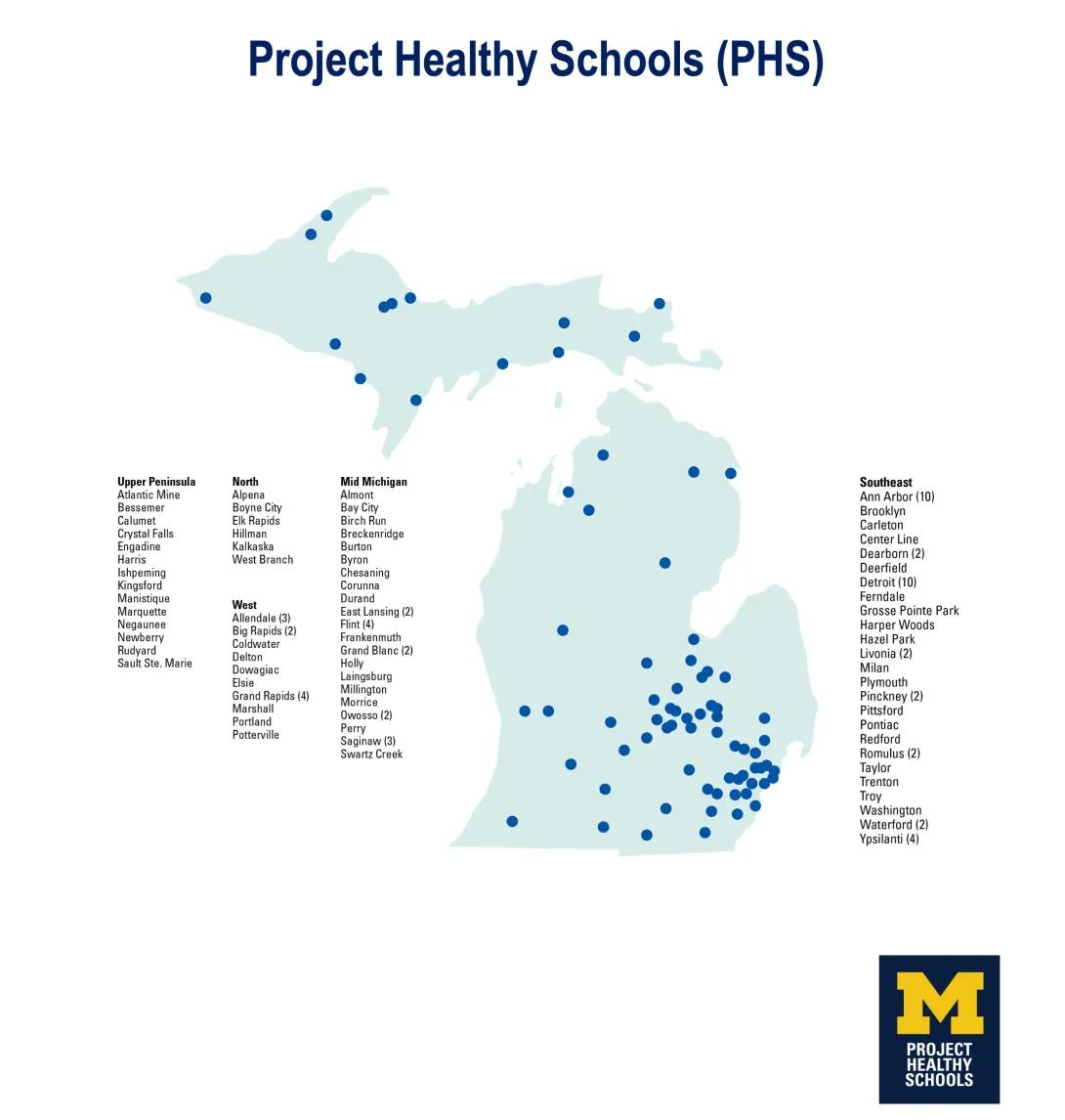
Project Healthy Schools (PHS)
Upper Peninsula:
- Atlantic Mine
- Bessemer
- Calumet
- Crystal Falls
- Engadine
- Harris
- Ishpeming
- Kingsford
- Manistique
- Marquette
- Negaunee
- Newberry
- Rudyard
- Sault Ste. Marie
North:
- Alpena
- Boyne City
- Elk Rapids
- Hillman
- Kalkaska
- West Branch
West:
- Allendale (3)
- Big Rapids (2)
- Coldwater
- Delton
- Dowagiac
- Elsie
- Grand Rapids (4)
- Marshall
- Portland
- Potterville
Mid-Michigan:
- Almont
- Bay City
- Birch Run
- Breckenridge
- Burton
- Byron
- Chesaning
- Corunna
- Durand
- East Lansing (2)
- Flint (4)
- Frankenmuth
- Grand Blanc (2)
- Holly
- Laingsburg
- Millington
- Monroe
- Owosso (2)
- Perry
- Saginaw (3)
- Swartz Creek
Southeast:
- Ann Arbor (10)
- Brooklyn
- Carleton
- Center Line
- Dearborn (2)
- Deerfield
- Detroit (10)
- Ferndale
- Grosse Pointe Park
- Harper Woods
- Hazel Park
- Livonia (2)
- Milan
- Plymouth
- Pinckney (2)
- Pittsford
- Romulus (2)
- Redford
- Romulus
- Taylor
- Trenton
- Troy
- Washington
- Waterford (2)
- Ypsilanti (4)
Principal Investigator

Kim A Eagle
Professor of Internal Medicine
Medical Director
Patient Facilitated Services
Program Director
Medical School Administration
co-Director Frankel Cardiovascular Center
Medical School and Professor of Health Management and Policy
School of Public Health
Additional Resources
PHS Donations:
You can help PHS win the fight against childhood obesity in Michigan. In addition to ongoing support received from the University of Michigan Health system, PHS depends on grants and donations to grow and sustain the program. Help PHS reach more students in more Michigan middle schools by making a donation today. DONATE NOW!
Project Manager
Rachel Krallman BS CCRP
Domino’s Farm |24 Frank Lloyd Wright | PO Box 363
Ann Arbor MI| 48106
