
Physiology Phenotyping Core
Expanding on integrative genomics expertise, the PPC delivers cutting‑edge cardiovascular models and advanced cardiac phenotyping to drive discovery and refine computational science.
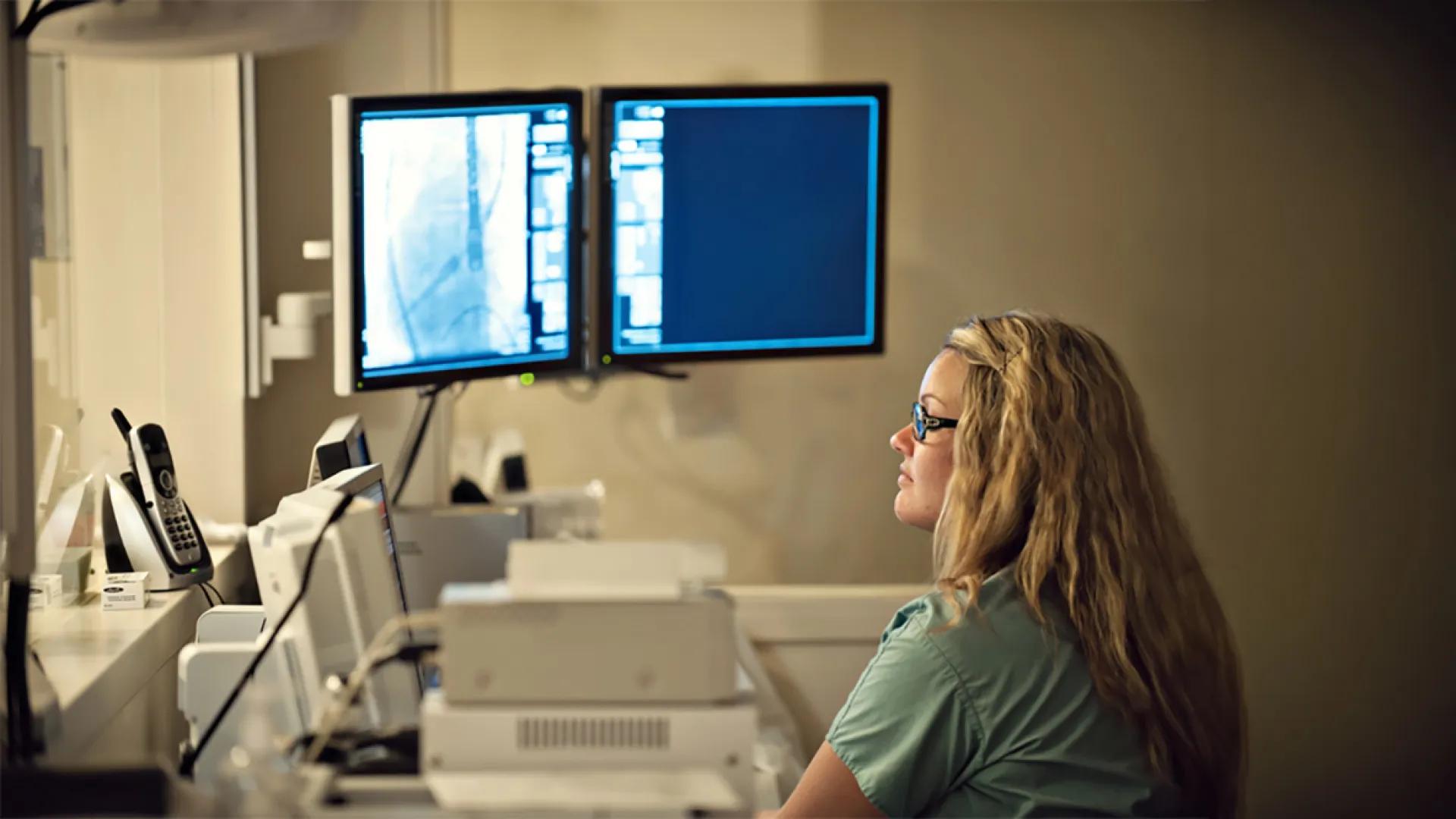
The Frankel CVC & Physiology Phenotype Core (PPC) provides state-of-the-art phenotyping services for animal models ranging from zebrafish all the way to large animals, with a primary focus on mouse and rodent disease models. All services are fully operational and equipped to provide state-of-the-art imaging, surgical techniques, and telemetric monitoring for small and large animal research. These services are offered at both the Medical Campus and North Campus Research Complex.
Scheduling Appointments
Please reach out to either Erica Wiencek or Steve Whitesall for a project consultation.
**All users must have an approved UCUCA approved animal protocol that includes use of ultrasound imaging/ echocardiography/ microsurgery/ telemetry**
Contact Us
For billing questions or concerns, please email:
Erica Wiencek ([email protected])
Steven Whitesall ([email protected])
How We Serve Your Research Needs
Ultrasound Imaging / Echocardiography
High-resolution, noninvasive imaging used to assess cardiac structure and function in real time. This service enables precise measurement of ventricular performance, blood flow dynamics, and disease progression across small and large animal models.
Microsurgery & Micromanometry
Advanced surgical techniques combined with high-fidelity pressure measurement to investigate cardiovascular physiology at a detailed level. These methods support complex model creation and enable accurate assessment of hemodynamic parameters in controlled experimental settings.
Telemetry
Continuous, real-time monitoring of physiological signals—such as heart rate, blood pressure, and activity—in freely moving animals. Telemetry provides longitudinal data collection with minimal stress artifacts, improving the accuracy and translational relevance of research findings.
