
Rehemtulla Lab
The Rehemtulla laboratory specializes in imaging of signaling cascades in mouse models to gain novel insights into the biology of cancer.
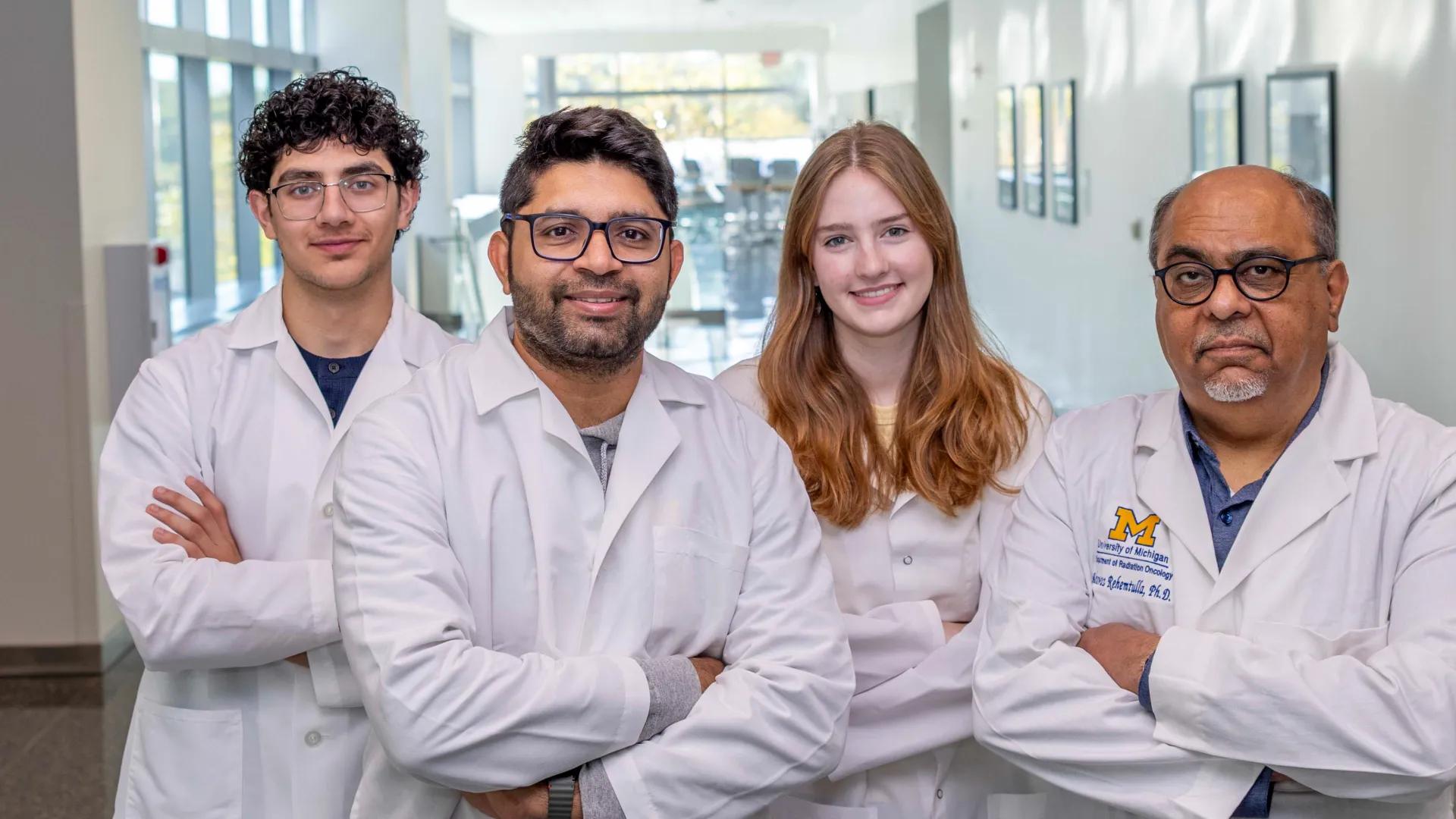
Explore the Rehemtulla Lab
In response to specific stimuli, cells, through a coordinated action of many proteins forming a so-called signal transduction cascade or network, will generate a specific response. Achieving an understanding of these signaling networks in tissue culture models let alone in living individuals is a major challenge. The complexity and dynamic behavior of individual signaling cascades is such that the simple knowledge of the players (proteins) and their interacting partners is not enough to provide an accurate quantitative description of the system. Molecular Imaging provides for a unique opportunity to quantify these signaling cascades in a non-invasive and dynamic manner. The development of genetically encoded proteins, which enable real-time, high-resolution and semi-quantitative visualization of molecular concentrations and protein-protein interactions. More interestingly, the ability to image specific enzymatic activities (kinase, phosphatase, proteases, glycanase etc.) within a signaling cascade dynamically and quantitatively will serve as key experimental tools that will ultimately allow an intuitive understanding of the signal–response relation. The Rehemtulla laboratory has used the ability image signaling cascades in mouse models to provide novel insights into the biology of cancer. Additionally, cell based have been used to delineate novel signaling events that promote the transformed phenotype.
Dr. Rehemtulla has over 25 years of research experience in the field of oncogenic signaling in cancer, as well as the development and evaluation of inhibitors for these signaling pathways as anticancer therapies. He has developed technologies that enable non-invasive imaging of signaling pathways in cells, as well as in mouse models of cancer. These technologies are leveraged to discover novel drugs that target oncogenic pathways and exhibit antitumor activity. He has also used the ability to monitor signaling pathways in live cells to identify previously unappreciated signaling hubs that mediate the transformed phenotype.
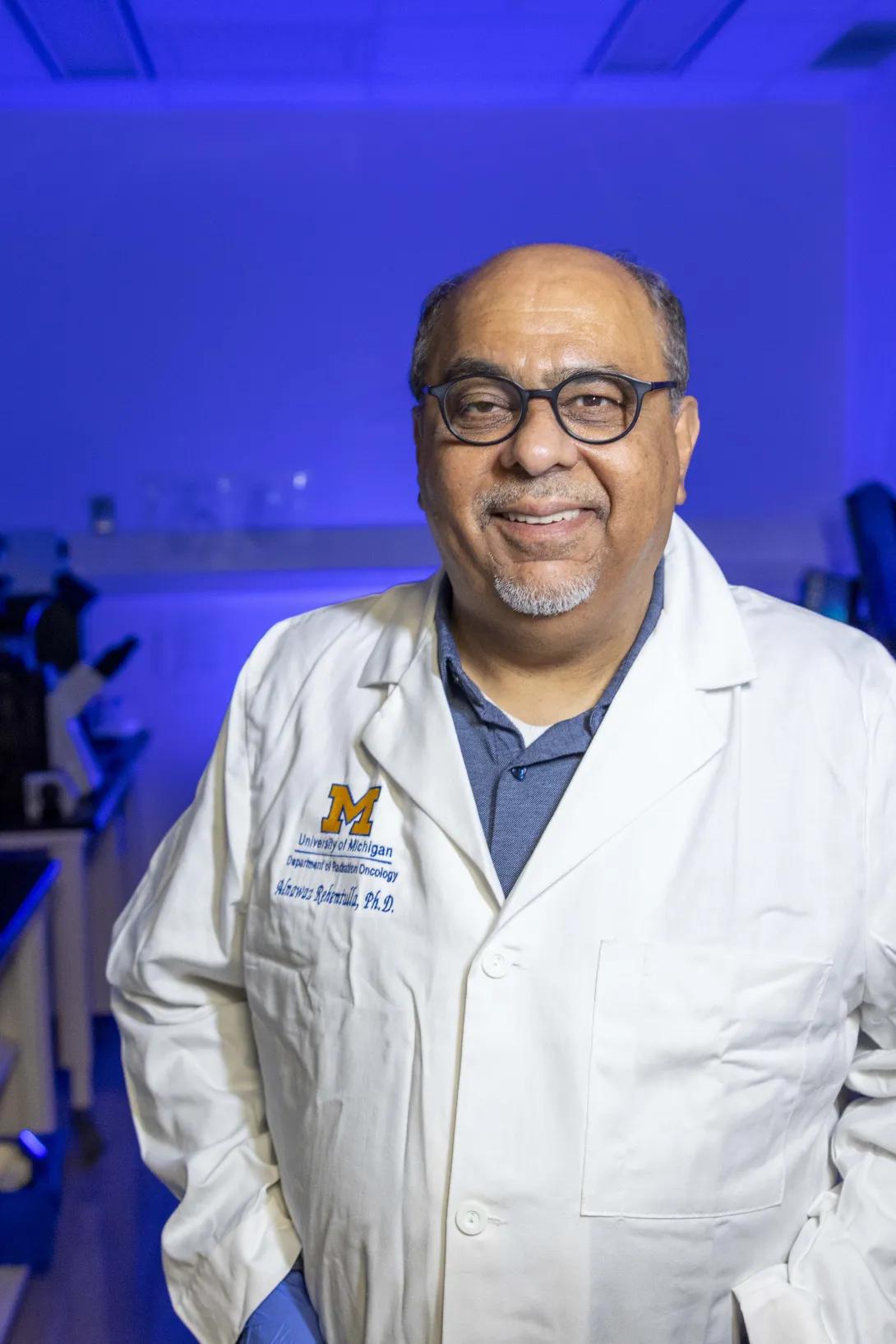
Alnawaz Rehemtulla, PhD
Professor of Radiation Oncology
Professor of Radiology
Medical School
