
More articles about: Alzheimer's Disease

Research News
Aging, physical activity, and dementia prevention
How to improve physical activity as you age

Research News
Can your diet improve brain health?
A summary of the MIND Diet for preventing Alzheimer's disease

Health Lab
Common hospice drugs linked to higher death risk in people with dementia
A study of hospice patients with dementia in nursing homes shows a higher risk of death in 6 months among those prescribed benzodiazepines and antipsychotics.

Health Lab
Is everything you know about Alzheimer's wrong?
Amyloid’s role in Alzheimer’s disease and other forms of dementia doesn’t tell the whole story; other molecules and prevention via cardiovascular, social and cognitive.

Research News
Shruti Mishra Receives New Investigator Award
Shruti Mishra, MD receives NACC New Investigator Award
Minding Memory
Exposure to a Natural Disaster and Long-term Cognition
In this episode, Matt and Lauren speak with Drs. Elizabeth Frankenberg at the University of North Carolina at Chapel Hill and Duncan Thomas at Duke University about their research which focuses on understanding how survival and physical health evolve after exposure to large scale shocks like the 2004 Indian Ocean Earthquake and Tsunami. They will specifically speak about the STAR Study and what they’re learning about long-term effects on cognitive outcomes.

Health Lab
85% of Mexican Americans with dementia unaware of diagnosis, outpacing overall rate
More than three-quarters of older adults with dementia may be unaware of their diagnosis, a University of Michigan study finds.
Minding Memory
Understanding Dementia Risk Factors with Helen C. Kales, MD
In this episode, Matt & Lauren have the unique opportunity to talk with Dr. Helen C. Kales, a geriatric psychiatrist and health services researcher who has participated in the previous Lancet Commissions on Dementia Prevention, Intervention and Care – including the most recent one released in 2024. Dr. Kales discusses how the commission puts together all the evidence to make recommendations that can play a crucial role in dementia prevention. Dr. Kales is the Chair of the Department of Psychiatry and Behavioral Sciences and Joe P. Tupin Professor of Psychiatry at the University of California at Davis and has dedicated much of her career to improving the lives of patients living with dementia.
Minding Memory
The Link Between Hearing Loss and Cognitive Decline
Hearing loss is one of the most common conditions of aging, affecting nearly two-thirds of older adults over the age of 70, but it’s not just a matter of diminished hearing. Hearing loss can contribute to poor psychosocial outcomes for patients including loneliness, depression, and social isolation. New research also shows that hearing loss is linked to a higher risk of cognitive decline and dementia. In fact, the 2024 Lancet Commission on Dementia Prevention, Intervention, and Care identified hearing loss as one of 14 modifiable risk factors for dementia. According to the commission, treating hearing loss could prevent up to 7% of dementia cases globally, making it one of the most impactful areas for potential prevention. This raises the question of whether use of hearing aids in people with hearing loss can reduce or mitigate this increased dementia risk.
To help us understand these connections and the latest research in this area, we are joined today by Dr. Alison Huang, an epidemiologist and Senior Research Associate from the Johns Hopkins Cochlear Center for Hearing and Public Health. Her research studies the impact of sensory loss on cognitive and mental health in older adults. Dr. Huang was an author of the Aging and Cognitive Health Evaluation in Elders (ACHIEVE) study, a large, multicenter randomized controlled trial that tested whether treating hearing loss in older adults could help slow cognitive decline published in the Lancet.
Alison Huang, PhD, MPH
Link to article:
Lin FR, Pike JR, Albert MS, Arnold M, Burgard S, Chisolm T, Couper D, Deal JA, Goman AM, Glynn NW, Gmelin T, Gravens-Mueller L, Hayden KM, Huang AR, Knopman D, Mitchell CM, Mosley T, Pankow JS, Reed NS, Sanchez V, Schrack JA, Windham BG, Coresh J; ACHIEVE Collaborative Research Group. Hearing intervention versus health education control to reduce cognitive decline in older adults with hearing loss in the USA (ACHIEVE): a multicentre, randomised controlled trial. Lancet. 2023 Sep 2;402(10404):786-797. doi: 10.1016/S0140-6736(23)01406-X. Epub 2023 Jul 18. PMID: 37478886; PMCID: PMC10529382.

Health Lab
Sleep apnea contributes to dementia in older adults, especially women
Obstructive sleep apnea, a common and underdiagnosed sleep disorder, contributes to dementia in older adults — particularly women, a study suggests.

Health Lab
Medicare has a revolving door, study suggests
Medicare Advantage vs traditional Medicare is an annual Open Enrollment decision, and a new study looks at how many older adults revolve between the two.
Minding Memory
Can a Serious Infection Increase the Risk of Developing Dementia?
In this episode, Lauren and Matt talk with Leah Richmond-Rakerd, PhD who is an Assistant Professor in the Department of Psychology at the University of Michigan. Her research focuses on emotional and behavioral dysregulation across the life course. Here, Dr. Richmond-Rakerd will discuss her recent study on “The Associations of Hospital-Treated Infections with Subsequent Dementia: Nationwide 30-year Analysis” that was published in Nature Aging.
Health Lab
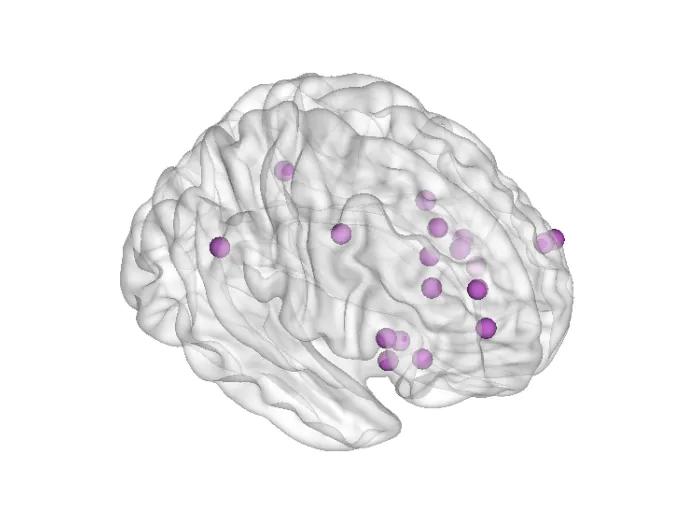
Brain network study reveals clues about dementia’s behavior changes
Dementia doesn’t just erode memory – it also changes behavior and mental health. A new study shows the brain’s salience network and tau protein may be involved.

Health Lab
Drug used for alcoholism shows potential for stopping inflammatory disease
A study shows that disulfiram, known for causing severe hangover symptoms by blocking alcohol breakdown, also inhibits the inflammatory NLRP3 complex.

Health Lab
Same person. Different place. Twice the odds of a dementia diagnosis
Dementia risks vary by person and by population. But a new study shows diagnosis of the disease varies by region even after those differences are taken into account.
