
More articles about: Community Health

Health Lab
Why organizations should value mental health literacy
Why mental health literacy – the understanding of mental wellbeing and how to address concerns – an important key to an organization’s success.

Health Lab
Considering the patient’s perspective in inducible laryngeal obstruction care
Exploring the main topic of concern patients have when it comes to the results of their treatment for inducible laryngeal obstruction can help to increase effective treatment methods.

Health Lab
An unequal toll of financial stress
Inflation rates may have cooled off recently, but a poll shows many older adults are experiencing financial stress – especially those who say they’re in fair or poor physical health or mental health

Health Lab
Sunscreen dispensers make skin cancer prevention easier
Medical students have worked to place dispensers at parks, pools and golf courses around Washtenaw County to give people easy access to sunscreen.

Health Lab
Dermatology goes “global”
A program at Michigan Medicine gives dermatology residents a chance to work internationally.

Health Lab
Children often exposed to problematic clickbait during YouTube searches
On YouTube, the content recommended to kids isn’t always age appropriate, a Michigan Medicine study finds.

Health Lab
Building a sustainable kidney transplant program in Rwanda
A Michigan Medicine surgeon builds a sustainable kidney transplant program in Rwanda.

Health Lab
Does your teen consume too much caffeine?
A quarter of parents report that caffeine is basically part of their teen’s daily life, according to a national poll.

Health Lab
A universal heparin reversal drug is shown effective in mice
The newest version of the heparin reversal drug, described in a recent issue of Advanced Healthcare Materials, adjusted the number of protons bound to it, making the molecule less positive so it would preferentially bind to the highly negative heparin, resulting in a much safer drug.
Health Lab
Neuropathy common, and mostly undiagnosed, among patients in this Michigan city
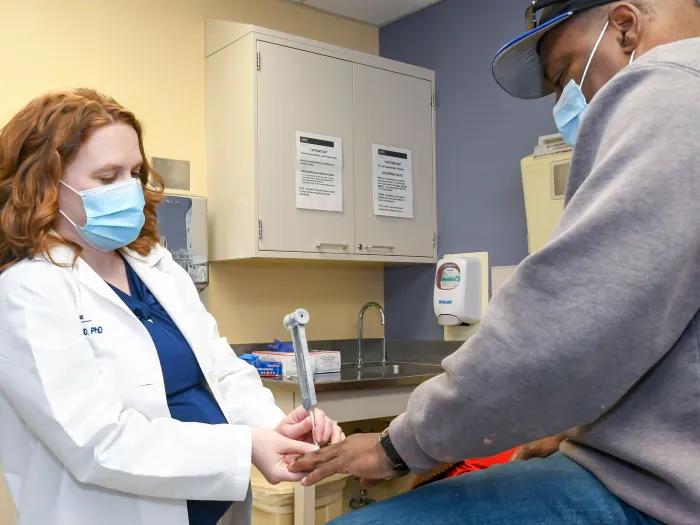
A research team, led by Michigan Medicine and in partnership with Hurley Medical Center, finds that nearly three-quarters of patients at a clinic in Flint, Mich., a community that is predominantly Black and socioeconomically disadvantaged, had neuropathy — of which 75% was undiagnosed.

Health Lab
Chemicals stored in home garages linked to ALS risk
A Michigan Medicine study finds that storing chemicals in a garage at home may associate with an increased risk of ALS.

Health Lab
How to make cancer prevention more equitable
Expert explains six behavioral risk factors for cancer and why current programs don’t always meet the needs of people from racially and ethnically minoritized groups and other vulnerable populations.
Health Lab
Striving for more equitable health care
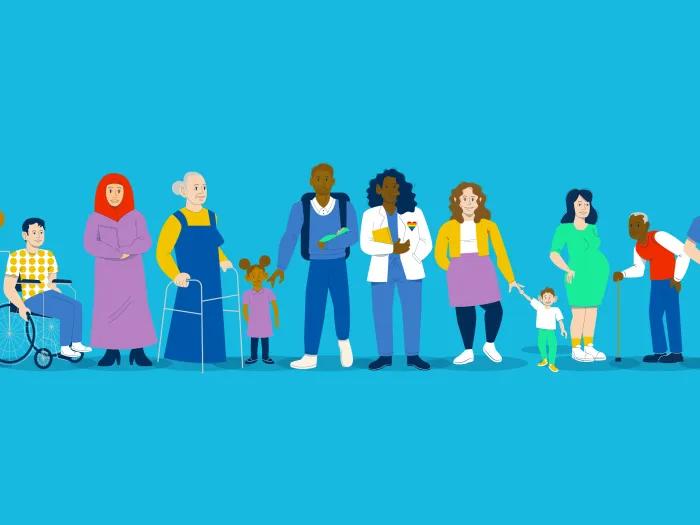
The Healthcare Equity Consult Service addresses the concern of bias and discriminations in health care access, delivery, and experience for University of Michigan-Health.

Health Lab
Transgender people show similar pregnancy outcomes to cisgender people
A Michigan Medicine-led study found that transgender individuals show similar rates of severe parental morbidity and preterm birth and lower rates of cesarean delivery when compared to cisgender people.
Health Lab
Everyone plays a role in improving cancer health equity
As guest editor for a themed journal issue, Lori Pierce helps highlight the multiple factors that can make cancer care and prevention more equitable and reduce the burden of this disease for all
