University of Michigan team leads first in-human recording with new wireless brain-computer interface
Researchers say this is a major step toward clinical trials for this unique technology
9:00 AM
Author |
ANN ARBOR, Mich. – A research team at University of Michigan completed the first in-human recording from a novel, wireless brain-computer interface. This technology aims to restore essential functions lost due to injury or disease.
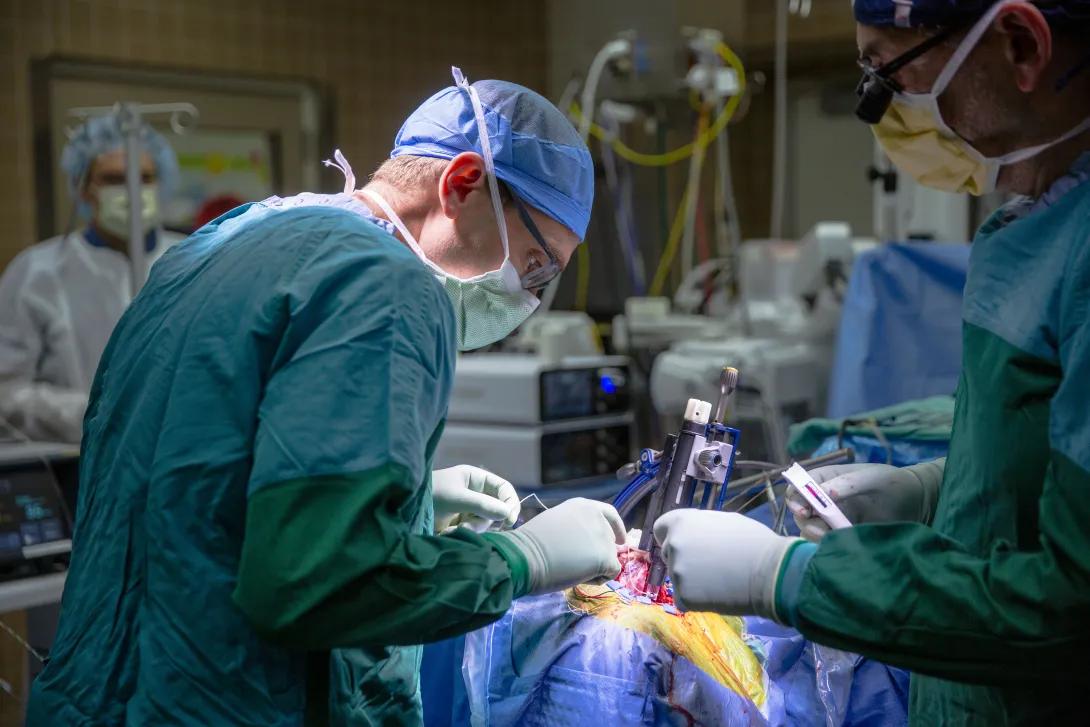
The device, called the Connexus Brain-Computer Interface by Paradromics Inc., was temporarily implanted into a research participant by Matthew Willsey, M.D., Ph.D., neurosurgeon and biomedical engineer at U-M, with Oren Sagher, M.D., director of functional neurosurgery at U-M Health, and a multidisciplinary team of clinicians and engineers.
This brain-computer interface (BCI), which is smaller than a dime and contains 421 microelectrodes, each thinner than a human hair, recorded signals from the participant’s brain.
The BCI was briefly implanted during a temporal lobectomy, a procedure to remove part of the brain that causes seizures for a person with epilepsy.
“This was a tremendous achievement to be able to implant for the first time this BCI, one with over four times the number of sensors compared to similar technology that we have used in the past,” Willsey said.
“With this technology, we can record information from the brain in a way that we haven’t been able to before. What we're working on right now may eventually allow for either replacement or restoration of motor or speech function for people with disabilities.”
Researchers plan to use the data recorded by the Connexus BCI to better understand how epilepsy influences brain signaling.
The data collection may also be used to work toward BCI clinical trials.
“This procedure demonstrates the Connexus BCI can be safely implanted using surgical techniques familiar to neurosurgeons anywhere, which is important because it will support safe clinical practices and facilitate broader adoption,” said neurosurgeon Stephen Ryu, M.D., chief medical officer of Paradromics and adjunct professor of electrical engineering and neurosurgery at Stanford University.
BCIs take the signals recorded from the brain, interpret them and use them to control external devices. This neurotechnology has already found success with certain applications, such as operating virtual controllers, moving robotic arms and producing speech.
Until recently, these devices have required wires that connect the electrodes recording from a person’s brain to the computer.
The Connexus BCI is designed to be fully implantable — one of a few such devices – which is a priority for eventual users of this technology who prefer not to be tethered to a computer by a cable.
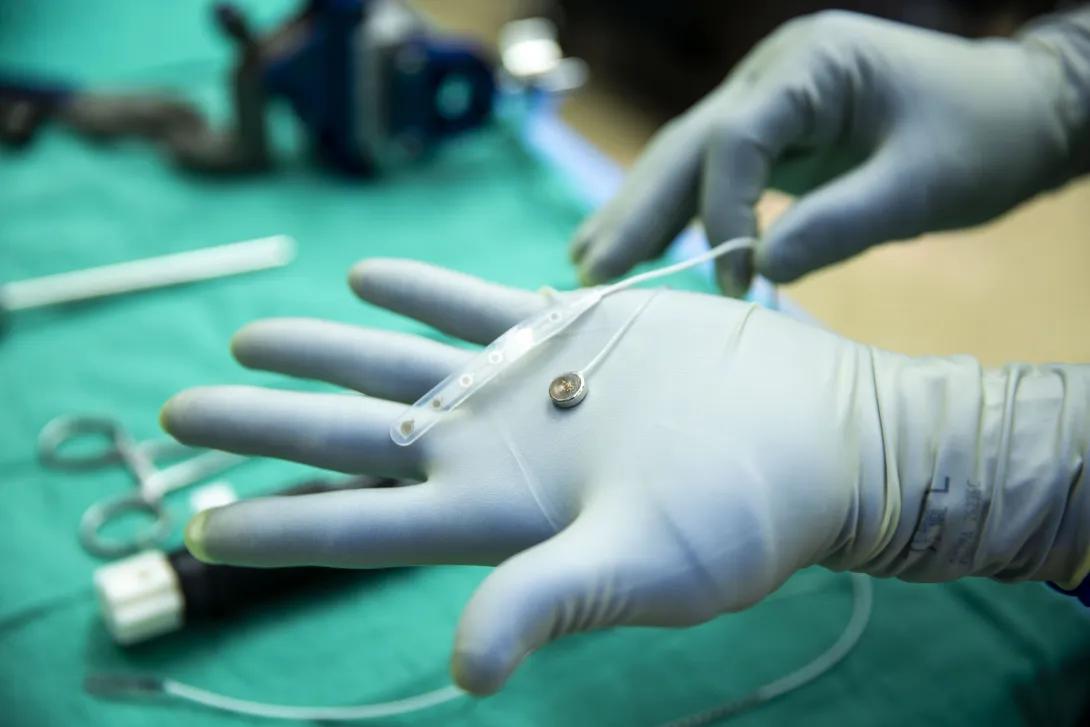
Once the microelectrodes catch the brain signals, the data travels along a thin wire to a small transceiver that will be implanted into the chest of future users.
The information is then wirelessly sent to a transceiver outside of the user’s body and to a computer that uses artificial intelligence and advanced algorithms to convert a thought into action.
“This research is incredibly significant to me because it is a goal in my lifetime to be able to see patients with untreatable neurological diseases and offer them BCIs that they can take home and use in their daily lives,” said Jordan Lam, MBBS, a neurosurgical resident at U-M Health who researches BCIs.
Willsey’s lab conducts research into using intracortical brain-computer interfaces as potential therapy for people with severe speech and motor disabilities. His team focuses on developing the next generation of speech and motor BCIs and also explores the possibility of using BCIs as a therapy for a variety of neurological diseases and injuries.
“The work by Dr. Willsey and everyone involved in this research reflects our department’s vision of delivering the most comprehensive and advanced neurosurgical care today, while creating a better tomorrow through research and education,” said Aditya Pandey, M.D., chair of the Department of Neurosurgery.
Willsey’s team is leading a separate clinical trial for another investigational brain-computer interface that is aimed at motor and speech restoration and received investigational device exemption approval from the U.S. Food and Drug Administration.
“I really feel like we're at an inflection point in the field of brain-computer interfaces — a time of rapid growth,” Willsey said.
“Our research and collaboration with motivated industry partners moves us toward our vision of curing a condition like paralysis.”
UPDATE: Willsey was recently announced as a site principal investigator for the Connexus BCI Clinical Study, a clinical trial that is expected to launch in late 2025 and will enroll people with speech impairments or severe paralysis to receive the device.
Researchers William Stacey, M.D., Ph.D., Enrico Opri, Ph.D., Joseph T. Costello, Ph.D., Matthew Mender, Ph.D., Arushi Tripathy, M.D., Stephanie Jones and Ron Ball at University of Michigan also contributed to the study.
Funding/disclosures: Willsey Lab has a sponsored research agreement with Paradromics, Inc. Aditya Pandey: Flex Dex Surgical; HistoSonics, Inc.; NextGen
In This Story

Matthew S Willsey, MD, PhD
Assistant Professor

Oren Sagher
Professor

Aditya S Pandey, MD
Professor
Featured News & Stories

A protein tape-recorder enables scientists to measure and decode cellular processes at scale and over time
Can Your Voice Reveal Early Signs of Alzheimer’s?
Studying neurons using neurons
Researchers discover what may be the root cause of preeclampsia, and how to fix it
New research brings power of AI, robotics, deep datasets to test drugs for devastating bird flu