APS Research Labs at the 2024 ACR Convergence
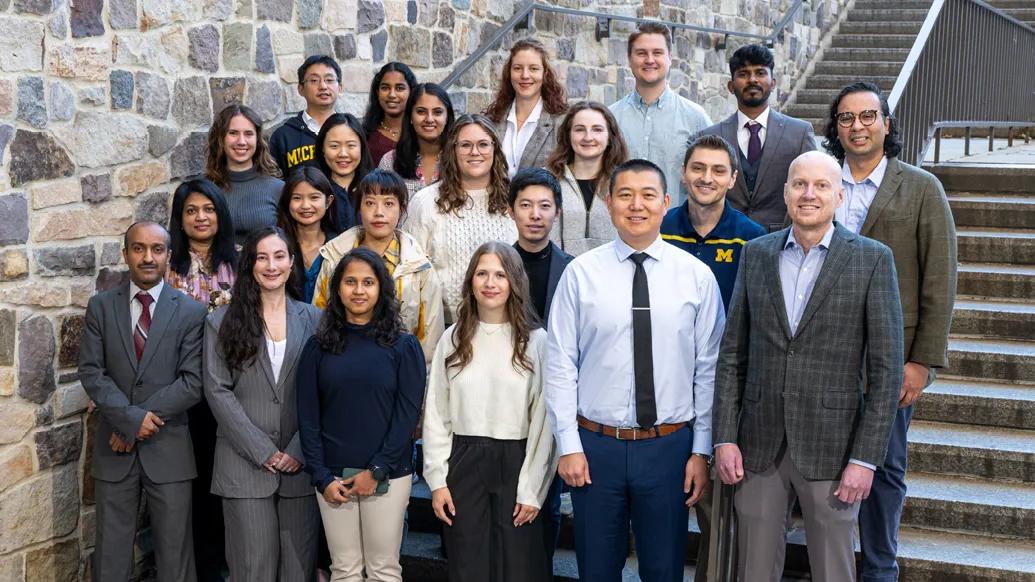
ACR Convergence, the annual scientific meeting organized by the American College of Rheumatology, is widely regarded as the world’s leading rheumatology event. This year, the meeting will be held in Washington, D.C., beginning on November 14.
Presenting their latest research in this forum is always an exciting opportunity for the APS Research Labs to share their own insights and learn from the best in the field.
Please see below for brief summaries of their planned presentations, along with links to more detailed descriptions (when available).
Oral Presentations
The Platelet Adenosinergic Axis as a Novel Therapeutic Target for Thrombotic APS
- Presenting Author: Somanathapura K. NaveenKumar
- Brief Summary: Only the top-scoring abstracts are selected for oral presentations. In this one, Naveen will present a novel approach he has discovered to inhibit platelets, one of the cells responsible for blood clotting. Naveen’s strategy is attempting to block harmful clotting activity caused by platelets while minimizing the risk of bleeding complications, offering a promising new direction for safer blood clot prevention.
- Presenting Author: Kavya Sugur
- Brief Summary: In the clinic, we test for different types of anti-beta-2 glycoprotein I (anti-β2GPI) antibodies, including one called IgA. Surprisingly, we don’t know much about this specific antibody species! This project, led by Kavya and Ray Zuo, tackles the issue head-on, with some interesting early findings about the potential role of anti-β2GPI IgA in atherosclerotic vascular disease.
Immunology for the Rheumatologist: Case-Based Illustrations of Key Pathways in APS
- Presenter: Jason Knight
- Brief Summary: In this invited lecture, Jason will guide rheumatologists through key immunological concepts crucial for treating APS patients. His presentation will highlight clinically relevant insights that can enhance patient care and improve outcomes.
- Presenter: Emily Balczewski
- Brief Summary: As medical knowledge grows rapidly, health-profession students increasingly rely on electronic flashcards to stay on top of the knowledge “firehose.” In this presentation, Emily will introduce learners and educators to this new learning tool and explore how it may promote medical knowledge acquisition in the rheumatology community, for APS and beyond.
Fellows in Training Program: Learning from the Expert - Rheumatology Roundtable
- Presenter: Jason Knight
- Brief Summary: Jason was invited to participate in small group discussions with rheumatology fellows (Internal Medicine graduates pursuing advanced training in Rheumatology) from around the world. Jason’s roundtable will focus on antiphospholipid syndrome.
Poster Presentations
- Presenting Author: Ramadan Ali
- Brief Summary: Led by Ramadan, this story applies what we learned from APS to scleroderma—a chronic disease that thickens the skin and affects internal organs. The team found that patients with scleroderma-associated vascular problems often have high levels of neutrophil extracellular traps (NETs) circulating in their blood. NETs might, therefore, be a new diagnostic tool, or even treatment target, for scleroderma.
Electronic Health Record Rule-Based Computable Phenotype of Antiphospholipid Syndrome
- Presenting Author: Emily Balczewski
- Brief Summary: Relying on physician-entered diagnosis codes is insufficient to reliably identify patients with APS for research purposes in Electronic Medical Records. Emily’s work is attempting to accelerate research efforts by creating a universal and easy-to-use tool that significantly improves specificity. For example, centers might use such a tool to identify cohorts of patients with APS eligible for clinical trials.
- Presenting Author: Emily Balczewski
- Brief Summary: This second abstract from Emily has even bigger ambitions, using computer models to search the Electronic Medical Record for patients who have features of APS but have never received the right blood tests. This type of work can eventually lead to valuable tools for front-line physicians, prompting them to recognize key moments when testing for APS is crucial.
- Presenting Author: Yuzhou Gan
- Brief Summary: PAI-1 is a blood protein that prevents the breakdown of blood clots. As compared with people without autoimmune conditions, Yuzhou found higher levels of PAI-1 in patients with a history of thrombotic APS. Through a partnership with Dan Lawrence in Cardiovascular Medicine, we are now asking whether a novel drug that interferes with PAI-1 function might be a new way to treat APS.
Calprotectin, a Mechanistically Informed Biomarker for Clinically Isolated Aortitis
- Presenting Author: Katarina Kmetova
- Brief Summary: This is another project where we are taking some of what we have learned from APS and applying it to other disorders. Here, Katarina uncovered that a neutrophil-derived protein called calprotectin is elevated in the blood of patients with aortitis, where it seems to disrupt the function of endothelial cells that line blood vessels. This finding suggests that calprotectin could serve not only as a potential disease marker but also as a promising target for future treatments.
- Presenting Author: Wenying Liang
- Brief Summary: This is an exciting project, being led by Wenying, for which some of you very graciously contributed skin biopsies. Using skin biopsies from 30 people with APS, we are in the process of deeply analyzing the tiny blood vessels that course through the skin at a single-cell level. This is the first time anyone has directly profiled APS blood vessels. We are early in the analysis, but it is already pointing us in some very interesting directions, which we hope will lead to smarter and more personalized treatments.
- Presenting Author: Kaitlyn Sabb
- Brief Summary: Kaitlyn, an undergraduate student in the lab, has discovered that a key metabolic hub in neutrophils known as the pentose phosphate pathway is critical for their ability to release neutrophil extracellular traps (NETs). Inhibiting a key pentose phosphate pathway enzyme called G6PD may be a potential therapeutic strategy for patients.
- Presenting Author: Ajay Tambralli
- Brief Summary: Ajay focused on the severest form of APS, which we sometimes call “microvascular APS,” and found that neutrophils from these patients had significant distortions in the so-called citric acid cycle. The cycle may actually be running in reverse in some patients, fueling inflammation rather than normal energy production! He could be onto something really interesting about neutrophil biology that will have far-reaching implications beyond APS.
Adolescents’ and Providers’ Perceptions of the Transition from Pediatric to Adult Rheumatology
- Presenting Author: Julia Witowska
- Brief Summary: Julia is a combined internal medicine and pediatrics resident at U-M who worked with Jackie Madison on this exciting project to understand how to prepare adolescents (including those with APS) to transition to an adult clinic when the time is right. The team identified several things we could be doing better, and the goal will be to implement at least some of these ideas soon!
Featured News & Stories

Emerging into the Future
Ljungman receives $500K from the Little Warrior Foundation for Ewing sarcoma gene-editing therapy

3D-Printed Models - Conjoined Twins
CPOD Faculty Publication Spotlight - Heemskerk Lab
Critical Care Program Fulfills Patients’ Final Wishes, Bringing Comfort to Last Moments