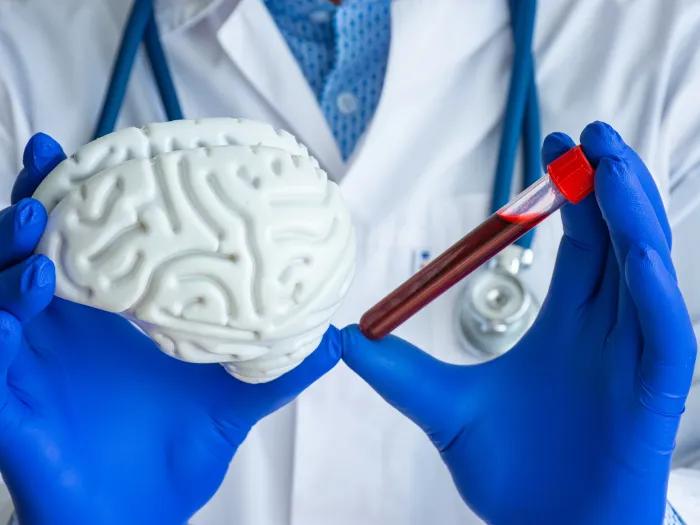
Weil Institute team awarded $3.4 million to optimize ICU triage of patients with acute heart and lung diseases
U-M researchers are developing data tools that could help doctors more accurately determine which emergency department patients should be admitted to the ICU and when.
Author |

ANN ARBOR – Supported by a 5-year, $3.4 million grant from the National Institutes of Health (NIH), a multidisciplinary team from the University of Michigan Max Harry Weil Institute for Critical Care Research and Innovation is developing powerful data-driven tools aimed at optimizing how hospitals triage and assign beds to patients with acute heart and lung diseases.
Studies have shown that mortality rates trend higher among acute heart and lung patients who are initially placed in a general ward rather than being directly admitted to the intensive care unit (ICU). Delays in deciding which patients should go to the ICU and when, as well as long waits in the emergency department for a hospital bed, can lead to worse outcomes, especially for patients needing urgent and complex care. Data-driven tools show promise in helping to enhance decision-making around ICU triage and bed allocation; however, there are several challenges to implementing such solutions.
“Figuring out the best timing for moving a patient depends not only on how sick the patient is and how their condition is changing, but also on factors like staffing and how busy the hospital is,” said Dr. Sardar Ansari, Assistant Professor of Emergency Medicine and Director of Data Science at the Weil Institute. “Second, to really help patients, we need systems that can also predict what might happen to those patients under different decisions, so that we can make the best determination for each individual. Finally, since hospital staff and beds are shared resources, decisions about one patient can affect other patients. So, even if a decision seems best for one person, we also have to think about how it might impact everyone else including hospital staff.”
OPTIBED
Dr. Ansari and fellow Weil Institute member Dr. Andrew Admon, Assistant Professor of Internal Medicine and Epidemiology, are principal investigators on the new NIH-funded research initiative OPTIBED (“Optimize the Care of Acute Heart and Lung Diseases through Precision Triage and Inpatient Bed Assignment”.) Comprised of Weil experts in the fields of data science, health services research and clinical medicine, as well as co-investigators at the University of Pennsylvania Health System, Yale University, U-M Health West and Hurley Medical Center, the OPTIBED team will, over the next five years, develop data-driven models that personalize triage and bed assignment for acute heart and lung patients. The researchers hypothesize that such models will be able to safely reduce deterioration rates among these patients.
Before building their models, the team will first focus on discovering and understanding the multitude of variables that inform decision-making around ICU admission and bed assignments. The researchers will look at “hard numbers,” such as electronic health record (EHR) and hospital data, combined with interviews and direct observations of staff across four diverse healthcare systems.
“Hospitals are dynamic environments, and there are so many factors that go into determining where a patient is admitted,” said Dr. Admon. “By blending data analysis and real-life experience, we’re going to be able to build a much more detailed profile of the patient, staff and hospital-level variables that drive these decisions.”
Next, the team will develop a clinical decision support tool that uses both data and context to recommend which patients should be prioritized for ICU care. Rather than relying on one-size-fits all guidelines, the team’s system will use advanced computational methods to personalize its advice, using past cases to learn how each patient might benefit from lower or higher acuity care. The team will then test this approach by simulating its use through years of real patient data while also considering the practical hospital limitations such as those studied in the first aim.
Hospitals are dynamic environments, and there are so many factors that go into determining where a patient is admitted. By blending data analysis and real-life experience, we’re going to be able to build a much more detailed profile of the patient, staff and hospital-level variables that drive these decisions.
Andrew Admon, MD, MPH, MS
Assistant Professor, Internal Medicine and Epidemiology
Member, Weil Institute
Finally, the team will focus on optimizing how patients are assigned to hospital beds overall. The team will use powerful mathematical and machine learning methodologies to suggest the best possible bed assignments with the intent of maximizing benefit for the most urgent patients while still considering hospital constraints. The researchers will also test this approach using real-life patient records and will compare their model’s recommendations to the actual outcomes.
Through the new NIH grant, the team’s ultimate goal will be to have developed and evaluated two model-based approaches to ICU triage and hospital bed assignment, and to have gathered strong observational evidence of the new systems’ safety and efficacy that can then be applied to future research and model development efforts in this area.
“As hospitals grapple with capacity challenges, OPTIBED holds the promise of transforming how patients are prioritized and treated,” said Dr. Kevin Ward, Professor of Emergency Medicine and Biomedical Engineering and Executive Director of the Weil Institute. “It’s powered by data science but grounded in the real-world complexity of healthcare systems, making it both a practical and safe tool. It also demonstrates the strength in the diversity of expertise that the Weil Institute brings to the table. From clinicians to data scientists to engineers, we are all united by the common goal of making care for our most critically ill and injured patients smarter and more efficient, providing the right care for the right patient at the right time. This is the essence of precision health!”
Project Team
Andrew Admon, MD, MPH, MS (Co-Principal Investigator, Weil Institute, Internal Medicine, Epidemiology); Sardar Ansari, PhD (Co-Principal Investigator, Weil Institute, Emergency Medicine); Claire Kalpakjian, PhD, MS (Co-Investigator, Physical Medicine and Rehabilitation); Amy Cohn, PhD, AB (Co-Investigator, Weil Institute, Michigan Medicine Chief Transformation Officer, Industrial and Operations Engineering); Jeffrey Fletcher, MD (Co-Investigator, Weil Institute, Neurology, Neurocritical Care); Kyle Gunnerson, MD, FCCM (Co-Investigator, Weil Institute, Emergency Medicine, Anesthesiology, Internal Medicine); Bhramar Mukherjee, PhD (Co-Investigator, Biostatistics); Vikas Parekh, MD (Co-Investigator, Internal Medicine); Michael Roebuck, MD (Co-Investigator, Emergency Medicine); Kayte Spector-Bagdady, JD, MBe (Co-Investigator, Obstetrics and Gynecology); Stephanie Taylor, MD, MSc (Co-Investigator, Internal Medicine); Thomas Valley, MD, MSc (Co-Investigator, Weil Institute, Pulmonary and Critical Care Medicine, Internal Medicine); Gary Weissman, MD, MSHP (Co-Investigator, Medicine and Informatics, University of Pennsylvania)
About the Weil Institute
The team at the Max Harry Weil Institute for Critical Care Research and Innovation is dedicated to pushing the leading edge of research to develop new technologies and novel therapies for the most critically ill and injured patients. Through a unique formula of innovation, integration and entrepreneurship that was first imagined by Weil, their multi-disciplinary teams of health providers, basic scientists, engineers, data scientists, commercialization coaches, donors and industry partners are taking a boundless approach to re-imagining every aspect of critical care medicine. For more information, visit weilinstitute.med.umich.edu.
In This Story
Sardar Ansari, PhD
Assistant Professor
Andrew J Admon, MD, MPH, MS
Assistant Professor

Kevin Ward, MD
Professor
Featured News & Stories

Into the Current: Dr. Nate Hunt Brings Specialized Water Rescue Expertise Back to Michigan Medicine

Emergency room intervention pairs smartphone, telehealth counseling to reduce risky firearm behavior
Meet Our New Emergency Medicine Fellows and Faculty

E-Bikes are everywhere, but most parents say they don’t know enough about them
From walk-in clinic to national leader: How Michigan Medicine’s Pediatric Emergency Division was built