Weil Institute’s “PICTURE” is licensed to U-M startup PreSense Health
The analytic will help healthcare systems across the globe predict patient deterioration hours in advance.
Author |
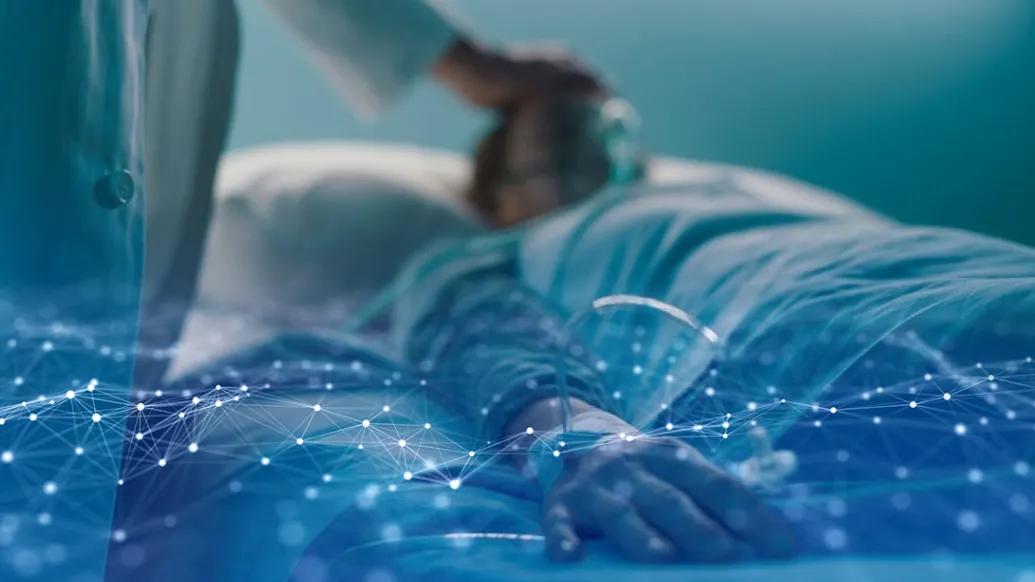
ANN ARBOR — PICTURE (Predicting Intensive Care Transfers and other UnForeseen Events), a clinical decision support system (CDSS) developed by researchers at the Max Harry Weil Institute for Critical Care Research and Innovation, has recently been licensed to PreSense Health, a U-M technology-based startup that launched with the support of Innovation Partnerships. Over the next six months, PreSense will deploy PICTURE at hospitals in India and Saudi Arabia.
“This launch marks a significant milestone,” said Drew Bennett, Director of Software, Content Licensing and Research Partnerships at Innovation Partnerships at U-M. “Seeing an analytic developed here at the University of Michigan move into real-world use highlights our thriving ecosystem of innovation. It’s a tremendous example of how our researchers and startups are translating ideas into impact.”
Bennett, who is also the licensing manager for PICTURE and facilitated the agreement between the Weil Institute and PreSense Health, noted that the initial launch in India and the Middle East will inform future efforts to bring PICTURE stateside.
“It is challenging to get an analytic like this through the regulatory processes here in the United States,” Bennett said. “By starting out in these countries, it’s going to provide us with a lot of valuable information from broad, diverse sets of patients that will ultimately have a positive impact as PICTURE is refined for eventual adoption in the US.”
PICTURE Helps Clinicians Act in Advance
Clinical decision support systems are computer-based systems that provide clinicians with timely, evidence-based recommendations to improve patient care and outcomes. PICTURE harnesses electronic health record (EHR) data to passively and accurately predict a patient’s risk of deteriorating up to an average of 30 hours before indications appear in traditional vital signs.
PICTURE also provides explanations for its every prediction, giving clinicians clear insight into the individual factors driving each risk alert and making it easier for them to understand why a patient has been flagged. This transparency empowers care teams to make more informed decisions earlier and enhances trust in the system’s recommendations.
PreSense Health has licensed the entire PICTURE suite, which includes separate models tailored for adult and pediatric patient populations plus a streamlined “lite” version ideal for environments where technical resources are limited, such as in rural hospitals or busy outpatient clinics.

Having been involved with some of Weil’s earlier predictive analytics, I’ve seen first-hand the passion and rigor that drives innovation here. PICTURE is going to be the perfect addition to PreSense’s portfolio of clinical intelligence systems, and I am proud to partner once again with a team whose focus remains on empowering clinicians and improving outcomes for patients around the world.
Ashwin Belle, PhD
CEO, PreSense Health
A Story that Began at Weil
The success of PICTURE’s licensing is closely tied to the unique background and relationship between the Co-Founder and CEO of PreSense Health, Ashwin Belle, PhD, and the Weil Institute. Originally a member of Weil (then known as the Michigan Center for Integrative Research in Critical Care), Dr. Belle was also a co-inventor of an earlier Weil Institute-developed predictive analytic—the Analytic for Hemodynamic Instability (AHI)—around which Dr. Belle and colleagues would form the spin-off company FifthEye, Inc.
PreSense Health has already deployed its product in multiple hospitals, where it is utilizing patient data from multiple sources, including wearables, and taking an AI-first approach to help care teams detect patient deterioration early, streamline documentation, and optimize resource allocation and workflows.
“Having been involved with some of Weil’s earlier predictive analytics, I’ve seen first-hand the passion and rigor that drives innovation here,” said Dr. Belle. “PICTURE is going to be the perfect addition to PreSense’s portfolio of clinical intelligence systems, and I am proud to partner once again with a team whose focus remains on empowering clinicians and improving outcomes for patients around the world.”
“Ashwin coming back to Weil to license PICTURE really shows the caliber and lasting impact of our work,” said Dr. Kevin Ward, Executive Director of the Weil Institute and Professor of Emergency Medicine and Biomedical Engineering. “We’re thrilled to work with him on this and to see Weil’s vision of innovation, integration, and entrepreneurship in action.”
PICTURE will be up and running in its initial launch countries by mid-2026, with adoption in the United States planned for 2027. PICTURE is also currently in use by Michigan Medicine’s Rapid Response Team.
Disclosures
Dr. Kevin Ward is an inventor of PICTURE.
Further Reading
- PICTURE Deploys with the Rapid Response Team: https://medresearch.umich.edu/research-news/picture-perfect-response-patient-deterioration
About the Weil Institute
The team at the Max Harry Weil Institute for Critical Care Research and Innovation is dedicated to pushing the leading edge of research to develop new technologies and novel therapies for the most critically ill and injured patients. Through a unique formula of innovation, integration and entrepreneurship that was first imagined by Weil, their multi-disciplinary teams of health providers, basic scientists, engineers, data scientists, commercialization coaches, donors and industry partners are taking a boundless approach to re-imagining every aspect of critical care medicine. For more information, visit weilinstitute.med.umich.edu.
About PreSense Health
PreSense is a clinical intelligence platform that helps hospitals detect patient deterioration early, automate documentation, and streamline clinical workflows. By integrating real-time data from bedside monitors, EHRs, and wearable biosensors, PreSense delivers explainable, AI-powered insights to frontline clinicians—without disrupting care. For more information, visit https://www.linkedin.com/company/presensehealth/.
In This Story

Kevin Ward, MD
Professor
Featured News & Stories
Small comforts make a world of difference
Department of Emergency Medicine Celebrates 25 Years at Anniversary Town Hall

Into the Current: Dr. Nate Hunt Brings Specialized Water Rescue Expertise Back to Michigan Medicine

Emergency room intervention pairs smartphone, telehealth counseling to reduce risky firearm behavior
Meet Our New Emergency Medicine Fellows and Faculty