
Weil researchers' AI-integrated smart CPR device named honorable mention in Fast Company’s 2026 World Changing Ideas Awards
The annual awards honor breakthrough innovations driving meaningful global impact.
Author |
ANN ARBOR - The transformative research taking place at the Max Harry Weil Institute for Critical Care Research and Innovation is being recognized on the global stage as Fast Company magazine names INSIGHT-CPR an Academic Excellence honoree of its 2026 World Changing Ideas Awards. Held annually, the awards recognize bold and transformative efforts that tackle the world’s most pressing issues--from fresh sustainability initiatives and cutting-edge AI developments to ambitious pursuits of social equity that are helping mold the world.
“Our team is thrilled and deeply honored to have our work highlighted among this elite group,” said INSIGHT-CPR principal investigator Dr. Cindy Hsu, who is Associate Professor of Emergency Medicine and Surgery, Division Chief of Critical Care and a member of the Weil Institute. “Sudden cardiac arrest remains an urgent and unforgiving medical emergency, and survival depends on rapid, effective interventions. The recognition from Fast Company emphasizes the critical need for new, life-saving innovations in this space.”
Currently in development, INSIGHT-CPR is an AI-integrated wearable sensor that detects how blood is flowing to a patient’s heart during CPR, allowing rescuers at the scene of a cardiac arrest to assess and refine their resuscitation techniques in real-time. Backed by a $5.5 million grant from the American Heart Association, the technology is being developed by a global team comprised of experts in cardiac arrest resuscitation, engineering, data science, pre-hospital medicine, product development, and human-centered design.

"Our goal is to help rescuers provide personalized CPR so that every patient can have the best chance at survival with good outcomes."
Cindy Hsu, MD, PhD, MS
Associate Professor, Emergency Medicine & Surgery
Division Chief, Critical Care
Member, Weil Institute
INSIGHT-CPR is being built by rescuers, for the rescuers who will use it. The project draws on multidisciplinary collaboration centered on the Weil Institute, with teams from Michigan Medicine and the University of Michigan College of Engineering. The Weil Institute's Data Science team is developing INSIGHT-CPR’s integrated neural networks using adult and pediatric cardiac arrest waveform data from Michigan Medicine, the Children's Hospital of Philadelphia, and the East Anglian Air Ambulance in the United Kingdom. The College of Engineering is developing the wearable sensor. The Weil Institute's Preclinical Laboratory is testing prototypes of INSIGHT-CPR in a model of cardiac arrest. Blue Cottage of CannonDesign is facilitating design thinking workshops and developing a go-to-market strategy for commercial launch, while In2Being is providing prototype development and FDA regulatory support. Finally, INSIGHT-CPR’s end users are guiding the design at every stage, from prehospital first responders to hospital and air medical teams.
“For other big killers like cancer, we know the patients’ tumor genetics and can tailor their treatments accordingly. But for cardiac arrest, every patient gets the same exact resuscitation protocol regardless of their individual physiology,” said Dr. Hsu. “Our goal is to help rescuers provide personalized CPR so that every patient can have the best chance at survival with good outcomes.”
The 2026 World Changing Ideas, featured on fastcompany.com, highlight 191 outstanding projects across 14 categories. A panel of Fast Company editors and reporters evaluated more than 1,500 entries based on their impact, sustainability, design, creativity, scalability, and ability to improve society. Now in its ninth year, the World Changing Ideas Awards celebrate organizations and projects that are delivering measurable impact across industries—from climate solutions and AI advancements to health, social justice, and beyond.
In September, members of the INSIGHT-CPR team will travel to New York City where honorees will be formally recognized as part of Fast Company’s annual Innovation Festival.
“The World Changing Ideas Awards are more than inspiration—they’re a measure of real-world impact,” said Fast Company editor-in-chief Brendan Vaughan. “This year’s honorees are turning bold ideas into tangible solutions and addressing urgent global challenges with creativity and rigor.”
About INSIGHT-CPR
Currently in development, INSIGHT-CPR is an AI-integrated wearable sensor that detects how blood is flowing to a patient’s during CPR. The technology will enable rescuers at the scene of a cardiac arrest to assess and refine their resuscitation techniques in real-time based on individual patient physiology, giving every patient the best chance at survival with good outcomes. For more information, please visit www.insight-cpr.com.
About Fast Company
Fast Company is the only media brand fully dedicated to the vital intersection of business, innovation, and design, engaging the most influential leaders, companies, and thinkers on the future of business. Headquartered in New York City, Fast Company is published by Mansueto Ventures LLC, along with our sister publication Inc., and can be found online at www.fastcompany.com.
In This Story

Cindy H Hsu, MD, PhD, MS
Associate Professor
Related
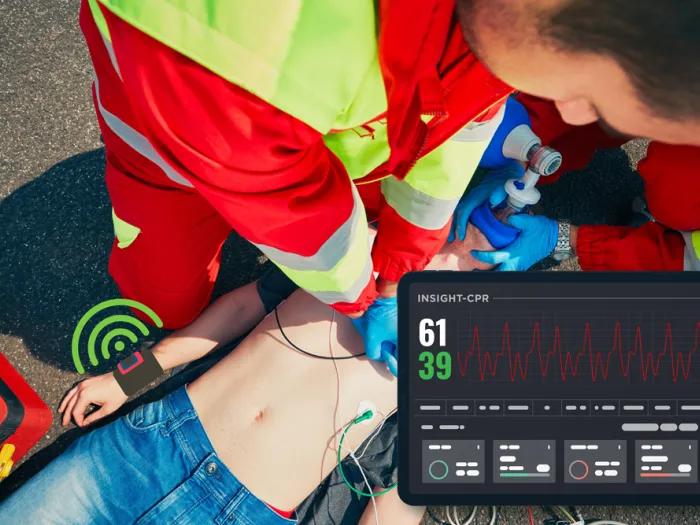
Weil Institute researchers awarded $5.5 million for smart CPR device that aims to restart more hearts
Featured News & Stories
Weil and University of Connecticut partnership awarded $2.8 million to develop defibrillator decision support algorithms
Weil Institute researchers awarded $5.5 million for smart CPR device that aims to restart more hearts

Weil Institute unites global cardiac arrest experts at eighteenth Wolf Creek Conference
Emergency EEG study suggests need for faster seizure diagnosis and care options

Collaboration with community child care centers creates innovative research tool

