
MI-AORTA Clinic Information
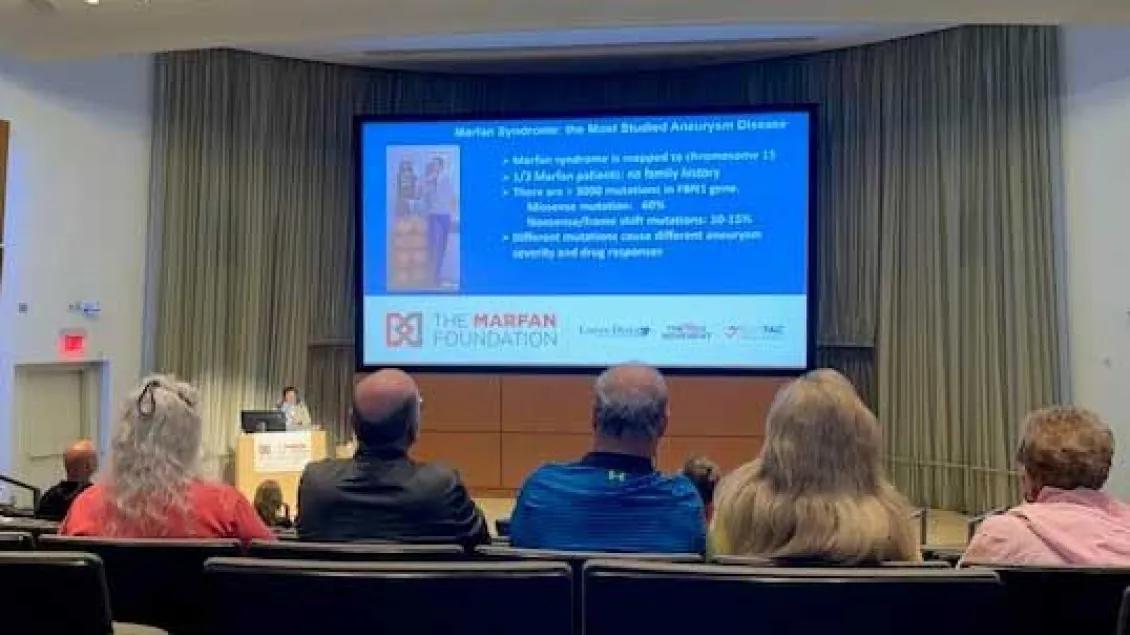
Patient Information
Welcome!
Thank you for choosing us to be part of your care team. Our multidisciplinary program focuses on the care and treatment of people with aortic disease and monitors those with genetic conditions that increase the risk for aortic disease. Multidisciplinary means that health care experts from a variety of specialists, each with experience treating different aspects of aortic disease, work together to care for you. Our team includes:
- Heart doctors (cardiologists)
- Heart surgeons
- Vascular surgeons
- Vascular medicine doctors
- Advanced practice providers (Nurse Practitioners and Physician Assistants)
- Radiologists
- Genetic Specialists
Referring Providers
If you would like to make an appointment with Allison regarding your aortic disease or suspected aortic disease, call our Contact Center to schedule: 734-647-7321 or 888-287-1082 (option 1)
Mention Allison DiBrano, or the MI-AORTA clinic
Your first visit will be a video visit with your healthcare provider. Like a clinic visit, you will be able to connect to your provider, but through your smartphone, tablet, or computer from home. This visit will last about 60 minutes, so make sure you are in a comfy spot with your camera on. Prepare for your video visit like you would for an in-person clinic visit. A typical visit includes:
- Talking about your health history.
Your provider will ask you questions about your medical history, current medications you are taking, and your social history. - Reviewing the results of your tests, including CT scans, MRIs, echocardiograms, ultrasounds, and lab work.
- Creating an individualized treatment plan.
Your provider will establish a personalized treatment plan tailored to your needs, including:- Starting medication if needed.
- Ordering necessary labs and testing.
- Placing referrals for ongoing follow-up with specialists such as cardiologists, cardiac surgeons, or vascular surgeons.
- Reviewing patient education.
Your provider will give you information to help you better understand your condition. This includes information specific to your condition, how to best manage your symptoms, and our contact information if you have any further questions. - Scheduling a follow-up visit or testing.
After your video visit, your provider will schedule you for any required follow-up appointments and testing. If you have completed testing related to your diagnosis, we will work with you to get these results before your appointment. However, your appointment will not be delayed if we cannot get the results in time. Please let your scheduler know if you had testing at an outside facility.
Where can I find more information about Aortic Disease?
For sources of information and support, we recommend:
- The Marfan Foundation: https://marfan.org/
- The John Ritter Foundation: https://johnritterfoundation.org/
- See our patient eduction materials page for more information
Looking for opportunities to get involved in research?
The links below are sources for research opportunities.
Scenarios when MI-AORTA assists:
This could involve assistance with appropriate image ordering and surveillance, risk factor modification, medication initiation and adjustment, evaluation of family history with potential need for genetic testing/surveillance, and other related services.
This may involve urgent or routine surgical evaluation, pre-operative testing/work-up, explanation of different surgical procedures/options for referred diagnosis, appropriate follow-up in regards to image surveillance, post-operative follow-up, and other related services.
This may involve urgent or routine surgical evaluation, pre-operative testing/work-up, explanation of different surgical procedures/options for referred diagnosis, appropriate follow-up in regards to image surveillance, post-operative follow-up, and other related services.
This may include situations when an existing cardiologist, surgeon or primary care physician is already managing the patient's care and only wants genetic counseling/surveillance. If genetic testing is recommended and obtained, genetic counseling will be provided. The MI-AORTA program can also facilitate evaluation by a Michigan Medicine provider if desired by the referring physician.
This may encompass patients with various genetic disorders such as Marfan's syndrome, Vascular Ehlers-Danlos syndrome, Turner's syndrome, and Loey's-Dietz syndrome. Such patients might present with scoliosis and require a expertise of a orthopedic surgeon. Additionally, they may need specialized care from ophthalmologists or reproductive endocrinologists to assist with family planning, among other related services.
A strong family history of aortic disease, genetic conditions that predispose you to aortic disease, or other related conditions.
Patient Education Materials
Outreach APP and Referral Liaison
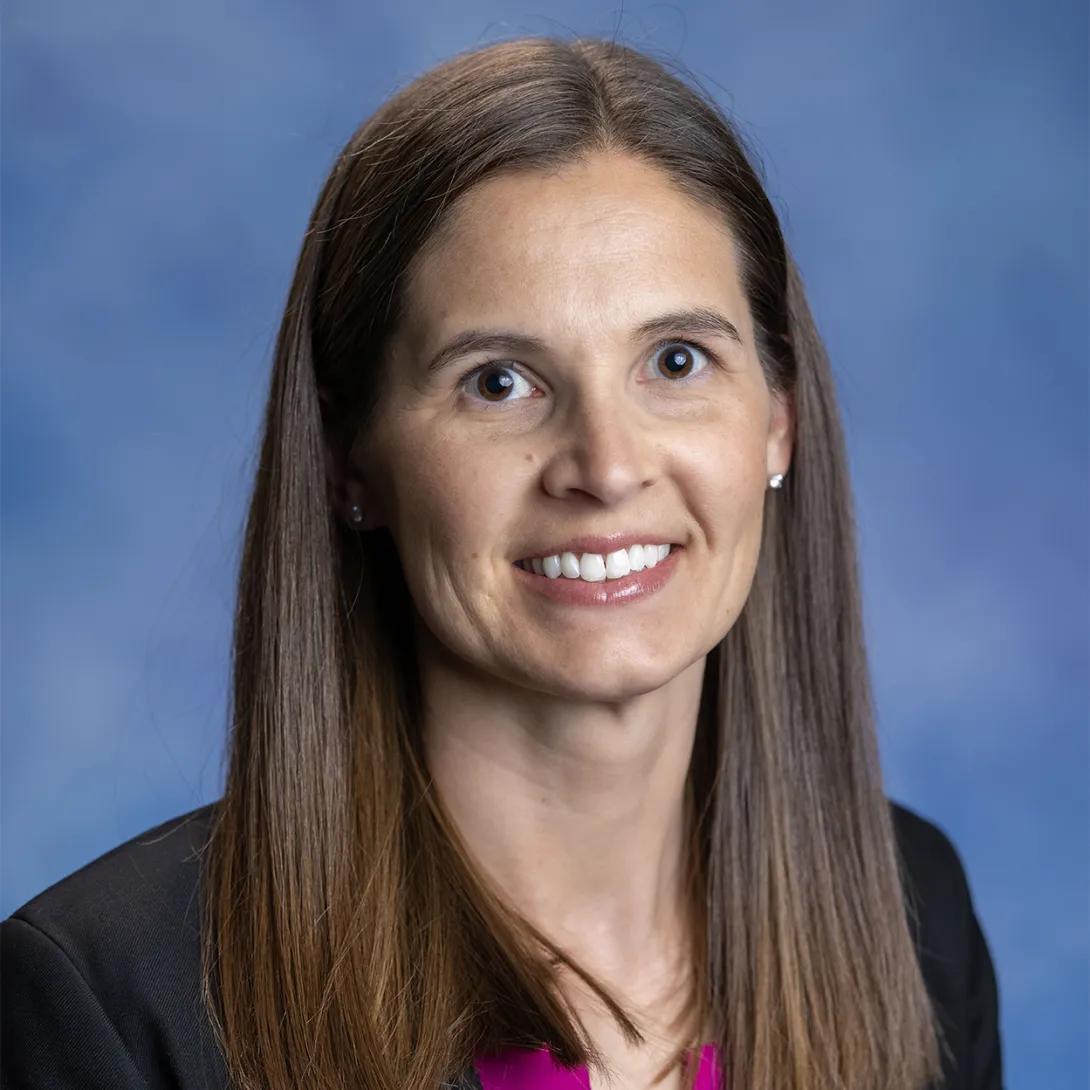
Allison DiBrano, AGACNP-BC
Allison is a key point of contact and works in collaboration with cardiac surgery, vascular surgery, and cardiovascular medicine leaders offering system-wide coordination of care for aortic disease patients at the Frankel Cardiovascular Center. She provides health care and specialized health services to patients evaluated for care within the FCVC. Her primary role is to evaluate, manage, and treat these patients under the direction of the MI-AORTA program's physician leaders.
Allison DiBrano, AGACNP-BC gradudated with her Bachelor of Science in Nursing from Eastern Michigan University, before graduating from Madonna University with her Master of Science in Nursing. Allison started her career as a registered nurse in the surgical progressive care unit and surgical intensive care unit at Saint Joseph Mercy Hospital for eight years. She then completed her Adult Gerontology Acute Care Nurse Practitioner certification and spend the following 9 years practicing with the VA Intensive Care Unit and Progressive Care Unit before joining the MI-AORTA team. Additionally, Allison is a part-time clinical lecturer at EMU School of Nursing.
Patient Stories
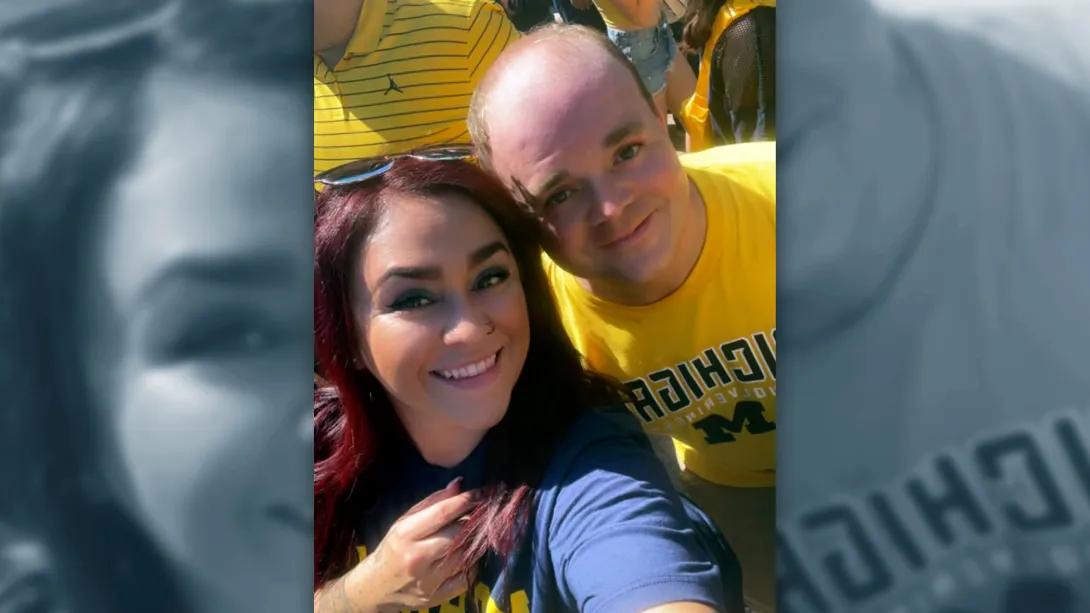
Getting ahead of aortic disease
This story was updated on Feb. 14, 2025.
Thomas Devereaux has known for years that Loeys-Dietz syndrome – a disorder affecting the connective tissue that supports the blood vessels, bones and joints – runs in his family.
He also knew that it was possible he carried the genetic variant that would put him at risk for life threatening disease.
His paternal aunt had surgery in 2014 to treat her inherited aortic disease and has firmly advocated over the years that extended family members should also get tested.
She feels knowledge is power when it comes to prevention.
But at the time, Devereaux was a 34-year-old physically active UPS driver from Saint Johns, Mich., who felt “just fine and healthy.”
So, he decided to forego genetic testing at the time.
Then Devereaux abruptly changed his mind last August when his uncle – who had also resisted getting tested – went to the hospital complaining of severe back pain.
Rushed into emergency open heart surgery, the uncle died suddenly of a ruptured aorta.
Time to step up
Now Devereaux knew it was time for him to get tested.
He called his aunt, a longtime patient of University of Michigan Health Frankel Cardiovascular Center’s thoracic surgeon George Deeb, M.D., to ask the name of the genetic counselor she sees at U-M.
That started a chain of events that would change the course of his life, and others in his extended family.
The aunt suggested he call Rajani Aatre, M.S., M.Sc., the genetic counselor for MI-AORTA, the Frankel CVC program that assists with genetic counseling and streamlines referrals for aortic disease within U-M Health system.
Aatre provides genetic testing and counseling for patients and works closely with MI-AORTA’s outreach referral liaison who coordinates all clinical testing and specialist referrals. (At the time of Devereaux’s referral, Kailey Chisolm, PA-C, oversaw this part of his care. Allison DiBrano, N.P., has since taken over that role within the MI-AORTA Program.)
Devereaux met with Aatre on September 18, 2023 for genetic testing and counseling. With a diagnosis of Loeys-Dietz soon confirmed, she referred him to Chisolm who saw her new patient four days later, and quickly set in motion the comprehensive testing and imaging studies that he needed: a computed tomography angiography, commonly known as a CTA, of the head, neck and the entire aorta – in the chest, abdomen, and pelvis – and an echocardiogram of his heart.
The extensive baseline imaging, Chisolm explains, allowed the medical team to look for any dilation or widening of the blood vessels, see how they’re shaped, and see any abnormal curving of the vessels called tortuosity.
“It’s a lot to process, and he was very understanding,” Chisolm said.
“It can be scary to be told you have Loeys-Dietz as well as undergo all this testing, and then see all these specialists.”
The scan showed an aortic root aneurysm, and Chisolm immediately referred Devereaux to Frankel CVC cardiac surgeon Bo Yang, M.D., for surgery, which he had in March, 2024.
Leading up to his surgery date, Devereaux continued to work delivering packages, even with a 35-pound weight restriction imposed by the MI-AORTA team.
Not surprisingly for a young man in otherwise good health, Devereaux came through the nine-hour surgery well, joking with his mother and sister that he felt like he’d only been under anesthesia for five minutes.
“My mom was a worried wreck and didn’t think my joke was funny,” he laughed.
In addition to the aneurysm, the imaging studies of his head and neck showed some dilation of the neck vessels so Chisolm arranged for him to see U-M Health neurovascular specialist Aditya Pandey, M.D.
Imaging found he had a left internal carotid artery aneurysm, which is now being monitored closely, with a follow up magnetic resonance angiography in February 2025.
Chisolm also referred Devereaux to Frankel CVC cardiologist Abbas Bitar, M.D., whose team will continue to follow his progress.
The goal of MI-AORTA is to facilitate fast and easy access for patients with aortic disease to U-M Health specialists in cardiology, vascular surgery and cardiac surgery.
As an intake provider, Chisolm sees patients within a week of referral, a process that could otherwise take months through a traditional referral process, she says.
“The whole process went as smooth as you could even ask for,” Devereaux said.
“From Rajani getting the genetic test and my results, and with Kailey helping me each step of the way, getting me set up with the right doctors and testing…It all went very smooth.”
Puzzle pieces falling into place
Since meeting Devereaux’s aunt in 2014, both Aatre and Chisolm have now met with five different branches of his family, across three generations.
Following their uncle’s untimely death, Thomas, his sister, brother, father, and the uncle’s children were all tested; all but Devereaux’s sister carry the variant, and Chisolm has been expediting coordination of their testing and care.
Two years ago a child presented to the Cardiac Genetics Clinic at C.S. Mott Children’s Hospital with a dilated aorta.
Aatre, who sees pediatric patients at Mott, connected with the child’s mother who gave her the name of a distant relative with heart disease.
It turns out the child was from another branch of the extended Devereaux family tree.
“It’s my role to look at the family and put together the pieces of the puzzle with the variant,” Aatre said. “Now we have a youngster who was already showing signs of it.”
“We have all these branches of the family with this variant. All were galvanized into getting tested when this child was detected and when Thomas’ uncle died,” she continued.
“The families are the ones who motivate us. When you find them and they’re all eager to know and take charge of their health, that’s why we do this.”
Taking charge
Devereaux advises others who know they have heart disease in their family to be proactive about their health and getting tested.
“You might feel like everything is fine, but you don’t always know what’s going on in your body,” he said.
“If I hadn’t gotten it looked at and kept doing the job I was doing, I could have gone back in the truck and picked up something and the aneurysm could have burst.”
Instead, Devereaux is recovering well, starting cardiac rehabilitation, and staying active.
At his one-month post-operative visit he and a friend took a three-mile hike in his favorite nearby parkland.
He’s also looking forward to getting back to work.
“Take control and make sure you can live your life to the fullest,” he said.
“If I didn’t take control and have this testing done, I’m only 34, I could have died before I was 40. You don’t know. But having the surgery done prolongs my life so I can get to retirement and enjoy the rest of it.”
Visit MI-AORTA for more information or to make an appointment or referral.
Sign up for Health Lab newsletters today. Get medical tips from top experts and learn about new scientific discoveries every week by subscribing to Health Lab’s two newsletters, Health & Wellness and Research & Innovation.
Sign up for the Health Lab Podcast: Add us on Spotify, Apple Podcasts or wherever you get you listen to your favorite shows.
