
Frankel IHBH News
Stay Connected
Featured Articles
Challenger Foundation Career Development Award advancing trailblazing research in women’s heart health
Innovative Multidisciplinary Research Pilot Award FY 25 Recipients
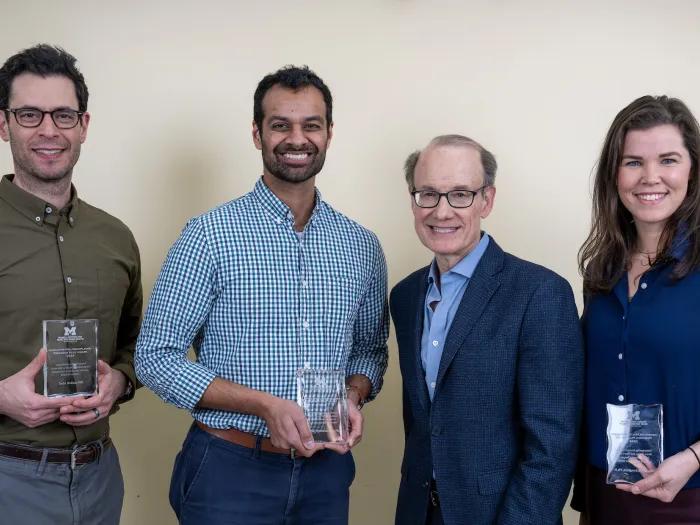
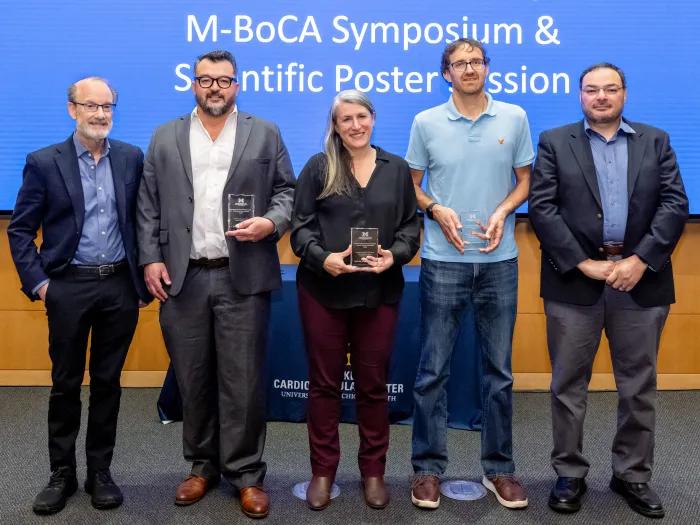
The Stanley and Judith Frankel Institute for Heart and Brain Health and the Michigan-Biology of Cardiac Aging (M-BoCA) program of the Frankel Cardiovascular Center, are delighted to announce that the recipients of this year's Innovative Multidisciplinary Research Pilot Award are:
- Andre Monteiro Da Rocha, Ph.D. (Internal Medicine – Cardiology) and Kenneth Cadigan, Ph.D. (Molecular, Cellular, and Developmental Biology) for their proposal: “Wnt and aging-associated diastolic dysfunction”
- Matthias Truttmann, Ph.D. (Molecular and Integrative Physiology) and Andrea Thompson, MD, Ph.D. (Internal Medicine – Cardiology) for their proposal: “Novel FICD inhibitors to improve cardiomyocyte and motor neuron proteostasis”
“We are particularly excited to see these partnerships between investigators, as they represent exactly the kind of collaborative, cross-disciplinary work that will advance our understanding of brain and cardiac aging,” said Dr. Ahmed Abdel-Latif, Director of M-BoCA. “We remain deeply committed to supporting early-career investigators and novel research directions in the biology of aging. These awards reflect our conviction that breakthrough discoveries often emerge from bold ideas and unexpected collaborations. We look forward to seeing how these projects develop and contribute to our understanding of heart and brain health."
The Innovative Multidisciplinary Research Pilot Award provides $100,000 annually for two years to support highly innovative research with the potential to substantively impact heart and brain health.
The objective of this pilot funding is to support projects that may be too innovative and speculative for traditional funding sources but still have a likelihood of producing impact findings. Aimed at encouraging compelling proposals across the full spectrum of our programmatic disciplines in support of innovative and impactful heart & brain research projects. We hope to support increased collaboration between experienced and new researchers to foster mentorship opportunities and knowledge exchange.
Dr. Anthony Rosenzweig, Director of the Frankel IHBH commented, “It was a pleasure to partner with Dr. Abdel-Latif and the M-BOCA program of the Frankel Cardiovascular Center on these awards, which recognize the crucial role of aging in heart and brain disease. We are delighted to help support these innovative proposals and look forward to learning more as their science evolves.”
We will launch the Frankel IHBH Multidisciplinary Pilot Award FY 26 call for applications in June 2025.
Please contact our team with any questions or for additional information.
2024 Frankel IHBH Innovative Multidisciplinary Research Pilot Award Recipients
We are delighted to announce the recipients of this year's Innovative Multidisciplinary Research Pilot Award are:
Sharan Srinivasan; MD, Ph.D. and Hayley McLoughlin; Ph.D. for their proposal, "Investigating Exercise-Induced Motor Rescue and Heart-Brain Transcriptomic Changes in SCA1 and SCA3 Mouse Models”
- Todd Hollon; MD and Honglak Lee; Ph.D. for their project, “HeartMind: A Multi-modal Generalist AI Model for Heart-Brain Connection Analysis and Adverse Event Prediction"
The Innovative Multidisciplinary Research Pilot Award provides $100,000 annually for two years to support highly innovative research with the potential to substantively impact heart and brain health.
Dr. Anthony Rosenzweig, Director of Frankel IHBH, commented, “We received a large number of highly qualified applications and are grateful both to all who submitted proposals and to the reviewers who took on the challenging task of choosing among them. We’re thrilled that the selected projects represent exciting new research directions being led by early career investigators.” He added, “There will be more funding opportunities in the future, so we hope interested members of the community will consider applying for these as well.” Review Committee members included: Dr. Sami Barmada, Dr. Eugene Chen, Dr. Anne Draelos, Dr. Carol Elias, Dr. Michelle Hastings, Dr. Richard Mortensen, and Dr. Geoff Murphy.
The objective of this pilot funding is to support projects that may be too innovative and speculative for traditional funding sources but still have a likelihood of producing impact findings. Aimed at encouraging compelling proposals across the full spectrum of our programmatic disciplines in support of innovative and impactful heart & brain research projects. We hope to support increased collaboration between experienced and new researchers to foster mentorship opportunities and knowledge exchange.
We will launch the Frankel IHBH Multidisciplinary Pilot Award FY25 call for applications in June 2024!
Please contact our team with any questions or for additional information.
American Heart Association SFRN Spring Meeting hosted at the University of Michigan
On behalf of Dr. Rosenzweig (U-M/MGH/Oakland Inflammation SFRN Center), thank you to everyone who made the Spring AHA SFRN on Inflammation meeting at the University of Michigan a success! We hope everyone enjoyed Ann Arbor and left inspired by the talks, posters, and discussions. It was exciting to see investigators and trainees connect, and we look forward to continuing these conversations in the future. We’re grateful to the American Heart Association for supporting the outstanding science and collaboration emerging from this Network.
Frankel IHBH Inaugural Speaker Series
On May 12, 2026, the Frankel IHBH hosted its Inaugural Speaker Series featuring Filip Swirski, PhD, from Mount Sinai. Dr. Swirski, is the Arthur and Janet C. Ross Professor of Medicine (Cardiology) and Director of the Cardiovascular Research Institute at Mount Sinai, where he also holds appointments in Radiology, Precision Immunology, and Biomedical Engineering. Internationally recognized for his work on innate immunity and inflammation in disease, Dr. Swirski researches cardiovascular science with a focus on cell interactions and the roles of sleep, diet, and stress in heart health.
Dr. Swirski presented his talk “A cholesterol handling macrophage circuit that modulates cardiometabolic disease” along with a story about heart-brain connections.
Thank you to everyone who attended, we look forward to hosting our second Speaker Series spring 2027!
Featured Publications
Sensory-neuron-derived CGRPα controls white adipocyte differentiation and tissue plasticity | Cell Reports | Dr. Ruas
Our bodies rely on a constant conversation between the brain and fat tissue to regulate energy balance. Part of this dialogue happens through nerves that run into adipose tissue: Sensory nerves send information to the brain and sympathetic nerves tell fat cells when to burn energy or release stored lipids. However, when activated, sensory nerves also release signaling molecules locally in the fat tissue. In this study, we discovered that one of these sensory-nerve molecules, CGRPα, plays a surprising role in shaping how white fat cells (adipocytes) develop. CGRPα prevents white preadipocytes from maturing, without affecting brown fat cells, which are specialized in heat production.
In mice exposed to cold, when fat normally forms many small cells to boost thermogenic capacity, CGRPα instead pushes the tissue toward larger fat cells. Even more striking, people taking anti-CGRPα migraine medications show weight loss and improved blood sugar, while matched individuals not on these drugs tend to gain weight during the examined period.
Together, these findings reveal a previously unknown communication pathway in which sensory nerves influence how white fat grows and functions—offering new insights into how the nervous system shapes metabolism and potentially pointing toward new strategies for treating obesity and metabolic disease.
Cardiac adaptation to endurance exercise training requires suppression of GDF15 via PGC-1α. | Nature Cardiovascular Research | Dr. Rosenzweig

Listen to the audio overview here
Exercise-Induced Cardiac Lymphatic Remodeling Mitigates Inflammation in the Aging Heart | Aging Cell | Dr. Rosenzweig
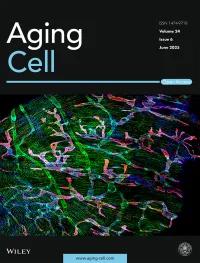
With the featured article in Aging Cell Dr. Rosenzweig and his collaborators examine the impact of age on the structure and function of cardiac lymphatics – the blood vessels that drain interstitial fluid from the heart – and demonstrate that exercise mitigates many of the effects of aging in these vessels.