
MIITT Careers
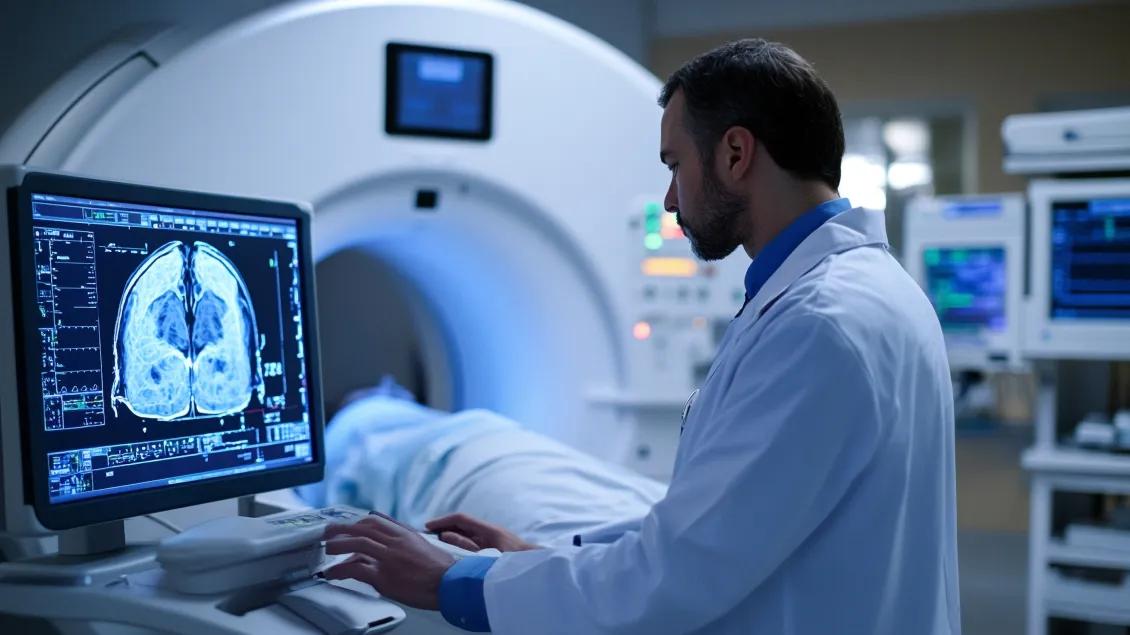
Research Opportunities
Research positions are open in the Michigan Institute for Imaging Technology and Translation (MIITT) in the Department of Radiology at the University of Michigan in Ann Arbor, Michigan, USA.
We welcome all scientists who share our passion in medical imaging; faculty from multiple departments in both medicine and engineering share MIITT affiliations as associated faculty. MIITT also supports education and training opportunities for our learners which include undergraduates, master’s and PhD students, medical students, postdoctoral fellows, and clinical fellows who undertake research projects in conjunction with our primary faculty members. These projects involve both engineering/science and clinical application which drive new technology towards clinical translation and improved patient care, the overarching goals of MIITT research.
Contact our faculty to learn more about joining the team!
We are currently looking for undergraduate, graduate, and postdoctoral researchers (both technical and clinical) to work on several projects.
MIITT Positions
MIITT is seeking graduate students and/or postdoctoral research fellows to develop 3D motion-resolved Magnetic Resonance Fingerprinting (MRF) techniques, which will allow for simultaneous imaging of structure, function, and tissue properties (e.g., T1/T2 relaxation properties) over the entire heart from a rapid all-in-one scan. This work will build our existing 2D cine MRF implementation by 1) extending this technique to 3D whole-heart imaging, 2) developing motion self-navigation techniques to allow the scan to be performed without breathholds or electrocardiogram gating.
This project aims to enable an objective and reproducible diagnosis of cardiomyopathy based on quantitative MRF data, which would allow patients to receive timely treatment targeted to a specific cardiomyopathy subtype.
Helpful skills for this project include the ability to program MRI pulse sequences in Siemens IDEA, develop algorithms for detecting/correcting respiratory and cardiac motion in MRI data, develop MRI reconstruction algorithms, and program in MATLAB and/or Python. Promising candidates who do not yet possess these skills will be mentored and expected to learn them during the project. This work is in collaboration with University Hospitals Cleveland Medical Center (UHCMC), and the applicant will be expected to interface regularly with cardiologists.
Contact Jesse Hamilton for more details ([email protected])
MIITT is seeking graduate students and/or postdoctoral research fellows to develop 3D high-resolution Magnetic Resonance Fingerprinting (MRF) techniques, which will enable a quantitative and automatic prostate cancer detection.
This work will build our existing 2D and 3D MRF implementations by combining this technique with a multi-dimensional radio frequency encoding and spatial encoding strategies.
Helpful skills would include the basic knowledge of MRI, the ability to perform MRI scans, optimize data acquisition trajectories, program pulse sequences in Siemens IDEA, develop and apply image reconstruction algorithms, and program in MATLAB and/or Python. Promising candidates who do not yet possess these skills will be mentored and expected to learn them during the project. The applicant will be expected to interface regularly with urologists and radiologists.
MIITT is seeking graduate students and/or postdoctoral research fellows to develop novel acquisition and reconstruction solutions for low-field cardiac MRI.
The goal of this project is to develop rapid and user-friendly imaging techniques for evaluating heart structure, function, and tissue characteristics that can be deployed on low-cost 0.55T scanners, which have the potential to expand access to cardiac MRI worldwide. This project will involve the design of rapid data collection strategies tailored for low-field scanners, and the development of AI-enabled image reconstruction methods to counter the inherently low signal-to-noise encountered at 0.55T.
Current research areas include real-time cine imaging, phase contrast flow imaging, and relaxometry using MR Fingerprinting.
Helpful skills include the ability to program MRI pulse sequences in Siemens IDEA; experience with deep learning and neural networks using TensorFlow, PyTorch, or a similar language; proficiency in programming in MATLAB and/or Python; design optimized non-Cartesian MRI sampling trajectories; developing deep learning MRI reconstructions; and interface with cardiologists and radiologists.
Promising candidates who do not yet possess these skills will be mentored and expected to learn them during the project.
MIITT is seeking graduate students and/or post-doctoral researchers to explore novel breast MRI techniques. This project would build on our existing technologies, including Magnetic Resonance Fingerprinting, but could move in directions, including compressed sensing and/or machine learning, depending on the candidate's interests.
Helpful skills include the ability to perform MRI scans, optimize data acquisition trajectories, program pulse sequences in IDEA, develop and apply image reconstruction algorithms, implement methods for platforms like BART and/or Gadgetron, and interface with radiologists.
Promising candidates who do not yet possess these skills will be mentored and expected to learn them during this project.
Contact Nicole Seiberlich for more details ([email protected])
MIITT is seeking undergraduates, graduate students and/or post-doctoral researchers to develop novel pulse sequences to provide unique tissue contrasts in MR images. This primarily computational project would allow the researcher to learn about MRI physics while developing new types of MRI data acquisition strategies. This project would build on our existing Magnetic Resonance Fingerprinting technologies but could move in directions, including machine learning, depending on the candidate's interests.
Helpful skills would include the ability to program in Matlab and a desire to learn more about MRI pulse sequences.
Promising candidates who do not yet possess these skills will be mentored and expected to learn them during this project.
Contact Nicole Seiberlich for more details ([email protected])
MIITT is seeking graduate students and/or post-doctoral researchers to explore the application of MRI in the lung.
The goal of this project is to interface with lung researchers and pulmonologists to implement existing lung MRI techniques and develop methods where existing approaches may be lacking. Development will be performed in conjunction with other researchers at MIITT. While we anticipate that our 0.55T Free.Max system would be used for this project; we also have both a 1.5T and a 3T system available should the candidate seek to work at a higher field strength.
Helpful skills include the ability to discuss lung physiology, interface with lung imaging researchers, radiologists, and pulmonologists, perform MRI scans in the lung, program pulse sequences in IDEA, and develop and apply image reconstruction algorithms.
Promising candidates who do not yet possess these skills will be mentored and expected to learn them during this project.
Contact Nicole Seiberlich for more details ([email protected])
MIITT is seeking graduate students and/or post-doctoral researchers to develop novel pulse sequences and reconstruction algorithms to assess the effects of Magnetization Transfer on other quantitative measurements and measure MT itself in the brain and other organs. This project would build on our existing technologies using Magnetic Resonance Fingerprinting but could move in directions, including compressed sensing and/or machine learning, depending on the candidate's interests.
Helpful skills include the ability to model the effects of MT, perform MRI scans in the brain, optimize data acquisition trajectories, program pulse sequences in IDEA, and develop and apply image reconstruction algorithms.
Promising candidates who do not yet possess these skills will be mentored and expected to learn them during this project.
Contact Nicole Seiberlich for more details ([email protected])
MIITT is seeking graduate students, post-doctoral researchers, and/or clinical researchers to explore the use of our new 0.55T Free.Max MRI system. Projects in this area are broad, ranging from assessing images from standard clinical protocols run on the 0.55T to developing novel acquisition and reconstruction strategies on this magnet.
MIITT faculty are also open to other projects which specifically make use of lower-field systems.
Helpful skills would be the ability to work with technologists, radiologists, and our industrial partner (Siemens Healthineers).
Contact Nicole Seiberlich for more details ([email protected])
MIITT is seeking graduate students and/or post-doctoral researchers to develop novel pulse sequences and reconstruction algorithms for quantitative abdominal MRI.
The goal of this project is to develop, implement, and translate robust methods for 3D free-breathing abdominal imaging, with a focus on the collection of quantitative information. This project would build on our existing technologies using Magnetic Resonance Fingerprinting and non-Cartesian parallel imaging approaches, but could move in directions including compressed sensing and/or machine learning, depending on the candidate's interests.
Helpful skills would include the ability to perform MRI scans, optimize data acquisition trajectories, program pulse sequences in IDEA, develop and apply image reconstruction algorithms, develop approaches for free-breathing 3D acquisitions using PilotTone and/or self-gating signals, and interface with abdominal radiologists. Promising candidates who do not yet possess these skills will be mentored and expected to learn them during this project.
Contact Nicole Seiberlich for more details ([email protected])
MIITT is seeking graduate students and/or post-doctoral researchers to develop novel pulse sequences and reconstruction algorithms for real-time cardiac imaging.
The goal of this project would build on our existing technologies for real-time acquisitions and reconstructions based on non-Cartesian parallel imaging, but could move in directions including compressed sensing and/or machine learning depending on the interests of the candidate.
Helpful skills would include the ability to perform cardiac MRI scans, optimize data acquisition trajectories, program pulse sequences in IDEA, develop and apply image reconstruction algorithms, implement methods for platforms like BART and/or Gadgetron, and interface with cardiologists and radiologists. Promising candidates who do not yet possess these skills will be mentored and expected to learn them during this project.
Contact Nicole Seiberlich for more details ([email protected])
