
Arthroscopic Rotator Cuff (ARC)

ARC Study
Purpose of this study
The ARC study is a randomized clinical trial comparing operative and non-operative treatment for rotator cuff tears that develop over time, funded by the Patient-Centered Outcomes Research Institute (PCORI, PCS-1605-35413-IC2).
Rotator cuff tears are one of the most common causes of shoulder pain in adults in the United States, accounting for 10.7 million outpatient doctor visits in 2013. Specifically, it is estimated that 65-70% of adults with shoulder pain have an underlying rotator cuff disorder. Rotator cuff injuries are common due to their degenerative nature, meaning that they occur slowly over time as a person ages, often without a distinct injury. These kinds of tears are classified as atraumatic.
The two standard treatments for atraumatic rotator cuff tears are non-operative (physical therapy alone) and operative (surgery followed by physical therapy). The percentage of rotator cuff patients treated with surgery rose from 33.8% to 40.4% from 2005 to 2012, showing an increasing tendency to treat with surgery. It is not clear, however, if this trend has resulted in more successful outcomes for patients. The purpose of the ARC Trial is to help answer this question. We are also studying whether size of tear and age influence which treatment works best. This trial is different from previous observational studies because patients are randomly assigned to a treatment group, which will allow us to better measure the differences between these two treatments without any biases. We believe this study will help patients and providers to make better and more informed decisions in the future.
Study Characteristics
Enrollment for the study was completed in December, 2023. The study includes 187 participants from 19 sites across the country. Nearly 15,000 individuals were screened for the study and, of that number, 2069 were eligible.
- 187 participants randomized to operative or nonoperative treatment
- 99 (52.9%) randomized to operative treatment (surgery)
- 88 (47.1%) randomized to non-operative treatment (physical therapy)
- 60.4 % female, 39.57% male
- 73.8% White, 18.7% Black/ African American, 2.7% American Native, 1.1% Asian,
1.6% more than one race, 2.1% Unknown - Follow-up rates
- 90.9% 3 months
- 87.0% 6 months
- 86.4% 12 months
- 88.1% Overall - Tear size representation:
- 52.9% Less than 2 cm
- 47.1% Greater than or equal to 2 cm - Age representation:
- Average age 62.7 years, range 40-84 years at enrollment
- 57.8 % Less than 65 years old at enrollment
- 42.3 % Greater than or equal to 65 at enrollment
ARC Trial Participating Sites














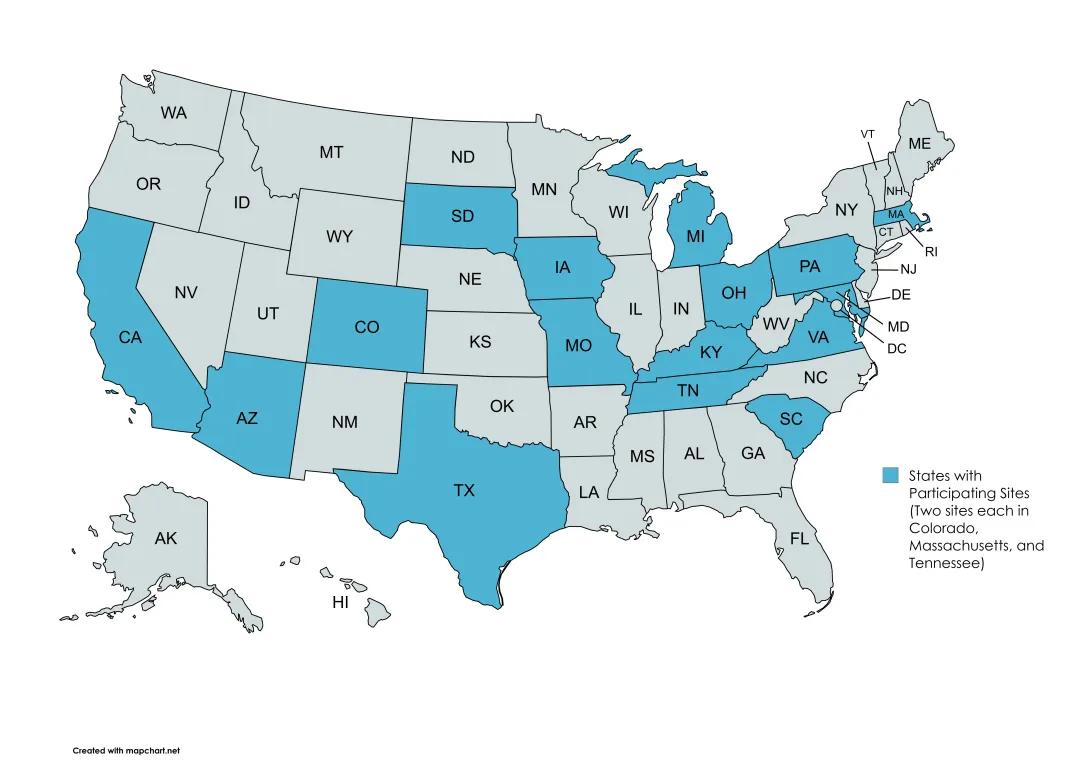
States with Participating Sites include: Arizona, California, Colorado (2 sites), Iowa, Kentucky, Maryland, Massachusetts (2 sites), Michigan, Missouri, Ohio, Pennsylvania, South Carolina, South Dakota, Tennessee (2 sites), Texas and Virginia.
