
More articles about: Alzheimer's Disease

Health Lab
Opinion: Hospice care for those with dementia falls far short of meeting people’s needs at the end of life
An end-of-life care specialist discusses the shortfalls of hospice care coverage for people with dementia, using the experience of former President Jimmy Carter and former First Lady Rosalynn Carter as examples.

Health Lab
Research needed on support for nontraditional caregivers providing care for people with Alzheimer’s disease, dementias
A growing number of people living with Alzheimer’s disease and related dementias – especially those from diverse backgrounds – receive care from a network of individuals that increasingly includes nontraditional informal caregivers.
Minding Memory
Identifying Dementia from EHR Data
In 2009, the Health Information Technology for Economic and Clinical Health Act, wow, that's a mouthful, more commonly known as the HITECH Act, spent billions to promote the uptake of electronic health records by US hospitals. Fast forward more than a decade later, and now approximately four out of five healthcare institutions have electronic health record systems in place that integrate clinical notes, test results, medications, diagnostic images, et cetera. The adoption of EHR systems into healthcare introduces new and exciting opportunities to extract information that can be used to augment other types of data for research. As you might imagine though, it can be tricky to pull out meaningful information from the text of clinical notes. In this episode, we'll speak with a University of Michigan researcher, Dr. Vinod Vydiswaran, who's been developing methods to identify dementia from EHR data.

Health Lab
Dementia’s financial and family impact
Dementia has far more impact on a person’s finances and their family members’ caregiving demands, compared with other health conditions in older adults, study suggests.
Minding Memory
Lecanemab: Breakthrough Alzheimer’s Disease Medication Déjà vu
In this episode of Minding Memory, we dive into the newest FDA-approved drug to treat Alzheimer’s – Lecanemab – with Ohio State University stroke neurologist Jim Burke. Dr. Burke discusses the benefits and drawbacks of the new Alzheimer’s drug and also the paradigm shift of how people (clinicians, patients, and the general population) are thinking about these news Alzheimer’s medications.

Health Lab
Can AI help hospitals spot patients in need of extra non-medical assistance?
Needs related to housing, transportation, food, social support and more can be identified through AI/ML techniques

Health Lab
Study shows dementia more common in older adults with vision issues
A link between vision issues in older adults and an increased likelihood of dementia.
Health Lab
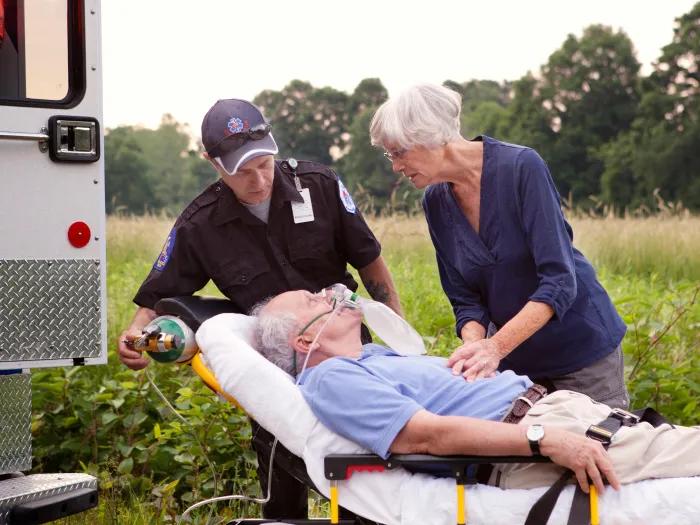
Dementia becomes an emergency 1.4 million times a year
People with Alzheimer’s and other forms of dementia account for a large percentage of emergency visits by older adults, but some of those crises could be prevented.
Health Lab
Majority of older adults with cognitive impairment still drive
The majority of older adults with cognitive impairment are still driving, despite concerns raised by caregivers and others, a Michigan Medicine study in a South Texas community finds.
Health Lab
What you can do now to prevent Alzheimer’s disease
Three experts share knowledge on Alzheimer’s prevention, treatment and research
Health Lab
When pills and talk therapy aren’t enough, these options may help
Interventional psychiatric care involving brain stimulation and infused or inhaled medicine can offer different options for patients.
Minding Memory
Genetic Testing for Alzheimer’s Disease
In this episode, Matt & Donovan speak with University of Michigan School of Public Health Professor, Dr. J. Scott Roberts, who investigates the psychological and behavioral impact of genetic risk disclosure for Alzheimer's disease.
In addition to being a professor in the Health Behavior & Health Education department at the School of Public Health, Dr. Roberts is also a core lead of the Michigan Alzheimer’s Disease Center. Dr. Roberts’s research interests focus on the process and impact of risk assessment and disclosure for adult-onset disorders, as well as the ethical, legal, and social implications of advances in genomic science & technology.

Health Lab
High fat diet activates early inflammation in mouse brains, supports link to neurologic disease
The findings may support the immune pathway as a bridge between diet and neurologic disease
Minding Memory
Personality Type and Cognitive Resilience
In this episode we discuss what’s known about the association between personality type and cognitive function. Further, the idea of resilience—or what protects the cognition of individuals with a high level of neuropathology associated with cognitive decline—might have important implications for dementia prevention. Our guests are Dr. Eileen Graham and Dr. Dan Mroczek. Drs. Graham and Mroczek are both faculty at Northwestern University with interests in how personality factors influence physical and cognitive health over the life course.
Minding Memory
Dementia as a Cause of Death
Causes of death were reclassified by the CDC to include contributing factors such as dementia. These changes resulted in dementia jumping up from the 8th cause of death in 2000 to the 6th cause of death in 2018 (and the 5th cause of death among older adults). In this episode we’ll talk with Dr. Bryan James from Rush University about dementia as a cause of death (versus contributing factor).
