
More articles about: Alzheimer's Disease

Minding Memory
The Study Most Often Cited in the First Sentence of Dementia Research Papers
If you’re new to dementia research, you’ll soon come to find that most research papers on dementia start off something like this: “In the United States there are 5.8 million individuals living with dementia and this is expected to increase to 13 million by 2015. . . .” In this episode we discuss the study on dementia prevalence that has been cited thousands of times with one of the authors. Dr. Jennifer Weuve from Boston University joins us today. We also talk more broadly about what makes a research paper highly citable in general.
Minding Memory
What is it Like to be a Caregiver for a Person Living with Dementia?
In our last episode we talked about caregivers for individuals living with dementia. In this second part of our series on caregivers we’ll get to know someone with lived experience. We’re joined in this episode by Peggy Arden whose husband has Alzheimer’s disease. Peggy has graciously agreed to offer us a behind the scenes look at the ups and downs of being a dementia caregiver.
Minding Memory
Donovan Takes the Telephone Interview for Cognitive Status
One of the richest data sources available to study cognition and aging is the Health and Retirement Study (HRS). This nationally representative survey includes questions to help assess cognition, but many researchers may use this data without actually knowing the questions behind the variables—don’t be That Guy! (or Gal!) Listen to Dr. Lindsay Ryan, an HRS team member, coach Matt as he administers the Telephone Interview for Cognitive Status (TICS) to Donovan, who is surprisingly good at recalling types of birds.
Minding Memory
Drugs and Dementia: The Good, the Bad, and the Ugly
While there are some FDA-approved medications for dementia, more individuals living with dementia are actually prescribed psychotropic medications. In this episode, Donovan introduces Matt to the concept of the behavioral and psychological symptoms of dementia, which are just as much part of dementia as the memory loss—and are probably a big reason for all this other prescribing.
Minding Memory
What are the Implications of the Approval of Aduhelm (Aducanumab) to the US Healthcare System?
In this episode we continue our discussion of the implications of the approval of Aducanumab. Our guest this week is Professor Nicholas Bagley. Prof. Bagley is a professor of law at the University of Michigan Law School and a contributing writer to the Atlantic. Recently he wrote an article titled “The Drug that Could Break American Health Care” that discusses some of the broader (unintended) consequences of the approval of Aducanumab. In this episode we discuss some of the broader cost implications of the new drug.
Minding Memory
Could the FDA’s Approval of a New Drug to Treat Alzheimer’s Disease do More Harm than Good?
Aducanumab is a new drug designed to remove amyloid in the brain. Following an accelerated process, the Food and Drug Administration approved Aducanumab as a treatment for Alzheimer’s disease despite (what many experts feel) little evidence of effectiveness. In this episode we discuss the approval of Aducanumab with Dr. Jason Karlawish from the University of Pennsylvania and talk about what it could mean for drug discovery going forward.
Minding Memory
Introduction to the Minding Memory Podcast
In this episode we introduce ourselves and provide an overview of the Minding Memory Podcast. This podcast is supported by the Center to Accelerate Population Research in Alzheimer’s (CAPRA) at the University of Michigan. Our guest this week is Dr. Julie Bynum. Julie is the director of CAPRA and we talk briefly about what the NIH-funded research center is and how to get involved.
Health Lab
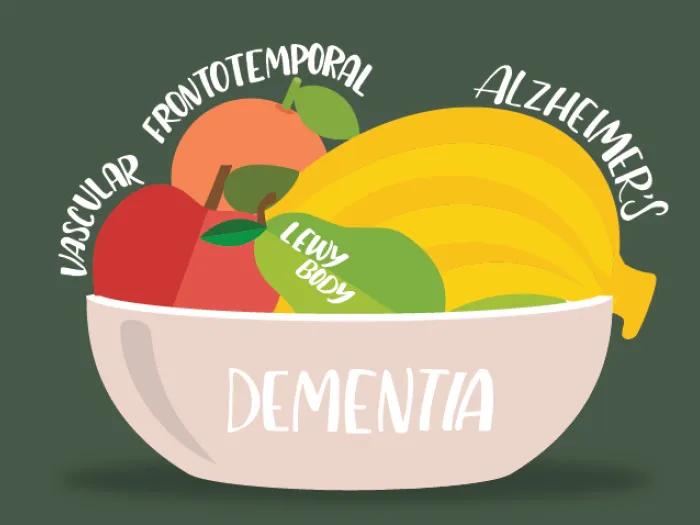
Alzheimer’s Disease vs. Dementia: What’s the Difference?
What's the difference between dementia and Alzheimer's disease? Discover key differences between two from the Michigan Alzheimer's Disease Center.

Health Lab
Capgras Syndrome in Dementia: Are You a Pretender or the 'Real Mary'?
Capgras Syndrome, or Imposter Syndrome, affects patients with demCapgras Syndromeentia, bipolar disorder, or schizophrenia. Here's help in managing Capgras Syndrome symptoms.
