Research Finds Possible Therapies to Target Oncogenic Transcription Factors in Multiple Cancer Types
A study from the University of Michigan Health Rogel Cancer Center furthers research that suggests the potential of developing new cancer treatments to target oncogenic transcription factors by indirectly affecting their ability to access enhancer DNA in chromatin.
Author |

The findings appear in Cancer Cell.
Led by Arul Chinnaiyan, M.D., Ph.D., S.P. Hicks Professor of Pathology and director of the Michigan Center for Translational Pathology at Michigan Medicine, the research builds on previous work to find genetic vulnerabilities to treat transcription factor-driven cancers like prostate cancer.
“These cancers have been challenging to target therapeutically because it’s hard to find drugs or small molecules that can bind to transcription factors. They lack a ‘druggable’ pocket,” Chinnaiyan explained.
“These findings will hopefully drive forward the clinical development of SWI/SNF degraders or inhibitors to treat transcription factor-driven cancers.”
Further, this research shows that principles Chinnaiyan and his team learned in prostate cancer may apply to other oncogenic transcription factor-driven cancers such as small cell lung cancer and multiple myeloma.
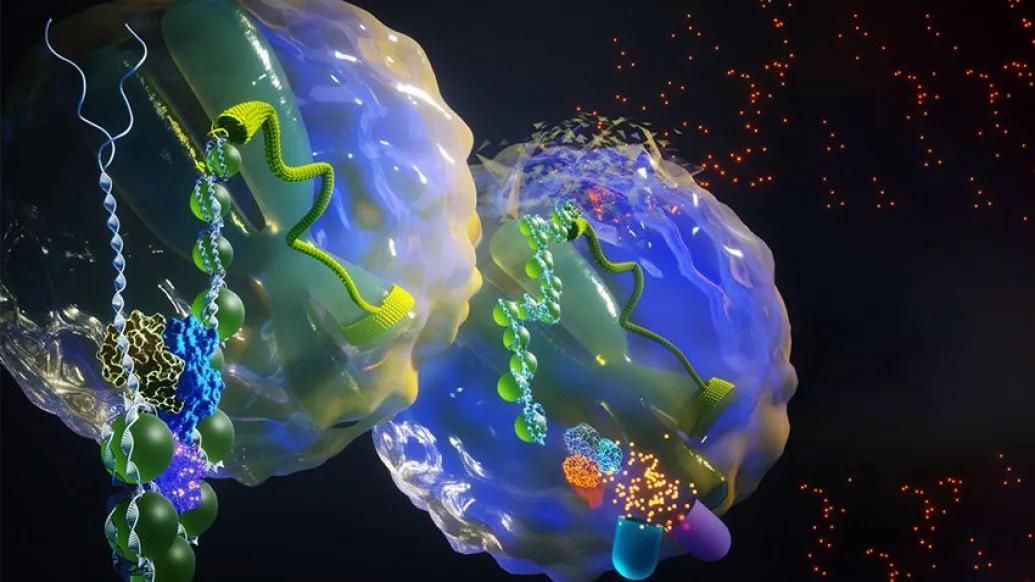
In previous work, Chinnaiyan’s team found that it’s possible to inhibit key components of nucleosomal remodeling factors of the SWI/SNF pathway by using PROTAC degrader molecules.
In disabling the pathway, oncogenic transcription factors can't access chromatin to bind to the enhancer elements in DNA that drive the overexpression of oncogenic gene programs.
Chinnaiyan previously presented this research at the American Association for Cancer Research 2024 Annual Meeting in San Diego, California.
Additional authors: Tongchen He, Lanbo Xiao, Yuanyuan Qiao, Olaf Klingbeil, Eleanor Young, Xiaoli S. Wu, Rahul Mannan, Somnath Mahapatra, Esther Redin, Hanbyul Cho, Yi Bao, Malathi Kandarpa, Jean Ching-Yi Tien, Xiaoju Wang, Sanjana Eyunni, Yang Zheng, NamHoon Kim, Heng Zheng, Siyu Hou, Fengyun Su, Stephanie J. Miner, Rohit Mehra, Xuhong Cao, Chandrasekhar Abbineni, Susanta Samajdar, Murali Ramachandra, Saravana M. Dhanasekaran, Moshe Talpaz, Abhijit Parolia, Charles M. Rudin, Christopher R. Vakoc
Funding: This work was funded primarily by the Trailsend Foundation with additional support from the Prostate Cancer Foundation (PCF), National Cancer Institute (NCI) Prostate Specialized Programs of Research Excellence (SPORE) Grant P50-CA186786, and an NCI Outstanding Investigator Award R35-CA231996 (A.M.C.). L.X. is a recipient of the 2022 PCF Young Investigator Award; he is also supported by a Department of Defense Prostate Cancer Research Program Idea Development Award (W81XWH-21-1-0500) and the Michigan SPORE Career Enhancement Program. Y.Q. is supported by a Department of Defense Prostate Cancer Research Program Idea Development Award (HT9425-23-1-0084). A.M.C. is a Howard Hughes Medical Institute Investigator, A. Alfred Taubman Scholar, and American Cancer Society Professor.
COI: A.M.C. serves on the clinical advisory board of Aurigene Oncology Limited. C.A., S.S., and M.R. are employees of Aurigene Oncology Limited. C.R.V. has received consulting fees from Flare Therapeutics, Roivant Sciences, and C4 Therapeutics; he has served on the advisory boards of KSQ Therapeutics, Syros Pharmaceuticals, and Treeline Biosciences. C.R.V. has also received research funding from Boehringer-Ingelheim and Treeline Biosciences and owns stock in Treeline Biosciences. Aurigene Oncology Limited has filed patent applications on AU-15330 and AU-24118. C.M.R. has consulted regarding oncology drug development with AbbVie, Amgen, Astra Zeneca, D2G, Daiichi Sankyo, Epizyme, Genentech/Roche, Ipsen, Jazz, Kowa, Lilly, Merck, and Syros. C.M.R. serves on the scientific advisory boards of Auron, Bridge Medicines, DISCO, Earli, and Harpoon Therapeutics.
Paper cited: “Targeting the mSWI/SNF complex in POU2F-POU2AF transcription factor-driven malignancies,” Cancer Cell. DOI: 10.1016/j.ccell.2024.06.006
This story originally appeared in Michigan Medicine's Health Lab, July 25, 2024, written by Anna Megdell
Featured News & Stories

Many hospitals still don’t do enough to prevent UTIs from catheters

BRCF Holiday Closures

Emily Kautz, M.A., nominated for inaugural Michigan Medicine award

How Bipolar Symptoms Unfold Differently in Women and Men

15 years of data will help uncover how flu spreads—and how to reduce its impact