About | CC-PBTC

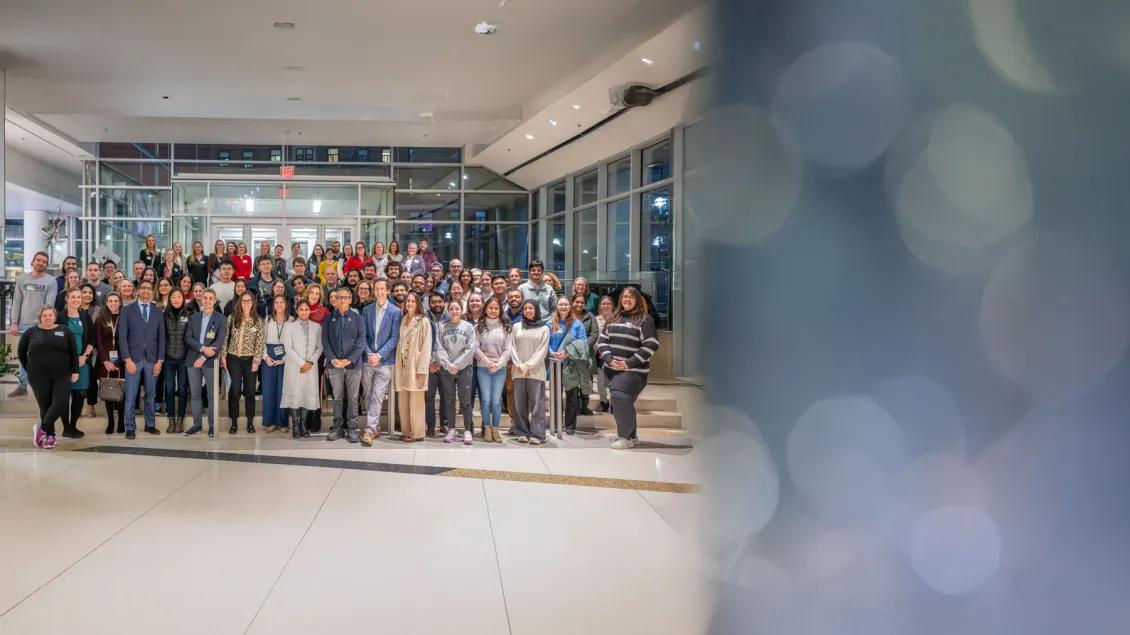
Pediatric Brain Tumor Team Group shot at holiday party

About Chad Carr Pediatric Brain Tumor Center

Led by the collaborative efforts of C.S. Mott Children’s Hospital, Rogel Cancer Center and more than 1,500 dedicated donors, the Chad Carr Pediatric Brain Tumor Center (CC-PBTC) was established at Michigan Medicine in 2018 to pool the diverse ideas and knowledge that can solve childhood brain cancers.

The center was launched under the leadership of Valerie Opipari, M.D., former chair of the Department of Pediatrics, and Karin Muraszko, M.D., former chair of the Department of Neurosurgery, and now is under the guidance of Donna Martin, M.D., Ph.D., chair of the Department of Pediatrics, and Eric Fearon, M.D., Ph.D., director of the Rogel Cancer Center.

The center brings together unmatched expertise from across the University of Michigan (U-M) Health departments of pediatrics, radiology, neurosurgery, radiation oncology, genetics, and pathology, and U-M schools of engineering and public health — as well as renowned international collaborators.

As a national center of excellence for pediatric brain cancer, the CC-PBTC has significantly expanded Michigan Medicine’s clinical and research capacity, delivering great promise in the search for cures.

We’re already on the cusp of breakthroughs. We are doing pivotal research on diffuse intrinsic pontine glioma (DIPG) and high-grade gliomas, closing gaps in understanding their causes and mechanisms. We are also working to develop innovative treatments for DIPG and other pediatric brain tumors.

Our efforts and progress are inspired by Chad Carr, the grandson of former U-M football coach Lloyd Carr. Chad was diagnosed with DIPG three days before his 4th birthday. He endured 30 rounds of chemotherapy and a clinical trial before dying of the inoperable brain tumor at the age of 5.

The incredible contributions from our community of generous and dedicated supporters are helping us lead the way in advancing the understanding of pediatric brain tumors, improving therapies and moving us closer to finding much-needed cures.

The time is now — and Michigan is the place — for conquering DIPG, gliomas and other pediatric brain tumors.
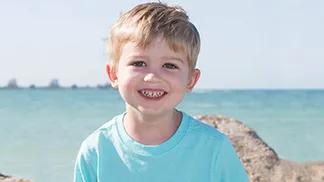
Chad Carr diagnosed with DIPG
In 2014, Chad Carr was diagnosed with DIPG three days before his 4th birthday. He endured 30 rounds of chemotherapy and a clinical trial before dying of an inoperable brain tumor at the age of 5.
Chad Carr Chad Carr
Chad Carr Movement Accelerating Childhood Brain Cancer Research
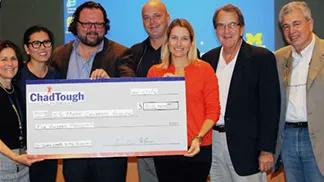
The ChadTough Foundation announces a $1.5 million gift over three years to C.S. Mott Children's Hospital as part of a collaborative effort to accelerate pediatric brain tumor research at the University of Michigan.
Gifts in Chad's memory will help our scientists to fight the deadly DIPG tumor.
Chad Carr Donation Chad Carr Donation
Chad Carr Pediatric Brain Tumor Center Launched
The Chad Carr Pediatric Brain Tumor Center was established in 2018 through the efforts of the Chad Carr family and a few dedicated volunteers who, along with U-M leadership, envisioned what it would take to make U-M a leader in the care, treatment and cure of pediatric brain tumors, especially DIPG
Chad Carr Pediatric Brain Tumor Center Logo Chad Carr Pediatric Brain Tumor Center Logo
University of Michigan joins the Pediatric Neuro-Oncology Consortium
In 2019, the University of Michigan - C.S. Mott Children's Hospital joined the Pediatric Neuro-Oncology Consortium (PNOC), as the only institution in the state of Michigan. PNOC is an international consortium with centers across the United States, Europe, Asia, and Australia. PNOC is dedicated to bringing new therapies to children and young adults with brain tumors.
Pediatric Neuro-Oncology Consortium Logo Pediatric Neuro-Oncology Consortium Logo Learn more about PNOC
Co-Directors Named
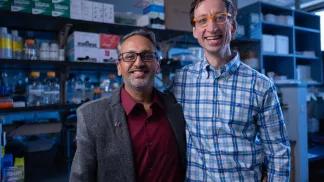
Sriram Vennetti, MD, PhD, and Carl Koschmann, MD, are named the Co-Directors for the Chad Carr Pediatric Brain Tumor Center.
Sriram Venneti and Carl Koschmann Sriram Venneti and Carl Koschmann
First Annual Research Workshop
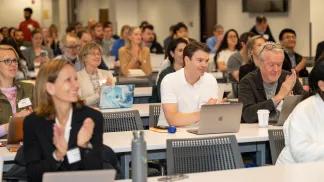
In partnership with the ChadTough Foundation, we hosted the inaugural International DIPG/DMG Conference, welcoming over 100 experts and advocates from around the globe. This landmark event provided a dedicated forum for DIPG/DMG researchers to collaborate and share insights.
Conference attendees clapping Conference attendees clapping
First CAR-T for CNS tumor in Midwest
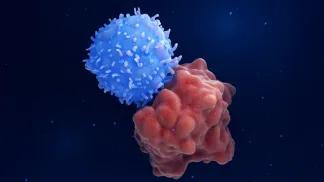
The standard treatment for most cancers is chemotherapy and surgery. However, for tumors in the brain and spinal cord treatments can be challenging. These tumors are often difficult to access through surgery due to their location and can be very aggressive. Unfortunately, there are limited therapy options for patients with inoperable tumors. The development of chimeric antigen receptor T cells is a promising new type of cancer therapy. CAR T treatment helps the patient’s own body and immune system to target the tumor.
Article: Phase I trials target aggressive tumors in children
Illustration of engineered receptors on the surface of a T cell binding specifically to molecules on a leukemia cell. Getty Images Illustration of engineered receptors on the surface of a T cell binding specifically to molecules on a leukemia cell. Getty Images
FDA clears new DMG treatment
There’s new hope in the fight against DMG, as the Food and Drug Administration approved ONC201 (dordaviprone) to treat recurrent H3K27M-mutant diffuse glioma, which occurs in pediatric patients.
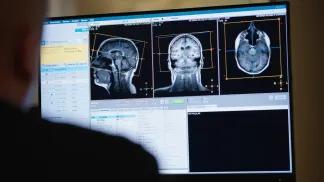
MRI scans of a patient with DIPG. Credit: Erica Bass MRI scans of a patient with DIPG. Credit: Erica Bass Expert answers questions about ONC201, the first FDA-approved therapy for diffuse midline glioma
Strengthening Pediatric Brain Tumor Research
As of 2025, U-M has grown to 80 researchers focused on pediatric brain tumors and 5 dedicated pediatric neuro-oncologists. Nearly a decade ago, there were only 4 researchers and 2 neuro-oncologists.
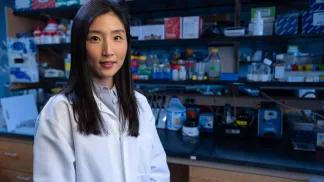
Jouha Min, Assistant Professor Jouha Min, Assistant Professor

Current Faculty Openings

Explore opportunities to join our research faculty.

Explore more