
Living with Bipolar Disorder

Understanding bipolar disorder requires studying the lives, experiences, treatments, and outcomes of those affected.
Bipolar disorder is a condition with strong mood swings, ranging from mania (uncontrolled energy) to deep depression. These symptoms of bipolar disorder are often severe and much different from the normal ups and downs of daily life.
Bipolar disorder affects all types of people from different cultural, economic, and social backgrounds. Although most people are diagnosed by early adulthood, it can affect people of all ages.
Many people don’t get formally diagnosed with bipolar disorder until 8-10 years after their symptoms first start. Because symptoms of bipolar disorder can look similar to other mental health disorders, it’s important for healthcare providers to look at an individual’s symptoms over time to make an accurate diagnosis.
Bipolar disorder is not easy to diagnose. Some people have bipolar disorder for years before the illness is diagnosed. A doctor needs to diagnose you with bipolar disorder by evaluating the nature and severity of your symptoms to determine, based on clinical experience and judgement, if you reach the threshold for a clinical disorder. The current manual that doctors use to diagnose and classify mental disorders (DSM-5) highlights the importance of energy change in making a formal diagnosis. People with bipolar disorder experience episodes of extremely low moods that meet the criteria for major depression as well as extremely high moods (mania). It is unwise to try to diagnose yourself based on the presence or absence of a “list” of symptoms. If you are concerned that you may have symptoms suggestive of bipolar disorder, you should talk with a doctor.
Bipolar disorder takes many forms, and its symptoms combine differently in each individual. Some people with bipolar disorder experience only a few symptoms, while others experience many. The severity of symptoms also varies by individual and changes over time.
Bipolar disorder may include depressive episodes, manic episodes, or hypomanic episodes. Sometimes the features of these episodes overlap. Doctors refer to this overlap as mixed features. Someone with bipolar disorder may experience a depressive state with mixed features (e.g. mostly depressed with some manic or hypomanic symptoms) or a manic or hypomanic state with mixed features (mostly manic or hypomanic with some depressive symptoms). For instance, if you are having a manic episode with mixed features, you will experience the elevated energy of mania along with the despair of depression.
What are the Symptoms of Mania?
Mania is a period of abnormally high energy and mood. This mood can be either intensely happy and confident or irritable. Other common features include:
- Extremely high self-esteem (grandiosity)
- Decreased need for sleep (feeling rested after 2-3 hours of sleep)
- More talkative than usual or pressure to keep talking
- Racing thoughts
- Distractibility
- Restlessness and increased movement
- Reckless behavior, poor judgment, or impulsiveness that puts someone at risk for painful consequences
What are the Symptoms of Depression?
The common features of depression are low energy, with a persistent negative view of self, the world, and the future. Other common symptoms include:
- Feeling sad or empty
- Feeling irritable or restless
- Feelings of hopelessness or guilt
- Difficulty remembering, concentrating, or making decisions
- Withdrawing from people and feeling alone
- Less interest in friends, family, hobbies, or other activities that normally bring pleasure
- Regular, unexplained aches and pains
- Changes in weight (loss or gain)
- Overeating, or loss of appetite
- Changes in sleep patterns (sleeping a lot or not being able to sleep well)
- Thoughts of suicide, or suicide attempts
The key feature of bipolar disorder is the presence of mania or hypomania. Many, but not all, people living with bipolar disorder experience depression and for some, depression becomes the main challenge in treatment. For others, unstable moods and energy levels are chronic and may persist even when the individual is not in a full episode of depression, mania, or hypomania.
There are several types of bipolar disorder, based on the specific duration and pattern of manic and depressive episodes.
Bipolar disorder actually refers to two different disorders – bipolar I disorder and bipolar II disorder.
- Bipolar I disorder involves episodes of mania, which are periods of extremely high or irritable mood with increased energy. These episodes cause severe impairment in one’s relationships, home life, and/or at work or school, often making it more difficult to maintain or develop close relationships and keep jobs.
- Bipolar II disorder includes episodes of hypomania and depression. Hypomania is a period of high or irritable mood with increased energy that does not cause severe impairment but is noticeably different than the individual’s typical self.
Bipolar Disorder, unspecified: is a type of bipolar disorder that does not follow a particular pattern (for example, very rapid shifts between some symptoms of mania and some symptoms of depression). It was previously called “bipolar, not otherwise specified” in an earlier version of the manual that doctors use to diagnose and classify mental disorders (DSM-4).
Cyclothymia is a milder form of bipolar disorder characterized by several hypomanic episodes and less severe episodes of depression that alternate for at least 2 years. The severity of this illness may change over time.
Bipolar disorder with rapid cycling is diagnosed when a person experiences 4 or more manic, hypomanic, or depressive episodes in any 12-month period. Rapid cycling can occur with any type of bipolar disorder, and may be a temporary condition for some people.
We do not know exactly what causes bipolar disorder. Researchers are finding out more about the disorder by studying it. This research may help doctors do a better job of treating people with bipolar disorder. It may also help doctors identify patterns of the illness in order to predict whether a person will get bipolar disorder or experience an episode.
Research through the Heinz C. Prechter Bipolar Research Program at the University of Michigan suggests that bipolar disorder has many causes. Although bipolar disorder tends to run in families, no one gene explains it.
Everyone’s experience with bipolar disorder is unique. But all of these experiences include features that fall into the following 7 classes of observable characteristics or phenotypes.
- Disease – Changes in how certain chemicals function in the brain may affect bipolar disorder.
- Neurocognitive – Changes in thinking, reasoning, and emotion processing.
- Temperament and personality –People with bipolar disorder are frequently more reactive and “temperamental” compared to the average person.
- Motivated behaviors – People with bipolar disorder frequently experience substance use disorders and other behavioral patterns.
- Life story – Trauma and abuse in childhood, unfortunate life experiences and other challenges contribute to bipolar disorder in complex ways.
- Sleep and circadian patterns - Patterns of sleep and circadian rhythms are often different among bipolar patients, causing disruptions in daily patterns and routines.
- Outcomes and course of illness - Measures of how someone’s symptoms change over time and respond to treatment
For most patients with bipolar disorder, ongoing treatment is required to continually monitor and adjust medications and manage symptoms.
“Mood stabilizing” medications including lithium and certain anticonvulsant medications as well as antipsychotics can be effective in preventing episodes of either depression or mania. Antidepressants should be used cautiously as they may worsen the mood swings.
Psychotherapy is used along with medications to help patients cope with stressful life experiences that can bring about episodes. Certain kinds of therapy, such as those that focus on ways that thoughts and behaviors affect mood, how relationships are affecting mood, and monitoring daily structure are thought to be the most effective kinds of psychotherapy. Learning how to recognize early warning symptoms of a relapse is a key skill for preventing relapses. However, psychotherapy can never replace medication.
Exercise and nutrition are important lifestyle strategies for managing bipolar disorder.
Support of family members, friends and co-workers is crucial.
Living with Bipolar Disorder Podcast
The Living with Bipolar Disorder podcast is a 3-part miniseries from the Michigan Medicine Podcast Network that features research, clinical, and lived experience experts from the Heinz C. Prechter Bipolar Research Program.
Bipolar disorder affects nearly 11 million Americans at some point in their lives, and despite affecting millions of people, it is still often misunderstood and stigmatized. Bipolar disorder can impact all facets of a person’s life– relationships, jobs, and healthcare. But it can also influence and shape wellness, and how we define it. Listen to research, clinical, and lived experience experts from the Prechter Program as they explore what it’s like to live with bipolar disorder.

Episode 1: The Science of Bipolar Disorder
Episode 2: Exploring the Meaning of Wellness
Episode 3: Medication, Relationships, and Caretaking
Michigan Medicine Bipolar Clinic
The Bipolar Clinic is housed within the Ambulatory Psychiatry Division of Michigan Medicine. It offers clinical services for adults with bipolar spectrum disorders. Bipolar spectrum disorders include bipolar I disorder, bipolar II disorder, other bipolar disorder, and in some cases, schizoaffective disorder with mania. Individuals referred to the Michigan Medicine Bipolar Clinic will first undergo a comprehensive consultation to clarify presenting concerns and goals. After evaluation, several options may be recommended.
The Heinz C. Prechter Bipolar Research Program does not deliver direct treatment to patients or research participants.
For more information about the Michigan Medicine Bipolar Clinic, visit the clinic website or contact the Psychiatry Contact Center at (734) 764-0231. The Contact Center is available to answer your call from 8:00 am to 5:00 pm ET.
Personal Accounts
Read personal stories, poems, and other writings from Prechter Program research participants about their lived experiences with bipolar disorder.
If you are interested in sharing your story, email us at [email protected].

3 Poems
By Hue H.
I.
THE LIGHTEST METAL
Lightest metal in me
Cannot roam free
Atomic number three
Primordial sea
Cut with knife
Atomic number three
Valence electron
Instability
Too deep brine pool
Brine pool to me
Owe life and sanity
Salt compound in me
II.
I AM IRRATIONAL
i am irrational
are you irrational, too?
that makes two of us
what a dreary world
this would be
if everybody
were rational
would we have paintings
like those of van gogh?
would berlioz have composed
“march to the scaffold”?
i am not suggesting
we head to guillotine
let me assure you
i am no philistine!
III.
QUAKER GARDENS
Serene comes to mind
Quaker Gardens find
West of Bunhill Fields
Silent worship yields
“Go placidly amid the noise and the haste,
And remember what peace there may be in silence.
As far as possible, without surrender,
Be on good terms with all persons.
“Speak your truth quietly and clearly;
And listen to others,
Even to the dull and the ignorant;
They too have their story.” *
George Fox’s headstone
Rests alone
Caretaker’s home
Survived bomb
Quakers carry no creed
Witness to living Truth, indeed
Peace, simplicity, integrity,
Equality, earthcare, community
I come from faraway
Seeking answers today
Traveled a long way
Turmoil of yesterday
* From "Desiderata" by Max Ehrmann (1927)
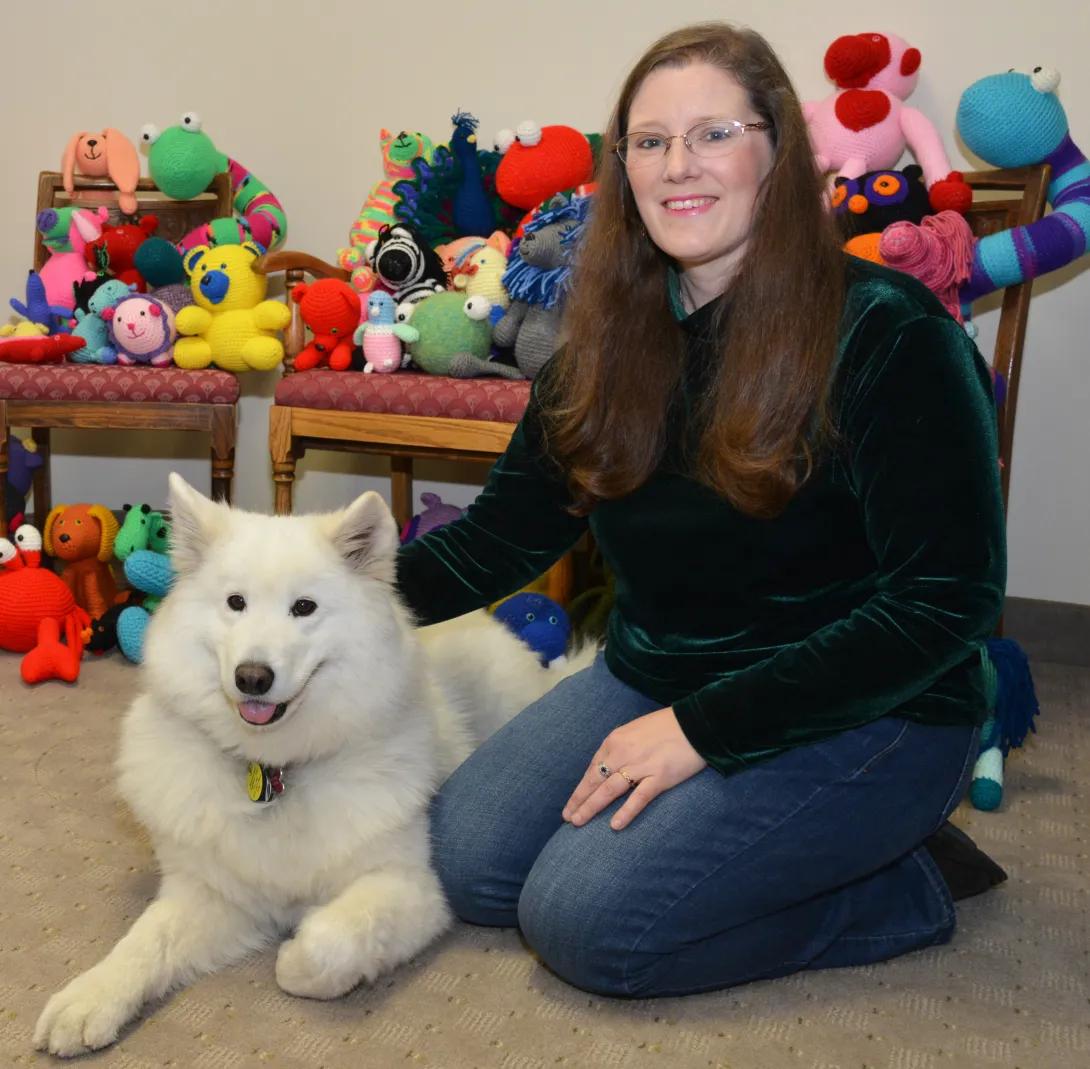
A Q&A with Jennifer F.
Jennifer is one of our hundreds of dedicated research participants.
Please tell us a little bit about yourself!
My name is Jennifer or Jen to everyone who knows me. I went to the University of Michigan to study voice. I was very accomplished academically and still study with abandon anything I can get my hands on, which is one reason I LOVE working with the Prechter researchers! I have made it my mission to understand as much as I possibly can about bipolar short of getting a degree myself.
I am a rapid cycling, bipolar I with mixed episode states typified by crying spells. What that all means is that I can be both manic and depressed at the same time and that I can flip back and forth multiple times, sometimes it can happen in a matter of minutes. That is how fast my rapid cycling is. The crying spells are what make my bipolar unique. I know I am in trouble if I start crying for no reason. This is essentially my brain having something akin to an emotional seizure. If I don’t correct it immediately I will go into a full blown episode.
I was diagnosed at the age of 24 but I have had all the signs and symptoms since I was six years old. But thanks to the fantastic work of my doctor, I have been stable (with a few minor bumps) since 2004!
How did you first hear about the Prechter Bipolar Research Program?
I first heard about the research program when my mom found an article in a paper somewhere. She thought I would enjoy giving back and I have been doing it ever since. I am going on my 9th year with the program and have done every study I qualify for! I was told by one of the researchers this year when I did the nutrition study that it was nice to finally meet the number that he has seen so many times! I was the first participant enrolled in that study.
I was also the second or third to do the stem cell study. I did both of the cell phone studies and a lot of the pilot studies back in the early days. There have been so many I have lost count but I am thrilled that they can use me in so many ways! I figure God gave me this illness for a reason and I had better use it to the best of my ability to help others. I don’t want to miss an opportunity to learn more about it or to give to the research team.
What motivates you to stick with it and collaborate with the research team?
By participating in the Prechter research, it is my passion, hope and mission to help other people. I have been through a lot, I have been suicidal and in fact spent most of my adolescence and teen years debating suicide attempts. I don’t want others to feel the way I’d felt. My first suicide attempt was at the age of six! I didn’t understand why my mind was going crazy and I just wanted it to stop. I understood better than most adults that things weren’t right but I didn’t know how to fix them. I had seen Patty Duke on TV and she talked about trying to kill herself. That was enough for me. I knew at age six that I was like her. Incredible insight that it would take the doctors almost another 20 years to figure out!
I was participant number two or three right at the very beginning of the stem cell study back in 2011. It is fascinating that the scientists are taking my skin cells and can turn them into brain cells in the lab! I have undergone a lot of trial and error with my meds and have had terrible side effects. It is my hope that the stem cell project will advance personalized medicine which will mean, that in the future, others can avoid going through everything I’ve been through.
What do you do in your free time?
I trained my dog Maya to be a therapy dog and we spend a good portion of every day visiting with the people in my neighborhood. There are several shut ins that we visit daily and a couple of group homes and then when the kids are in school we visit with them every day as well.
I crochet and make all kinds of things, from sweaters to blankets to hats, but what I have focused on the past few years is stuffed animals. I have an Etsy shop where I have hundreds of my creations ranging from little hippos to a gigantic snake. I am hoping to get enough traffic that I can donate a portion of the proceeds to the Prechter Program!
Blackbird Dreams
by Meg LeDuc
Acknowledgement
"Blackbird Dreams" first appeared in CRAFT magazine, January 2022. The piece was a finalist in CRAFT's 2020 Creative Nonfiction Award, judged by Joy Castro.
Author's Note
When I began writing “Blackbird Dreams” two and a half years ago, I envisioned a spy novel in which a woman named Marie discovers that she was born the rightful heir to an island kingdom. Her ruthless parents, who have been drugging her for years, consign her to a psychiatric institution. Marie escapes with three residents following a car crash, and the gang of misfits go on an adventure to regain Marie’s inheritance. Marie is recruited by the CIA, overthrows her father’s criminal enterprise, and regains the throne of the island kingdom.
As I developed the spy plot, I knew that I was narrating the very delusions I had suffered during a severe manic episode several years earlier. Something compelled me to tell the story of losing my mind, but I was sure I could never write it as nonfiction.
I did practice putting my own, true story into words, however. I’m deeply grateful to the Metro Detroit chapter of the National Alliance on Mental Illness (NAMI) for training me as a peer support group facilitator and inviting me to share my story on panels for family members of those struggling with mental illness. In the talks I gave, I always highlighted that moment in the car on the phone with my mother when I said to her, “I think I might be having a break with reality.”
And she replied, “I think you might be too. Please come home.”
The moment is pivotal. Each time I sat down and began shaping “Blackbird Dreams,” I started with a scene set in a car, even when I was fictionalizing the narrative—I wanted to begin in medias res, and I knew the power of the scene from living it.
My mother says that something inside of me, no matter how bad things get, still wants to be well, still yearns for wholeness. She calls it “a piece of God” inside me.
If not for that shard of insight, of God, that night, I believe I could easily be homeless, trafficked, or dead today.
I began to write a memoir as I came to realize, this is me: I have lived this, and I have survived it too. I can’t hide behind fictionalizing. This is my story.
And what’s more, I was proud. Proud that I went fathoms deep but returned to light and air wiser and stronger, like a deep-sea diver bringing up a lustrous, dark pearl. I had emerged from the depths determined to change my life, and I had.
Today, after having lost nearly everything to medication noncompliance and bipolar mania, I’m stable and healthy, have a successful marriage, own my own home, and work full-time in a professional career. I’m pursuing an MFA in Writing at Vermont College of Fine Arts.
My hope is that the memoir I began with this essay as a prologue will be published someday, and that I can give voice to those who have lost the ability to speak for themselves. My own mind, after all, once robbed me of my voice. Even if it isn’t, I know this: the girl in “Blackbird Dreams,” who lost her mind and labored long and arduously to restore her life, finds her way home.
Content Warnings: mental illness, suicidal ideation
Read "Blackbird Dreams" by Meg LeDuc
Close to midnight, I approach the Michigan-Ohio border, headlights flashing around me like starry pinpricks in the vast, dark tunnel along southbound I-75. It’s November 2015—a cold, clear-heaven night—and I’m clocking ninety miles per hour. Frost carves the blacktop in glittering figures, but the driving has been all too easy.
I had been so sure of myself and my plan. But now, alone in the darkness, as night becomes morning, I suspect that maybe, just maybe, I’m wrong. The back of my neck has turned to stone. Pain creeps up the base of my skull.
These sensations, I know all too well, are my body’s warnings.
I swerve, slowing down as I check my phone. My cell phone log shows thirty-two missed calls. My voice mail is full.
Right now, I’m about as steady and sure as a hand grenade.
The phone rings.
I hesitate—three rings—then I answer. I know who’s trying to reach me. I can’t let her down any longer.
“Honey? Where are you?”
The tension of the past weeks and months, the fear and suspicion, fractures in me. The nights I woke, slick with sweat, from nightmares of what he might do. The raw carrots and black coffee; the ice cream binges; the benzos with beer chasers. The cold bathroom tile where I wielded a razor blade. I don’t reply. I can’t. The tears well up inside me, too strong.
My mom’s voice softens.
“Meggie, where are you?” I am supposed to meet her to see a movie this evening.
I mumble into the phone. “Mom, I….”
“Honey, where are you?”
“I don’t know. Almost to Ohio, I think.”
My mom asks quietly, “Meggie, why are you going to Ohio?”
Because I’m being recruited.
Three hours ago, an Ohio address popped up on my phone, a calendar reminder to make a phone call about the ACT Educational Testing Center for the article I’m supposed to write for the newspaper where I’m a freelance reporter. Except it was a secret message from the CIA directing me to drive to that address, where agents would whisk me away to a training center in a faraway desert surrounded by towering mountains. The CIA would educate me in spycraft and make me into a world-class spy, so that eventually, I could return to Detroit to bring down my father’s criminal enterprise.
I told no one when I left—the CIA wanted me to stay silent.
But now, alone in my little 2005 Ford Taurus, as midnight blurs into morning, doubt punctures my certainty. Maybe it is the sound of my mom’s voice, reaching out, a lifeline, catching hold of me in the black sands where I stumbled and lost myself. Speeding down the highway, my own little universe in the night, I cup the phone against my ear like a seashell, as if the waves of sound that sang to me in the womb now draw me up from my own depths.
In a moment of clarity, I think, the CIA—really? That can’t be right.
I start to sob. “Mom, I’m scared.”
“Meggie, honey, what are you thinking?”
“I’m scared of Dad,” I cry.
It began the afternoon my father came over and stood in my front yard. “I really should come over and put a stake through that mailbox and straighten it out,” he said. He snapped out the words, red in the face, as if the hapless mailbox deeply offended him.
That night, I pulled couches across the doors, and, for several nights running, woke from nightmares of rape.
My father has never harmed me. In fact, he has never been anything but a loving and nurturing dad, and, normally, I admire him deeply. But now I am terrified.
“Come home to our house, sweetie,” my mom urges me. “I will ask your dad to leave. I promise he won’t be here when you get here.”
In this moment, I still trust my mom. Even in the midst of all my fear and confusion, I know—she loves me.
Because I know she loves me, tonight, alone in the dark, I whisper my deepest fear into the phone: “Mom, I think I might be having a break with reality.”
There is a silence.
Then, “Meggie, I think you might be too,” my mom says softly. “Please come home.”
My mom always has demanded that I face up to the facts. Many times, especially when I was in my twenties, these interventions infuriated me because I didn’t believe she was treating me like an “adult.” But her willingness to dare my anger, to speak hard truths out of love has at times been the only thing that kept me from the brink, kept me from killing myself.
Tonight, I stand at such a brink.
I take a deep breath. Let it out.
All of a sudden, I want to be held.
“Find the nearest exit,” my mom urges.
I scan the road. There is a blue highway sign with golden arches in the distance.
“Mom, there’s a McDonald’s up ahead.”
“Get off, go in, and buy a coffee. Do you have money?”
“Yes. Ten dollars.”
“Good. Look at the exit number as you’re getting off and tell me what it is. I’m getting my map out. I want to see where you are while you drive home.”
I walk into the McDonald’s. Three men in jeans, camouflage jackets, and hunters’ orange vests hunch over coffee and Big Macs at a nearby table. They are quiet, munching. To me, their silence amidst the aroma of grease and salt, and the gurgle of a coffee maker, is anything but companionable. In my mind, everyone is suspect.
Are they just hunters out well before dawn?
I chance another look and pay attention to their boots—too clean. More likely, they are my dad’s spies.
I order my coffee. I can’t tell if my voice trembles. But my hands shake as I fumble in my wallet formy ten-dollar bill. I keep an eye on the men, who seem to ignore me—but do they? The tallest, coal haired, thin, unfolds a newspaper. I wonder if it’s a code.
The cashier, about twenty, with vapid eyes, an eyebrow piercing, and a cobalt star outlined in crimson on her pallid inner wrist, wordlessly slides the hot coffee and my change across the counter. I clutch the Styrofoam in my chill fingers, warming them.
“Have a nice night,” I say to her, trying my best to appear “normal.”
She nods—nonchalant, dismissive.
I’m drawing upon my upbringing, on the good manners instilled in me. I also believe, in this moment, that being polite is keeping me safe: you never know who might be listening.
Underneath the etched stars of the frosty November night, I pick my way through the dimly lit parking lot back to my Taurus. Sliding behind the driver’s seat, I answer the ringing phone.
“Mom?”
“Just keep me on speaker the whole way home, sweetie. We’ll talk. You’ll be home soon. I know where you are now.”
“Okay,” I say, putting the car into drive. I pull out of the parking lot and maneuver onto the road and the freeway ramp to I-75 North.
“Do you want any music on, Meggie? Would that help you calm down?” my mom asks.
“Just keep talking, Mom. It’s helping.” I take a swig of coffee. I’m driving slower now, a mere eighty miles per hour. I weave in and out through traffic, passing a semi. My windshield fogs, and I crank up the defrost. It’s a cold night out there, in the twenties. The moon gleams—a delicate white sickle hung against black sky.
“I know you’ve got a lot on your mind, honey,” my mom reassures me. “And you’re not really sure what to believe right now.”
“I’ve been scared of Dad for a long time now,” I confide, and wonder how my mom could be married to a man like him.
I hear my mom say, “I know, sweetie. But your dad is a good man. He doesn’t know what to do.”
I parse this statement as my muddled brain works furiously: Whose side is my mom on? Who does she love, truly? Suddenly, it comes to me: My mom works for the CIA. That’s it—she’s a double agent, infiltrating my dad’s crime syndicate so she can eventually bring it down. I hit the gas, revving my Taurus’s little engine.
“Meg?”
“Yes?”
“Are you okay?”
Strangely enough, I feel an overwhelming sense of peace. I must be right—my mom is a CIA agent: powerful, smart, skilled, andtrained in handling criminals. She will handle my dad.
The neon lights and tall buildings of the city give way to long, dark fields where the corn stands sentinel—barren and dried, stripped by farmers and deer.
As I navigate onto M-53, about forty minutes away from my parents’ home, I notice two black SUVs. One pulls ahead of me and one follows behind, forming a phalanx before andbehind me.I see them as an extension of my mom’s protection, and I am no longer afraid of my father’s henchmen. I imagine the SUVs’ headlights guiding me home.
When I turn into my parents’ subdivision, in an exurb north of Detroit, I feel sure of myself, now in familiar territory. The black SUVs turned off miles before, but they got me close enough to the area where my parents live. The countryside around the subdivision, a place where apple orchards grow, appears idyllic, far away from the busy world. I know the CIA chose this location because it’s a haven, a hideout: I will be safe here—for a little while.
It’s almost 2:00 a.m. when I pull into my parents’ driveway, and right away, I see the glow. It seems that every light in the house is switched on. The darkness surrounding me recedes as I step onto the porch.
When my mom opens the door, she sweeps me into a hug. “Thank God.”
I relax into her arms, the tension of the night melting away.
My mom wears faded jeans with an elastic waistband and an old “Air Jordan” sweatshirt that once belonged to my older brother. Small and fine boned, with a delicate face, her hazel eyes and soft, fox-brown hair are my rest. My mom is nearing seventy, and in a moment of clarity, I think that she’s getting too old to be dealing with a daughter in such a state. Even though I know what lies ahead, I trust her.
A pair of sweatpants and a T-shirt wait for me on my childhood bed, in the room with pink-and-blue train wallpaper that my dad never got around to updating. I scan the house, looking for him, but my mom told the truth—he is gone. I wonder where he is, but don’t ask. It is just the two of us here tonight; my siblings long since grown up and moved away. There is no need to mention my dad, or my deep fear of him again. That will come—tomorrow, in a very different place.
My mom lends me a toothbrush. At 2:30 a.m., she wishes me goodnight.
“I’m so grateful you came home, Meg,” she says. “Thank you for turning around and driving home.”
“I was scared, Mom.”
My mom turns off the bedside lamp and leans over to give me a hug.
“I know you were, sweetheart. But everything is going to be all right.”
The tears slide down my cheeks as I hold onto her slight frame. I decide that I must believe her. Clinging to this belief allows me to take a breath, even as I feel my world splinter. I’m utterly confused: Are my thoughts trustworthy? If I can’t trust my own mind, then what can be trusted? Was I wrong all along about my dad? Or is he the monster I had imagined?
“Do you want the radio on?” my mom asks, not waiting for my answer. In the glow of the
hallway light that floods in the open bedroom door, she tunes my old radio, finding NPR’s classical station.
I fall asleep to an orchestra playing Tchaikovsky’s “Dance of the Little Swans.” The classical music evokes images of beautiful women attending ballets and fairy-tale lights in faraway places.
I sleep deeply and dream that white birds are alighting on my shoulders, eating from my hands. As they fly from my outstretched palms, they change to black. The blackbirds wheel in the air, turning and turning about my head. They fly faster and faster—circling, circling, circling—fusing into an onyx band that settles onto my brow like a dark crown.
When I wake, I wake to the grief that has been crushing me for twelve years, grinding my identity to grit. I remember the girl who graduated from high school ranked tenth in a strong class, a National Merit Scholar, a varsity soccer player named MVP her senior year, a girl who washeaded for the University of Michigan’s Honors Program. This girl lived for books, wanted to become a college literature professor and a best-selling author; she had applied, and was accepted, into the university’s writing program.
But by the end of my freshman year in college, I was so riddled with the stress of performing at an elite public university, and—more than that—burdened by my own disintegrating mind, that I lost the ability to read. I would scan a page again and again, a hundred times it seemed, and never comprehend the words. My ability to read never fully returned.
I muddled through my classes, dropping out of some and faking my way through others. In my junior year, my anxiety and gathering depression spiraled out of control into a full-blown suicide attempt. After that, I moved home, commuting several times per week between Metro Detroit and Ann Arbor, an hour-and-a-half drive each way. At home, my mom would read to me, proppingup my college textbooks and novels like Wuthering Heights and The Mill on the Floss on the counter, as she chopped carrots and celery for homemade minestrone soup while I sat at the kitchen table and strove to stay awake, fighting for consciousness against powerful psychotropic medications that tired me to my bones.
In my college days, as I struggled to read and dropped out of class after class, I would sometimes ask my mom, sobbing, what I had done to make God angry with me. It was Job’s question, the age-old riddle: “How have I offended thee?” My mom would tell me I had done nothing wrong; she would tell me that God cherished me. Once, she cried with me and told me that she, too, questioned God.
Five and a half years after I began college, I graduated with my BA in English from the University of Michigan in 2007. My parents never doubted that I would get my degree—it simply was expected that I would persist. I never stopped expecting it of myself. And I did get my degree. But I gave up my dreams of attending graduate school, sure that I could not complete a rigorous PhD program with my diagnosis of bipolar disorder and its crushing challenges to my mood, my energy levels, and my stability.
Now, this morning, overwhelmed by grief, I ask the question once again: “How have I offended thee, Lord?” It is my silent prayer. But I haul myself out of bed, knowing that this is no time for self-pity. Self-pity will only undermine me and make me feel like a victim, when I need to be brave.
Downstairs in the kitchen, my mom is frying an omelet. “Are you hungry?” she asks. “Did you wash your hands?”
When I sit down at the kitchen table, the veggie and cheddar omelet tastes salty, fluffy, and rich. My mom knows how to make an omelet—she whipped the eggs with whole milk. In this moment, her breakfast makes me feel both cared for and slightly edgy, especially since I haven’t been allowing myself to eat breakfast for about a year now. But my mom wants me to put good food in my body.
“Thanks, Mom.” I eat rapidly, huddled over, staring down at my plate. I’m scarfing food. When was the last time I ate? I can hardly remember.
“Slow down, Meg,” my mom says. “You’re gulping. It’s not going anywhere.”
She pours me a small glass of orange juice and sets it down before me as if I am five years old—or ninety. After all I have been through, I don’t feel thirty-one years old. I might as well be ageless, a natural element, a piece of granite or the sea itself. But, sitting there, swallowing orange juice, I also feel fragile, as if every bone might turn to salt.
I realize suddenly—I can’t look back. Behind me stretches a wasteland of scorched ambitions and lightning-struck dreams.
There is nowhere to go but forward.
After I finish breakfast and brush my teeth, I shower, taking my time, steamy water pouring over my skin as I elongate each moment of normalcy. While I dress in jeans and a sweater, my mom places a bag of toiletries and some simple clothes—jeans, sweatshirts, socks, and underwear of mine that she has stored away—beside the door.
“It’s time, Meggie,” she says.
I know what she means. We have been through scenes like this before—six timesover the past ten years. They always involve preparing and packing, and a sense of me casting my nets wide, hoping to find the fragments of myself that have scattered to the four winds. I have already lived this moment.
How many times will I repeat this scenario? How many times will I go away before I go away—never to come back? Deep down, I wonder if this is my final chance to right my capsized life, to save myself.
As I beginto pull on my coat, my mom waves me toward her. “Come here.” Gently, she unclasps my locket, a gift from my grandmother, who passed away six months ago. I have been wearing the piece of jewelry like a talisman ever since she died. The locket gives me a sense that my grandmother watches over me and prays for me in heaven, petitioning the angels for my safety, just as she prayed for me in life. I need her prayers now.
As I watch my mother place the locket in her purse and cover it with her fingers, I know that she is right: anything—everything—can be stolen where I am going.
Author Biography
Meg LeDuc
Meg LeDuc is a graduate of the University of Michigan with a BA in English and Creative Writing. Her writing has appeared in Brevity, San Fedele Press, and IHRAF Publishes. She won a 2014 Michigan Press Association Award for News Enterprise Reporting, and her essay, “A Different Kind of Home,” was nominated for a Pushcart Prize in 2020. An MFA in Writing student at Vermont College of Fine Arts, she lives and works in Detroit with her husband and three cats. Meg is a participant in the Heinz C. Prechter Bipolar Research Program Longitudinal Study of Bipolar Disorder.

By Mark J.
“We have been given a challenging illness, and there is no option than to meet those challenges. Think of it as an opportunity to be heroic – not ‘I survived Mosul during an attack‘ heroic but an emotional survival. An opportunity to be a good example to others who might share our disorder.
These are the words of Carrie Fisher, the late and great actress and bipolar advocate who also suffered from bipolar disorder. I’m always up for a good challenge so I’ve decided to take these words to heart.
My name is Mark and I am currently managing bipolar disorder. I would love to help everyone be healthier and happier but I’ve come to the conclusion that everyone is different and the best place to get started is with yourself. Small current positive changes lead to long term benefits. Patience.
I was diagnosed with bipolar disorder 30 years ago when I graduated from the University of Michigan. It has been a long road full of trials and tribulations. I have been hospitalized 10 times for mania. It is truly amazing that your mind can lead you down the most bizarre trails. Some people I know and have read about have similar experiences when taking LSD. So my brain chemistry was sending me off on a drug-induced haze. The problem is I accepted it as truth.
I could share my manic episode stories with you. However, I choose not to relive those periods of my life. Plus, my mom will be reading this and I don’t want to scare her. Or, for her to think I’m more strange than she already does. Just trust me… manic episodes are not good.
I have not been hospitalized or had a manic episode for eight years. Never giving up is the key ingredient. Sure, some of my bad days are worse than most people’s. And some of my “good’ days can be catastrophic. But, there is always light at the end of the tunnel – tomorrow. There is hope of new friends, new beginnings, and even new medicine. Try to accept change, good or bad, as a growth experience. A chance to learn and arm yourself with more confidence and coping abilities now that you have lived through some harrowing times – and survived them.
I have been derailed many times due to my behavior and actions and I believe partially due to some aspects of today’s mental health care system. I now do my best to stay on track daily. Exercise and healthy eating really help your mood. There is an acronym that reminds you to check yourself when you are grouchy or ill-at-ease. It is HALT. H is for hungry. A is for angry. L is for lonely. And T is for tired. Try to remember HALT! and adjust yourself accordingly.
I always try to adjust my thinking. Remember to act not react and give yourself extra time when replying to someone or making an important decision. I try to. Sometimes it is extremely difficult but necessary to get your mind off your concerns. I do this by reading and watching sports (especially baseball and football). Go Tigers!
Try not to take yourself too seriously. It’s not healthy. Comedy, humor and laughter always help your mood. I enjoy YouTube performances by Robin Williams, Jack Nicholson and Jimmy Fallon. Music can be uplifting and moving. Some of my favorite music is by U2, Fleetwood Mac and The Red Hot Chili Peppers.
I try to be a man of action. My current stance on mental health care and stigma is it is improving but not quickly enough. From my last visit and hospitalization I would like to offer up some concrete solutions that could be addressed. In roughly 2009 I had a manic episode. I was kept on a hospital floor for 30 days and was not let outside once. I am a firm believer in ecotherapy. Using outside air and any natural aspects to brighten spirits. I think this would be beneficial to most hospitalized mental patients. Assist them, if possible, outside!
My fire was stoked recently by a New York Times article about a hospitalized woman who was a writer suffering from a bipolar manic episode. She said when she was in the hospital she was really not treated as her “self;” more as a stereotype of how a mental patient would be taken care of. I remember being in the hospital and, yes, I had bizarre thoughts, but “Mark” was still there and could have been treated with more dignity, kindness, and compassion by the hospital staff.
I hope things have gotten better in the last 10 years. A couple ideas I had were to create a psychiatrist/patient questionnaire. This would be a predetermined survey the patient fills out on a weekly basis. Mainly about goals (hospital stay length) and care process (meds and initiatives to help). Even if the patient was not “all there,” their answers would help empower the patient with hope and give the doctor insight into the current situation at hand.
The last thing I would suggest is a weekly third party “audit.” This would keep the psychiatrist on track and give the patient trust and better care with his/her doctor. This probably would be done by a family member or a mental health professional. The informal session would provide valuable information for the patient, psychiatrist and the treatment.
Balance is very important to me. I really have to check myself and evaluate good and bad events. Don’t get too high in the highs or low in the lows. I am a spiritual person and spirituality comforts me and helps me grow to feel better and stronger.
“Act always as if the future of the universe depended on what you did, while laughing at yourself for thinking whatever you do makes any difference.” - Buddha
By Sheree Braswell
Sheree Braswell writes about her mental health journey in her blog and shares resources on her website.
My name is Sheree Braswell, born and raised in Detroit, MI. I’m a mental health awareness advocate, minister, inspirational speaker, author, and lover of God and people. I love empowering and uplifting people, especially those with mental illness. My mission in life is to silence the shame, break the stigma and bring hope to others by being an example of seeking treatment and living a fulfilling life while managing bipolar disorder. I am humbled by my experiences in life and give credit to my faith in God for carrying me through every obstacle.
I am a graduate from Eastern Michigan University with a bachelor’s degree in Communication and minor in Family Sociology. I plan to pursue a master’s in social work and become a therapist. I want to pay forward what I was looking for at the age of 16 years old being diagnosed with mental illness. My dream is to bring healing, hope, and restoration to the mental health community.
In my spare time, I enjoy reading, journaling, spending quality time with family and friends, shopping, and going for a walk or doing a workout. I’m a dog lover and enjoy being around children. I enjoy laughing and making others do the same and smile. It brings joy to my heart to do so!
Check out some of Sheree's blog posts:

By Tina Cole-Mullins Angel n'Hell
"You do not have a soul. You are a soul. You have a body." - C.S. Lewis
My name is Tina, and I am a locally published journalist. I have been a participant in the Heinz C. Prechter longitudinal bipolar studies since 2009, and recipient of the Stockbridge Community News 2021 Readership Award acknowledging my ongoing coverage of mental wellness issues and series 'Faces of Mental Wellness.'
When I first received my diagnosis of bipolar I had an array of natural mixed emotions (not to be confused with bipolar emotions). At the forefront of these feelings relief comes to mind. After all, I first sought help on my own and answers were what I wanted. Although I felt relief it was short-lived; I at least had an “a-ha'' moment and disillusion I would soon be better. This was soon followed by unanswered questions, medications, and then a spiral into confusion as if opening a Pandora's box of unexplained emotions I had never experienced, let alone felt all at once.
My journey into the mental health world did not come on gradually, and I did not appear to have telltale signs growing up, although I should have. I thought I had truly escaped the traumas, grief and tragedies of my past, the alcoholism, addiction and abuse within my family, and my childhood memories, including that of the actual events creating my family's burning legacy, The Burning Bed. That was their story and this is mine.
When I first sought help for myself, I was in my late-20s working in a high-pressure job in education working with ‘At Risk Kids’ while facing multiple situational stressors including marital infidelity and my father's terminal illness. The stress caused me to notice the instability within myself. I sought out a co-worker familiar with the mental health system and asked for his help.
It was the high-pressure job that gave me the ability to see in myself the issues and have the accessibility to professionals in psychology as co-workers. I know I am truly lucky to have had this support. It was at this time I was diagnosed and began treatment for bipolar disorder and overlapping disorders that tend to go hand in hand, and so the dance began.
When maneuvering through serious chronic illnesses such as bipolar it can be both challenging and also all-consuming; within the chaos of our own mind and emotions we can become imprisoned. Having gone through the inpatient Community Mental Health hospital stays and escaping with my sanity intact literally gave me the will, strength and determination to survive. It is also during this time I became an ‘attempt survivor', a stigma that may forever shadow me, but a darkness I will no longer allow to define me.
The lost years drug out in a haze – With each label came its own little pill; pills to help manage, maintain and enhance my quality of life. Labels – not only that of bipolar NOS, but also borderline personality disorder, PTSD from childhood trauma(s), residual trauma from a teen date rape, grief, generalized anxiety, situational depression, an extreme bout of agoraphobia and tardive dyskinesia from one of the medications.
Time slips away – As another day of nothing comes to mind; as I finally make my way to the bathroom. If not for my therapy appointment within the hour, I would just go back to bed where most of my days were now spent, in a medicated depressive haze. There were occasional bursts of energy, labeled as a manic state in my psychiatric profile along with varying degrees of one or more overlapping diagnoses. I was trapped in a way of life that was once a foreign concept to me – the life of the mentally ill and bipolar world.
At that time my current psychiatrist had told me this was my life now; it would never be like it was before. The sooner I accepted this, the easier it would be. I could not and refused to accept that; there had to be more. My reply, “I am not a numbered patient, I am not a statistic, I am not my diagnosis.” I feel that is why the C.S. Lewis' quote resonates with me so deeply.
This was the point in life when I chose to advocate for myself, and try a new approach to my treatment. My therapist and I had been discussing varying approaches for the past several months. Experience from my past training and work in education had taught me to help create IEP’s (Individualized Education Plans) for kids and I already had various forms of safety plans in place for myself. Why not an ITP? (Individualized Treatment Plan) That was my approach, with the support of my therapist.
One good thing I can say about my Community Mental Health treatment was that my therapist, the one I had at my most unstable period of time, was exceptional. They helped me create my treatment plan, as it was individualized I will not get into all of the specifics, but will say this is when I started my med-free journey and I have stood firm on that through my psychiatric treatment plan although I am labeled non-med compliant as a result. With this individualized alternative approach I was closely monitored by a therapist; tripling up on weekly appointments to monitor my coming off my medications.
I also have to add at this time – I will reference living a psychiatric medication free life. I absolutely do not advise or encourage this approach. In fact, I recommend the opposite, and I did not impulsively make this decision. I never did the on-again, off-again because I feel better – many have experienced and done this with their medication. This was a one time decision I made and stuck by. Med-free does not mean treatment-free. In my case it simply means an alternative approach.
It was at this same time in transition that the infidelities of the marriage could no longer be overlooked and my husband asked for a divorce after almost sixteen years together. My mind was clear enough now. I did not fight it and returned to my home state.
Beyond the haze – from 2004 through 2009 – I gained five years of stability while med-free, which was by no means an easy task. I continued to advocate for myself to receive therapy through a personal care provider instead of Community Mental Health. My provider was at the campus of Chelsea Community Hospital, a therapeutic setting itself. In 2009 I transitioned off disability and returned to the workforce full-time, however this was short lived.
Although my wellness journey began after my divorce in 2004 and just prior to my return home to Hell, Michigan, it was that return to my hometown that really moved me forward. In the comfort of this beautiful scenic hamlet nestled between the acres of lakes near Ann Arbor I truly began healing. Its beauty has always given me grounding and balance, a feeling of being deep within a refuge of my own, and seclusion for healing from so many traumas no child or adult should ever have to experience.
It was at this time I began to find my footing in the world of mental illness. Although Hell was often a metaphor for both my life and my physical residence, it is where I began finding my own balance in the duality of my two existences of mania and depression. It was also at this time I reconnected with an old friend and support system, a relationship few accepted – let alone understood. The bond was undeniable and made up not only of love and long-standing friendship but that of co-dependency and a shared trauma bond.
Moving back home also brought to the forefront more extreme symptoms of my other diagnoses of PTSD and borderline personality disorder, both trauma-based and/or caused by environmental issues, easily triggered if not addressed properly and therapeutically.
My intense soul cleansing journey began to manifest within letters to that best friend. Through this not only did the journalistic letters become a coping skill, but also allowed for me to acquire the skill of independence, learn to live single, and discover who I was outside a daughter, girlfriend, wife, mother or mentally ill patient.
But journaling was only one of several skills I had learned to carry in my bag of coping skills. One constant coping skill was in my external support system. One support system I had created for myself in the very early years of my diagnosis involved the internet. Long before support was easily accessible via social media platforms and apps, there was the online AOL mental health support group. This group no longer exists, but many former members have transitioned over into a newer platform where I now host a Mental Wellness blog and offer ongoing daily peer to peer support. Another support group I participate in and find very beneficial and supportive is a nonprofit on Facebook titled Beautiful Purpose: A Bipolar Community.
Through my journaling letters and extensive ongoing and long-term therapy I found a cyclic pattern to my bipolar. Symptoms came quarterly as if seasonal in nature, and I still experience the highs and lows of a cycle, but my symptoms were not typical of SAD (Seasonal Affective Disorder). In fact, my feelings always gravitated to the exact opposite. On dreary, gray, ominous days I present as more calm, while sunny days tend to irritate me as well as make me more withdrawn into myself. Recently I discovered I am not the only one who experiences this, and in fact it is a reverse occurrence of SAD, according to Dr. Melvin G. Mcinnis and director of the Heinz C. Prechter Bipolar Research Program.
I have gone through many phases of my journey into mental wellness and stability, as if a true dance: one step forward two steps back. After a life-altering dark spell in 2009, I began what I call my reflective phase and marked my introduction into the Heinz C. Prechter longitudinal bipolar study. It was also at this time I had my last evaluation from a private psychiatrist and was told I have the coping skills to manage long-term stability as long as I apply those skills.
One of my first tasks in this new reflective phase was to break the codependent relationship I was in, and remove myself from the toxic environment triggering my lack of stability. In doing this I had to restructure my social circle, cut familial ties, and set and enforce boundaries. This did not make for a pleasant time, but it was crucial.
At that time I once again lost my private healthcare insurance and encountered a conundrum – I was too stable for Community Mental Health without being med-compliant and on a long waiting list for therapy. But both inpatient and Community Mental Health providers confirmed I had achieved manageable stability within my mental health long-term, which is where my conundrum arose.
Managing this stability takes diligence, patience and everyday work as if it were a full time job. I recently learned this from my current therapist and my return to the private sector of therapy I once had. At this time we are treating my anxiety and stressors that create adrenal insufficiency and working on how to regulate and manage day to day stressors and those within my diagnoses most efficiently.
Many bipolar individuals are prone to have amplified emotions from external stimuli overloading even when not in an episode, and being an HSP (highly sensitive person) adds to that. Being an HSP is not the same as being oversensitive. It feels as if I am constantly on alert unless I filter that external energy and stimuli – I refer to it as ‘observe and reserve’- I now observe my situations and emotions while reserving reactions, use of energy, and judgments on others and myself.
I have achieved a higher functioning level within my bipolar through tremendous effort and self development. I maintain a healthy sleep routine and know when to disconnect from social media and the internet in general. I refuse to engage with the stressors that could upset my balance and well-being. I incorporate day to day reading and mindfulness activities to help manage daily stressors such as anxiety and panic that can limit my productivity. However, this higher level of functioning does not mean I do not struggle within my stability, and through that I have discovered there is strength in vulnerability.
Through my self awareness and strong coping skills learned within CBT (cognitive behavioral therapy) and the more in-depth scope of DBT (dialectical behavioral therapy) which I am currently taking, I have learned to adjust my skills regularly. I create, build and apply new skills as needed. Wise mind is not always a happy place, but it is a healthy place.
I view my DBT class, skills and support as if it is a 12-Step program and if I don’t work the skills, they work me. I am at a phase of my life where I am taking a moral inventory in this self reflective phase and now find myself at forgiveness and amends, not only with others but myself.
While reflecting and regulating the emotions that have arisen while working on this piece, there is one thing I need to point out. No matter how bad my bad years were, they were just a few years in the scope of my 51 years. No matter how bad my childhood was, many other family members' lives were much worse and still are if they are still alive. I have recently found healing (but not yet closure) in the previous trauma bond relationship even though I have not spoken to the individual in a decade. I am preparing for the day to come, and can now smile on our once happier times.
My husband and I have reconciled, and although we have been divorced for many years we still remain close friends and co-parent our children together, who are now grown and have given us grand-children. My husband thankfully has always been part of my support system, and even in times when he did not or does not know how to support me he has tried and he has always been part of my therapy plans.
Today I have accepted that I am disabled, but I still have a purpose in life. I found it as a volunteer Community Outreach Facilitator and contributing writer for our local paper with my ongoing work in mental wellness. I always refer to mental illness, treatment and stability as individualized. You and I could have the same diagnosis, could be family, been raised in the same home, have taken the same medications, been in the same hospitals –- and still our experiences would be completely different.
Although I have danced with the devil, as if in a decade-long battle for my soul in my own duality, it is in this past year of reflecting and skills learned within my DBT group with a special group of ladies that I have gained a higher level of clarity and growth that, in turn, has left me in a place of healing. My past is my past; I do not live there anymore. I cannot change where I am in life but I can change where I go in life!

Disclaimer Authors Note: This piece is not meant to be used in place of professional or medical advice. I reference living a psychiatric life med-free, however I do not encourage this approach; in fact, the exact opposite. Med-free does not mean treatment-free. In my case it simply means an alternative approach.
Finding help: If you feel you need help, please contact:
- National Institute of Mental Health, 866-615-6464 or visit nimh.nih.gov.
- Michigan Medicine Depression Center, to make an appointment: 800-525-5188 or 734-764-0231 or depressioncenter.org/.
- Mental Health America, 800-969-6642 or mhanational.org/.
- Chelsea Hospital Outpatient Behavioral Health Services, 734-593-5250 or https://www.trinityhealthmichigan.org/location/chelsea-hospital-behavioral-health-clocktower-commons.
- National Suicide Prevention Lifeline, a 24-hour crisis line, 1-800-273-8255 or suicidepreventionlifeline.org/.
- The Listening Ear in Lansing, a 24-hour crisis line, 517-337-1717, or theear.org/.
Crisis Text Line: Text “Start” to 741-741.
by Dave M.
Growing up and getting older, I always hated hearing that someone “was bipolar” because for one moment they may have acted in a way people think is bipolar or manic depressive. The reason this bothers me is because I am bipolar and I have been diagnosed since I was 17. I don’t believe I act out or have too many episodes because I take my medication. It does bother me and I think about it every day. A lot of times I can’t get it off my mind.
Talking about it doesn’t usually help; at least it’s not something I mention to most people. What scares me is when someone like my old boss, Heinz Prechter, takes his own life. This man was one of the richest and most powerful people Downriver. He owned Heritage Newspapers and American Sunroof Corp., but he also had a dark secret. He was bipolar and unable to silence his demons, so he died by suicide.
His family donated money to the University of Michigan. The University of Michigan created the Heinz C. Prechter Bipolar Research Program. The program does research to help find out more about the disease and where it comes from. I wrote a letter to Heinz’s wife, telling her how much his death bothered me and why. She responded back telling me about the Prechter Program’s flagship study, the Longitudinal Study of Bipolar Disorder. Now, I have been a part of this study for over ten years. It helps me deal with my disease and helps others as well.
If anyone is interested in taking part in the study, they should call 1-877-864-3637.
The other reason I am writing this is because suicide should never be an option for depression or for any other reason. There is always someone you can talk to. Step away from the situation and look at all your options. Help is out there.
Please, please do whatever it takes. Call the National Suicide Prevention Lifeline at 1-800-273-8255.
Do it for your family, for me, or for the greatest gift of all -- your life.
-Article slightly edited from its first appearance in the Allan Park Guardian on March 29, 2019
Dave M. has been an active research participant in the Prechter Program for over 13 years.
He says:
“It seems like forever and a day ago when I started being a participant in the Longitudinal Study. I have done several other studies since then. Participating in these studies helps me and also makes me feel like a contributor of something bigger than myself. I will continue to do it, as well as whatever other studies I can get into, as long as my assistance is needed. Thank you and see you in the lab!”
By Kristine N.
a poem about mania:
Of the Days Electric
coming up from sleep,
I slowly arise from my bed,
I can feel the light,
before my eyelids peel apart,
stretching the dreams from my limbs,
shaking the night from my mind,
I walk towards an entirely new day,
full of all manner of possibilities,
that are at times so electric,
I am pulled into the flow.
yet, other days are wide as a yawn
and on those days, mind and body rest,
in preparation for the times
I ride the highest voltage wires.
a poem about suicide:
Skirmish with the Tow
Lone, I sit, on the dock, legs dangling,
three feet above cobalt water moving deep;
I can feel its pull, am unsteady in my space,
fearing it will take me.
Gulls beside, in back, scream, push me forward,
the water calls as it hits the poles anchoring the wood
planks upon which I sit… as boats slip past,
waves see-saw their way into the breakwall behind me,
then are slapped back into the river…
the dock shakes with the impact,
I quiver at the shaking.
A freighter’s horn rises forlornly, deep and low,
as I watch pieces of flotsam, scraps of rubbish,
being pushed along, the river cleaning itself of
unwanted debris; I decide that I do not want
to be any part of that waste…
I pull myself up by my fear,
and walk away.
a poem about healing from depression:
Healing
having prepared this space
to accompany his malady,
he curls, an abraded animal,
nursing gashes still raw,
tender to the slightest utterances.
he lies dark against bleached muslin,
slats closed flat against filmed panes,
no talons of sunlight reach here,
shadows’ greyness blends drab and faded
onto sluggish hollow walls.
This space is where despair can echo,
till it loses all hint of sadness,
where pain can be nurtured into oblivion,
healing work goes on within the darkness,
allows shadows to quietly gain dimension.
sneaks out while light breaks through,
darkened corners disappear,
as he stretches from the fetal,
rising from the blood-soaked cotton
to reach with fingers yet weak, trembling,
he allows new life to enter, cleansing,
awash, from windows flung wide open.
by Robin M.
So the comment went something like this: “I can’t understand why Robin would want to post anything like that on her Facebook wall. Why is she putting up that stuff?” My sister, my defender, answered in her tactful, but direct former-call -center -employee way, “…she’s trying to get rid of the stigma is all. She’s not trying to embarrass you.” The other individual is a family member as well, and the aforementioned “controversy” was my account on participating in the Heinz C. Prechter Bipolar Research program at the University of Michigan Frances and Kenneth Eisenberg and Family Depression Center. Stigma bustin’, you bet. I’ll talk about my recovery process to anyone who wants to hear, for the good of all.
Now that I have my “thesis” out of the way, let me clarify something. I have decent boundaries; in other words, I take my time in judging if someone is “safe” to share my story with. I’m not the chatty lady in the grocery check-out line who starts by saying, “Some kind of weather we’re having…” and proceeds to tell her life story to the unsuspecting shopper, encapsulated and Cliff-noted down to fit the “Express” lane experience. Take your time, judge the situation, and share in a natural and easy-going manner. Here’s the thing - everyone has a story, and you’ll find that there’s this “Seven Degrees of Separation” thing with mental illness. Once someone hears part of your story they will tell you about their situation, or of someone they know who is affected.
Recently, I had a quite touching moment with my “p-doc’” – psychiatric doctor for those who are thinking, “what?” It was a moment where I had a chance to offer him a listening ear (what irony, eh?) and in turn, talk about my journey to recovery. He tells me “I just lost a patient the other day. How do you stay healthy?,” and in my usual comedic form I begin by saying, “by taking your meds like the doc tells ya!” From there I laid it out: everyday is new, every minute is as well. Feelings are just feelings and they shift just like the weather does. Stick around long enough and it will change. You have to put off any and all irrational thoughts and urges until they wither to nothing. Every thought and mood is a reaction to something that happens earlier, duh. Back the thought train up and put it in perspectives as best you can. Seek counsel from good friends. They’ll tell you if you’re full of it or if what you’re thinking is legit. Pray, pray, pray as well. If you feel like God’s abandoned you, He hasn’t. Just tell Him to hang on to you because you haven’t the strength to hold on yourself.
All of that and what about the thesis part with the research bit? How’d that go, you might ask? It challenged my Stigma Bustin’ paradigm in that I had to truly bare my bones as it were for the research staff. Quite a bit of time was spent on my diagnosis and the details that lead to it. Even though these were trained, compassionate people, the shame that is natural in most of us wanted to rear up and cover up or downplay my history; however good old self-talk wouldn’t have it, “You’d be a hypocrite. Don’t be an ass, just be real.” At the very foundational level, research and the understanding of bipolar illness is what will lead to greater acceptance in the end. I’m proud to say I was part of it.

By Alex I.
I open my eyes, and instantly my brain ignites. I gain peak momentum by the first step out of bed. Surges of motivation sling me from dancing like a worm ninja to meditating in a headstand. A divine spark of lightning illuminates my peripheral vision as I kneel in the middle of the kitchen – a beacon of fate. My destiny and I were always parallel, but now we are one. I am fearless and supremely aware of my surroundings. I am connected to a special sector of the universe with a vacancy of one.
A mid-day movie feels just right. I pop in an older Alfred Hitchcock film. The dusty negatives create a clear pattern of communication. Alfred is deliberately trying to speak to me, in this room, right now. My brain waves respond in a glitch format to unlock the spirit of the director. He floats angelically around the room as I helplessly slip off the couch. The main character’s voice fades into an ambient background, becoming remotely audible and scrambled. As I lie on the floor in a Buddhist stare, a ringing phone accompanies my concentration. It’s my mother and she’s picking me up. Perfect timing.
I march to the porch and sit in a cold iron rocking chair. A steady tempo accents the anticipation of my mother's arrival. I know why she’s coming; I hear her reasoning like a conscious thought. She is coming home from work at 10:00 A.M. to tell me how much she loves me. If I concentrate hard enough I am able to transmit brainwave signals to let her know that I am ready to reciprocate. This rocking chair is a perfect antenna.
Two vehicles race into the driveway in unison. I react with a moment of silence and sprint toward the garage to greet them. We embrace for an extended time and their eyes penetrate my soul. “We love you, son, and just want the best for you,” they both say in their own way. “We’re taking you to Ann Arbor for some support.” I softly smile and accept the proposal like a sage. I climb into the van as if I’m about to embark on a tour of Jupiter.
We take the winding, scenic route - devoid of traffic and abundant with wet aged leaves. I sit motionless and meditate to the beautiful sound of open windows. Few words are spoken between us, but the happiness speaks in a language of its own. I close my eyes and begin to float. The vehicle vanishes around me, and I unite with the stars. My thoughts connect the dots with various constellations, and my mind hovers seamlessly. I open my eyes, and we arrive – perfect timing.
I am purified, and liberated by the calm air as I exit. We approach the building together and the massive automatic doors open like an industrial space station. The receptionist informs me about the necessary papers and questionnaire that must be filled out. The waiting room television spews banality, and I contrast it with quips in my writing. I record each response in a novel font and encrypt every sentence with allusions to my destiny. This paperwork is my manifesto, and it encapsulates my entire belief system. I can feel its influence on future readers when I hand it in. My name is called, and my parents and I are escorted into a room the size of a walk-in closet.
A woman enters the cramped space holding a clipboard. She asks me if I know why I am here, and I respond with a focused smile. The interview is performed in hyper-speed as I parry a barrage of detailed questions. She departs after obtaining desired information, and my parents and I sit across from each other.
We do what seems natural: cry and hug. The embrace is charged with emotion and emits a radiant beam of peace throughout the confined space. We absorb the moment until two genial men in scrubs manning a wheelchair arrive. I’ll take a little stroll through this sanitary mansion.
The assistant wheels me around like a celebrity. I pass employees and charmingly greet everyone, like it’s my sole purpose for the visit. The experience embodies all of my being: a magnetic mind on a conveyor belt, attracting beliefs without question. We take the elevator to the 9th floor and a keycard is needed to enter a special section of the building. The door opens to reveal a fleet of interns clad in white coats; they were waiting for me. My guided cruise ends at a room near the end of a hallway and the drab scent of recycled air consumes me. Like a kitten, I familiarize myself with all nooks of the room. A specialist walks in during my research, and his expression implies honesty and credibility.
The specialist conducts a personal interview with me, and I sense an immediate bond. His visual disability creates detached eye contact; I’m speaking directly to his head. In conclusion, he informs me that I have a Bi-polar disorder. As I am left alone to reflect upon the diagnosis, it doesn't compute. I am at the pinnacle of my existence, not ill or compromised. My mental state is sound and legendary, far beyond sickness. I shake the epic possibilities out of my head like a dusty rug, and explore this unique place which I temporarily inhabit.
My short investigation of this sealed area leads me to a vacant kitchen. In the far corner, I notice a languid man staring out the window, and sucking on a nicotine inhaler. Our eye contact regenerates his vitality. We chat like old buddies, and completely dismiss our surroundings. He emphatically escorts me into his room to show me a project. I examine it and see discrete drawings of jet fighters and sentence fragments chaotically drawn all over a sheet of paper. The format is a clear manifestation of his mental state – the mind’s eye fixed in a viewfinder. As I depart from his quarters I overhear that he is suffering from schizophrenia. I must show him a path of enlightenment; only I understand him.
I move to the next patient’s room and sit down with a middle-aged male. He looks like a confused professional dragged here by an invisible force. Our conversation leads us to establishing the basics of his job via pen and paper, like he’s rapidly re-mapping his education. He thanks me as “Dr. Alex” and I leave realizing my purpose. I am here to help people gain awareness and establish inner harmony. I am the link. I am the cure. I am the ubiquitous panacea. I am the invincible, spiritual arbiter.
After two weeks of reluctantly taking anti-psychotic drugs at the mental institution, I found myself lost. I was confused and resistant to the notion of harboring a delusional mental illness. I was powering down, as if someone pulled the plug behind my back. I had traversed through a solar system of awareness only to get trapped inside an atom of despair. Reality crept into focus, and a gradual avalanche of emotions poured down on me. The consistent ecstasy and universal connectivity morphed into a sludge of depression and detachment. I had gone from destiny to derailment.
Thankfully my family was there to save me when I had spiraled out of control. Although I willingly take a dedicated dosage of medication today, part of me yearns for the sickness again. The connection I had with God, fate, and the universe felt completely authentic. The space between my mind and the world was uniform; everything was intelligible and connected. My mind finally found home when in reality I was light years away from it.

By Mitzi B.
via her blog Let Your Dreams Begin
Are you going through a divorce and wondering if you will ever stop feeling depressed, so overwhelmed by everything that is going on?
Divorce is hell – everything that was familiar in your life is changing and it is devastating. Keeping your spirits up for the kids, trying to focus on work and wondering what the hell you are going to cook for dinner just feels like more than you can bear some days.
I get it. I have been there.
But I am also here to tell you that you can and will get through your divorce even if you are feeling depressed. Let me help!
#1 – Nest.
When I was going through a divorce, I met a woman who had been through one the previous year. Because I had never gone through a divorce before, I had no idea how to cope. Lucky for me, she was able to help because she had been just been through it.
I had moved out of our family home and had found a rental. I had left my things at our house so that it would look good when we tried to sell it. My new friend told me, in no uncertain terms, that I had to get my things and bring them to my new house.
For women, when we are going through a hard time, our surroundings are very important. It has something to do with the nesting instinct that is very primal. Women want their space to be a comforting, happy place.
So, what did I do? I had my things moved to my rental and I filled our family home with furniture from a house staging company. And did it make a difference? Oh yes, it did. Being surrounded by my furniture, by my pictures, sleeping in my bed with my bed linens, seeing the little things that I had accumulated over the years on the shelves all gave me such a sense of comfort. My life was so confusing because of all the change but coming home to my things provided me more comfort than I can even explain.
#2 – Get support.
For many women, going through divorce is very embarrassing. It feels like failure on so many levels. And because it is so, we often try to go with alone. We think we can tough it out and get through it and that we will be just fine.
But the reality is is that we all need support when we go through this very difficult period. We have never been divorced before and we have no idea what we’re doing and it’s very important that we align ourselves with people who are informed and supportive.
What kind of people? For me, my friend who had been through a divorce was a huge source of information and support. She could look back on her divorce and talk to me about her successes and her failures so as I went through my divorce process I knew what to look out for.
I also found myself a therapist who I talked to every week. I really felt like I was the biggest loser on the planet because my husband decided he didn’t want be with me anymore and she was incredibly helpful, pointing out that divorces don’t happen because one person didn’t do something right but that there are two people in marriage and both share responsibility for the good and the bad.
Someone else who really helped me when I was going through my divorce was my massage therapist. My husband left me right after my youngest child went off to school so I was left completely alone. For the first time in 18 years, I wasn’t being touched regularly. So, I indulged and got a massage once a week for three months. Having somebody touch me for 60 minutes a week significantly help me get through these very turbulent times.
And, finally, I got myself a lawyer. She was able to walk me through the reality of getting a divorce and what being divorced would look like. And how much it would cost. Information for me is very powerful. It makes me feel like I have some control of my outcome. Talking to her gave me the clarity I needed to be able to move forward confidently.
#3 – Make a plan for the future.
After talking to my lawyer, I realized that, for the rest of my life, I was going to have to take care of myself. I was scared out of my mind.
I had been mostly a stay-at-home mom for 20 years and all of a sudden I was going to be responsible for taking care of myself financially, for doing my own taxes, for finding healthcare and for figuring out how to fix things that broke in my house. I was very overwhelmed and didn’t know how I was going to handle it.
So I started to think about where I wanted to live, what I wanted my life to look like, what I wanted to do now that I was on my own. I realized that, while being alone was scary, it was also give me a certain amount of freedom. For the first time in 20 years, I could live the way I wanted to live. Realizing that really helped me cope with feeling depressed because for 20 years I had been unhappy and I knew that now I was in charge of fixing my unhappiness.
Next, I made plan. I came up with a list of things that I was going to need to consider for my future and I came up with a list of people who could support me when I needed support. I found myself a financial planner. I found myself a CPA to help me with my taxes. I found myself a handyman who could help me with those things around the house that I couldn’t take care of myself.
Lastly, I did the math. I figured out what my expenses were so I knew what kind of money I was going to need going forward to survive. Armed with that knowledge, I was able to secure the kind of alimony that I would need to get myself back on my feet.
Making a plan, having an idea of what my future looked like and how I was going manage, really helped me to cope with my feeling depressed while going through my divorce.
#4 – Take care of yourself.
Fortunately for me, when I was going through my divorce, I didn’t drink. While I hadn’t been much of a drinker for the previous 20 years, I have to admit that the inclination to drink a bottle wine on a lonely night at home was often very attractive. I am glad i didn’t though. I think had I indulged in a bottle of wine I might’ve struggled more with figuring out what I needed to do to move forward.
Instead of drinking wine I did yoga. I did yoga every single day. When my brain started running out of control, I would use yoga to bring it back. When I started feeling like I was not going to survive, I used yoga to make my body feel stronger.
I also made a big effort to spend a lot of time in the sunshine because it’s warmth made me feel healthy and strong and the Vitamin D from the sun helped alleviate my depression.
And, of course, I ate well, as well as I could at least, and made a big effort to get enough sleep.
I know, in retrospect, that taking care of myself and keeping my mind and my body strong really helped me get through this divorce intact and helped alleviate my pain when I was feeling depressed.
#5 – Don’t give up!
Perhaps you’re reading this article because you are feeling like you might be at the end of your rope. Perhaps you’re feeling that, because the life that you once led is over, there’s no reason for you to go on. Your future looks hopeless and you will never be happy again.
I can promise you this is not true. I know you might not believe it right now because from where you sit things look pretty shitty but I can promise you that the view from the other side is a rosy one.
Since I’ve been divorced, I have moved to New York City from New England, I have started my own business, I have dated a bunch of wonderful men, I have a whole crew of new friends, I have a great relationship with my kids and a really huge sense of my own self-worth. The few years after my divorce were definitely a struggle but in the years since I’ve learned more about myself than I learned in the previous 46 and I know now who I am, I know what I want and I’m not afraid to get it.
So, know that your hopelessness is because of your depression and that your future is not hopeless. This is the beginning of the rest of your life.
Learning how to cope when you’re feeling depressed because you’re going through a divorce is an important part of successfully getting through it all.
I know right now it doesn’t seem like you ever will be happy again but you will!
Make sure that you are surrounded by the things that make you happy, reach out to get support from whoever you need to get support from, make a plan for the future, take care of yourself and don’t ever give up.
You can do this. I promise.
Reprinted with permission from the author. Find the original article here.
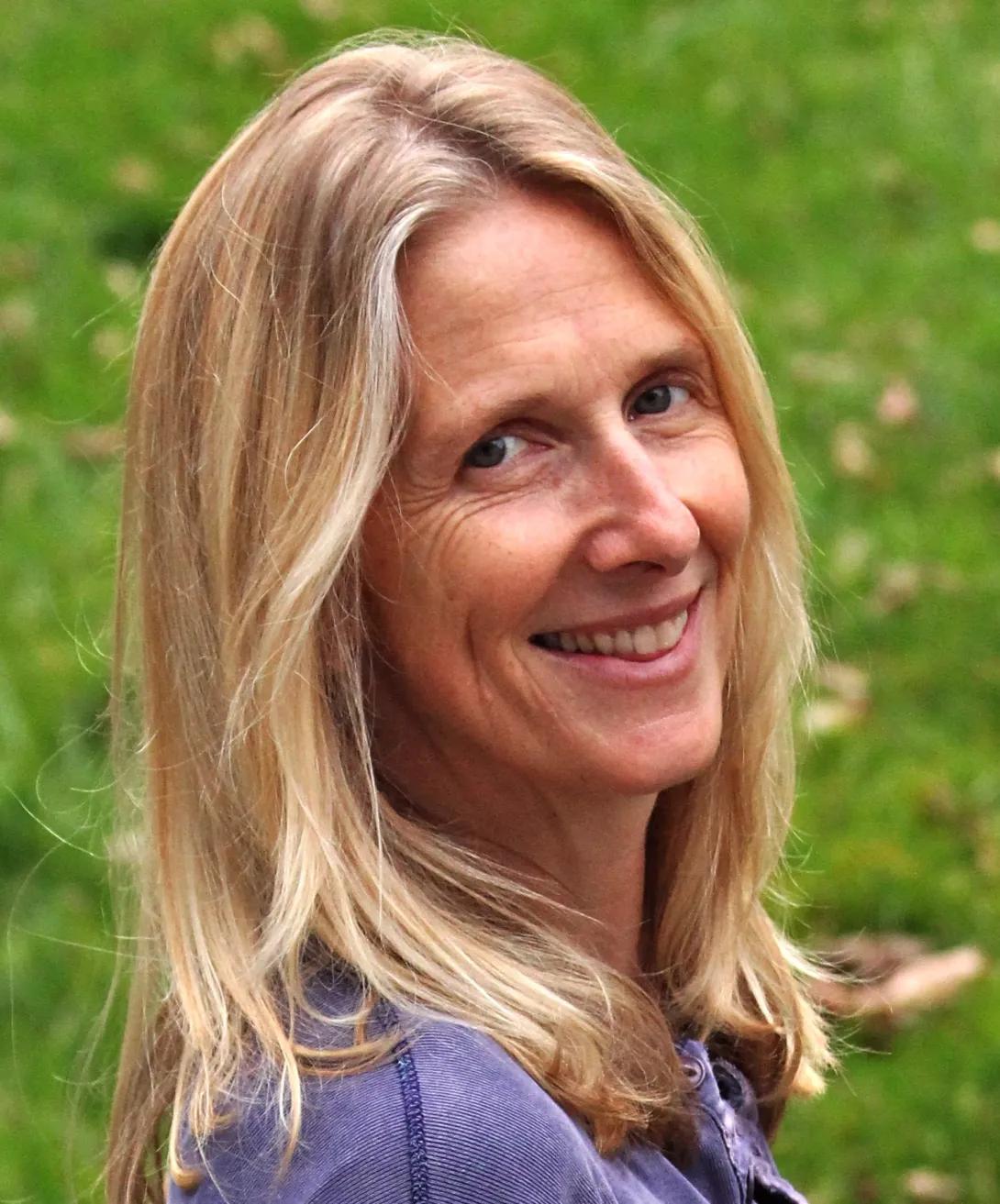
By Mitzi B.
For as long as I can remember the majority of my days were full of hopelessness and dread. I don't ever remember being happy. The prospect of doing my homework or of going to a birthday completely overwhelmed me. I remember obsessing about what it would be like to cease to exist and to do so in a way that wouldn't hurt anyone else.
I had no idea that I was different from everyone else – that not everyone lived with these horrible feelings.
When I was 16 I discovered ways to ease that sense of dread – I drank, did drugs and sexed my way into oblivion. Anything that would temporarily ease my pain. It took a lot to ease that pain.
Somehow, even with all the dread and the drugs, I lived a productive life. I was very successful at whatever job I threw myself into. I got married and, when I got pregnant, I stopped drinking. I worked hard to be the very BEST stay at home mom and was a supportive wife and a loving daughter.
In spite of all this, or perhaps because of it, I still carried that sense of dread with me everyday. It was heavy. And exhausting.
Believe it or not, I really thought that I was doing ok.
And then I stopped sleeping. For a year. I lost 20 pounds, spent hours driving really fast on the back roads of Maine, did things that I shouldn't have been doing. One cold October day I found myself in a closet, banging my head against the wall. I had no idea what was happening to me.
A friend scooped me up off the floor of my closet and took me to a psychiatrist. It took him 20 minutes peppering with me questions, and confirming with my husband that I wasn't lying, to diagnose me with Bipolar II disorder. This was 9 years ago. I was 42 years old.
Having a diagnosis was HUGE for me. I could finally understand what I was going through. I was immediately medicated and within a month I wasn't depressed for the first time in my life. People would tell me that I looked different. "That's because I am not depressed," I would exclaim with a smile.
I accepted my diagnosis right away and set out to learn everything I could about my disease. Because that's what it is -- a disease. Like heart disease or thyroid disease. I had a disease and it could be treated.
Since my diagnosis I have been on a mood stabilizer and an anti-psychotic. My meds are an important part of my treatment because they raise the bottom of the pool for me, to keep me from drowning. Then I use my coping skills to really thrive.
My coping skills? Daily yoga, a healthy diet, lots of sleep. I also work hard to talk back to those destructive thoughts that can spiral me down into a deep depression. People always tell me to "think positive" but really it's those negative thoughts that I work on when I am depressed. And, 8 times out of 10, it works.
I also have a plan in place when I am in crisis. When I am manic it involves hiking in the woods and 1000 piece puzzles. When I am depressed it involves bed, yoga, chocolate pudding and TV, particularly The Walking Dead. I have learned to ride out those crises with a little self-awareness and effort. Well, a lot of self-awareness and effort.
The past 5 years have been difficult. I survived an ugly divorce, I took care of my mother as she died of pancreatic cancer, I raised two teenagers on my own and I moved to NYC from Vermont at the age of 51.
Throughout all of these transitions I have been able to maintain my mental wellness. Sure, I still have bad days but they are days, not weeks or months or years like they used to be. And here I am. Still standing.
Today my life's work is to educate, spread awareness and reduce stigma. I do so by working with the National Alliance on Mental Illness, traveling the east coast and sharing the story of my mental illness. Nurses tell me that after a presentation, one person who wasn't willing to accept their diagnosis does. Which is huge.
Because I know that, without acceptance, healing cannot begin.
I only cared about the mentally ill in theory, until I was institutionalized myself.
By Melanie C.
I believe that stability is a goal anyone can achieve if it is self-determined, and if clients have access to sufficient resources to meet their basic needs. I’m so proud that I now work in a Housing First program that offers permanent supportive housing to people experiencing chronic homelessness. In the grand plan for social change, I can only commit myself to the work. I do so voluntarily.
This article first appeared on xojane.com.
By Rachel K.
They all call me a high-functioning bipolar. “They” are psychiatrists, psychologists, doctors, and researchers; the people who make the labels. I’ve officially been a high-functioning bipolar since the fall of 2006, when my erratic skipping between the realms of mania and depression became impactful enough for me to say, “Something is terribly wrong” to myself. Sadly, this was weeks after my family had already been saying this. But it’s only when you say it to yourself that you can say it to the professionals who can help you.

After weeks of labeling myself as simply “wrong”—wrong for drinking too much, wrong for not going home, wrong for being preoccupied with various random obsessions, wrong for sleeping no more than three hours, wrong for not being able to stop crying, wrong for feeling alone in crowded rooms, wrong for planning my suicide—I welcomed the new label of “high-functioning bipolar” with delight. It came with these shiny, organized pamphlets that described my unexplainable actions and feelings over the previous months (and years, upon reflection). It came with the beginning of forgiving myself for throwing a grenade into the middle of my life and all who moved within it. And it came with medicine that could help. Yeah, high-functioning bipolar was just dandy, thank you, doctors.
As I got better and learned to live a lifestyle that supported my high-functioning by managing my bipolar, I started to think about that label more. How should I feel about the pairing of those two words? Maybe I was high-functioning for someone with bipolar, as in, “Boy, she really gets shit done despite being all nutty and stuff.” Because I do get shit done. Or maybe it was dismissive of my struggle, as in, “Yeah, she’s bipolar, but not that bipolar. She’s still functioning. Like, a lot.” Because sometimes I am bipolar, but not that bipolar.
But sometimes, I’m super bipolar.
A good example of super-bipolar was four months after I had my second child. I had my first and high-functioned my head off by starting a doctoral program, building new friendships, making handmade Christmas cards, baking homemade bread… Bipolar? Pffft. But my son came into the world with a lot of drama, and a lot of emergency decisions, and then a lot of drugs. I remember talking to my sister-in-law from my hospital room hours afterward, while I tidied up my things and put on high-functioning make-up. “You sound really good,” she commented, and I could hear surprise in her voice. And it was no show; I felt really good. I had just experienced the miracle of life! I had a newborn baby to add to our family! The surgery had gone well and the drugs minimized the pain! (And I was beginning a bipolar mania!)
I was in the high stage, in which everything is possible and transcendent and I am so full of ideas and joy and pretty much every breath makes me excited for the next. It’s an ecstatic state. And after twenty hours of labor ending with an unconscious slicing of my belly, ecstasy was maybe a little… surprising, yeah.
Several weeks later came the low stage, when every morning I woke to a weight on my chest that told me I could not do this thing they called life. When I am there, hopelessness pushes every other sensation out of my mind and body. I cannot find my joy, to the point that I convince myself that surely I have imagined anything resembling it. It is here that I become convinced that my family would be better off without me.
And it is here where the label confounds the doctors as well. At the valley of that low point, I sat in a chair across from the woman who ultimately saved my life (that time). She had the job of deciding whether or not I needed to be hospitalized. I was diagnosed as bipolar; I was suicidal; I had a plan. All of that should have sent me in. But I had a newborn and a two-year-old to think about, and parents just a few blocks away who had dropped everything to circle the wagons, and a husband who was willing to be on exclusive night duty with the baby so I could regulate my sleep patterns. And I was high-functioning, dammit, with a household to run and a dissertation to write.
What do you do with me then? Well, when you’re amazing you get me on Lithium, meet with my family to make safety plans, and send me home as I wish. Then you call me twice daily to make sure you made the right call. She told me later she was terrified about that decision. So you see, labels are tricky, even for those who use them.
But I’ve realized something as I oscillate between these two identities. The truth is, the high-functioning isn’t a caveat for the bipolar, nor the bipolar for the high-functioning. They are a single unit, and I don’t need to prove my case about either one. I am both.
When I can’t stop crying as I fix my family a well-balanced dinner, pack lunches, and answer emails, I’m both. The fact that I function doesn’t stop my tears from scaring my children about their mommy, and I don’t ever get those hours with them back. But the fact that I’m bipolar doesn’t make their carrot sticks and baked tofu any less healthy, make my response to the email any less helpful, nor negate the lesson I am teaching my kids about how sometimes our feelings are not rational and we need to muscle through them to do the right thing as best we can.
When I am sitting in psych ER at nine in the evening in the middle of teaching an intensive summer course at a prestigious university, I’m both. The fact that I function doesn’t stop the hospital staff from confiscating my things for fear of self-harm while I wait to see a doctor in a room full of people who look like they’ve seen the side of the curtain that I see. But the fact that I’m bipolar doesn’t change the fact that I get up the next day and teach twenty-five masters students for six hours and ultimately receive glowing reviews of my course, nor the lesson I learn that I can get emergency help without totally imploding my life.
I’m both.
So I am sort-of done with that question, and on to a new one. Yes, I am a high-functioning bipolar, and I am many other things. I am wealthy. I am employed with health benefits. I am well-educated. I am housed, luxuriously. I am free of addiction. I am safe from everything but myself. I am, to be clear, a high-functioning bipolar within a context of privilege, surrounded by caring, supportive family and friends who also exist in that context of privilege.
My next question concerns the same label, though. When I drive by the homeless man who sits at that exit ramp day after day no matter the heat or cold or precipitation, or when I walk by the man who is talking to himself outside of the hipster restaurant where I meet my friend for lunch, or when I read about the kid who went through with it as a teenager and didn’t live to blog about his struggles with bipolar… I wonder.
What are they?
Interview with Long-Time Research Participant Jennifer F.
Interview by Kat Bergman, Communications Manager for the Prechter Program
Jennifer is one of the over 1,300 dedicated research volunteers who participate in the Prechter Program’s many studies. She has been a participant for eleven years.
Jennifer went to the University of Michigan to study voice. She also has a service dog, a Samoyed named Maya. Read below about Jennifer’s love of music and the immense help Maya is to her.
Please tell us about your love of music and singing – how did it develop?

I started singing in my church choir in the third grade. It wasn’t long after I joined that I was asked to sing special parts with the adult choir. By the time I was in junior high, I was singing in not only the school choirs but state honor’s choir, and three church choirs. I loved singing harmony, which can be a challenge when you are a first soprano and the highest voice period, so I started singing descants above the melody when the congregation would sing hymns, some of my own design and some written.
In junior high, I followed my passion to Interlochen All State which was a program run for only Michigan students and staffed completely by the University of Michigan. That’s when I first fell in love with the University of Michigan style of teaching and had some of the same professors as a child that I would have when I arrived six years later on the campus as a budding freshman.
The first time I sang on the stage at Hill Auditorium in Ann Arbor was January of 1987 as a 7th grader. I was hooked and I knew my destiny lay at the school. In 1993, I entered the University of Michigan School of Music officially. I studied under many brilliant minds including the great Melody Racine and, of course, my dear friend and musical father Jerry Blackstone, who helped shape and guide me. I consider him the most influential person in my musical training because he always made practice fun and he never hid his faith which I knew guided him. Watching him gave me courage to step out on my own faith as well and that has made all the difference. He asked one of my friends and me to sing at his church as a sophomore and I will never forget the reception. He was an amazing mentor and guide for me all these years. He took over for the UMS Choral Union in 2003, which is when I decided to join. He never knew of my disabilities although I am sure he must have suspected. I pray that what I am doing now would make him proud.
You’ve mentioned to me that you have anxiety. How does it manifest when you are on stage? How have you dealt with it in the past?
My anxiety for many years was able to be managed just by powering through. I would spend hours, sometimes days, psyching myself up, fasting so I didn’t get sick on stage, and then praying that I wouldn’t faint during the performance. More than once I have had to sit down because my heart was going so fast it made me dizzy. During the rehearsal process I was so anxiety ridden that there were weeks I couldn’t even will myself to get in the car -- the dread was so real – and this was something I LOVED doing!
That all being said, when I perform, I typically go into a zone and try and block everything out. However, a few years ago my bipolar medicine regiment was completely changed because the drugs that had helped me for years had stopped working. As my doctor explained, for about 12 years I was always slightly drugged and sedated with the regiment I had been on, which made dealing with anxiety easier. Now, I didn’t have a chemical crutch. I was facing the world as I truly am. I honestly feel more like myself mentally then I have in years – even though I have technically been stable since 2004 – I feel more alive and focused, and more willing to step out, but only because I have my faithful service dog to steady me. She is more powerful and more reliable than any drug, plus no side effects!
Tell us more about your service dog, Maya. How does she help you?
Maya is a completely unique service dog tailor-designed to work for my specific needs. The first thing you will notice is that the closer she is to me physically, the more anxiety-prone I am. She tends to touch me to try and calm me down. This can be as simple as a paw on my foot or, when I need more immediate help, she will lick my hand. When I drive and am anxious she will simply put her paw on my arm or put her head in my lap to instantly calm me.
She can sense my heart rate, blood pressure and smells changes in my pheromones when I am about to have a panic attack. Her main goal of being with me is prevention but if I do have a full blown panic attack, she often senses it before I do and will start nudging my leg to get me to move. If that doesn’t work will bark at me to almost “herd” me to a safe, quiet place where she can coach me through the attack. She will sit me down and lean against me, and in extreme cases make me lie down, and go heart to heart so our heart beats will sync up. Then she will press her forehead against mine, close her mouth and deep breath with me. After I am breathing normally she will lick my face to continue to calm me. The whole process can take 5 to 10 minutes. It is SO much more pleasant than having to be rushed to the ER thinking you are having a heart attack.
Maya also watches me throughout the day and when she senses my anxiety level starting to rise she grabs her leash and prompts me to walk – the best way for me to mentally manage my anxiety. She knows when I am to take my meds and which ones are to be taken when. She knows increments of time so I can ask her to come and remind me to do something in 15 minutes and she will come back exactly 15 minutes later and point at me reminding me I am supposed to do something. She wakes me up in the morning so I do not sleep too long and she also knows my bedtime and will herd me to bed if I try to stay up too late.
Our relationship is a very unique and special one. She is an amazing dog and unbelievably devoted and faithful.
You recently were one of the singers in the University Musical Society Choral Union’s performance of Handel’s Messiah, with the Ann Arbor Symphony Orchestra. How was that experience?

I have sung with the Choral Union since 2003, but by my last concert in 2016, during the entire performance my heart rate never dropped below 150 bpm. I had no way of measuring my blood pressure on stage but I seriously thought about checking myself into the emergency room after that performance. I knew I couldn’t continue being in the Choral Union because my life was being threatened by my crippling anxiety.
I told my director I needed to take last year off while I dealt with medical issues and then in the spring I let him know I wanted to come back but only if I could have my service dog with me. Many hurdles had to be jumped through, but I ended up being allowed to have Maya with me during performances.
The end result for me was FREEDOM! For the first time in almost 30 years I had FUN, and for the first time in what felt like forever I had absolutely no symptoms of anxiety! Maya checked in with me all throughout the performance, keeping physical contact with me the entire time, licking my hand when she needed to shock me and drop my heart if it started to race, and I was simply at peace throughout the whole performance.
The music and the story of Messiah has very special meaning to me because it is the entire life, death, and resurrection of Christ. I long every year to be able to tell the story to the audience. Because the meaning is so profound to me, I am brought to tears many times throughout performing, but instead of anxiety tears they are tears of joy now!
By David A.
As a freelance reporter on a Grand Rapids, Michigan, daily, my intent in the latter part of the 20th century was to work steady "forever" on this job I loved so much. But, after three months, my submissions were nil. "I don't have any more gumption to get up any more stories," I told my editor. My mood had turned into a severe depression. But soon I was Off to the Races. Fired with mania, I got into my car and drove, and drove--and when the gas was empty, I found myself in mid-Wisconsin.

As on all these 'vacations,' I found a phone booth and called 9-1-1. A cop car soon arrived with two officers. They took me to a local mental hospital. We stood at the nurses’ desk where I would be checked in. As we waited, I slipped a note on paper to one of the officers. He stared after he read on. The other cop took it away from him, and did not waste time as he ripped it up.
After the men left, my eyes spotted a unit phone for patient use. I hurriedly called my former editor at The Grand Press. "I'm on a nut ward," I explained. "Can I do an article about this?" He stumbled to find words. Little did I know this was to be the last conversation!
I was then put in a private patient room. All staff who came in contact with me wore blue rubberized gloves. Previous to this, I had Hepatitis A, which had run its course and was now non-contagious. But the staff did not want to take chances. Even my dirty sheets and clothes were washed alone.
Soon after, the hospital employees took a collection of seventy dollars so I could leave and go back to Michigan. I was told I could go that night or in the day light hours. I chose that night. As a male held open the glass door to my freedom, I walked through. "See you next year,” I joked. He looked at me as he laughed.
As I drove, I was on 'manic alert.' "Am I being followed?” “Will my gas run out again?” I stopped at a cheap hotel. For $8 I rented a room for the night. I went to the bar there and, in my socks, ordered water. A man with cowboy boots looked at me with contempt and ordered a whiskey from the bartender. In my mental illness I 'reasoned' he was Ronald Reagan.
Though I was freaked by this whole trip back, I had made it....
The above is an excerpt from the author’s book A Life of Unleashed Mania, available on Amazon.
by Scarlet T.
I've had severe mood swings for as long as I can remember. My family always brushed it off, because "she gets over it eventually." I started dating my current boyfriend in December 2013. About six months into the relationship, he said: "This isn't normal. You need help." Out of everyone in my life, he was the first one to tell me that.

Shortly thereafter, I found myself in a local therapist's office discussing my symptoms. She concluded I had bipolar disorder type 2. A diagnosis was a double-edged sword for me, because on the one hand, I was happy to find out there were others like me. But on the other hand, I was upset because this was something I would have to manage the rest of my life.
The road to stability has been long and arduous, but worth it. I started off by seeing my therapist weekly, then biweekly. Now I only see her every few months, more often if I'm in an episode. I read every book I could about bipolar, co-dependency, and other self-help topics to learn everything I could about my disorder. I keep up on new research findings, seminars, and books. I started participating in the Prechter Program's Longitudinal Study of Bipolar Disorder, because I wanted to help others like me find clearer answers and those still searching attain earlier diagnosis.
I was always an A-student in grade school, and now having the information and tools for bipolar helps me stay stable. One of my personal mantras is altered from 1 John 4:18: Perfect love casts out fear. For me, perfect knowledge casts out fear, simply because I'm not always going to believe my family and friends love me.This is true especially when I'm in a depressive episode. However, I know in the back of my mind that this feeling, too, shall pass. Whether is takes hours, days or months, I'll be stable again down the road. This knowledge is something I can hang onto in my darkest hours while I wait for the light to shine again.
Agoraphobia
The morning is dark against the window
yet safe, still, familiar.
Now, it is the waiting
for hours sometimes,
days sometimes,
for the light to come.
That takes patience. Fortitude.
Maybe in the middle of the afternoon
comes the capacity to leave
through the door
and into the uncharted.
The unknown.
How will it
all be perceived?
Will the eyes, mind,
distort it into something
harrowing? Perverted?
Stepping out into the undiscovered;
moving cautiously, across the floor
is taking the chance
that contact with reality
will be unfaithful. Confusing.
What a risk!
Into the brick wall...
Down the bottomless well.
What are the repercussions?
People move past
shedding impressions as they do.
Can these be trustworthy?
Can they be depended on
as empirical fact?
For it is upon these impressions
that I react.
There is no other way.
To move into the day knowing
that it is warped - beyond belief
does not instill confidence...
to say the least.
Alone
I walk disconnected
a stray limb in a forest
of winter trees.
Unplugged,
not a place to bond
to attach
to join.
The path is unformed,
I create it as I move forward.
Each step I take
crackles the undergrowth
beneath, flattening it.
There is no one
around to hear it,
if a tree falls in the forest, and there’s nobody around to hear,
does it make a sound?
An age old question.
Do I make a sound walking
if no one is around to hear it?
Do I exist if
there is no one around
to see me?
Yes, I exist. Alone.
Each step now is uncertain.
Each step is harder and heavier.
So I stop.
The sky is cluttered with
tree branches
entangled and dark.
A small bit of sun,
cold sun seeps thru.
I gather my clothing
around me more tightly.
Which way to move next?
Where is the passion that calls to me?
It is silent now,
so I wait.
It is not a comfortable patience.
It is painful.
I want to be able to go to the grocery store
I want to be able
to go to the
grocery store...
Two times I have been to the one
near to where I live.
First was my initial
outing for food.
When I moved here. Horrifying.
The second stemmed from
desperation
for plain yogurt
because the vet said
that the yogurt
would kill the
cavity forming bacteria
in my dog's mouth.
And they don't sell yogurt at Dollar Tree.
So I had to go.
It was cold that day.
Huge doors open as hot air releases
waiting carts come next.
Shoved together
like steel traps.
Around the next corner:
a football field,
players scattered around
from one distant end
to the other.
Noise, lights, pictures on boxes, cans,
endless floors.
Tall ceilings.
I thought to zip in and out
..but walked until
my feet hurt and
after struggling with the self-check-out
machine until the disgruntled
employee did it for me,
I made it back to my car
and my dear, waiting dog,
so happy to see me.
Missing Out
Does everyone else?
That's what it feels like.
Having babies for instance.
The doctors, nurses, husband by the side.
White sheet, screaming,
then - your self-made creation!
What is that like?
What is it like?
A white wedding,
flowers and endless
tablecloths,
people laughing,
long gown with lace.
Clapping?
Wedding cakes?
A round table
with piles of presents
wrapped.
Oh, and showers,
babies and bridal.
I don't know.
I mean what does it really feel like
on the inside?
I know linoleum hallways
with doors lined up
on both sides.
And shuffling from one end
to the other.
Med lines and "group" group group
called from the
sidelines.
So we can get in a circle
and look at each other.
I know helplessness.
Agony and defeat.
But birthing a baby,
bringing a life
into this dreary world,
I will never know.
And I wonder about it.
Fairness is not
part of the equation.
It's by chance, I think.
I think I am just worn out. (Tuesday night’s mood.)
There is no word to describe it.
So vacuous. Empty.
I look around, within, over there over here
Nothing.
Moving along on this journey of aging.
Where is all the stuff?
The stuff of life?
Has it just faded away?
With preoccupation about
Maintenance?
Feed me, wash me, dress me, sleep me.
Each day, check.
shoulders?
Knees?
Hands?
From minimally to moderately,
with pain.
The years tolling by,
each one adding an extra weight
to the bones.
Is the body primary?
No.
There is something else...but I can’t find it right now.
Old inspiration has lost it’s luster…
no longer shimmering above all else.
Good-bye to shimmer.
Can this missing something be manufactured?
Plan an event- walk, talk. Carry out tasks, function.
OK. Have fun? Sure! Whee!
A light flickers in the dark,
then gone. It’s over.
Back home again, jiggety jig.
Cynicism is a bugger.
It hides under the skin, crawling around, breathing ashes.
Useless, but determined. For me, it does not let go.
G-D?
Spirituality. To come into that state,
to summon that presence is work.
I can’t find it right now. Maybe tomorrow.
From nothing comes nothing.
Keep looking Laura, over under, through and through.
HOPE? G-d only knows.
Morning
Dreary spotty everywhere
without a smoth to think
dampness resting on the flob
with nothing left to drink.
Wander there wander here
no rest for all the stumblers
awake all night to toss in fear
that sleep is in the donlgers.
Dragging through the stuckle morn
to drift flat on the flongers.
Never caring in a foggy mind
whether it's all right or wrongers.
By Samuel Johnson
I lay on the floor, almost suffocated by the darkness. It seemed the most I could do was focus on each breath, as shallow as it might be. If someone saw me from above, they would think that I was perhaps sleeping. I literally was unable to lift a finger. The world was no longer joyous and bright. Instead, my eyes only saw the shadows of an eternal night. I felt numb and drawn into myself. I felt devoid of strength. I felt as if a heavy weight was upon my chest, and a curtain was drawn over my brain. I felt scared, for I had no control over this mood, including its duration. And the deeper I sank, the more impossible it seemed that I would rejoin the living.
But suddenly I felt different. I felt like I was shooting up a roller coaster at incredible speed. I started gasping for air. Each breath was a gift. The light returned. It started to pulse until it glowed with an otherworldly happiness. It felt like I hadn’t moved for days. I stretched my limbs. I continued to rush higher and higher. Thoughts flowed rapidly. My brain felt incredibly crisp and clear, and sent pleasant tingles down my arms and spine. I could see fine detail in the carpet. I had an extremely heightened sense of smell. I could hear everything. Pacing the house with newfound energy, I called friends for a conversation in which I spoke incredibly fast. Ideas were precious. I had reached an exhilarating high.
Unfortunately, things didn’t stay that way for long. All of a sudden, everything slowed down. I struggled to speak. Something suddenly felt “off” in my mind, like a light getting dimmed. And just like that, the darkness had come back. If I had been walking along in a high mood, it was just a few steps before I’d be curled back up on the floor. Except I would continue to fall “past” the floor. Deeper and deeper, with no end in sight. One breath in, and one breath out. That’s all I could do to survive. The extremely high mood had just been a cruel trick. But then again, it always came back.
These changes between moods were violently sudden. Just a matter of seconds, really. When I was catatonically depressed, I would end up stuck in front of the fridge, or on the stairs. And above all else, the mood swings were exhausting. My Mom, who had been taking care of me during some of this experience, tracked these episodes. There were an average of about eight depressive episodes and eight manic episodes a day. Sixteen episodes total. In other words, hundreds of episodes in a matter of weeks.
So I began to learn how to cope. Mania was the time to take care of myself. I’d focus on the basics, like getting food and hydration. I would try to find something else to keep me busy. That was hard, because there wasn’t much time before I plummeted into depression again. I turned to music, for I found that I was able to still hear it when I was depressed, and also enjoy it when I was manic. Taking a shower was nice, and if I got depressed I’d just curl up on the bottom, water streaming over me. For comfort, I began to use aromatherapy. Talking to friends and family on the phone provided much needed support. And of course, reaching out to a counselor and psychiatrist was necessary.
Back when these symptoms started, I ended up in the Emergency Department since I wasn’t able to move. Speech was basically impossible. In spite of being familiar with my bipolar I diagnosis, neither my wife or I understood what was happening. The doctor said that I was catatonic, and gave me some sort of IV to help. Shortly afterwards, I was able to move. The conclusion from the visit was that it would be best for me to spend some time in the psych ward so that I could be monitored. My wife and I both thought that sounded best.
Contrary to my usual experience, this stay in the hospital was not positive. The doctor wasn’t convinced I was catatonic, so we stopped the medicine that was supposed to help. (To be fair, the second time I received the medicine I started having visual hallucinations). But then the doctor started saying that I might have borderline personality disorder instead of bipolar I disorder. This didn’t make sense, for I had been diagnosed with bipolar I disorder many times by different professionals. Perhaps the only thing that could be used in support of the doctor’s theory, is that during hospitalization, my manic highs were not very pronounced. Maybe the episodes were still “developing,” for even the day after I left the hospital I experienced many distinct manic episodes. But the biggest reason I left was because a nurse accused me of “not trying,” even though I was struggling to function. Every day required immense effort. Sometimes I couldn’t eat my food. It just felt like the hospital didn’t understand how to help. It felt like they didn’t know how to process what I was experiencing. Contrary to their advice, I had myself discharged.
After the hospital, I was hesitant to try changing meds, since I was tired of the whole “system.” However, my symptoms were getting worse. I reluctantly set up an appointment with my psychiatrist. But scheduling the appointments happened at a snail pace. I needed help faster! I was afraid I’d lose my job. I felt like I was starting to go crazy, and the episodes were getting worse. Contrary to what I was experiencing, my psychiatrist thought that I was having a mixed episode. He prescribed a new medicine that worked for a week or two, but then the depressive episodes came back. And then he wanted to increase my lithium, even though the levels were already quite high. I was uncomfortable with the situation. So I went on a desperate quest to find a new psychiatrist. Someone who would take the time to listen to me, and who would understand what I was going through. Someone who would know what medicine would help me feel better. And someone who would be willing to provide appointments to match the need of my mental health.
The next psychiatrist I found (after extensive searching), happened to offer everything I was looking for, and even more. During the first appointment, and after a short discussion, she explained that I was rapid cycling. She explained that this could happen to anyone with bipolar disorder, especially if there have been enough big stressors recently. (Such as moving twice in less than a year). She gave me medicine that’s supposed to be the best at treating rapid cycling. And she wanted to schedule a follow-up appointment for the next week! I felt heard and seen. And I felt even a little optimistic. Maybe things would be okay.
It was two days. Just two days, and the medicine stopped the rapid cycling. As I continued to meet with my new psychiatrist, she shared that she also has bipolar disorder. She kept encouraging me, saying “things don’t stay this way, trust me.” She assured me that setbacks were normal, and to just give the medicine time to work. Now I knew why she spoke with such conviction. She’s been in tough situations too. She had an idea of what I was going through. And she was placed in my life at the right time, with the right set of skills.
My experience with rapid cycling raises questions. For instance, why had it been so hard for professionals to diagnose what was going on? Is it just that people with bipolar disorder rarely rapid cycle as fast as I did? Was I an abnormality? Is the medical community still learning about bipolar disorder, and not always equipped to provide the right care? In any case, I hope that my story encourages others to look for providers who are able to help, and are knowledgeable. It might take a bit of searching at times. There’s going to be some trial and error. But never stop being your own advocate. It’s worth it, many times over.
Thanks to a good psychiatrist and good medicine, I stabilized and eventually returned to work. As a result, I have a renewed appreciation for psychiatry. I had started to question if taking meds helped at all. But now I can say with confidence that finding the right meds makes a huge difference. It’s a difference I feel every day. I’m also especially thankful for my wife, who loved and supported me through everything. And of course I’m thankful for my parents, family, and friends. Relying on my support network got me through the most difficult of times. Just having someone to listen to you and pray for you means so much.
Overall, I’d say that my experience with rapid cycling has changed me for the better. I was pushed to the limits of what I thought was possible to endure. I thought more than once about how it could be a form of torture. But I emerged from the chaos a different and happier person. For instance, I have a greater enthusiasm for life now that I’m relatively stable. I’ve also developed a stronger resilience from living through the deep and recurring depressive episodes.
I hope that my story helps others understand rapid cycling better, including the medical community. And I hope that those who are rapid cycling can find this article and be comforted. The highs and lows of bipolar are extremely difficult. Especially many times in a single day. But the first breath of regained stability is freedom itself. It’s the freedom of a life regained. And a life regained is always worth the search for help.

by Joyce L.
The miscarriage in 1977 took me completely by surprise. A series of tests had confirmed there was little chance I would get pregnant. But while I cried for the baby we’d lost, we had already adopted our 12.5 month old son in 1974 and his good nature and laughter reminded us we were “in line” for a baby. That was the plan anyway!
But about a month after my miscarriage I became deeply depressed. I was non-functional to the point that my in-laws came from Pittsburgh to run the house. I was embarrassed that I needed their help. They set up a strict morning routine which I now know was helpful. Every morning, I’d get a wake-up call, shower and dress. After breakfast, my son would get into his little car and off we’d go for a very long walk. I was so tired that a long walk was the last thing I wanted to do. Yet as the days went by I was less tired and my mood subtly improved. My husband’s parents were able to go home and I went back to golfing, gardening, and playing with our son.
Two months later I realized I was getting depressed once again and I hated to go to bed knowing what the next day would bring. I was awake all night waiting for my husband’s alarm to go off. When it did I pleaded with him not to go to work. He called off and then called the doctor I’d been seeing. He gave us the number of a psychiatrist to call and after only a short visit, he said I was suffering from post partum depression and prescribed something to calm me.
With help from friends I got through this bout in only three weeks. I promised my son I wouldn’t get sick anymore. But it was a promise I couldn’t keep. And this next depression was “darker” than the others. I felt fearful about most everything and I had to pretend playing with my son was fun. I hated myself when he’d hug me and tell me he loved me, because I figured he’d sense I didn’t love him like before.
I saw the psychiatrist again and he could see I was worse. He said I should be hospitalized and I was desperate enough to say yes. Once I agreed to be hospitalized, I actually relaxed a little. My husband’s folks had agreed to arrive Sunday and I’d enter the hospital on Monday. Then, the Sunday before I was to go to the hospital, my husband asked if I thought I could handle being alone about three hours so he could take our son and his friend to an Indian Village. He said I could call our neighbor if I needed help. I said I’d be just fine – to have fun!
In the afternoon the doorbell rang and panic set in. Then I saw it was my teaching partner and her baby. I was glad to see her but explained I had trouble conversing – even with good friends, she laughed and said she’d talk for both of us! I was beginning to get a bad headache and was going to tell her I needed to lie down. But instead, she asked if I’d like to hold her baby. She put her gently into my lap. She was a darling little girl and made me think of the little girl who would join our family soon. And then an awful thought hit me and I told my friend I needed to lie down. She took her baby, wished me well at the hospital and was on her way.
I wrote a quick note to my husband that I had taken two sleeping pills but to wake me when they got home so I could fix dinner. And I believe that really was my plan. But I had to hang onto the railing and sit on the steps as I tried to reach the bedroom. I was crying so hard as I reached the landing so I just sat there and sobbed. I could see my pills in the bathroom and crawled and stumbled till I could use the doorframe to stand up. I took two pills and poured a glass of water and took it to the bedroom with me. Sadness and desperation had overcome me.
While holding my friend’s baby a heartbreaking thought had crossed my mind. Monday I would be entering the psychiatric ward – meaning in some way I was mentally ill. I believed there was no way the adoption agency would place a baby with me now. I was sobbing again and took more pills to try to get my mind from working. The next thing I remember was driving and being in the back of our car. My husband was driving and my friend was shaking me and shouting for me to wake up. I don’t remember arriving at the hospital and have no idea if they pumped my stomach.
My first memory was of opening my eyes in a small white room and through a blur, I saw my best friend leaning against the doorway. She looked so sad and I didn’t know how I could ever face her after what I’d done. I closed my eyes tightly. All I thought about was the baby who would never be ours. I had stopped caring about anything else – except for my son and those thoughts brought on fits of crying that left me exhausted.
I was told later that I was in a lock-up unit due to my suicide attempt. No one would believe me it was not a suicide attempt and I became very withdrawn and uncooperative during mandatory group activities. Thankfully, they did not try to force participation but you had to be part of the group even if you chose not to talk. Then one day they were working with clay so I joined to make some dinosaurs for my son. This project was the first step back to my world. I’m delighted that my 37 year-old son still has one of those dinosaurs left!
Once I was home my husband called the adoption agency. He told them of my hospitalization due to an overdose, but that the diagnosis was still post partum depression. He asked the big questions: “Are we still on the list for adoption?” The answer was a cheerful “absolutely!” I then got on the phone and explained the bouts with depression had frightened me and that we wanted to wait nine months (like a normal pregnancy) to be sure I’d not get depressed again. They said that could be arranged and for nine months, I was fine and soon we brought home our six-week-old daughter.
Neighbors had made signs and provided a festive dinner. Lots of pictures were taken and one would be very “telling” about my mood as the day went along. We could see my eyes had become dull while in earlier photos, they were bright and happy. I was rocking this beautiful baby and realized my feelings had gone numb – as if I had no feelings for her. I was desperate! My mind was a mess of darting, sad thoughts. I couldn’t believe I was depressed at such a joyous time.
My husband had put our son to bed and returned for our daughter. We started upstairs when I asked my husband to stop. I told him I was sick again and said we’d have to take our daughter back for her sake. My husband was stunned, then finally said: “The moment we saw our daughter, she was ours and if you aren’t able to care for her at night, I will. We’ll get through this.” And for two weeks, my husband cared for our daughter at night – as I lay awake hating myself for not being there for her.
As a teen, our daughter and her dad had their share of arguments. After one ugly one, she asked, “Why does dad hate me so?” I said he was just angry but that didn’t help so I took the chance that she wouldn’t hate me and told her how her dad cared for her for two weeks when I was unable to. How he refused to give her up! She was noticeably surprised and calmed down.
We moved to Pennsylvania when our daughter was one year old. As my husband headed off to work, I had to direct the movers while battling depression. Then a next door neighbor showed up and I discovered the friendliness of a small town. The depression ended and I began to read about PMS. I self-diagnosed and collected a box full of articles. I became “the PMS Lady” and shared my information with anyone who asked.
And then came the miracle I’d so often prayed for; only the route it took still stuns me. I was given a phone number for a new PMS clinic in Pittsburgh. I called immediately and was told I was 500+ in line to get in! I told the lady on the phone I was fighting PMS for years and the toll on my four-year-old was unbearable. I said my doctor had sent a letter but she had not seen it. I started to cry and couldn’t stop as I remembered a recent incident when our daughter overheard me tell her dad he should take the kids and run till he found them a normal mother. She was sobbing and slept in bed with us holding my hand tightly. My doctor had mailed a letter to the PMS Center about the incident. At that the woman said I could try calling one of the doctors there and see if he could help me as he had started the clinic.
I called immediately and his secretary put him on the phone. He told me my doctor’s letter had crossed his desk and he was touched by all I’d been through. He said he’d sent my letter to the center and was disappointed I had not been accepted. “How far from Pittsburgh do you live?” I said, “two hours away.” He said, “I’d like to see you. Do you have next Thursday open? I’ll make the appointment for late afternoon.” I told him I’d stay with my parents the night before so he could choose a time good for him.
The following Wednesday evening I called my college roommate. When I told her who I had an appointment with on Thursday, she literally screamed: “How did you get an appointment with him?” I told her the convoluted route I’d taken to the doctor. “Joyce,” she said, “the doctor is retired. He doesn’t see patients anymore! Everyone in Pittsburgh knows him and I’d say his reputation is world-wide!” I told her to stop telling me anymore – that now I was nervous!
When I first met the doctor what I noticed most about him was the kindness in his voice and eyes. As we walked toward his office, he showed me the book he was working on. It was about fighting alcoholism, his current passion. Once in his office, he asked why I thought I had PMS and I told him my story. He asked if I’d be open to another possible diagnosis. I said yes. Then he asked me to be patient with him – that he had a friend at the University of Pittsburgh that he’d like to discuss my case with as this diagnosis was his specialty.
We set up an appointment for the following week and I began to feel I’d been led to a man who could help me more than I had hoped for. The second appointment, he treated me as if I’d been a patient for years. But this time, he asked questions no other psychiatrist had asked before. Many questions seemed unrelated but he continued to take notes. My answers didn’t seem to surprise him, but to verify what he expected to hear.
The final visit my family had been invited to join me. It was then that the doctor explained his diagnosis: bipolar disorder – or manic depression. He explained why he had come to that diagnosis – and his friend from the University of Pittsburgh had agreed – and had written a prescription for lithium for me. He said there was no cure but medication helped control it. I felt our family now had a new way to deal with our lives. I will always think of the doctor with respect and affection.
When we moved to Toledo, Ohio, I made several calls in an effort to find the best psychiatrist I could find. The answer was a doctor in Oregon, OH. He was very pleasant as he took a history of my battle with bipolar disorder and asked questions about drugs I had used. He gave us information on a research program under the direction of another doctor. I’d heard him speak and was impressed. Soon I was signed up and for two years I went to Cleveland every month. But there was little improvement in the two years.
So it was back to the other doctor but just briefly as my husband read about the University of Michigan Prechter Longitudinal Study of Bipolar Disorder. When my husband read the information to me I was very interested. And to my surprise, he had me registered with one of the doctors there. In two weeks, I was depressed once again to meet a doctor for the first time. I felt I’d spent my life giving bad first impressions to doctors.
“Are you Joyce Lewis?” a friendly voice asked. I looked and saw this very young man. I said I was Joyce Lewis and he responded: “Well, I’m your doctor here at the University of Michigan Frances and Kenneth Eisenberg and Family Depression Center and you’re my very first patient.” I remember thinking, “first here or ever?” Then he cheerfully led us through a maze of hallways till we reached the final door. He laughed as we entered an office and said, “I’m so new, I don’t even have an office yet.” He quickly took charge of the session and by the time it was over, I knew I was in good hands. There was something very likeable and trustworthy about him. In a period of three years, my first impression has proven to be accurate in truly life-changing ways.
In 2009, I was finally well enough to file for divorce from my husband of 44 years. I had battled bipolar disorder for 33 of those years and sadly, my husband was a perfectionist and once I became ill, he was supportive for a while but eventually became an angry man – not just with me but our son and daughter and then our six grandchildren. Eventually he told me he preferred me depressed because he had complete control over me. Instead of trying to help me battle depression, he yelled upstairs (where I was in bed crying), “Do you know how much I hate being married to you?” That was the day I realized I hated being married to him. For the first time I realized his nastiness was likely affecting my health.
2009 was an amazing year. I was well in January and February. Then depression set in, in March when I filed for divorce. I called my doctor at the U-M Frances and Kenneth Eisenberg and Family Depression Center, desperate about whether I was strong enough to go through with this. “One day at a time,” he said. He assured me I could do it and added something to help relax me. He said: “I’ll call you tomorrow morning about 10am to see how you slept. Then, you page me in the evening so I’ll know how your day went.” I think I double checked that this was a daily plan!
After three weeks of phone calls I was no longer depressed – in fact, I felt more in control of my life than I had for years. My doctor’s decision to touch base with me while I was depressed I doubt is in any medical journal. And I realize not every doctor could keep up with one patient twice a day – but I’m sure there are more doctors, like my doctor, who would be willing to try. When you’re depressed and feel useless, there’s something powerful about a call from your doctor.
by Lisa M.
I have lived with Bipolar Disorder for as long as I can remember, though I was not formally given the diagnosis until the age of 23. When I was young, my mom tried to explain away my frequent, often explosive mood swings as products of my creativity, curly hair, and Italian heritage. In her mind, I simply possessed a more temperamental personality than most kids. My illness developed gradually through my high school and college years until by my early twenties there was no denying that something was seriously wrong.

Until I was finally put on medication, it seemed that I was always either at least a little high or a little low. I remember suddenly feeling “normal” the first time I took an antidepressant medication. Throughout my childhood, I walked around with a heavy ache in my heart that got worse on the occasions that were supposed to be the happiest, like birthdays and Christmas. I often went from being crumpled on the floor sobbing, to giggling, to rage in the space of fifteen minutes. I worked very hard to prevent my mood swings from interfering with school because I was a perfectionist, driven to excel in all the activities in which I took part. Having to do everything at 110 percent power, however, left me sick with anxiety. I had a headache nearly everyday, and frequently threw up before or during the school day. At eight years old, I was diagnosed by the pediatrician as “stressed out.”
The more laid-back atmosphere of college brought me some relief from all of the anxiety I had experienced in elementary, junior high, and high school. In fact, I remember college as being the best time of my life, in part because of the multiple periods of undiagnosed hypomania I experienced during that time. My sophomore year, in particular, was marked by high moods, frenzied reading and writing, and a very full schedule of extracurricular activities. I felt ready to take on the world, and served throughout the year as the president of multiple school groups and honor societies. Writing papers and reading came easily, and I would work through most nights into the early hours of the morning, then pop out of bed a few hours later eager to get on with the day. Because I seemed to need so little sleep, I became convinced that other students who slept eight hours per night were simply lazy. I also ate very little, keeping myself on a very strict diet though I wasn’t overweight, and when I wasn’t studying I spent hours running. Punctuating my good mood were bursts of rage that often led to me senselessly screaming obscenities at my roommate and best friend for no reason at all. I had no idea that anything was wrong with me, and she had no idea why I would keep her up at night with my bright desk lamp and rapid typing. So, after the year was over, we never spoke again. Our friendship was ultimately ruined by my disorder.
Alternating with my soaring mood and high energy were periods when I would crash, overeating and sleeping all day and all night. For a while the manic days still outnumbered the days when I was slowed down, but over time my mood shifted and I became depressed for a period of several months. When the incredible vitality that I had been living with disappeared, I tried my hardest to recapture it. But, I didn’t understand then what was happening. Because my moods had always been mercurial, it didn’t seem that unusual that I was now feeling depressed. I had lived with that dull ache in my heart since childhood, and by now it seemed like just one more aspect of myself.
It was during college that I began to see a therapist. My mom insisted I talk with someone when I became intensely irritable and subject to frequent episodes of extreme rage. I liked going to my therapy appointments, but it never occurred to me to tell the therapist about the changes in my moods that had caused so many problems with my living situation the year before. I just wasn’t able to put together the pieces of the puzzle at that time, and I had never heard of Bipolar Disorder. Still, my therapist was able to see at least some of my experiences for what they really were, and he told me that my highs were higher and my lows lower than those of others. My family doctor put me on an antidepressant, which made me feel suddenly clear and full of happiness again. The most amazing thing about going on medication was that the ache in my heart finally went away. I finished college on a high note, and prepared for the move across the country for graduate school.
At UCLA, I picked up where I had left off in college, feeling motivated, energized, and excited to discover where my research would lead. My first quarter of graduate school was an exhilarating experience, and I happily and breathlessly told the tales of this new part of my life when I went home for the holidays. It was the last time I would feel joy for many, many months.
During my first week back at school in January, I was sexually assaulted in a women’s restroom in my school building. At first, I seemed okay, but post-traumatic stress and depression crept insidiously into my life over the next couple of months. The depression I entered was incapacitating in its severity. I developed symptoms of psychosis for the first time, and for several years after was never quite free of hallucinations, voices, and various delusions. My first psychiatric hospitalization came in the midst of my deepest, extremely suicidal depression.
Over the course of my seven years of graduate school, I was hospitalized six times for depression, mania, and psychosis. During this time, I was given multiple diagnoses ranging from Schizoaffective Disorder to Borderline Personality Disorder, until the doctors finally settled on Bipolar I Disorder in addition to Generalized and Social Anxiety Disorder and PTSD.
My illness robbed me of my optimism and self-confidence. For years, I barely spoke around my friends and colleagues because my thinking was so slowed by medication and depression, and my confidence so shaken, that I felt unable to contribute anything worthwhile at all to conversations and social gatherings. Because I felt so worthless and hopeless, I could barely fathom why on earth anyone would want to be around me—I didn’t want to be around myself. I was very fortunate to have one of the most supportive groups of friends and colleagues that anyone could ask for, but I was suffering from extreme paranoia that made me suspicious of everyone around me, and that caused me to believe that the people who knew me were conspiring against me.
There were periods in the midst of my depression during which I felt happy, and then felt happy about being happy. At least, that was how I described it. In reality, I was hypomanic and giddy. Colors seemed more vivid, perspectives more sharply defined, and the whole world around me seemed to pulse with life. I became intensely creative, and did some of my best work during these reprieves from my sadness and utter agony. I learned to cherish those times of clarity and happiness, though they were, as before, frequently interrupted by bouts of rage of sobbing. Still, anything was better than the horrible depression that always seemed to be lurking around the corner, ready to swallow me up again.
Over time, my hypomanias became more extreme, and I gradually cycled into full-blown mania. Unlike the hypomanias, the mania was frightening and confusing. I could not properly process the world around me, so everything seemed distorted and sinister. My psychosis was pronounced to the point that I believed that the people on television were talking about me, that there was a tape recorder in my head so that the FBI could monitor my thoughts, and that everywhere around me were signs and symbols to be interpreted. I was surrounded by whispering and jeering voices that seemed absolutely real, though part of my brain knew that they couldn’t be. I still look back on that time with a feeling of dismay and wonder that my mind could possibly have become so disordered.
Probably in part because moodiness was accepted and even valued in the arts and humanities, I managed to write my dissertation and finish graduate school in 2007 despite my continuous emotional upheaval. I was hired for my first teaching job at Case Western Reserve University, and did my best to believe that I would have a more stable future. The next two years brought moves to the University of Michigan and back to CWRU.
Throughout my first three years out of graduate school, life was remarkably calm. The worst thing afflicting me was anxiety about teaching. I often missed work because I was sick with dizziness, nausea, and headaches brought on by anxiety. But, I managed well enough to maintain my employment.
In September of my first year of teaching, something that I had wished for throughout graduate school happened—I adopted a three-month-old Pug named Gus. Gus is truly my “little miracle,” and now, three years later, he is my Psychiatric Service Dog. I was determined to give Gus the best possible dog life, and in doing so my identity at long last became slowly disentwined from my illness. Training and caring for my puppy gave me confidence and purpose. Gus became very ill with inflammatory bowel disease in the first weeks that we were together. For many months, I had to get up every hour, every night to take him outside for potty breaks. His stoic acceptance of everything that was happening to him inspired me to be strong, too.
I stayed healthy for three years, thanks to Gus. Then, recently, I experienced a Mixed Episode of mania and depression. When I visited Ann Arbor for my annual Prechter study visit, it was recommended that I go to the emergency room for a psychiatric evaluation. Because I was uninsured, the options open to me were the nearest state psychiatric hospital or a crisis stabilization center. I was not actively suicidal, so I was able to opt for the crisis unit. My experiences there were surreal. Many of the people I was housed with were homeless, waiting for spots to open up in group homes. I met with social workers who got me started with the process of applying for Disability, Social Security, and Medicaid. Being uninsured made me realize just how privileged I had been up to that point. During each of my hospitalizations, I looked around me and felt grateful for what I did have, and that was never more true than during my stay at the crisis stabilization unit. I had become one of the many uninsured patients with a disabling mental illness, and I was forced to ask for help.
When I came home from the crisis unit, I decided that I would train Gus to be my Psychiatric Service Dog. Gus was already a therapy dog, and we had visited several hospitals and nursing homes together as a volunteer team. The difference would be that now Gus would be focused on helping me rather than other people, and that he would be able to accompany me everywhere I went. Psychiatric Service Dogs came into being when the Americans with Disabilities Act recognized mental illnesses as disabilities. These dogs are partnered with people with a wide variety of disorders, including PTSD and autism. Any size or breed of dog can be trained as a PSD, as long as he or she possesses the right temperament and affinity for the training.
In order to be considered a service dog as opposed to a therapy dog or a pet dog, Gus has to learn to do tasks that mitigate the symptoms of my illness. We are involved in the training process right now, and he is learning to do things like nudging my hand or leg, leaning against me, and sitting on my feet to distract and ground me when I am anxious; sitting facing backwards to “Watch My Back” while I am washing my hands in a public restroom or standing at an ATM to address the hyper vigilance associated with PTSD; waking me up in the morning and bringing me his leash to keep me going when I am depressed; and reminding me when it is time to take my medication. The training process is fun and therapeutic for both of us, especially because Gus has always been a star student. Having Gus with me in public places gives me confidence, and often leads me to connect with strangers who have questions about what he does (it is not every day that people see a Pug in a service dog role!). Gus gets me out of the house when I am suffering from severe anxiety, and motivates me to go for walks and do other positive things when I am experiencing symptoms that might otherwise cause me to shut myself off from the world.
Recently, I completed the extensive application for Disability and Social Security, which is the first step in the process of applying for Medicaid. The process forced me to confront the many things that have changed in my life since I became ill. Motivation and energy often elude me now; I have a very hard time being active because of medication side effects, including a weight gain of seventy-five pounds; and it is difficult for me to manage my finances, to shop for and prepare food, and to do other daily tasks of living that I once took for granted. Gus might not be able to balance a checkbook or cook healthy foods for dinner, but taking excellent care of him encourages me to take better care of myself as well (for example, I brush his teeth almost every day so that I remember to floss my own; and since I am very careful with his diet, I try to remind myself to be better aware of what I am putting into my body).
I know now that I will always need medication and treatment for my Bipolar Disorder, and it may continue to be a struggle for me to manage even simple things in my daily life. But, I have a partner by my side whose strength and enthusiasm for life inspire me. Gus is teaching me to use positive coping strategies to deal with my symptoms. Together, we have and will continue to weather the storms of my illness.

By Jane H.
Love Only Please
I am diagnosed with Bipolar I
But I don’t get depressed, I only have fun
Living in the world I create in my mind
Where everyone works as a team and is kind
If I ever did get depressed and low
I wonder just how low I would go
I can’t even imagine the pain Heinz C. Prechter must’ve felt
Why isn’t depression a card that I’ve been dealt?
It’s a mystery why I have been spared from depression
It might be because my 7th grade teacher taught me a lesson
He was a good artist and his name is Ray Pipkin
He instilled in me the power of positive thinking
One tool I use that works for me
I write and rewrite my own story
I come up with reasons to celebrate bad events
And the level of joy I feel can be intense
I also watch uplifting TV and listen to inspiring songs
‘Greatest Love Of All’ has been one of my faves all along
I really wish love would replace depression for all
Good Lord, I pray that You heed my call
Welcome to My Mania
Whether we discover a gene or the reason mental illness comes to be
I think that mine is due to painful events more like PTSD
One fact I seize is that it’s as real as my cancer and my heart disease
Yet I can’t freely claim it, can we stop the shame in it, please?
A question I often ask myself is “Why me?”
I’m starting to believe it’s so I could use my tendency
Toward seeing the bright side and my passion to write and share
My story which is yours too and the moral is that ‘Love is in the air’
I wish everyone could feel the joy I feel when I’m flying high
If you felt this way for even a minute, then you’d understand why
It’s exacerbated and extreme when I’m insane, but I have always felt this way
That we could all live in truth with inner peace some sweet day
If we could just bottle my pronoia just before I cross the line
We could all feel true connection and pure love all of the time
To a Deity, I imagine it’s as close as one can get
If I feel this way because of my illness, then to it, I’m forever in debt
It’s like an ever lasting positive energy that belongs to us all
I’ve had the energy in the room break a plate when no one touched it or made it fall
I’ve had a ceiling fan that was broken, all of a sudden turn on and start spinning
I’ve felt the whole world on the same team when everyone is winning
I’ve felt a true connection to those dead and alive
For us all to have these feelings is something for which I strive
I wish I knew the secret recipe to create this energy
I do believe it’s possible and it begins with you and me
My episodes are consistent with recurring thoughts and themes
Our truth is not hidden and our secrets are seen
Whether we’re kind or a bully, we come completely clean
We apologize to others if we’ve been deceitful, unlawful, or mean
Then we write our own stories making our misfortunes seem okay
If we all do this, then I think we’ll be on our way
To feeling the good stuff that’s deep down just waiting for us to feel
This is without a doubt something I believe will help us heal
I’ve written positive stories for my cancer and my heart issues
But why do I have a chemical imbalance in my brain tissues?
Why does my mania take me to a love connection that feels so right and real?
Maybe to tell you that “You are love and the world has love for you to feel”
I did not choose to be born, did you?
But I know I’m here to love and be loved and the same is true for you
This is your invitation to inner peace and for truth to surround
It’s addressed to “The true you, the very best you around!”
By Catherine S.
When I think about the course of my life and my experience in this world, I believe that nothing has affected me more profoundly than bipolar disorder. And when I first began to experience recovery, when I first had a bit of clarity as the medications began to soothe the fires and therapy strengthened my resolve, I realized the greater truth that I was not the only one traveling this road. More time passed and I again felt stability and joy and purpose, states I never believed I could achieve again. It is because of my gratitude for these things that I seek out all ways to give back, all ways to help others who are also suffering.

I do not know if or when a cure will be found for this illness. But I do know this: the medicine I take would not have been possible without research. The therapies that have helped me grow and thrive, they work so well because they have been tested over and over again. A whole system exists to discover what we do not know and to perfect and build upon what we do know.
I participate in research because the only way I can make sense of this life is to spend the rest of it giving back the goodness and kindness and opportunity that has been given to me. I participate because I know that if others had not participated before me, I may not have the life I have now. I participate because I believe that we all have the power to affect change in this world and this is one place where I can step up and use my experience for the betterment of our society. I participate because the more researchers know about the wide range of ways this illness is experienced, the more able they are to develop treatments that are successful for more people.
Finally, I participate because witnessing research of this magnitude and thoughtfulness gives me so much hope. A few months ago I drove past the Depression Center, home to the Prechter Research Team, early in the morning, just as the sun was rising … the Rachel Upjohn Building, standing so firmly, its grand windows shining with the sun’s reflection, but also graciously letting in all that brilliant light to the rooms inside. How well nature demonstrated the very mission of all the research and treatment programs of the center. The researchers there are dedicated to letting in the light and discovering what has been hidden in shadow. They exist to help individuals living with mood disorders feel warmth and sun and stability again in their lives. This is why I participate: because this kind of healing is so much larger than any one of us. The results will come from our unity of effort and spirit.
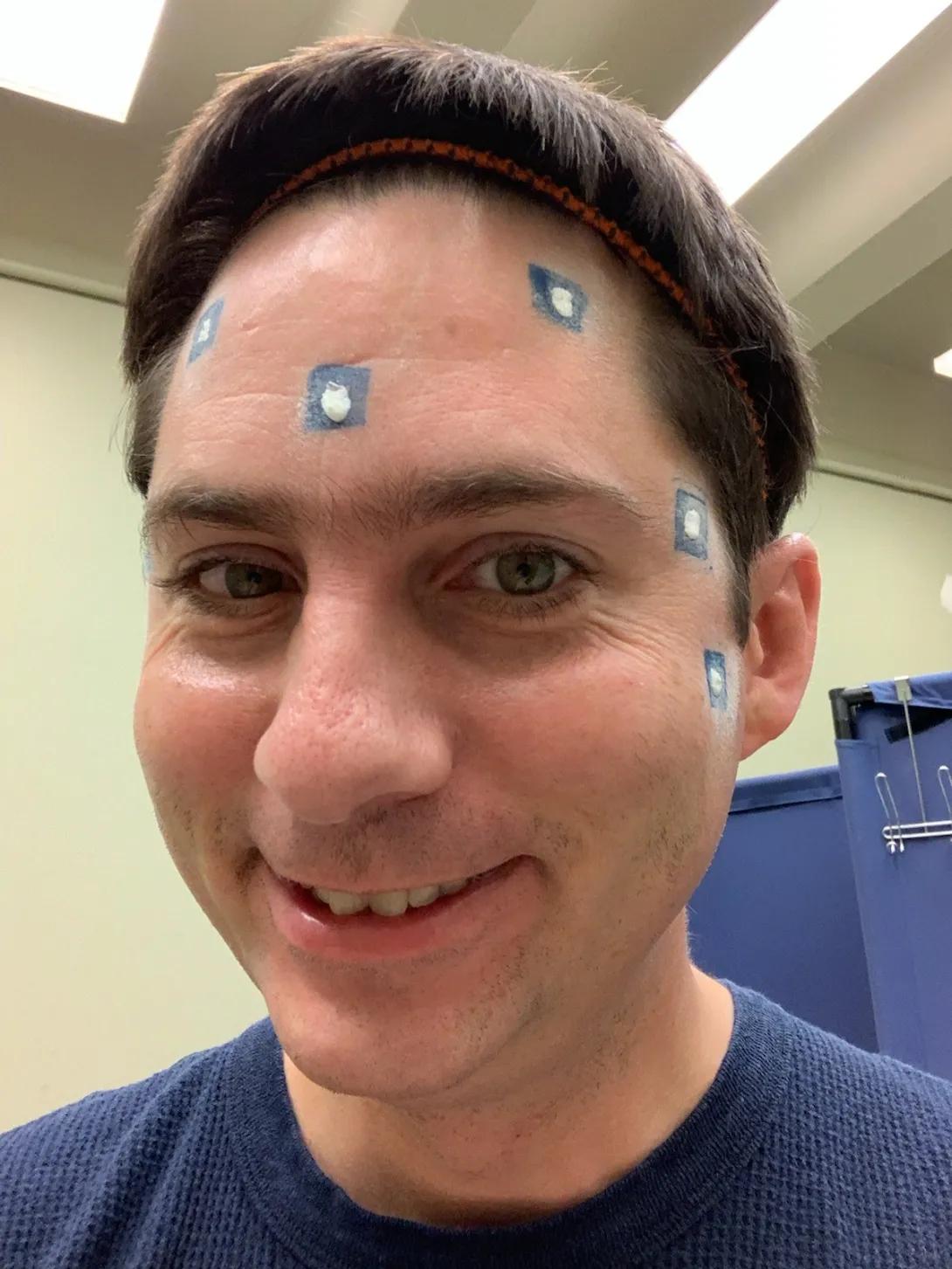
By Mert H.
As I shared once a little of my story of family history of illness, trauma, bipolar disorder, recovery and interest in serving others, with an acquaintance who was a therapist by profession, she asked me, “Do you see yourself as mentally ill?”
“I see myself as a poet” was my reply.
She smiled.
A poem well done is a masterpiece, a work of art. I have found that in reflecting on the history of my ups and downs, the mountains of mania have been made low and the valleys of depression have been lifted up. I am not a systematic scientist. Rather than research the details of my illness, I revel in how personal ruins and emotional ruins enable me to identify with others.
Soon after beginning participation in the Prechter Longitudinal Bipolar Research Study, I began work in Community Mental Health as a Peer Support Specialist on a Health & Wellness Team. Both of these opportunities have prompted a simpler and more joyous participation in my own recovery.
Through research in the Prechter Longitudinal and related studies, I have had the opportunity to understand myself better, more daily at times, than past therapy had enabled. This has enabled me to think through what really works for me and what does not.
As I have gained an understanding of what works for me in various situations, I have been more able to identify with others with similar histories, walk along beside them and lift them up.
Because of my faith in Jesus, self-reflection is crucial to enjoying the fullness of His mercy to me and others. I am less likely to criticize others once I have seen my own weaknesses. We are each more apt then to find healing as we explore life and how we may recover together in a prayerful manner. The following poems together summarize how this healing has worked.
A Progression
Weakness is the beginning of true prayer.
Prayer, the entry point of hope.
Hope, the fountainhead of faith.
Faith, the basis for purity.
Purity, the realm of peace.
Peace, the fruit of persistence.
Persistence, the essence of strength.
Strength, the chief sign of growth.
Growth, the path of life.
Life, the arena of joy.
Joy, the proof of true love.
Love, the goal and sum of all eternal blessing.
Cures
For doubt, swallow the whole truth.
For laziness, toil ‘til tired.
For exhaustion, sleep well.
For insomnia, dream of peace.
For sadness, smile at children.
For anxiety, pray faithfully.
For greed, apply generosity.
For insecurity, seek refuge.
For fear, cultivate trust.
For loneliness, love freely.
For haste and hurry, wait patiently on the Healer.
Bear One Another's Burden's
Oh, how I wish that I could hear your cries,
and wipe the tears from both your glistening eyes:
As if by listening, calm your aching sighs,
As if to mourn for every death you've died.
I'd want to take away a bit of pain and hurt
and wash away from wounds the stinging dirt.
And then make known the Father's worth,
His love, and how He gives you noble birth.
We'd trust Jesus for healing that will come
and thank Him for the victory that He's won.
The Spirit helps us in the race we run
and guides us to the Kingdom of the Son.
In bearing one another's burdens laws are kept,
For we share the loss for which we've wept.
Read more on Mert's blog.
