
PRIORI Ambient
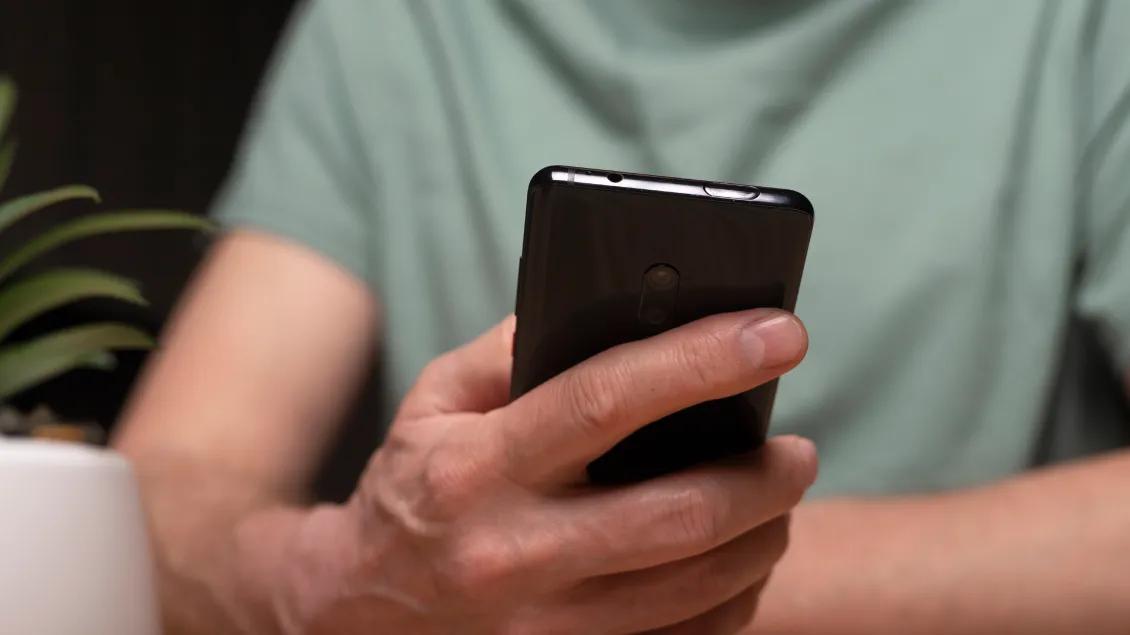
PRIORI: An emotion sensing app for bipolar disorder.
The Prechter Program has entered an exciting new era of the PRIORI (Predicting Individual Outcomes for Rapid Intervention) project! Since 2013, Drs. Emily Mower Provost and Melvin McInnis have worked tirelessly to develop a smartphone application and data pipeline to predict mood state changes based on variations in speech during phone calls and clinical interviews.
The newest era of the PRIORI project, PRIORI Ambient, is being conducted with the National Institutes of Health (NIH) and is built on what Prechter Program researchers learned from earlier, smaller iterations of the PRIORI project. In the previous study, we used the PRIORI app to collect voice data and discovered that we could predict how severe a person’s mood symptoms might be. For instance, our predictions matched very closely with how the participants said they were feeling each day in terms of depression. Additionally, the information we got from analyzing their speech and the emotions they reported feeling contributed to our prediction model in similar ways.
Our goal is to find ways to spot these changes in mood as they happen, without making people do anything extra or different. We’re inspired by the idea that you can often detect changes in someone’s mood through the way they sound, so we’re developing technology that listens to people’s voices passively, in real time, and picks up on emotional changes.
Thanks to funding from the National Institutes of Health (NIH), Drs. Sarah Sperry and Emily Mower Provost are working to study how 160 people talk in their daily lives over the next five years using smartphones equipped with a new version of our proprietary PRIORI (Predicting Individual Outcomes for Rapid Intervention) app. The newest version of the app captures 30 second snapshots of speech every 5 minutes as individuals go about their normal daily lives. The app surveys the level of emotion, activation, and energy from an individual's environment.
Participants in this study will also tell us how they’re feeling, and we’ll have clinical information about their mental health. We’re using advanced AI to analyze the emotions in their voices. Our team of researchers and research technicians are trying to figure out how these emotional clues, along with the participants’ own reports of their feelings, can help us understand the severity of their mood swings, whether they’re feeling manic or depressed.
This will allow us to better build a framework that can detect whether anomalies (changes) in speech are meaningful in the moment.
The long-term goal of this project is to provide innovative AI tools that people with bipolar disorder can use to help manage their mental health and improve outcomes.
The time commitment is 6 months, which includes:
- Consent over the phone, ~30-40 minutes
- Enrollment visit over Zoom or in person at the Rachel Upjohn Building in Ann Arbor, ~1.5-2 hours
- Recorded weekly clinician mood assessments, ~20 minutes
- Weekly app-based mood and self-report questionnaires, ~5 minutes
Once a month, for one week, participants will receive multiple mood and emotion assessments daily. This is called a "burst" week. Participants will be provided with an Android study phone with the PRIORI and CareEvo software preloaded. Participants in this study will be asked to use this phone as their personal device and continue using their own data plan and receive a $30 stipend towards it.
Participants will also be provided with an Android wearable device in tandem with the Android study phone. The wearable device will include the PRIORI app. The study team will compare and analyze the recordings from both devices for each participant.
Upon completion of the study, participants will be able to keep the Android device. If there is discontinuation of the study for any reason, participants will be asked to return the phone.
For completed interviews and assessments, participants will be compensated between $50-$1,580. If participants remain in the study for 6 months and complete all components, they will receive $1,300. If participants are asked to complete additional burst weeks, the compensation is $70 per week.
To participate in our studies, please contact us at
877-864-3637 toll-free
877-UM-GENES
[email protected]
