
Data Requests & Repositories
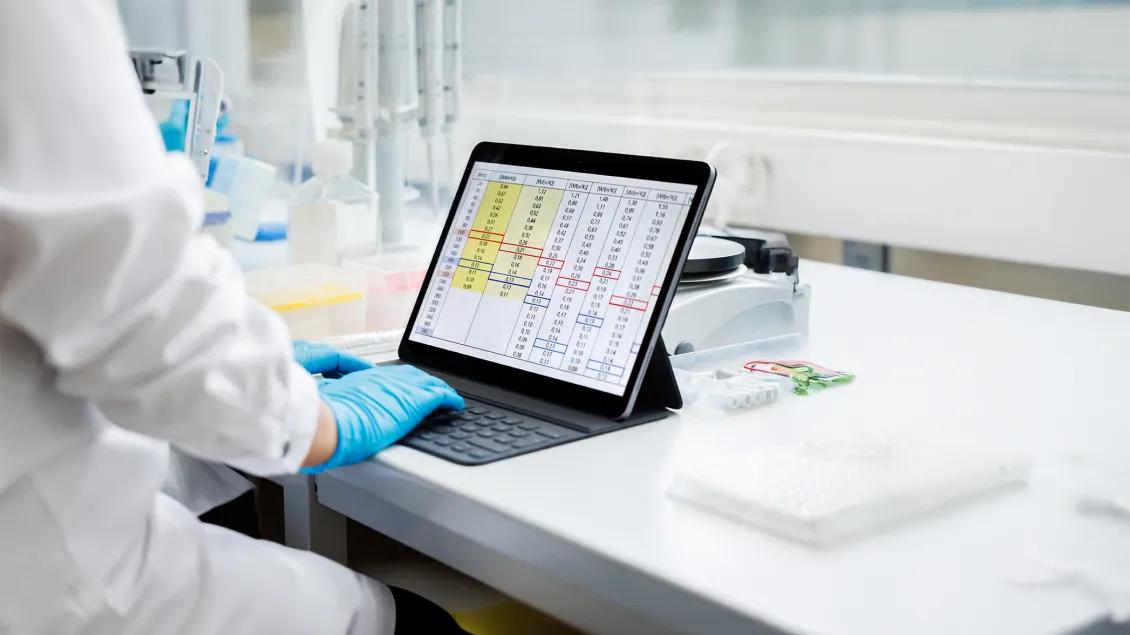
The Prechter Program works globally to connect research teams and empower collaborative efforts in bipolar research around the world through sharing our longitudinal data.
Prechter Program Data Sharing
The Prechter Bipolar Research Program is dedicated to sharing its rich data sets with fellow researchers. From 2019 to 2021, the Prechter Program completed a significant effort in standardizing and harmonizing data elements across all projects associated with and including our flagship research study, the Longitudinal Study of Bipolar Disorder.
In addition to the rich, deep clinical phenotyping and mood assessments, our data holds DNA sequencing data from people who have been diagnosed with bipolar disorder and undiagnosed control individuals. There is a repository of electronically captured health and ecological momentary assessment data, including anonymous speech data. We are also able to distribute biospecimens from our cohort matched with these data, including whole blood, plasma, saliva, hair samples and purified DNA.
Prechter Program Data Dictionary
The Prechter Program has created an easy-to-use, searchable data dictionary that helps researchers understand what information is available in our long-term study of bipolar disorder. This interactive tool runs on a secure, locally hosted system built with the Django web framework. It brings together thousands of data points collected over many years, such as clinical assessments, surveys, interviews, and neuropsychological measures, and organizes them so users can quickly find what they need.
The data dictionary provides clear descriptions of each variable, the type of information it represents, how often it was collected, and when it first became part of the study. It also includes summary scores, instrument details, and a guided workflow that helps users select the right variables before submitting a data request. The breadth of our data is extensive, including the number of participants, the frequency of collection across study components, and the percentage of completed assessments. Since 2021, the Prechter Program has shared data more than 300 times with scientist collaborators around the world and has contributed to five major international meta-analysis collaborations.
This resource supports new discoveries by helping collaborators explore what information exists, refine research questions, and request the data they need for innovative studies.
Data Requests
Data can be shared in an itemized, flat file format or through a collaborative research agreement according to the scope and nature of the project. Data Use Agreement required.
OUR COHORT
The Prechter Longitudinal Study of Bipolar Disorder is an open cohort study of bipolar disorder (BD) that began in 2006 and continues to follow individuals with BD and undiagnosed controls (C). The reason behind collecting this data is the need for detailed phenotype (or how BD presents in a person) data with long-term symptom and outcomes information. Further incentive for the longitudinal approach is the complexity of BD and the variable nature of the phenotype, with frequent changing states over time. Currently, the dataset includes repeated assessments starting from a rolling baseline enrollment, earliest 2006, through 2025 of over 1,500 people.
This resulting dataset is one of the longest and more closely studied cohorts in bipolar disorder.
Clinical assessment data are organized into 7 ontological domains:
- Disease States
- Neurocognitive Functioning
- Personality
- Motivated Behaviors
- Sleep and Circadian Patterns
- Life Story and Experiences
- Treatment and Outcomes Patterns
Study Demographics:
- Over 1,500 research participants, with 1000 active, with bipolar spectrum disorders and controls
- Ongoing accural over 18 years with 9-years average duration in study per participant
- Overall retention rate of 67%
- Average age 39 years old with 63% female
- Over 42,000 ASRM and PHQ-9 assessments
- Annual medical psychiatric and treatment updates
The average time participants have been in the study is 9 years, with a range of 0 - 18 years and an overall retention rate of 67%. The frequency of collection, number of participants, and number of different measures with average percent completion rate are shown in Figure 1 below.
Further efforts are ongoing to improve data collection continually, maintain participant input and diversify the cohort participants. This effort includes the implementation of an annual participant satisfaction survey. Since 2018, the participant feedback survey has averaged 500 responses annually. In 2020, 79% of the reporting participants indicated their participation in the study was "Mostly Positive." 91% of the participants with BD suggested that the study captures the crucial elements of their illness, how they manage it and how it impacts their life.
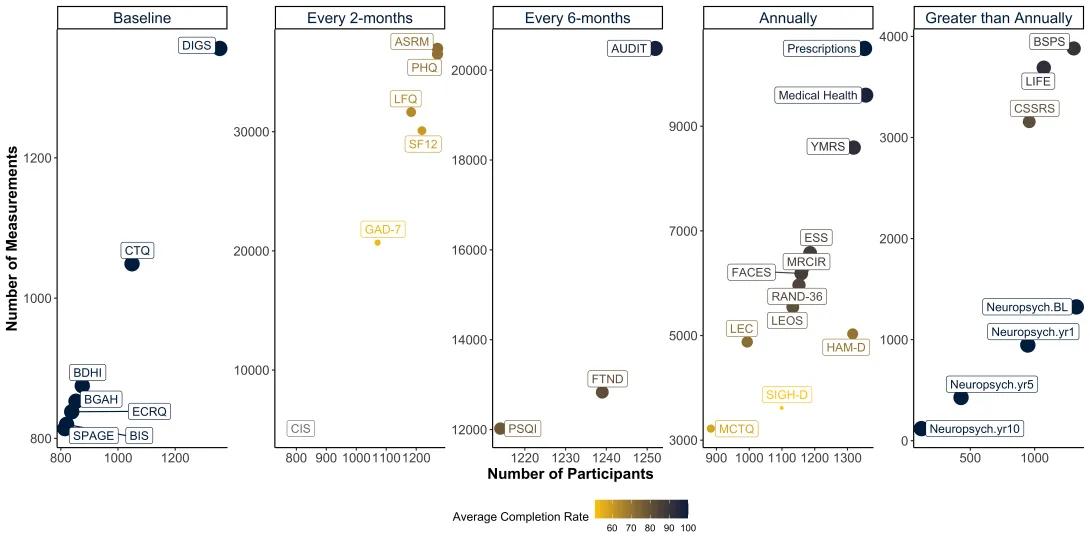
The average time participants have been in the study is 9 years, with a range of 0 - 15 years and an overall retention rate of 67%. The frequency of collection, number of participants, and number of different measures with average percent completion rate.
Prechter Bipolar Genetics Repository
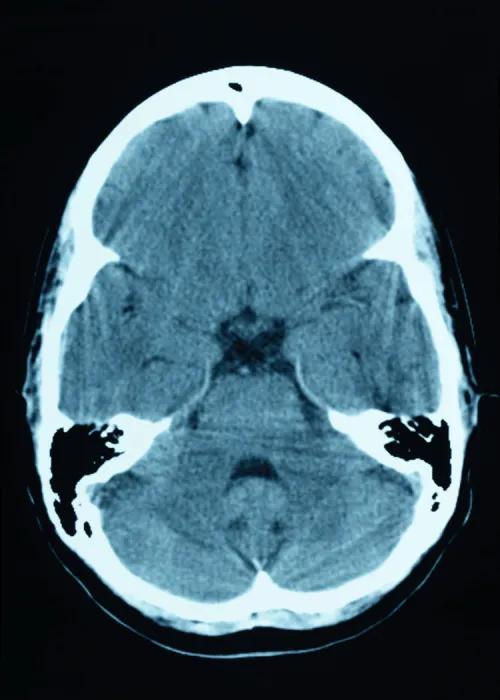
The Prechter Bipolar Genetics Repository (PBGR) was established in March of 2007 to give researchers the tools to study bipolar illness. The PBGR holds DNA samples from people who have been diagnosed with bipolar disorder and undiagnosed control individuals.
The University of Michigan collaborated on this effort with independently approved partner sites: Johns Hopkins, Penn State, Stanford, and Weill Cornell Universities. The investigators have collected phenotypic information (observable traits) and DNA on thousands of bipolar individuals and undiagnosed (non-bipolar disorder) participants. The PBGR also contains additional data and biological material on a subset of these participants, including imaging, electrophysiology, nutrition, stem cells, sleep, and medication data.
UNIVERSITY OF MICHIGAN MEDICAL SCHOOL CENTRAL BIOREPOSITORY (CBR)
In January 2016, the Prechter Longitudinal Study of Bipolar Disorder began to store biospecimens in the world-class UMMS Central Biorepository. The Central Biorepository provides a standardized and accredited system to safely process, store and distribute biospecimens, along with associated clinical data donated for research. The quality and accessibility of these samples and the accompanying data enhance basic, clinical, and translational research in bipolar disorder in the United States and across the world.
Contact Us
Interested in our Prechter Program data? Contact our data team at [email protected]. Data Use Agreement required.
For specific inquiries and further information, contact Prechter Program Director Melvin McInnis, M.D., at [email protected].
