
Angeles Lab Research
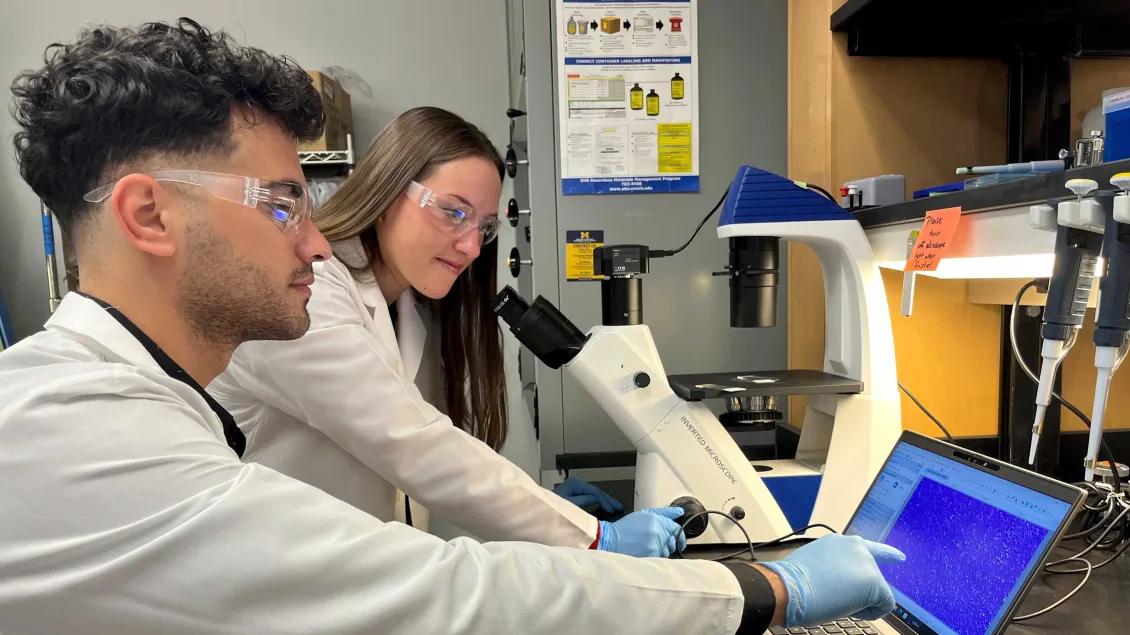
Discover Our Research
Learn more about the Angeles Lab’s current work and impact.
The Angeles Lab investigates how the immune system can be harnessed to fight cancer, specifically focusing on melanoma and sarcoma.
By studying how certain immune cells respond to both tumors and treatments, our research aims to discover why some people experience long-lasting benefits from immunotherapy—and how more cancer patients can share these outcomes.
Our lab integrates basic science with translational research. We begin by analyzing patient samples and clinical data, looking for patterns in immune cell behavior, genetics, and treatment responses. Cutting-edge techniques like whole exome sequencing, single cell and single nuclei RNA sequencing, T-cell receptor sequencing, and ATAC-seq give us a multi-layered view of each patient’s cancer and immune response.
We then use genetically engineered mouse models that mimic different subtypes of melanoma and liposarcoma to explore how targeted interventions, such as topical immunotherapy, can activate powerful resident memory T cells (TRM) within tumors. By combining research in patient tissues with preclinical studies, we can test hypotheses about how the immune system can fight cancer, and identify which strategies are most promising for translation into real-world treatments.
The discoveries made by our lab are directly shaping the future of cancer treatment. By identifying the role of resident memory T cells in lasting cancer control, we provide a rationale for new therapies designed to boost these cells in patients. Our innovative mouse models allow rapid testing of promising drugs and immunotherapies, accelerating the timeline for new clinical trials.
Ultimately, our research aims to make immunotherapy more predictable and effective, reducing unnecessary side effects and extending durable benefits to more patients—including those facing rare cancers like liposarcoma, where treatment options have previously been limited.
Close collaboration is essential to our approach.
We work hand-in-hand with clinical experts and researchers across many specialties at the University of Michigan, ensuring that our discoveries move quickly from the laboratory bench to the patient’s bedside. Our current collaborators include:
- Marina Pasca di Magliano, PhD
- Andrzej (Anj) Dlugosz, MD
- Zhen Xu, PhD
- Scott Bresler, MD, PhD
- Kyle Perry, MD
- Rashmi Chugh, MD
- Beth Pedersen, MD, PhD
Looking ahead, the Angeles Lab will continue to explore strategies for activating TRM cells, both in melanoma and sarcoma, aiming to design immunotherapies that produce long-lasting protection. We plan to discover new immune targets and to launch collaborative clinical trials based on our preclinical discoveries.
- American Cancer Society
- Melanoma Research Alliance
- NIH-National Cancer Institute (NCI)
- NIH-National Institute of Biomedical Imaging and Bioengineering (NIBIB)
- Society of Surgical Oncology
- Society University Surgeons
- Rogel Cancer Center, University of Michgan
- Department of Surgery, University of Michigan
Support Our Work
We greatly appreciate your support in further advancing our research. Please contact the Office of Development with any questions.
Explore Clinical Trials
The University of Michigan offers a wide range of clinical trials through the Michigan Institute for Clinical & Health Research (MICHR) in which volunteers can participate.
