
Hammer Lab Research
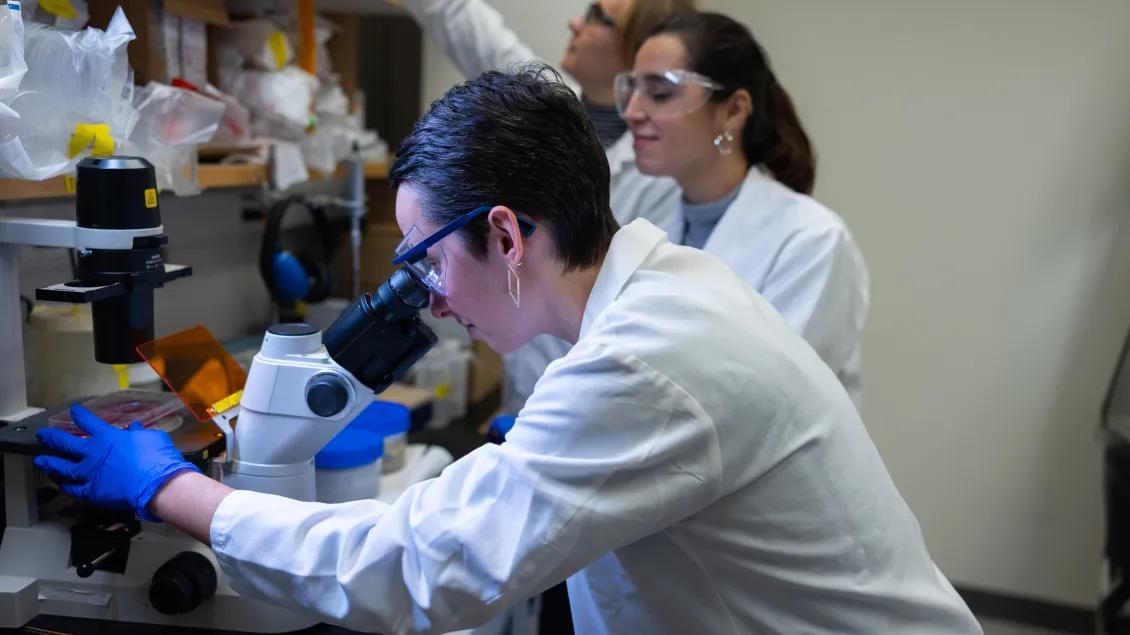
"Science does not know its debt to imagination"
- Ralph Waldo Emerson-
The Hammer Lab brings together a team of physician-scientists, research faculty, fellows, and students who are working to better understand how the adrenal gland functions in health and disease, with a strong emphasis on improving care for people with adrenocortical carcinoma (ACC), a rare and aggressive cancer.
We study why ACC develops, how to identify aggressive tumors earlier, and which biological weaknesses might be targeted by new therapies.
Across the lab, projects explore how genes and cellular programs are regulated, how tumor metabolism and the immune environment influence growth, and how adrenal cells develop and renew over time. By combining basic laboratory discovery with translational and clinical research, the Hammer Lab aims to turn scientific insights into practical tools and treatments that improve outcomes for patients with adrenal diseases.
ANTONIO LERARIO, MD, PhD
Associate Research Scientist
Adrenocortical carcinoma (ACC) is a deadly disease with few therapies. We recently led the NCI-sponsored The Cancer Genome Atlas study on ACC (ACC-TCGA), in which we performed a multiplatform high-resolution molecular characterization of ACC. My work is focused on translating insights from this comprehensive study to develop new prognostic tools, identify targeted therapies, and deepen the molecular understanding of ACC and adrenocortical biology.
Recent projects
I am currently focused on the following areas:
1) Molecular biomarker development,
2) Tumor epigenetics and transcriptional regulation, and
3) Metabolic reprogramming and tumor microenvironment.
The adrenal glands are paired endocrine organs that produce steroid hormones and catecholamines critical for life. Adrenocortical carcinoma (ACC) is a deadly cancer of these glands for which few therapies are available. We recently led the multi-institutional NCI-sponsored The Cancer Genome Atlas (TCGA) study on ACC (ACC-TCGA) to comprehensively characterize the molecular landscape of these tumors using multiomics approaches (Zheng, Cancer Cell, 2016). While illustrative, multi-omics technologies are not routinely available for clinical applications. The ultimate goal of our current research is to translate the molecular findings from ACC-TCGA into simplified tools and therapeutic strategies to improve patient care.
1.) Molecular biomarker development - One of the major findings of ACC-TCGA was that ACC comprises three distinct, equally prevalent molecular subtypes, here designated cluster 1, cluster 2, and cluster 3. These subtypes exhibit strikingly different prognosis; notably, patients with cluster 3 tumors account for ~70% of recurrences and >50% of deaths. Because cluster 3 ACC bear such dismal outcomes, we are focusing our efforts on developing tools to prospectively identify this aggressive subtype as soon as a patient receives a diagnosis of ACC, so we may ultimately exploit unique vulnerabilities that might lead to improved and efficient therapies. A distinguishing feature of cluster 3 ACC is a profound disruption in epigenetic patterning, leading to widespread CpG island hypermethylation (CIMP-high). We have recently developed a simplified, PCR-based molecular assay to unambiguously identify CIMP-high ACC by measuring the methylation level of the G0S2 locus (Mohan & Lerario, Clinical Cancer Research, 2019). We are now using this biomarker in prospective clinical studies and international clinical trials to interrogate whether it predicts response to specific adjuvant therapies.
2.) Tumor epigenetics and transcriptional regulation - Given the striking association between abnormal epigenetic patterning and cluster 3 ACC, we sought to explore the molecular mechanisms underlying the pathogenesis of these tumors. Through these studies, we uncovered a direct interaction between the lineage-defining transcription factor SF1 (NR5A1) and beta-catenin that is crucial for the expression of tissue-specific genes in ACC (Mohan, Cancer Research, 2023). This interaction appears to be essential for maintaining a super-enhancer landscape that may be therapeutically targetable in ACC. We are currently investigating how this pathway contributes to tumor biology and exploring potential therapeutic strategies to disrupt these dependencies.
3.) Metabolic reprogramming and tumor microenvironment - We have demonstrated that high steroidogenic activity and low immune infiltration are distinguishing features of cluster 3 ACC, despite that these tumors bear the highest mutational burden across ACC (Zheng, Cancer Cell, 2016; Mohan & Lerario, Clinical Cancer Research, 2019). Cluster 3 ACC also exhibits metabolic reprogramming that may contribute to features of the malignant phenotype. We are currently investigating how metabolic interventions affect ACC through both cell-intrinsic mechanisms (direct inhibition of tumor growth and epigenetic modulation) and cell-extrinsic mechanisms (effects on the tumor microenvironment and immune system). This work aims to understand how ACC metabolism influences tumor biology and anti-tumor immune responses.
Typhanie Dumontet, PhD
Research Assistant Professor
My name is Typhanie Dumontet, I am a research assistant professor at the University of Michigan, USA, in Dr. Gary Hammer’s laboratory, Department of Metabolism, Endocrinology and Diabetes. I grew up in the central region of France, called ‘Berry,’ and completed my graduate studies in cell biology, genetics, and physiology at the University of Clermont-Ferrand.
When I am not in the lab, I love spending time outside, biking, hiking, skiing and swimming in the Great Lakes. I occasionally participate in triathlons.
My passion for endocrinology and the adrenal glands began in 2011 as an undergraduate student in Dr. Antoine Martinez’s lab at the GReD Institute in France. After earning my master’s degree, I became particularly interested in how deregulation of signaling pathways and transcriptional programs might contribute to endocrine pathologies in humans, including Cushing syndrome. My work is motivated by the challenges faced by patients with dysregulation of glucocorticoid production.
My PhD work (2013-2017) focused on understanding the origin of adrenal lesions in Carney Complex, a rare genetic disease that affects organ homeostasis in both connective and endocrine tissues.
I moved to the United States in 2018, where I continued studying the adrenal glands as a post-doctoral fellow (2018-2022) in Dr. Gary Hammer’s lab at the University of Michigan. I focused on understanding the rules governing adrenal differentiation and primarily studied the zone that produces glucocorticoids, the zona fasciculata. I received funding from the Center for Cell Plasticity and Organ Design at the University of Michigan and the International Fund for Congenital Adrenal Hyperplasia. I am also a co-investigator on an R01 grant from the NIH with Dr. Gary Hammer.
My long-term goal is to acquire the necessary training, skills, and experience to establish myself as an independent investigator by implementing new technology and mouse models to address pathologic and therapeutic challenges of adrenal diseases. In Dr. Hammer's lab, I continually train students and postdocs and am committed to fostering the development and success of the next generation of scientists.
Chris Lapensee, PhD
Lead Research Lab Specialist
I am Chris LaPensee, a senior researcher at the University of Michigan. I received my PhD in Neuroscience in the laboratory of Dr. Nira Ben-Jonathan at the University of Cincinnati, and completed my Postdoctoral training with Dr. Jessica Schwartz at the University of Michigan. I have been in the Department of Internal Medicine and the division of Metabolism, Endocrinology and Diabetes (MEND) at the University of Michigan since 2013.
Adrenocortical cancer (ACC) is a rare cancer of the adrenal cortex with limited treatment options. There exists an unmet need for new drugs or drug combinations that target key regulatory pathways in ACC cells, with the goal of decreasing tumor growth and, ultimately, increasing survival of patients with ACC. My studies of ATR-101, a novel oral ACC drug candidate currently in development, identified the mechanism by which this drug induces death in an ACC cell line and in the adrenal cortex of dogs. In addition to exploring molecular pathways that can be targeted for the treatment of adrenal diseases, my research focuses on the role of endocrine and paracrine signaling in maintaining zonation and function of the adrenal cortex.
Lauren Krumeich, MD, MS, FACS
Assistant Professor of Endocrine Surgery
I am an endocrine surgeon and translational scientist at the University of Michigan. I am originally from the East Coast: I earned my undergraduate degree in Neuroscience with honors from Brown University, graduating Magna Cum Laude. Afterward, I attended Yale School of Medicine. I then completed my residency training in general surgery at the University of Pennsylvania. During that time, I obtained a Master of Science in Translational Research, focusing on the immune infiltrate in solid liver tumors. Following residency, I completed an endocrine surgery fellowship at Massachusetts General Hospital and Brigham and Women’s Hospital. Clinically, I specialize in the surgical management of thyroid, parathyroid, and adrenal gland diseases. Outside of work, I love exploring Ann Arbor with my husband and our two energetic sons—whether we’re checking out the newest playgrounds, hunting for the best ice cream, or getting lost in a local bookstore.
Our lab focuses on how cancerous cells from other sites in the body (metastases) grow in the adrenal gland. Adrenal metastases develop in numerous different cancers including lung cancer, breast cancer, and melanoma and are particularly challenging to treat. We are interested in uncovering how hormones in the adrenal gland influence tumor growth by interacting with immune and tumor cells. We are also exploring how these tumors respond to different treatments to improve patient outcomes.
Dr. med. Johanna Werner
Research Fellow
I joined Dr. Gary Hammer’s lab at the University of Michigan in the fall of 2023 as a visiting Research Affiliate from Würzburg, Germany, drawn by the Adrenal Cancer Program led by Dr. Hammer and the world-class research possibilities provided by the University.
My Professional Journey
I obtained both my Medical Degree and Doctorate (Dr. med.) from the University of Lübeck in Germany. My doctoral research in the lab of Prof. Henrik Oster focused on intra-adrenal cell clock communication, which initially sparked my profound interest in endocrinology and the complex mechanisms underlying adrenal disorders.
Following my studies, I began my residency in Internal Medicine and Endocrinology at the University Hospital of Würzburg. My clinical work, under the guidance of Professors Martin Fassnacht and Stefanie Hahner, made me acutely aware of the ongoing limitations in treatment options for patients diagnosed with adrenocortical cancer (ACC). Dedicated to finding solutions, I was selected for the RISE clinician-scientist program, which funded my initial year as a Research Affiliate in the U.S. Based on my contributions and goals, I was subsequently offered and accepted a role as a Postdoctoral Researcher in the Hammer lab.
As a Postdoc, my primary research focus is on investigating the distinct metabolic and epigenetic alterations associated with ACC. My work particularly emphasizes the COC3 subtype of ACC, which is characterized by significant changes in gene regulation. Specifically, I am looking at how altered lipid metabolism and epigenetic reprogramming contribute to tumor identity and progression. I firmly believe that uncovering these subtype-specific cellular vulnerabilities is the key to expanding and improving therapeutic options, ultimately enhancing patient outcomes and quality of life.
Beyond the Bench
While the complexity of ACC drives my work in the lab, I find balance and inspiration in an active outdoor life. I am an enthusiastic runner who is often exploring the trails and parks of Michigan, finding that the clarity gained on a run in fresh air is often the best fuel for creative scientific thought.
I am also an avid foodie and love trying new restaurants and exploring different cuisines with my friends here in Ann Arbor. The playful drama of the local wildlife—especially the endlessly entertaining squirrels of Ann Arbor—provides daily, lively reminders of the world outside the lab door.
Isabelle Fattori Moretti, PhD
Research Fellow
I am Isabele Fattori Moretti, a postdoctoral researcher in Prof. Gary Hammer’s lab since July 2023. I completed both my master’s and PhD in Sciences, with a focus on Neurology, at the University of São Paulo Medical School in Brazil. My doctoral research centered on the molecular pathogenesis of astrocytomas, tumors that arise in the brain and spinal cord. Specifically, I analyzed the inflammatory and metabolic characteristics within these tumors to uncover new therapeutic targets.
During my PhD, my fascination with cancer pathogenesis deepened. That led me to join Hammer’s lab with a specific interest in studying Adrenocortical carcinoma (ACC), a rare and aggressive cancer with limited treatment options. My current research explores the molecular biology of adrenal homeostasis and tumorigenesis, focusing on a specific cell communication pathway called Wnt/β-catenin signaling. This pathway is abnormally activated in up to 40% of ACC and is strongly associated with aggressive disease. Using both cell culture and mouse models, I aim to identify and characterize other molecules that cooperate with β-catenin to promote disease aggressiveness. Ultimately, our goal with this research is to advance the development of targeted therapeutic strategies that may antagonize abnormal β-catenin activity, improving the lives of patients with ACC.
Kelly De Sousa, PhD
Research Fellow
My name is Kelly De Sousa, and I joined Dr. Hammer’s laboratory at the University of Michigan in 2023 as a post-doctoral research fellow. I obtained my PhD in cellular and molecular biology in the laboratory of Dr. Maria-Christina Zennaro at the University of Paris (France) in 2020, followed by a postdoc in the laboratory of Pr. Hervé Lefebvre at the University of Rouen (France).
The adrenal gland consists of an inner medulla producing catecholamines, and a surrounding cortex that synthesizes steroid hormones, organized into three zones: the zona glomerulosa (zG), fasciculata (zF), and reticularis (zR). The zG, marked by aldosterone synthase expression, produces aldosterone and consists of compact cell clusters, while the zF, organized in radial columns and expressing 11β-hydroxylase, produces glucocorticoids like cortisol. Adrenal cortex renewal occurs via centripetal migration, with zG cells differentiating into zF cells, a process likely involving chromatin remodeling and distinct epigenetic changes.
My project aims to uncover the epigenetic mechanisms driving this zG-to-zF transition by identifying super-enhancers and associated genes through single-nucleus sequencing of cells from intact adrenal glands to reveal unique gene and epigenetic signatures that underly the molecular and cellular processes involved in the transition from zG to zF. These experiments will be informative for my functional studies of adrenal renewal/differentiation using transgenic mice with modified epigenomes.
Ultimately, a better understanding of epigenetic regulation in the adrenal gland could lead to clinical advances in diagnosing and treating adrenal disorders, including cancer, through the development of epigenetic biomarkers, targeted therapies, and gene-editing approaches.
Judy Senanayake, PhD
Research Fellow
I am a postdoctoral research fellow at the University of Michigan with training in Biomedical Sciences and Cancer biology. I earned my PhD in Biomedical Engineering from Wayne State University with a specialization in electroconductive biomaterials for peripheral nerve regeneration. My academic background spans across tissue engineering, biomaterials, biomolecular signaling, tumor microenvironment biology, and translational research, with a strong emphasis on asking clinically meaningful questions at the bench. My doctoral and postdoctoral work has centered on stress signaling pathways in cancer.
My current research focuses on non-small cell lung cancer metastasis to the adrenal gland, with specific interest in p53-glucocorticoid receptor crosstalk and how the adrenal microenvironment shapes tumor progression and therapeutic response. I am especially interested in understanding how systemic stress signals interact with local immune and tumor cells to drive metastatic adaptation. Outside of work, I enjoy mentoring math enthusiastic middle and high school students at a math academy, helping them build confidence in math and science and explore future careers in STEM. I also enjoy going on long walks with my dog and listening to good podcasts on forensic science.
Christopher Kennedy, MS
PhD Student
My name is Chris Kennedy, and I am a graduate student in the Hammer Laboratory, studying the homeostatic mechanisms that drive progenitor cell maintenance and how we can use this information to treat adrenal diseases. I first came to the University of Michigan in 2017 to begin my undergraduate degree in Molecular, Cellular and Developmental Biology and after graduating with my Bachelor's in 2021, continued with a Master's degree in the same program for the next two years. I decided to continue my studies at UofM and began my PhD in the Molecular and Integrative Physiology program in 2023. Outside the lab, I enjoy trying new restaurants in Ann Arbor, being active at the gym or outdoors or working on home improvement projects.
My project studies the influence of paracrine and endocrine signals on the cell fate of progenitor cells in the adrenal cortex, furthering the understanding of how progenitor cells contribute to adrenal homeostasis. The adrenocortical progenitor cell is a non-steroidogenic cell type, located in the Zona-Glomerulosa, that drives the constant, centripetal renewal of the adrenal cortex. Under normal homeostasis, non-steroidogenic progenitor cells differentiate into steroidogenic cells identified by the expression of enzymes Cyp11B2 or Cyp11B1, essential for producing steroids such as aldosterone and cortisol, respectively. The progenitor cells are also capable of self-renewal, which enables the maintenance of an undifferentiated pool of cells that can differentiate and displace through the cortex when necessary. My project explores key biology that regulates the balance between progenitor cell maintenance and differentiation, allowing for greater understanding of the basic science underlying normal homeostasis and ultimately providing key insights into the development of cell therapies for adrenal diseases.
To study the complex homeostasis regulating adrenocortical progenitor cell maintenance, we turn to in-vitro culture systems whereby culturing primary mouse adrenal cells we are able to precisely evaluate the changes that occur to progenitor cells when they are exposed to specific endocrine and paracrine signals. These signals we are investigating include Angiotensin II, ACTH, Wnt4, RSPO3, and PKA, which have all been shown in previous work to be involved in regulating distinct aspects of adrenal physiology. We relate these findings to normal physiology by replicating this work using in situ slice cultures, where we retain the physical structure of the adrenal gland in an in-vitro environment, and by in vivo pharmacological treatments of mice to physiologically alter endocrine and paracrine signaling pathways. By exploring the ways in which these signals are integrated to direct adrenocortical progenitor cell maintenance or differentiation, we can uncover the ways key regulatory pathways regulate adrenal homeostasis through the progenitor cell population.
This work also hopes to develop the foundational science necessary to further develop cell and gene therapies for adrenal disease. Congenital adrenal insufficiency is a group of diseases caused by mutations in key steroidogenic enzymes that render the adrenal gland unable to produce necessary hormones such as Cortisol and/or Aldosterone. Current treatment modalities require life-long medication to supplement hormone levels, but are limited in their ability to perfectly mimic the body’s homeostatic responsiveness. Gene replacement therapy is under development to replace the mutated gene with a correct version, but has been technically challenging to accomplish due to the centripetal renewal of the gland which eventually depletes the therapeutic effect from the cells, resulting in a lackluster treatment efficacy after just a couple months. In our work, we strive to target the progenitor cells specifically with these gene therapies to demonstrate that by correcting the cells that supply the constant turnover, we can retain a therapeutic effect for the lifetime of the animal.
As a whole, this project will greatly develop our fundamental understanding of this particular cell type in the adrenal and provide key insights into basic biology, translational applications, and future studies to further understand the adrenal cortex.
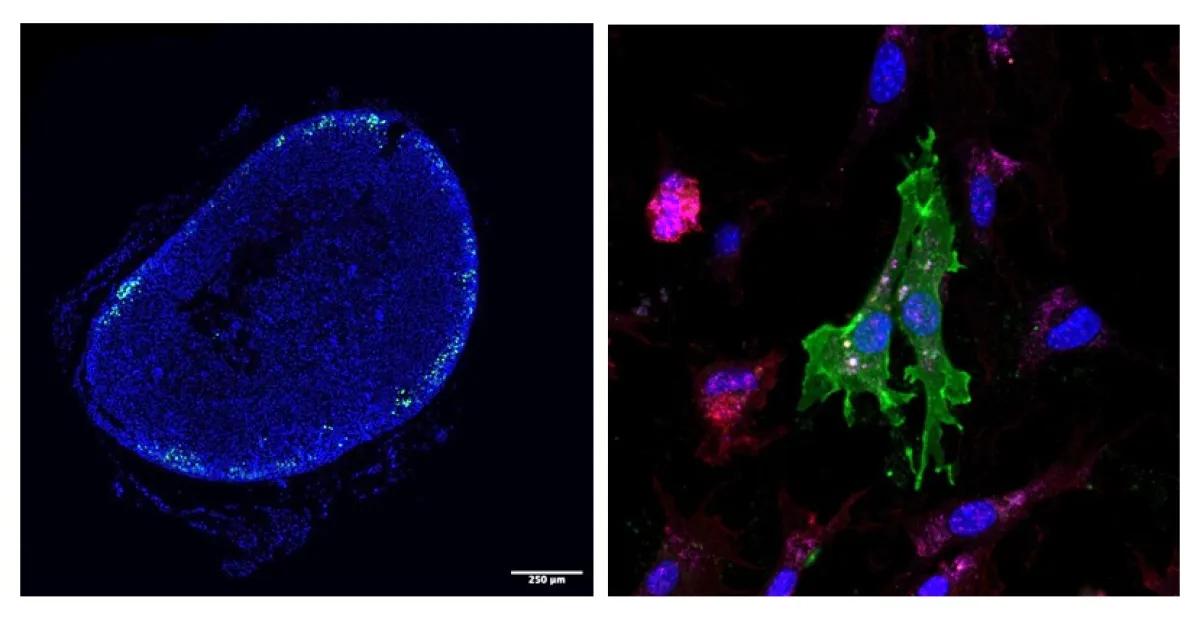
Right: Two Progenitor cells cultured in vitro and stained with GFP, adjacent to a cluster of Cyp11B2+
cells stained in pink.
Sidney Fitch, BS
PhD Student
Hi, I'm Sidney! I grew up in Virginia and received my BS in Human Biology from UC San Diego in 2024. When I'm not in the lab, I love working out and am currently training for a half-marathon and a half-Ironman. I also have a dachshund named Willow, who faithfully supervises all of my reading and writing.
My research investigates how the nuclear receptor SF-1 (NR5A1) responds to various phospholipid and sphingolipid species to regulate transcriptional programs governing Shh+ progenitor cell fate and zona-specific differentiation. My work aims to reveal fundamental mechanisms of adrenal homeostasis with implications for adrenal insufficiency, hyperplasia, and steroid-producing tumors.
Jordan Setayesh, BS
PhD student
I am a 3rd-year graduate student in the MD-PhD program. Originally from Topeka, KS, I moved to San Diego to study at UCSD. In 2020, I moved to Ann Arbor to begin my medical training and then joined the Hammer lab in 2023.
I study the nuclear receptor transcription factor DAX-1. Males with DAX-1 mutations the adrenal disorder known as adrenal hypoplasia congenita (AHC) and who present with primary adrenal failure in the first few weeks of life. Later in life, they also suffer from hypogonadotropic hypogonadism and azoospermia. DAX-1 is implicated in the maintenance of pluripotency across a variety of stem and progenitor cell contexts. Therefore, my project focuses on understanding DAX-1's contribution to maintaining Shh-expressing adrenal progenitor cells and, ultimately, the pathophysiology of adrenal failure.
In my free time, I enjoy reading and writing at coffee shops, playing and watching sports and grabbing a beer after work!
Jen Wloszek, BS
PhD Student
I graduated from Grand Valley State University with a BS in Biomedical Sciences with an emphasis in nutrition and Biochemistry. My research background is in how the brain controls peripheral physiology and metabolism.
Outside of the lab, I help recruit and mentor PIBS PhD students (when I am not busy reading and bothering my 4 cats)!
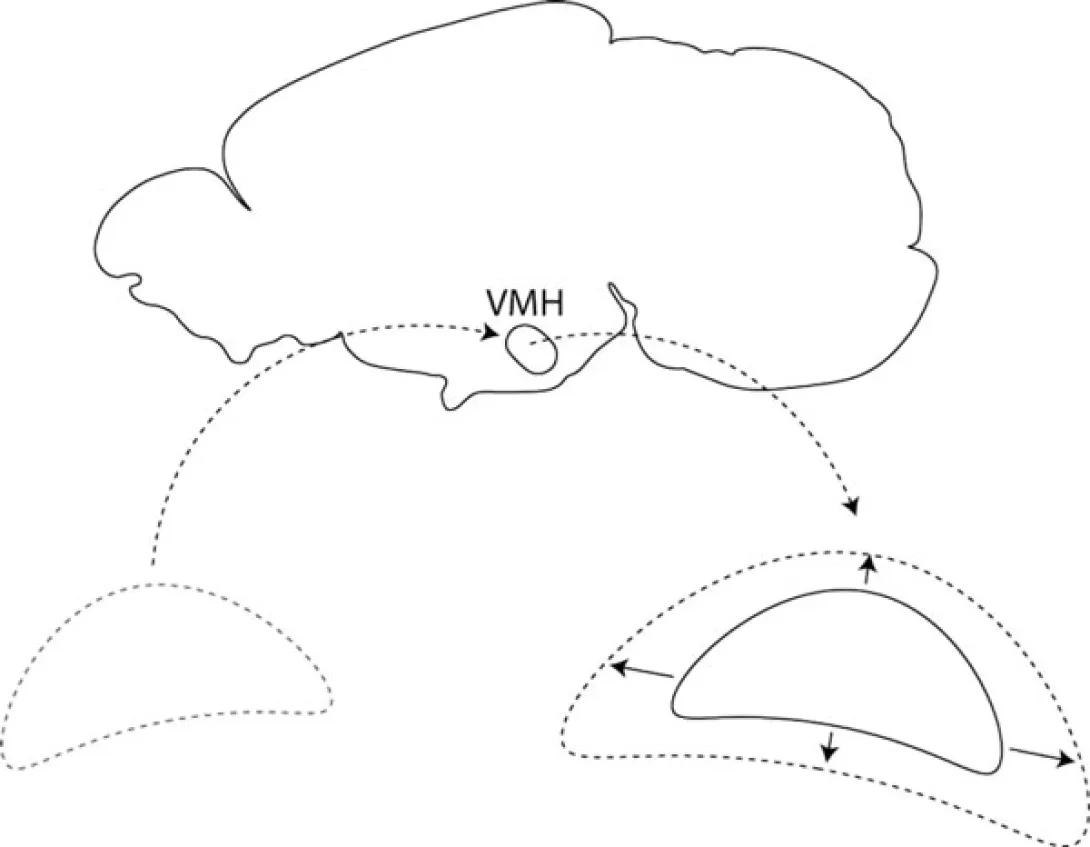
Schematic diagram showing the ventromedial hypothalamus (VMH) in the brain connected by dashed arrows to the adrenal gland, illustrating a bidirectional communication pathway between the brain and adrenal cortex that regulates adrenal growth and function.
My project focuses on understanding the contribution of the nervous system in regulating adrenal gland growth and homeostasis.
Specifically, we study the ventromedial nucleus of the hypothalamus (VMH) neurons as they regulate adrenal compensatory growth. There is a long history of connections between the adrenal gland and the VMH; most remarkably, the VMH is required for adrenal compensatory growth after a unilateral adrenalectomy (BONUS: both express Nr5a1, or Steroidogenic Factor 1 (SF1)!!!).
We aim to define the role of SF-1-expressing neurons in adrenocortical growth and identify the afferent signal that induces adrenal compensatory growth through the dorsal root ganglia and the VMH.
This project combines neuroscience and cell biology and contributes to our broader understanding of how the central nervous system can influence peripheral organ growth.
Select Publications/Talks
Wloszek J, Affinati A. “Context-Dependent Glucose Mobilization Is Modulated Through Specialized Ventromedial Hypothalamic Neural Populations”. Keystone Symposia- Interoception: Neural Sensing and Control of Organ Function (T4), Section: The Future of Interoception. 2025 April 24th ; Seattle, WA.
Wloszek J. Affinati A. “Stressed out: Glucose and Glipr1-expressing neurons as keys to uncovering the neurocircuitry that controls stress-induced hyperglycemia”. Dean’s Lecture Symposium. 2025 April 14th; Ann Arbor, MI.
Qiu W, Hutch CR, Wang Y, Wloszek J, Rucker RA, Myers MG, Sandoval D. Multiple NTS neuron populations cumulatively suppress food intake. elife. 2023 Dec 7;12:e85640.
Su J, Hashsham A, Kodur N, Burton C, Mancuso A, Singer A, Wloszek J, Tomlinson AJ, Yacawych WT, Flak JN, Lewis KT, Oles LR, Mori H, Bozadjieva-Kramer N, Turcu AF, MacDougald OA, Myers MG, Affinati AH. Control of physiologic glucose homeostasis via hypothalamic modulation of gluconeogenic substrate availability. Mol Metab. 2025 Sep;99:102216.
Yulan Chu, PhD
Research Associate
I joined Hammer Lab in the Summer of 2020 to pursue my PhD degree as a student in the Department of Cell & Developmental Biology. My research focuses on adrenal development and homeostasis.
Steroidogenic factor 1 (SF1) is a key regulator in adrenal development and steroidogenesis. Our team has employed newly developed mouse models to show SF1 phosphorylation status is involved in regulating progenitor fate in the adrenal cortex. I am exploring how SF1 phosphorylation is linked to the cell cycle in Shh-expressing progenitors and how it influences progenitor behavior under endocrine stress.
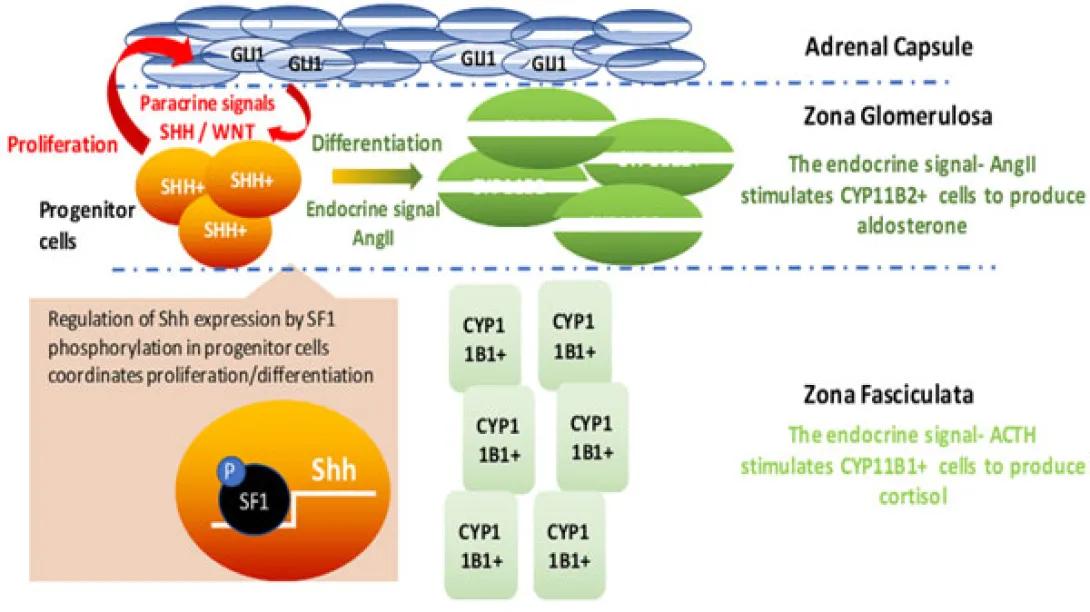
Diagram illustrating adrenal cortex organization and signaling: SHH-positive progenitor cells near the adrenal capsule proliferate and send paracrine SHH/WNT signals to GLI1-expressing capsular cells, then differentiate toward zona glomerulosa and zona fasciculata lineages. Angiotensin II stimulates CYP11B2-positive zona glomerulosa cells to produce aldosterone, while ACTH stimulates CYP11B1-positive zona fasciculata cells to produce cortisol. An inset shows SF1 phosphorylation regulating Shh expression in progenitor cells to coordinate proliferation and differentiation.
