Scott Soleimanpour Lab
Our research focuses on the genetic causes of diabetes through the study of pancreatic islet beta cell function in all aspects of the mitochondrial life cycle.
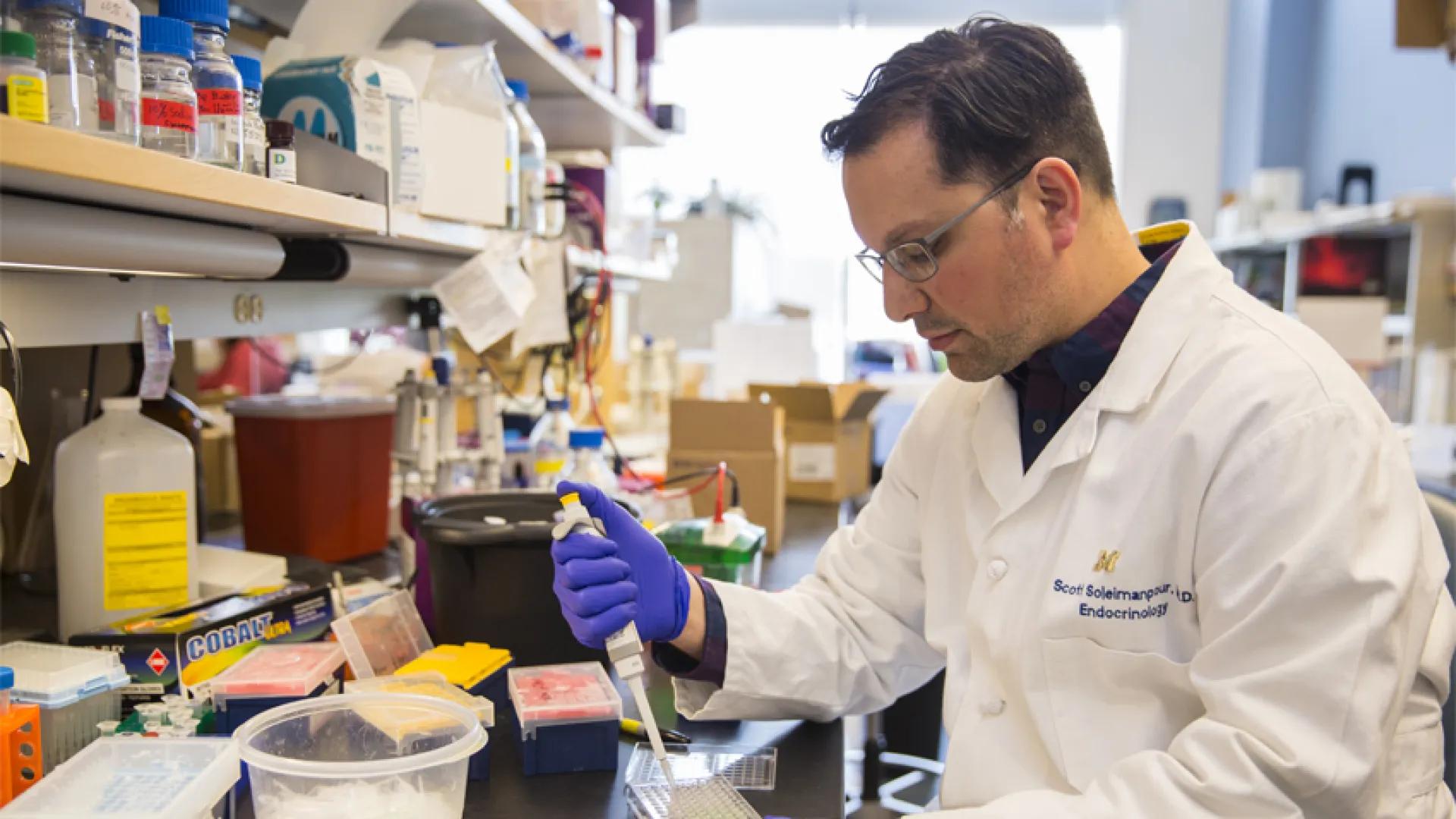

Scott Soleimanpour, MD
Larry D. Soderquist Professor
Departments of Molecular & Integrative Physiology and Internal Medicine, Division of Metabolism, Endocrinology & Diabetes
Director, Michigan Diabetes Research Center
Associate Director, Elizabeth Weiser Caswell Diabetes Institute (T1D Basic Research and Islet Biology Programs)
CONTACT
1000 Wall Street
Ann Arbor, MI 48105
Current Research
In the Soleimanpour Lab
Our lab focuses on the molecular and genetic regulation of the mitochondrial life cycle, with a focus on mitophagy, a pathway to dispose of unhealthy or damaged mitochondria. Our studies also concentrate on novel genetic targets affecting the mitophagy pathway, which are also associated with diabetes in humans, through studies in cellular and mouse genetic model systems, as well as isolated human islets. Our goal is to discover how the dysregulation of mitochondrial respiration and mitophagy leads to diabetes pathogenesis, along with determining strategies to improve mitophagy to prevent or treat diabetes.
Research Areas
- Genetic causes of pancreatic beta cell failure and its role in the pathogenesis of type 1 diabetes
- Role of the mitochondrial life cycle in diabetes and beta cell biology
- Molecular function of the diabetes susceptibility gene, Clec16a
Support Our Work
Making a gift to our lab will support and further our research work in diabetes and help us work towards new and better treatments for people living with the disease. To make a gift, please contact Andrea LaFave at the University of Michigan Office of Development.
News & Stories

Misfolded proteins accumulate in the mitochondria of patients with type 2 diabetes

Dr. Scott Soleimanpour's interview with Metabolic Care Today