

Health Lab
Metformin may reduce Afib after ablation in adults with obesity
Taking the diabetes medication metformin may reduce episodes of atrial fibrillation, or Afib, in people with obesity. Preliminary findings were presented as late-breaking science at the 2025 American Heart Association Scientific Sessions.

Health Lab Podcast
Better health benefits linked to better job numbers
The recent study shows the biggest job gains were seen among low income adults with serious health problems whose health improved over time.
Health Lab Podcast
Chronic health conditions and food insecurity in kids
A recent Michigan Medicine-led study finds a link between chronic illness and higher food insecurity rates for children, even after accounting for income and other factors.

Health Lab
Diabetic teens with high blood sugar have higher neuropathy risk in adulthood
Poor blood sugar control in adolescence increases the risk of painful future complications for people with type 1 diabetes, research suggests. Participants with the greatest increase in HbA1c levels from childhood to adolescence not only retained higher blood sugar levels in adulthood, but they also had a greater risk for neuropathy.

Health Lab
Children with chronic conditions may face higher risk of food insecurity
Food insecurity is more common among children with a chronic medical condition than those without one, a new study suggests.

Health Lab
Brain neurons are responsible for day-to-day control of blood sugar
University of Michigan researchers have shown that a specific population of neurons in the hypothalamus help the brain maintain blood glucose levels under normal circumstances.

Health Lab
New technology called PathoPlex maps the location of proteins inside cells
Abnormal changes in protein levels and patterns can result in diseases. Understanding protein organization can improve treatments and minimize disease symptoms. A team of researchers developed a new technology called pathology-oriented multiplexing, or PathoPlex, to map more than 140 different proteins across 40 tissue samples.

Health Lab
Protein targets can act as a switch for obesity and anorexia
In the U.S., dietary obesity has a prevalence of 40% and obesity increases the risk of other chronic diseases such as heart disease and diabetes. Even though anorexia nervosa has a prevalence of 1%, it is the second-highest death rate of any mental illness. Roger Cone discusses how melanocortin receptors can be used to treat both obesity and anorexia.

Health Lab
Misfolded proteins accumulate in the mitochondria of patients with type 2 diabetes
Aging-related diseases, including cancer, cardiovascular disorders and type 2 diabetes, are associated with defects in protein synthesis and folding. In a new study, researchers at the University of Michigan found that mitochondria also accumulate misfolded proteins, which kills insulin-producing β-cells of patients with type 2 diabetes.

Health Lab
Simple muscle ultrasound may detect early prediabetes
A simple ultrasound of a patient’s thigh or shoulder muscle may detect insulin resistance before it progresses to type 2 diabetes or even prediabetes. In a study, Michigan Medicine researchers performed muscle ultrasounds on 25 patients who were also evaluated for insulin resistance.

Health Lab
Continuous glucose monitors can optimize diabetic ketoacidosis management
University of Michigan researchers show that using continuous glucose monitors can help measure glucose accurately during DKA and potentially prevent ICUs from being overwhelmed.

The Fundamentals
Epigenetics, Inflammation and the Human Immune System
People with diabetes often have a host of other conditions including cardiovascular disease and kidney disease driven by inflammation. On today's episode, we talk with Dr. Katherine Gallagher, professor of surgery, professor of microbiology and immunology, and the Leland Ira Doan Research Professor of Vascular Surgery at U of M, who is looking at how epigenetics - the influence of environmental factors and behaviors impact on gene expression - might explain changes in the immune system in people with cardiovascular disease, diabetes, and other conditions related to inflammation.
Health Lab
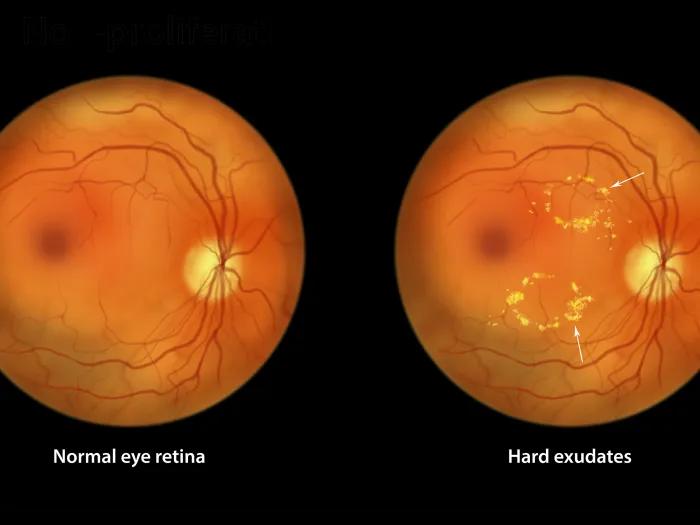
Managing your diabetes can help prevent associated vision loss
Diabetic retinal disease screening remains challenging because patients often do not have any symptoms in the early stages and, therefore, misunderstand the importance of regular screenings. In a recent publication Thomas Gardner discusses current screening recommendations and treatment options for DRD.
The Fundamentals
Psoriasis, Diabetes and Other Inflammatory Conditions
Today on The Fundamentals, we have a conversation with Dr. Sonya Wolf-Fortune, Assistant Professor of Pharmacology, whose work focuses on investigating the underlying mechanisms of psoriasis, diabetes, and other inflammatory conditions. Dr. Wolf-Fortune is trying to uncover what sets off the cascades of inflammation related to these conditions and related diseases.

Health Lab
Sleep health may impact mobility for women with chronic conditions
Women diagnosed with chronic conditions, such as osteoarthritis, multiple sclerosis and diabetes, experiencing poor sleep are at a higher risk of needing mobility aids sooner in life. Addressing sleep issues in these women may be crucial to better mobility.
