
More articles about: Rogel Cancer Center
Health Lab
New clinical trials for pediatric brain tumors
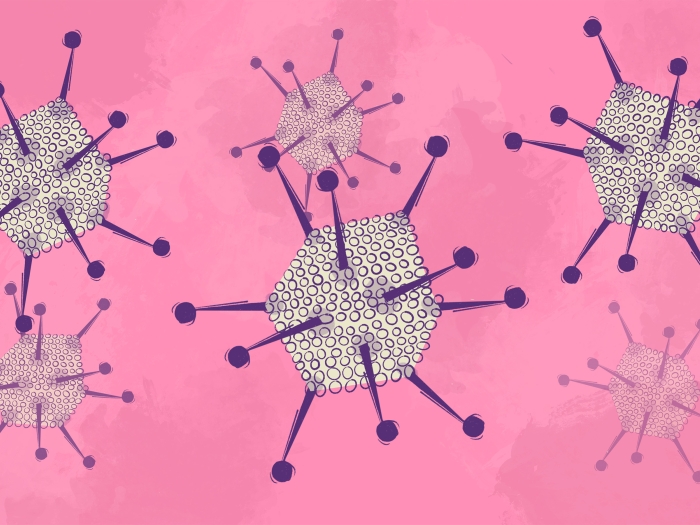
Brain and spinal cord tumors account for one in four childhood cancers. Although 75% of children survive for at least five years after being diagnosed, many patients have recurrent tumors that cannot be cured. Andrea Franson discusses current therapies for pediatric brain tumors, how viruses can be used to target tumor cells and the new phase 1 trial that started in May 2025.
Health Lab
Researchers find early driver of prostate cancer aggressiveness
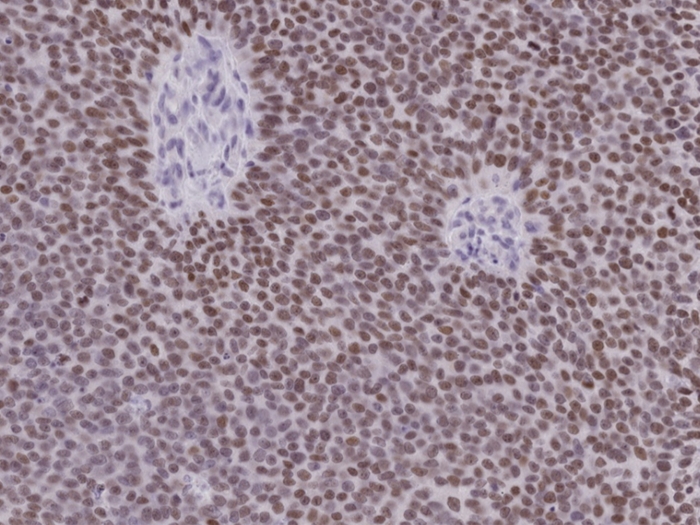
University of Michigan Health Rogel Cancer Center scientists identified a gene that plays a key role in prostate cancer cells that have transitioned to a more aggressive, treatment-resistant form. The gene can be indirectly targeted with an existing class of drugs, suggesting a potential treatment strategy for patients with aggressive subtypes of prostate cancer.

Health Lab
Researchers engineer a herpes virus to turn on T cells for immunotherapy
The University of Michigan team identified herpesvirus saimiri, which infects the T cells of squirrel monkeys, as a source of proteins that activate pathways in T cells that are needed to promote T cell survival.

Health Lab
Interplay between key proteins could serve as a target for cancer treatment
University of Michigan researchers have identified that the balance between two proteins—STAT3 and STAT5—is important for making tumors vulnerable to immune checkpoint therapy, and targeting STAT3 degradation is a potential novel cancer immunotherapy strategy.

Health Lab
From transplant recipient to nurse: Tommy Schomaker's story
Tommy Schomaker received his heart transplant in elementary school at University of Michigan Health C.S. Mott Children's Hospital as a part of ongoing cardiology care he was receiving at Mott. As Tommy graduates from Michigan State University with a degree in nursing, he is working as a Nursing Assistant in Mott on the floor he was treated on.

Health Lab
Drug targets identified for pancreatic cancer
U-M researchers have discovered that simultaneously targeting PIKfyve and KRAS-MAPK can eliminate tumors in preclinical human and mouse models.

Health Lab
Personalized app reduces cancer-related fatigue
Researchers at the Rogel Cancer Center, in collaboration with Arcascope, have developed and tested a personalized app that tracks a user’s circadian rhythm and makes behavioral recommendations to reduce daily fatigue.

Health Lab
4 exciting advances in multiple myeloma
A specialist outlines some recent advances that have him excited for the future of multiple myeloma treatment.
Health Lab
Aggressive brain cancer doesn’t stop woman’s positive perspective
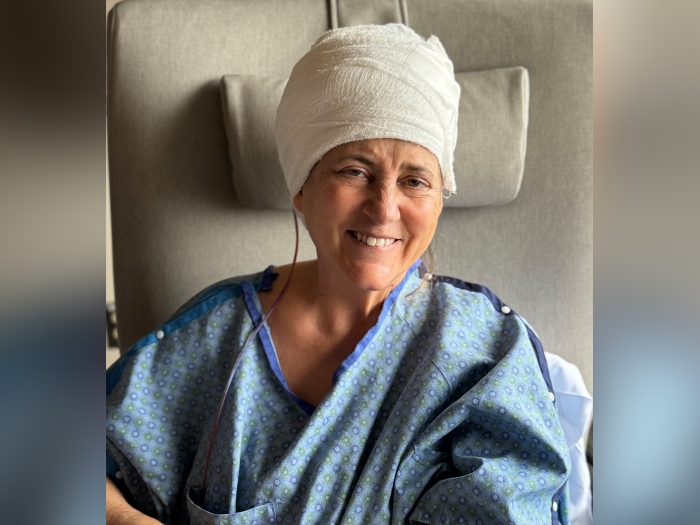
Despite a devastating diagnosis of glioblastoma, Chris Barry is thankful for her family, friends and the care she’s receiving at Michigan Medicine.

Health Lab
New cellular therapy trials for brain tumors
Michigan Medicine experts discuss CAR T therapy, its use in other clinical trials at U-M and the new Phase I trials that started in March 2025.

Health Lab
Re-purposed FDA-approved drug could help treat high-grade glioma
Avapritinib, an FDA-approved drug used to treat other types of cancer, also decreases aggressive gliomas in animal models and in an initial cohort of patients with high-grade glioma.

Health Lab
A dosimetry code ready for widespread use in software
Patients receiving radiation treatment for cancer from around the country now benefit from a University of Michigan-developed code that research clinicians developed.

Health Lab
An emerging class of RNA fighting cancer, infectious and genetic diseases
Michigan Medicine's College of Pharmacy researchers have developed a promising new weapon in the war on cancer: small circular mRNA vaccines.

Health Lab
Speculum exams unnecessary for HPV screening
HPV screening usually entails a speculum-based exam, which is an uncomfortable experience for most patients. University of Michigan researchers are the first to demonstrate in the United States that self-sampling is just as effective as speculum-based testing for HPV detection.
Cancer Aware
How De-Implementation Can Improve Health Care in the U.S.
In the United States, unnecessary tests and treatments not only drive-up health care costs but may also contribute to a waste of valuable resources and avoidable patient harms. Today we talk with Michigan Medicine assistant professor of surgery Dr. Lesly Dossett, M.D., MPH about an effort to reduce such practices through a process called de-implementation.
