
More articles about: Rogel Cancer Center

Health Lab
Exercise can reduce your cancer risk and help prevent its return
A director of exercise and health behavior in oncology shares ways to help cancer survivors live longer and better lives by incorporating exercise and other physical activity into everyday routines.
Health Lab
What experts wish more people knew about hospice and other end-of-life care
Hospice, palliative care, end-of-life decisions, long-term care insurance and durable power of attorney are all things people with serious health issues should think about.

Health Lab
How race impacts patients’ response to cancer immunotherapy
The first large scale analysis finds immune checkpoint inhibitors are equally effective in Black and white patients, with Black patients having fewer side effects.

Health Lab
Exercise and physical activity help with cancer recovery and prevention
When it comes to living well and preventing cancer, scientists long ago established that exercise and physical activity are key. But some cancer survivors wonder which activities are best for maximizing health benefits. An assistant professor of applied exercise science at the University of Michigan School of Kinesiology talks more.

Health Lab
New drug candidate blocks resistance to cancer therapies
A team of researchers at the University of Michigan Health Rogel Cancer Center has designed a molecule that impairs signaling mediated by two key drivers of cancer therapy resistance.

Health Lab
Researchers identify novel biomarker linked to renal cancer recurrence
Researchers from the University of Michigan Health Rogel Cancer Center have discovered a biomarker that could help identify which renal cancer patients have a higher risk of recurrence.

Health Lab
Pediatric brain tumors rely on different metabolic “route” to fuel treatment resistance
Researchers at the University of Michigan Health Rogel Cancer Center are one step closer to understanding how pediatric DIPG tumors work.
Health Lab
Widening inequality seen where cancer clinical trials are available
The availability of clinical trials of new treatments for cancer varies greatly by geography, and a new study shows more socially vulnerable areas have far fewer.

The Fundamentals
If they don't give up, how can I give up?
Today on The Fundamentals is Dr. Maria Castro, the R.C. Schneider collegiate professor of neurosurgery, and a professor of cell and developmental biology at the University of Michigan Medical School. Her research program aims to develop immunotherapies for primary and metastatic brain cancer, studying basic immune biology mechanisms leading to clinical implementation. She has been inducted into the American Association for the Advancement of Sciences, the Latin American Academy of Sciences, and the American Institute for Medical and Biological Engineering College of Fellows. She has won numerous awards for her contributions to basic science and cancer research and is a diversity ambassador for the Cancer Biology Graduate Training Program.
You can learn more about Dr. Castro here, and you can follow her @castro2355_mg, the Rogel Cancer Center @UMRogelCancer, the department of neurosurgery @umichneuro, Michigan Neurscience Institute @UM_MNI and the department of cell and developmental biology @UMCDB on X

Health Lab
Is lung cancer treatment working? This chip can tell from a blood draw
Using a chip to process blood samples, doctors can monitor the amount of cancer cells in a patient’s blood to determine how well a treatment is working by the fourth week, according to a new study.

Cancer Aware
Patient Financial Toxicity
It’s estimated that one in three Americans experience medical cost distress, and many fear the high cost of debt will leave them financially destitute. As a result, many may decline needed treatments or therapies.
Here to address this issue is Dr. Mark Fendrick, Professor of Internal Medicine and Professor of Health Management and Policy in the U-M School of Public Health.
Dr. Fendrick directs the Value-Based Insurance Design Center at the University of Michigan and his research focuses on how clinician payment and consumer engagement initiatives impact access to care, quality of care, and health care costs.

Health Lab
Studying cells to improve medulloblastoma treatment
Research from Michigan Medicine experts is shedding light and potentially expanding options for patients living with an aggressive childhood cancer.
Cancer Aware
Family Health History as Cancer Prevention
Drs. Elena Stoffel and Jennifer Griggs, co-principal investigators of the Michigan Genetic Hereditary Testing (MiGHT) Study, discuss the importance of knowing your family health history.
Cancer Aware
Metastatic Spine Cancer
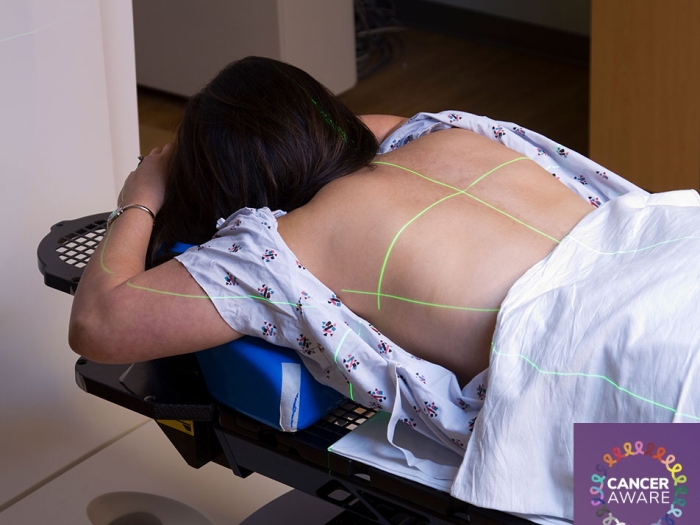
Michigan Medicine neurosurgeon, Nicholas Szerlip, discusses cancer metastasis to the spine and how the Rogel Cancer Center is addressing this through their Metastatic Spine Oncology clinic.
Cancer Aware
Cancer Drug Shortages
In this episode, head and neck surgical oncologist Andrew G. Shuman, M.D., FACS, HEC-C, discuses the current cancer drug shortages and how they’re impacting patient care nationwide.
