Emerging into the Future
Rogel’s Emerging Leaders Council gives early career faculty the opportunity to develop their leadership skills and ‘peek behind the curtain’ of cancer center leadership
Author |

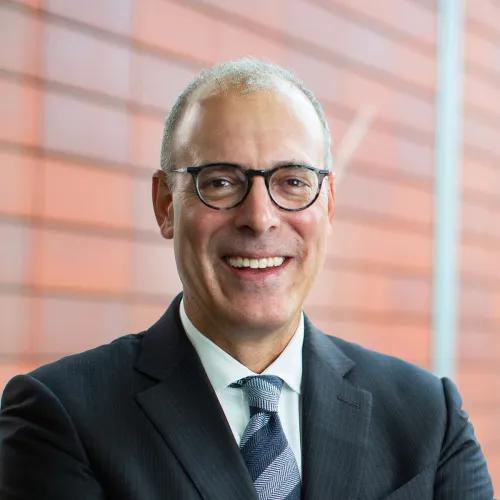
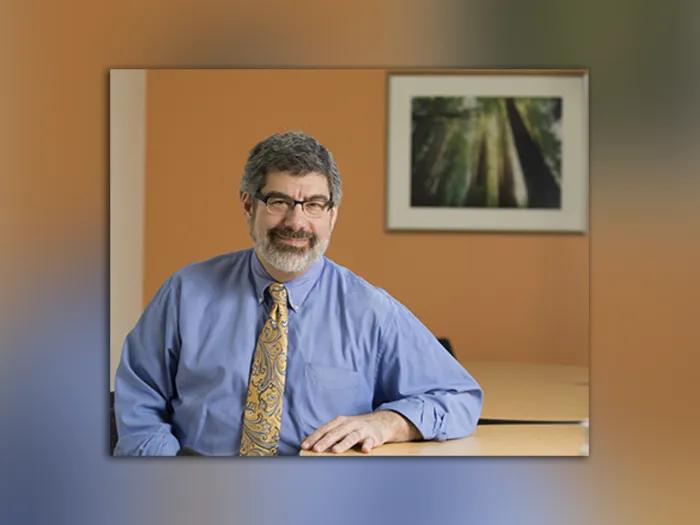
As a leader, Eric Fearon, M.D., Ph.D. (pictured right), describes himself as “arguably self-taught.”
“I had a lot of great mentors in leadership here at the University of Michigan, from a range of departments and roles, whom I looked up to,” says Fearon, director of the Rogel Cancer Center.
“But one of the opportunities I didn’t have before taking on a leadership role, was to understand what National Cancer Institute-designated cancer centers are about. How are they judged? What’s a matrix organization, and how does it function within the structure of the rest of the university? It’s much more complex.”
Now, as director, Fearon wants to change the experience for the next generation of leaders – to pull back the curtains so early career faculty learn what cancer center leadership involves.
“The goal is to inspire people to work on behalf of their colleagues and the next generation. We want to inspire faculty to find their passion and meaning in their leadership at Rogel or beyond,” Fearon says.
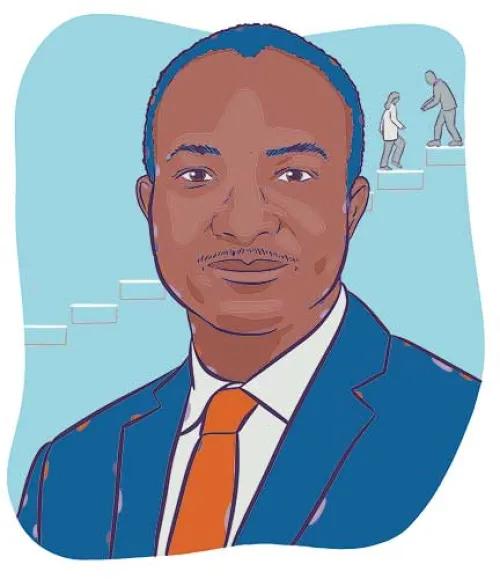
The Emerging Leaders Council was formed in 2021 with that big-picture goal in mind. The council comprises 15 members who are within the first 10 years of their faculty appointment. It provides a forum for early career faculty to share with Rogel leaders what support they need. Meanwhile, aspiring leaders get a greater understanding of how the cancer center works, exposure to Rogel’s senior leaders, and opportunities to grow and build their own leadership skills.
“A lot of times leaders are identified or appointed based on a subjective assessment of their expertise, skills or interest,” says Simpa Salami, M.D., M.P.H., associate director for research workforce and leadership development at Rogel and a former ELC member.
“What a program like this does is provide a platform for people to test themselves and ask themselves, ‘Is this something that I really want to do?’ It also provides a platform to develop the skillsets they need.”
‘Do something, figure it out’
The ELC was a somewhat lofty and nebulous concept in the beginning. After all, part of the idea was to see what early career faculty needed and wanted. When Fearon first met with the initial cohort, he says, “I didn’t want to be too prescriptive. They were probably a little bit puzzled.”
Alison Mondul, Ph.D., MSPH, who served on that first cohort, laughs as she remembers. “It was ‘You’re emerging leaders, do something, figure it out,’” she says. And they did.
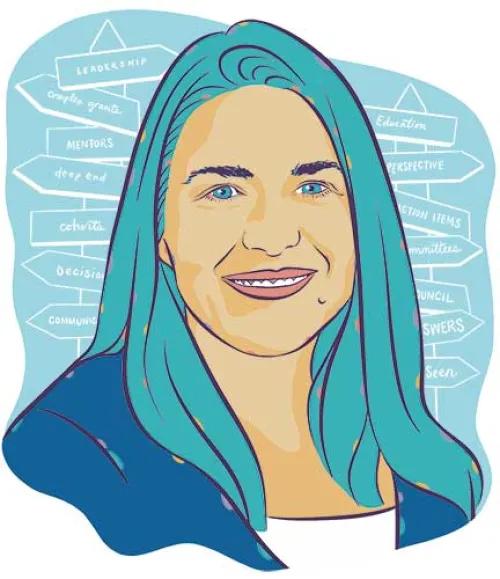
Mondul was named the chair of ELC and started creating processes for how future chairs and vice chairs would be selected among council members. The group also developed subcommittees around specific action items they wanted to tackle, including communications, education and mentoring, and clinical trials.
“It’s daunting to get thrown into the deep end as a leader. This is a chance to get your toes wet beforehand and see how it works,” says Mondul, associate professor of epidemiology at the School of Public Health.
Mondul, a cancer epidemiologist, sees the cancer center as her research home and her future as a leader within that space. During her time on the council, Mondul appreciated seeing what senior leadership does and learning about the cancer center’s complex organization.
As an ELC member, she sat in executive committee meetings, which allowed her to see how priorities were set and why decisions were made. She was asked to review chapters from the Cancer Center Support Grant renewal, gaining a better understanding of how that critical and complex grant comes together.
“ELC definitely helped me understand what the roles and priorities are of senior leadership – how they interact with each other and what exactly they do. It was a little bit of a black box before, but I feel like I peeked inside the box a bit. I feel better prepared for a leadership role in the future,” Mondul says.
Finding support and belonging
Rogel’s leaders ensure ELC members represent all six Rogel research programs and many U-M schools, colleges and departments. The 2025 cohort includes faculty from the Medical School, Social Work, Pharmacy, Engineering, Kinesiology and Public Health.
This allows faculty to interact with people they may not otherwise get to know, fostering new ideas and collaborations.
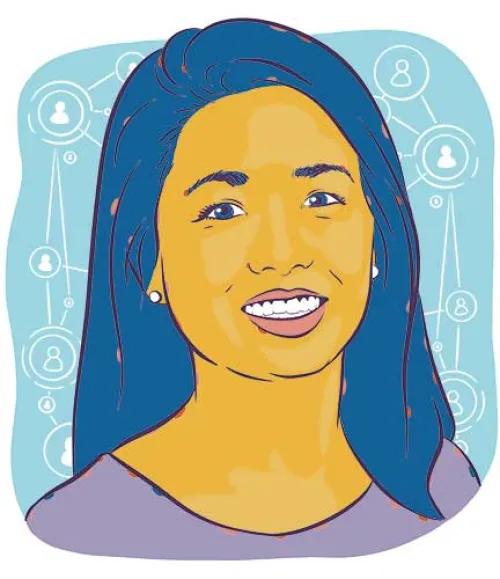
“It’s really nice to see how all of us are facing the same challenges in our work,” says Angel Qin, M.D., clinical associate professor of hematology/oncology at Michigan Medicine. Qin served as a vice chair and chair of ELC and is now an assistant director of training, education and career development at Rogel.
“Everyone has shared experiences in what’s working well, but also what’s frustrating. It’s nice to hear how other departments or schools are handling it,” Qin says.
ELC also gives early career faculty more visibility, making it easier to find connections or to identify potential research partners. As Qin was getting her clinical research program off the ground, she started to learn who outside of medical oncology was working on lung cancer.
“Through being part of ELC, I now have more people reaching out to me wanting to collaborate on different projects,” she says. “Sometimes it’s just knowing a name and a face. Those opportunities would not have arisen had I not been on ELC.”
It feeds into one of the cancer center’s strengths: interdisciplinary collaboration. It also gives members more of a sense of belonging.
“I met people participating in ELC that I wouldn’t have otherwise met. I got the chance to interact with them in a more meaningful way and get to know people better,” Mondul says. “I feel like I’m more a part of the cancer center as opposed to just showing up at a meeting or event.”
Giving early career faculty a voice
In addition to developing her leadership skills, Erin Cobain, M.D., associate professor of hematology/oncology at Michigan Medicine, was drawn to the ELC as a way to share her thoughts and experiences as an early career physician-scientist.
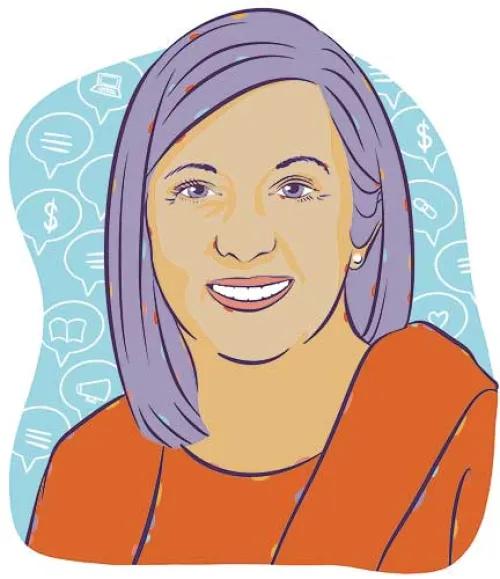
“Because junior faculty members are so often underrepresented in leadership, they don’t necessarily always have a good avenue to express their concerns or thoughts about what could be valuable in their career development,” Cobain says. “I was eager to share my thoughts about what I had learned in my early career and see how that may be able to impact the changing landscape of the cancer center.”
Council members spend time brainstorming what they would advocate – for themselves, for their fellow early career faculty or for bigger changes within Rogel. And many of these ideas have been implemented.
ELC members identified challenges with accessing shared resources, which led Rogel leadership to offer stipends to those without significant start up packages. They gave feedback on the Rogel website to help make important links and resources more easily available. They also identified the need for better faculty onboarding, which has led to a new program being piloted this year.
A subcommittee focused on clinical care surveyed Rogel clinicians about their challenges in providing excellent care. ELC shared the data with Rogel leaders as well as the University of Michigan Medical Group, which oversees all of Michigan Medicine’s clinical care. It helped inform changes in both the physician and the patient experience.
On the clinical research side, ELC members identified opportunities to improve biospecimen procurement and processing for clinical research studies. As a result, Rogel leaders bolstered the Clinical Research Specimen Processing core and made ELC member Paul Swiecicki, M.D., the medical director.
‘No one is born a leader’
Early on, ELC members recognized formal leadership training as crucial. They invited key leaders within U-M and at other cancer centers to talk about their experience as leaders. The group also identified leadership development courses, within and outside of U-M. Rogel provides funds for council members to pursue these classes.
“No one is born a leader. You have to learn and have the opportunity to try,” Qin says.
Salami notes that mentorship has been – and continues to be – a key part of his career development. He talks about examples learned from Fearon or David Miller, M.D., M.P.H., who was Salami’s mentor as a urologic oncology fellow and is now CEO of Michigan Medicine.
“As a leader, David will never ask anyone to do something that he is not willing to do or that he has not already done. I need to be able to lead by example, roll up my sleeves and get something done before I ask someone else to do it,” Salami says.
ELC members also have access to formal coaching through U-M’s Office of Faculty Development. It’s something Salami has done himself and found valuable.
Currently, Cobain is taking advantage of coaching. She meets with a senior Michigan Medicine faculty member who has significant leadership training and has worked as a career coach for many years. Her coach is not within her department and someone she would otherwise not interact with. They meet monthly to discuss Cobain’s career and work.
Cobain co-leads a new precision oncology initiative at Rogel that will fold in patients from U-M Health West and U-M Health Sparrow.
“I was eager to take advantage of the coaching opportunity because I thought as I was transitioning into this role, it would be a wonderful opportunity for me to assess my strengths and weakness and how to be cognizant of those as I develop this new program within the cancer center,” she says.
Her coach collected anonymous feedback from colleagues about Cobain’s interactions. She’s also given Cobain insights and advice on hiring, finance and delegating.
“I realized if I wanted to be a more effective leader, I needed to explore opportunities to get more training and more experience,” Cobain says. “Being a leader is a totally different job with a totally different skillset.”
New leaders emerge
While other cancer centers have some form of leadership development, the structure of the ELC is unique to Rogel.
“From my perspective it’s been very successful in identifying individuals who have a passion not only to succeed in their own work but to lean in and help others at the cancer center,” Fearon says.
After five cohorts of emerging leaders, the program is bearing fruit: more faculty engaging with the cancer center, new leaders, new opportunities for development, better onboarding and stronger connections. Half of former ELC members are now in leadership roles, including two associate directors.
Participants say their experience with ELC has made them more committed to leadership. Salami’s three-year term on the council cemented his drive to help others develop in their careers.
Today, the Emerging Leaders Council falls under Salami’s direction. He helps identify leadership, mentoring and coaching opportunities, looking for ways to engage members with the inner workings of the cancer center. He also looks at individuals’ interests and expertise to match them with leadership roles as they emerge.
“In my mind, a person has not succeeded until his successor has,” Salami says.
Key Emerging Leaders Council initiatives
Women in Cancer Research Symposium
The ELC took over running this symposium in its second year. They expanded the program to include presentations from fellows, postdoctoral and graduate students. They focused on identifying speakers who would be inspiring to early career faculty, included talks on navigating a research career, and built in time for networking.
Emerging Scholars Exchange
Rogel partnered with six other cancer centers to give junior faculty the opportunity to deliver grand rounds talks at partner institutions – something they would not typically do. The experience allows faculty to get feedback on their research and foster future collaborations. In three years, four Rogel faculty members have given talks.
Rogel CONNECT
A need for better access to Rogel resources led to a new onboarding program, CONNECT. It combines mentorship with monthly videos explaining aspects of the cancer center, including shared resources, clinical trials and working groups. The year-long program also covers tips to present science, develop an online research identity and craft impact statements.
From emerging to leader
More than half of former and current Emerging Leaders Council members now serve in leadership roles:
- Christina Angeles, M.D., co-chair of cutaneous oncology clinical research team; co-leader of cutaneous oncology research interest group; co-leader of sarcoma research working group
- Erin Cobain, M.D., co-chair of breast oncology clinical research team, oncology lead of the precision oncology program
- Justin Colacino, Ph.D., co-director of Interdisciplinary Discovery, Engagement + Actions for Society (Public Health)
- Kyle Cuneo, M.D., associate director for clinical research
- Daniel Hertz, Pharm.D., Ph.D., co-chair of cancer prevention and survivorship clinical research team
- William Jackson, M.D., co-chair of genitourinary oncology clinical research team
- Gen Li, Ph.D., assistant director of Cancer Data Science shared resource
- Kristen Pettit, M.D., co-chair of hematological malignancies clinical research team
- Matthew Pianko, M.D., co-chair of hematological malignancies clinical research team
- Sethu Pitchiaya, Ph.D., assistant director for shared resources
- Angel Qin, M.D., assistant director for training, education and career development; co-chair of thoracic clinical research team
- Simpa Salami, M.D., M.P.H., associate director for research workforce and leadership development; co-director of liquid biopsy shared resource; co-leader of kidney and liquid biopsy working groups; co-chair of biomarker development and validation clinical research team
- Jean Siedel, D.O., co-chair of gynecologic oncology clinical research team
- Paul Swiecicki, M.D., medical director of clinical research specimen processing; associate medical director of oncology clinical trials support unit; co-chair of investigator-initiated trails incubator working group; co-chair of multi-tumor experimental therapy clinical research team
- Aaron Udager, M.D., Ph.D., co-director of tissue and molecular pathology shared resource; co-leader of bladder cancer working group
- Christine Veenstra, M.D., MSHP, co-program leader of cancer control and prevention
Portraits by Amanda Walden; Dr. Fearon's photo courtesy Michigan Photography

Illuminate
Articles showcasing the latest in cancer research underway at the Rogel Cancer Center
Featured News & Stories
Human Rabies Exposures Growing Across the Country
Continuing the legacy of a doctor’s doctor
Dr. Elafros Receives Global Achievement Award
Karsten Bartels, MD, earns Gladys Sessler Outcomes Research Consortium Award
Into the Current: Dr. Nate Hunt Brings Specialized Water Rescue Expertise Back to Michigan Medicine