Closing the Gap
Cancer patients between 15 and 39 years old are developing physically, emotionally and socially and experiencing major life transitions. Rogel researchers are exploring how cancer care can be tailored to better support their unique needs.
Author |

Although studies show that cancer deaths are falling, rates of cancer in adolescents and young adults are on the rise, representing an estimated 4% of all new cases.
Despite this upward trend, patients ages 15 to 39 are underrepresented in clinical trials and other research. They occupy a specific phase of life — not little kids, not yet middle age, not geriatric — and the complexity and range of their needs often falls through the gaps in cancer treatment and support.
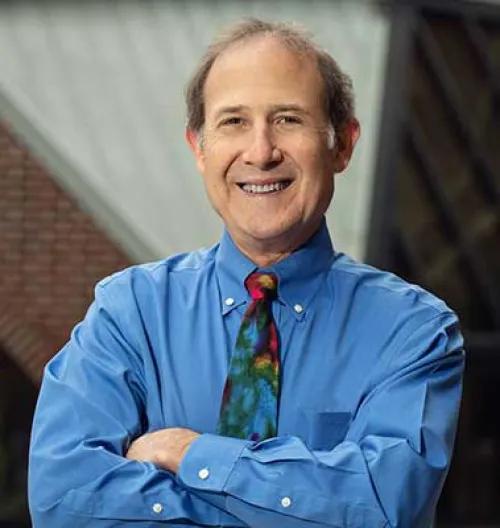
“This population has unique experiences and challenges when it comes to a cancer diagnosis and treatment,” says Brad Zebrack, Ph.D., M.S.W., M.P.H. (pictured at right), professor of social work at U-M. “But they’re either lumped in with younger children in pediatric settings or lost among older adults in adult care settings.”
The Adolescent and Young Adult Oncology Program, jointly run by Rogel and C.S. Mott Children’s Hospital, was founded in 2020 specifically to provide supported specialized care for this “misplaced” patient population.
Researchers and clinicians from across Michigan’s campus are studying these patients’ unique needs and tailoring interventions for AYA patients and survivors, prioritizing flexibility, autonomy and empathy.
Addressing Alienation
Zebrack experienced being overlooked firsthand when he was diagnosed with Hodgkin’s lymphoma at 25. He went to a support group but felt alienated from his age cohort. “Everybody in that room was the age of my grandparents,” he says. “It didn’t really seem like I fit in. People were talking about things that just weren’t relevant at that point in my life.”
That feeling of alienation lies at the heart of why AYA patients require a unique and highly personalized approach to care, and why standard practices of care feel incomplete. Between ages 15 to 39, people experience a wide swath of distinct life experiences that bring different needs and perspectives. Generalized care can fall short.
“This population is floating between life stages, even outside a cancer diagnosis,” says Victoria Wytiaz, M.D., medical oncologist at Rogel and clinical assistant professor of hematology/oncology at Michigan Medicine. On the younger side, patients are going through school and developing their sense of self. On the older side, they’re launching careers and starting families.
“One of the biggest challenges in AYA cancer care is teasing out the impact of cancer and treatment from the effects of everything else going on in their lives,” Zebrack says. “In addition to cancer and all the usual transitions, there’s anxiety about what’s going on in the world, exposure to social media and so on.”
There’s also an open question of how traumatic childhood experiences affect an AYA patient’s mental health and ability to cope with a cancer diagnosis.
“On one hand, emerging evidence suggests that childhood trauma could exacerbate mental health issues,” Zebrack says. “On the other hand, people who have faced adversity in the past may be better prepared to deal with a cancer diagnosis.”
Zebrack is working with Steven Cole, Ph.D., a professor of medicine at UCLA, to study how past exposures to adversity influence gene expression and subsequent treatment outcomes in cancer patients. Cole identified a biomarker that shows changes in immune function and inflammatory responses associated with exposures to social traumas like social isolation and poverty.
They recently received funding to test whether changes in this biomarker over time predict increased risk of mortality among patients who have more exposure to trauma or other adverse social conditions, and to identify psychosocial and clinical factors that contribute to that risk for AYA patients and survivors.
“As a social scientist, I would argue that when figuring out toxicities for chemotherapies, for instance, we haven’t taken into account social and environmental conditions that may exacerbate the risks of treatment,” Zebrack says. “If patients who have experienced childhood trauma are more likely to have a weaker immune system, those toxicities may be different.”
Body image, visible and invisible

Wytiaz (pictured above), who primarily works with sarcoma and melanoma patients, focuses on body image in AYA cancer patients and survivors. This population often experiences heightened awareness of, or sensitivity to, physical and mental changes during key developmental periods, like puberty or, later, when trying to conceive.
Body image isn’t just about visible changes like hair and weight loss. It also includes invisible aspects of body image. “It’s more than just the things we can see,” Wytiaz says. “Body image also refers to how you see the functioning of your body, and pretty much any cancer treatments will affect that.”
Patients in this younger age group may have particularly high expectations around how their body will function, whether it’s an ability to excel in sports or have a child. Societal pressure of wanting to fit in with peers can contribute to this stress too. For reality to fall short of those expectations is a sort of betrayal of the body that can last long into survivorship.
Zebrack recalled the feeling.
“A year or two after my own cancer, I was wondering, ‘Am I going to be a sickly person, at risk of cancer for the rest of my life?’” he says.
Wytiaz’s research explores how expressive writing can help AYA patients work through body image issues and better communicate their support needs. Since writing has been proven to help treat psychosocial distress outside of cancer, like PTSD, Wytiaz is running a study where patients journal about their experiences. Journaling may be particularly useful for AYA patients who are still developing their identities and their ability to advocate for themselves.
“Sometimes as a provider, communication with adolescents and young adults can be challenging because these patients are wrestling with a lot of things internally,” Wytiaz says. “Journaling can help younger patients figure out how to describe what they’re feeling, and that can help them know what kind of support to ask for.”
The study recently finished a pilot run and recruitment, and early feedback is positive. Even people who had never journaled before found it useful. It’s flexible; patients can write whenever and wherever the desire strikes.
“Whether they keep the writing to themselves or choose to share with their doctors, it can help improve communication,” Wytiaz says. “They’re already sharing so much with their medical team in this process, so keeping some things private can feel good.”
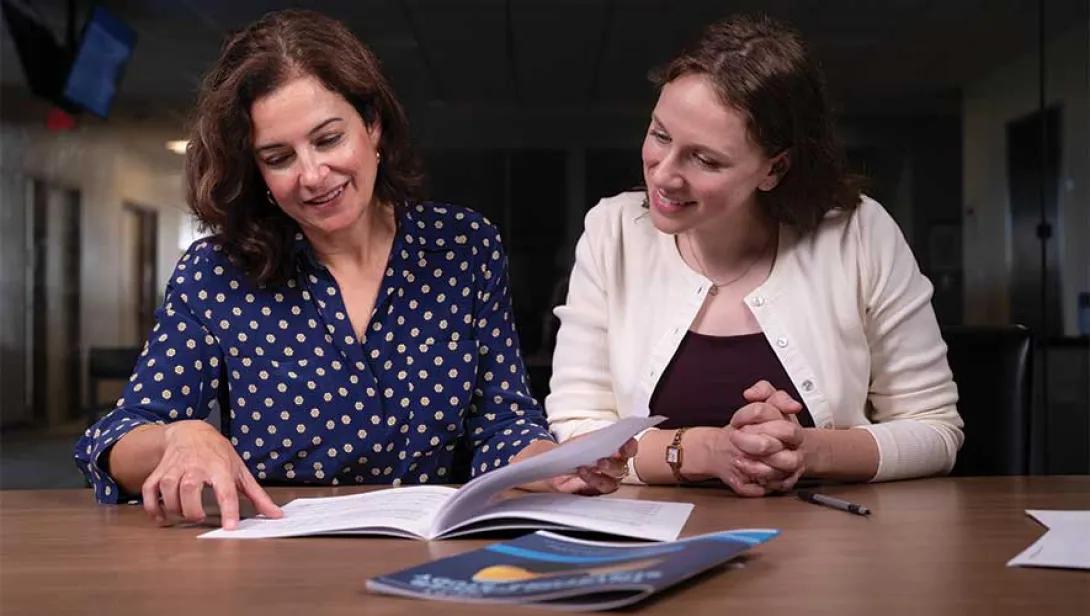
Fertility is another important part of a body’s functioning that acutely impacts the AYA population. Cancer, both the disease and its treatments, can negatively affect fertility. Nina Francis-Levin, Ph.D., M.S.W. (pictured below with Dr. Megan Haymart), is a postdoctoral fellow at Michigan Medicine and the U-M School of Social Work. She uses her background in anthropology and social work to study how patients adapt their timelines, including family planning, in response to a cancer diagnosis.
A cancer diagnosis can force very young adolescents to think about family planning well before they otherwise would. Francis-Levin’s earlier work with Zebrack explored what advice and support previous onco-fertility patients would have wanted.
“It’s a really tricky age and a difficult conversation,” Francis-Levin says. “But it’s about more than just discussing it age-appropriately. It has to be discussed throughout treatment and continued down the line, when it comes time to start their family.”
She found that patients need support at every step of the process.
“Right now, there’s not much structured follow-up on reproductive health care for survivors,” she says. “It usually rests on the survivor to enter the world of reproductive endocrinology and deal with potential infertility. I want to learn more about what survivorship care should look like from a family planning perspective, and when and how we can intervene.”
Because fertility treatments and cryopreservation are expensive and may not be covered by insurance, some people cannot afford it. That changes the care conversation.
“Fertility counseling becomes grief counseling,” she says.
Francis-Levin is also interested in timelines more generally for AYA patients: how cancer disrupts milestones, hurrying or delaying them, such as getting a driver’s license, starting school or getting married.
“The young adult period is filled with rites of passage,” Francis-Levin says. “Cancer scrambles them up. But young people can build their own culture in response. They can decide what their own milestones are.”
Flexible, accessible, digital care
Not all patients can adjust, or at least not easily. AYA cancer patients and survivors report higher levels of anxiety and depression than other age groups: about 40% of survivors report anxiety or depression years after completing treatment.
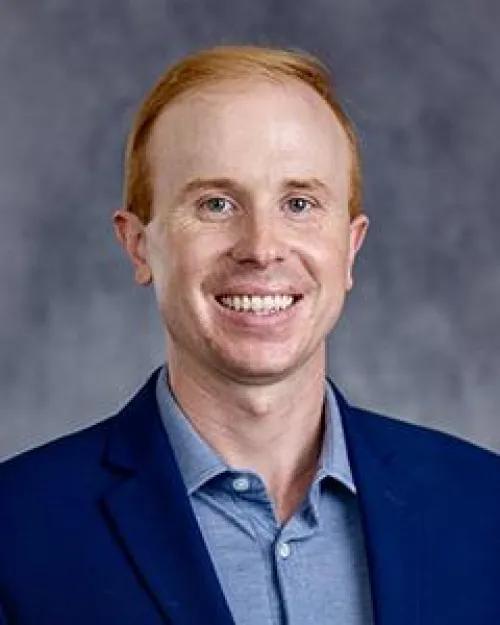
Despite the prevalence of these symptoms, there is relatively little research on tailored supportive care and interventions for psychosocial symptoms in survivorship, says Robert Knoerl, Ph.D., R.N. (pictured right), an assistant professor in the U-M School of Nursing.
“There’s still a great need for symptom science and symptom support for AYAs following cancer treatment,” Knoerl says. “Obviously, we want to treat the disease. But overall, there is a lot more focus on treating the actual disease than the psychosocial symptoms and side effects of treatment, which are big problems for a lot of survivors.”
Long-term anxiety and depression are often major concerns for AYA survivors. Fearing cancer recurrence, navigating the health care system, not being able to work or missing important milestones like prom or graduation can all contribute.
With a list that long, it is perhaps not surprising that some people even experience anxiety about their anxieties.
“Sometimes individuals feel guilty about worrying,” says Megan Haymart, M.D., an endocrinologist and professor of internal medicine at Michigan Medicine, who researches cancer-related worry in AYA survivors.
Patients feel that by having anxiety, they’re not handling their cancer well enough. Part of the issue, she says, can be that young adults are less likely than older adults to know what to expect in cancer treatment and survival.
Haymart is interested in non-pharmaceutical forms of psychosocial support outside of traditional doctor-patient relationships in a clinical setting. Funded by the National Cancer Institute, she and U-M professor of medicine and health policy Sarah Hawley, Ph.D., M.D., are working on an app that aims to give AYA survivors the autonomy to manage their anxiety and other psychosocial symptoms, and the flexibility to do so whenever they need to.
“Young adults use their phone regularly and pretty much always have them,” Haymart says. “We wanted to make a tool that would be very easy to use, at any time, that would give them the methods to self-manage their worry in a constructive way.”
And, she emphasized, “something that would not make anyone feel guilty about being worried.”
Knoerl is also exploring the potential for non-pharmacologic interventions to treat anxiety in AYA cancer survivors. His current focus is on music therapy, which has been successfully used to alleviate anxiety and depression in older adults with cancer.
When he started the work a few years ago, a review showed that less than 10% of music therapy trials had focused on younger populations. “So there was a real gap,” he says. “We ran a pilot study and found it was feasible that music therapy could help young adult cancer survivors who had anxiety during treatment.”
His current study explores the question of accessibility: how to scale music therapy so that it reaches the most people, and how to tailor it to the needs of adolescents and young adults?
The proposal: make it digital.
Once a week for eight weeks, young adult cancer survivors spend 45 minutes online with a music therapist. The sessions are meditative, pairing music with techniques like progressive muscle relaxation and breathing exercises to help the patient sink into a mindful state. Participants choose what strategies they want to use as the sessions progress.
The idea of using digital delivery to make music therapy more accessible came about because of COVID-19. Knoerl was previously at the Dana-Farber Cancer Institute, where his work with music therapy began. The pandemic forced a music therapy study to switch from in-person to virtual sessions.
“Adherence to the virtual format was much higher,” he says. “And recruiting was a lot easier.” He previously found recruiting AYA cancer survivors for trials was difficult. “They just have so much going on in their lives, it’s hard to get their involvement,” he says.
There are still benefits to in-person interactions, he says. But virtual delivery saves patients travel time, meaning more people are more likely to have the time to participate. And many young people are comfortable carrying out all kinds of interactions virtually, including medical care.
The simple act of taking 45 minutes to focus on themselves helps young cancer survivors.
“Early feedback has been really positive,” Knoerl says. “People have said that it’s a chance to pull away from life — whether it’s work, family or school — and set aside time for themselves.”
Connecting is caring
The tools Rogel researchers are developing can help adolescent and young adult cancer survivors for years, from diagnosis long into survivorship.
“Learning these skills to cope with worry helps people throughout their whole lives,” Haymart says. They are approaches that have been used successfully in other diseases, including non-AYA cancer patients, but researchers are just beginning to explore how they might improve care for the often-lost AYA population.
“Great strides have been made, but there’s still lots to be done,” Zebrack said.
With AYA cancers on the rise across many subtypes, “it’s becoming clear that all providers in the oncology world need to have some understanding of the unique needs of adolescent and young adult patients,” Wytiaz says.
The simplest intervention may be fostering connections between young people going through cancer treatment or with similar-aged survivors, like in the U-M AYA Oncology Program. These connections can help normalize all the disruptions a cancer diagnosis in youth can cause. They can help individuals set expectations, reduce self-judgment about feeling worried and find a path forward.
Having such a support network can make a huge difference. As a patient, Zebrack’s support group was mostly older people. But one day, a younger man who had completed treatment joined.
“He looked fit and healthy,” Zebrack says. “Just hearing him talk about how he got his life back together gave me hope.”
Photos by Erica Reist Bass and Michigan Photography
Keep Reading Illuminate 2026:
- The Answers in the Epigenome
- Emerging into the Future
- An Elegant Dance
- The Next Generation 2026
- Helping Patients Make Longer-Term Treatment Choices During Survivorship
Learn more:

Illuminate
Articles showcasing the latest in cancer research underway at the Rogel Cancer Center
In This Story
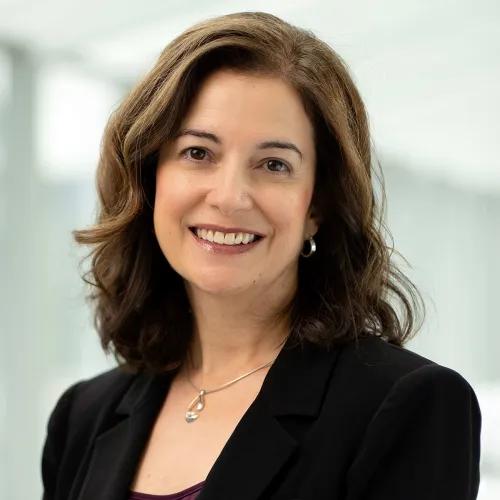
Megan R Haymart, MD
Professor

Victoria Wytiaz, MD
Clinical Assistant Professor
Featured News & Stories

Human Rabies Exposures Growing Across the Country
Continuing the legacy of a doctor’s doctor

Dr. Elafros Receives Global Achievement Award
Karsten Bartels, MD, earns Gladys Sessler Outcomes Research Consortium Award

Into the Current: Dr. Nate Hunt Brings Specialized Water Rescue Expertise Back to Michigan Medicine