The Next Generation 2026
Rogel Cancer Center is committed to training future cancer researchers and care providers, and this article highlights three outstanding members of our next generation
Building the Future of Translational Medicine
Connie Wu, Ph.D., is putting engineering into practice.
by Eric Olsen
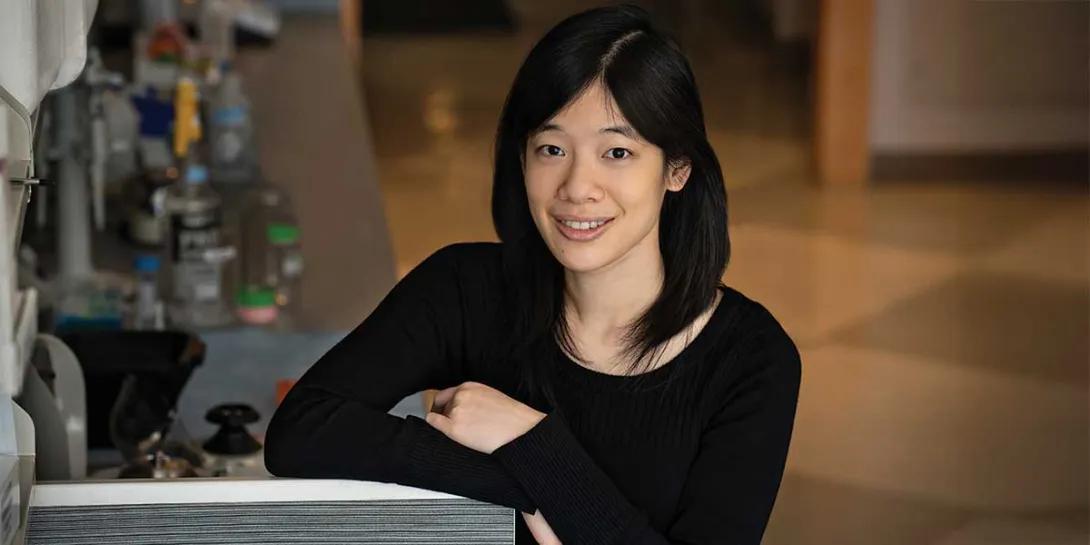
Connie Wu, Ph.D. (pictured above) is forging new paths for translational science in engineering and medicine. But it wasn’t always so.
“I started out in chemical engineering,” says Wu, research assistant professor at the U-M’s Life Sciences Institute (LSI) and assistant professor in both Biomedical Engineering and Pharmaceutical Sciences. “But I realized pretty quickly that I was more interested in biomedical side of chemical engineering. I did my Ph.D. work in an area of biomedical research, and here we are.”
She was drawn to medicine by what she describes as an “obvious and ongoing” need for progress in clinical application of medical advances.
“My primary interest is in developing tools to address problems. That’s why I’m more in the engineering end of things. I guess I like very application-focused work.”
Her interdisciplinary background has shaped her perspective, and she sees the boundaries between these fields as “pretty much not existent.”
In her relatively short time at Michigan, Wu established a research program that sits at the intersection of engineering, biomedical science and clinical collaboration.
At the heart of Wu’s lab are two primary research areas. One focuses on diagnostic tools to detect biomolecules in bodily fluids, the other on RNA therapeutics and delivery systems. Both are defined by their emphasis on translation: taking discoveries out of the academic lab and into the hands of clinicians and patients.
On the diagnostic side, Wu’s lab is developing technologies capable of measuring biomolecules at the single-molecule level. “We’re basically counting the number of individual molecules in a sample,” Wu explains.
Why is this sensitivity important? Wu says certain diseases, especially in their early stages, may be characterized by biomarker levels so low that conventional tests cannot reliably detect them. These ultra-sensitive platforms have broad applications, from cancer diagnostics to the detection of elusive biomarkers in other diseases.
And while technologies for measuring DNA and RNA have advanced rapidly in recent years, protein detection has lagged. “Sensitivity has been an issue. Especially in cancer, where the current protein biomarkers need to be more sensitive or specific,” Wu notes.
Wu’s vision is to develop tools that not only detect trace biomolecules but simultaneously measure many different things in a single test—a concept known as multiplexing. This would allow a clinician to order a single blood test that analyzes dozens of proteins or genetic biomarkers at the same time, dramatically improving diagnostic efficiency and accuracy.
The second area of Wu’s research focuses on the design of RNA-based therapeutics, primarily directed at cancer immunotherapy. Following the global success of mRNA vaccines, interest in utilizing RNA molecules for therapeutic purposes has increased dramatically. Wu hopes to engineer multifunctional RNA molecules, giving them the ability to perform several tasks—such as targeting cancer cells, stimulating immune responses or enabling precise regulation of gene expression—all within a single platform.
“Our current applications are focused on cancer. But, the technology could potentially be applied to infectious disease vaccines if things work out well. RNA is very versatile molecule.”
Concurrently, the team is developing the delivery systems for these therapeutics. “We’re screening different nanoparticle systems to deliver the RNA,” Wu says. The goal is to ensure that these therapeutic RNAs reach their intended sites in the body efficiently and safely. And while cancer remains a primary focus, the approaches developed in her lab could potentially be adapted for other diseases.
Wu’s work at Michigan embodies the promise of modern biomedical engineering: blending science, creativity and clinical focus to build tools and therapies that can reshape the future of medicine.
“I just really enjoy the translational aspect of it and putting the puzzle pieces together,” she says. “But I still want those pieces to lead to real-world applications.”
Shining Light into the Dark Proteome
A perspective shift as an undergraduate led John Prensner, M.D., Ph.D., from English literature to cancer genomics on a journey to improve pediatric brain cancer outcomes.
By Staci Vernick
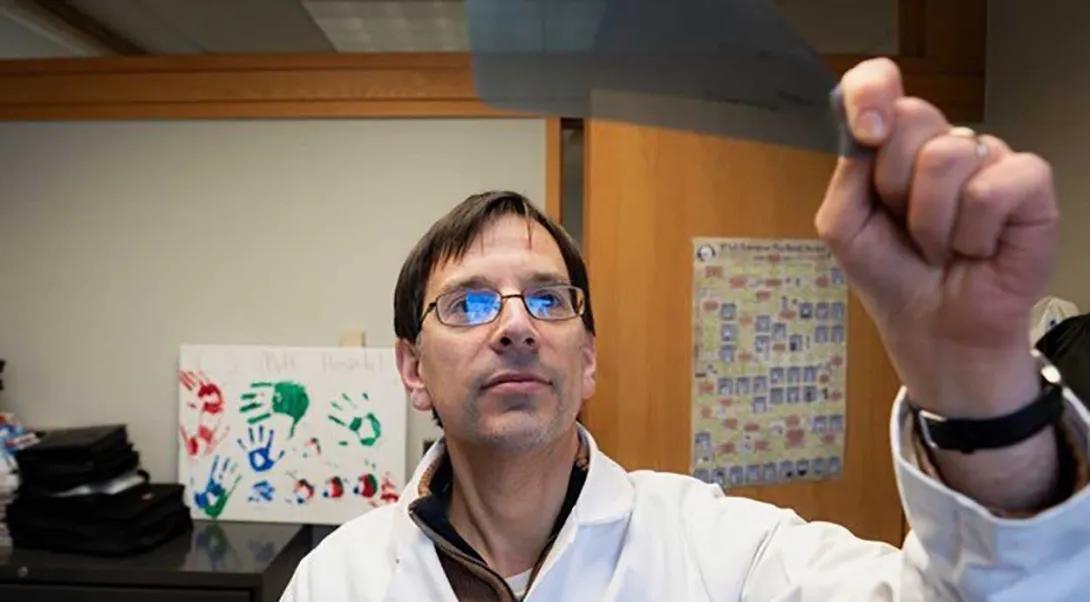
In his quest to uncover the root causes of brain tumors in children and potentially new ways to treat them, John Prensner M.D., Ph.D., is determined to leave no stone unturned.
“I have long been captivated by children and families with cancer. The extraordinary feats they go through, the dedication and love you see from these families is just the greatest inspiration,” says Prensner, pediatric neuro-oncologist at C.S. Mott Children’s Hospital and research member at Rogel.
“We need to do better for these children,” he insists. “It’s all about seeing these families in clinic and being able to look them in the eye and say, ‘We’re leaving no stone unturned’.”
Prensner’s “stones” are a fine analogy for the dark proteome – the gaps in knowledge about how RNA translates or produces the proteins in medulloblastoma, for example, and how that gene expression shapes the tumor’s biology and behavior. Using advanced imaging and gene sequencing technologies, his lab shines light into those dark gaps in search of new therapies for childhood cancer.
“What we’re finding in this dark proteome is a rich territory of new things. They’ve always been there in cancer, but we haven’t been looking with the correct vision to find them,” he explains.
“Now that we can look with a better set of glasses, we can see them, find them and begin to understand how this area may push our understanding of these cancers, and then maybe also our treatment of them.”
Prensner says he hadn’t always been set on pediatrics or cancer medicine. While he was studying English literature as an undergrad at Tufts University, his younger cousin died of congenital heart disease and complications following a heart transplant. Deeply affected, Prensner made a thoughtful pivot and applied to U-M Medical School.
He was accepted at U-M but took another carefully considered pause. Prensner had been lured by the Human Genome Project and the nascent field of cancer genomics. Before starting medical school, he spent the next year working as a research technician at Dana-Farber Cancer Institute.
“This was the first wave of being able to look at cancer through a big picture lens. No longer were we taking little polaroid snapshots of things, but we were out there on top of Mt. Everest photographing the entire view,” he says.
“I thought that was the coolest thing in the world.”
That experience finally brought him to medical school at U-M where he ultimately completed an MD-PhD in Cancer Biology in 2014.
After, during a residency in pediatrics at Boston Children’s Hospital, Prensner found he loved working with kids.
Next was a return to Dana-Farber for a postdoctoral fellowship in Pediatric Hematology/Oncology, and to The Broad Institute of MIT and Harvard in Cancer Biology.
“I decided I really wanted to go forward with kids with cancer because it’s where I could see myself really finding a home and a soil to grow and bloom in and make the most difference,” he recalls.
Prensner returned to Rogel in 2023 as assistant professor of pediatrics/pediatric hematology-oncology, member of the Michigan Medicine Chad Carr Pediatric Brain Tumor Center and leader of the Prensner Lab.
Today as a physician-scientist he bridges the clinic and the lab, working to understand what new technologies can reveal about RNA translation, the dark proteome, and childhood cancer, and how this new knowledge may be applied to help his young patients.
“To me, this looks like moving into a space where we can analyze RNA molecules and protein molecules at the single molecule level,” he says. “We need precision in what we’re looking at so we can understand if it’s the right thing to move forward to patients.”
No stone unturned.
Biology and Tissue Engineering in Pancreatic Cancer
By Beth Uznis Johnson
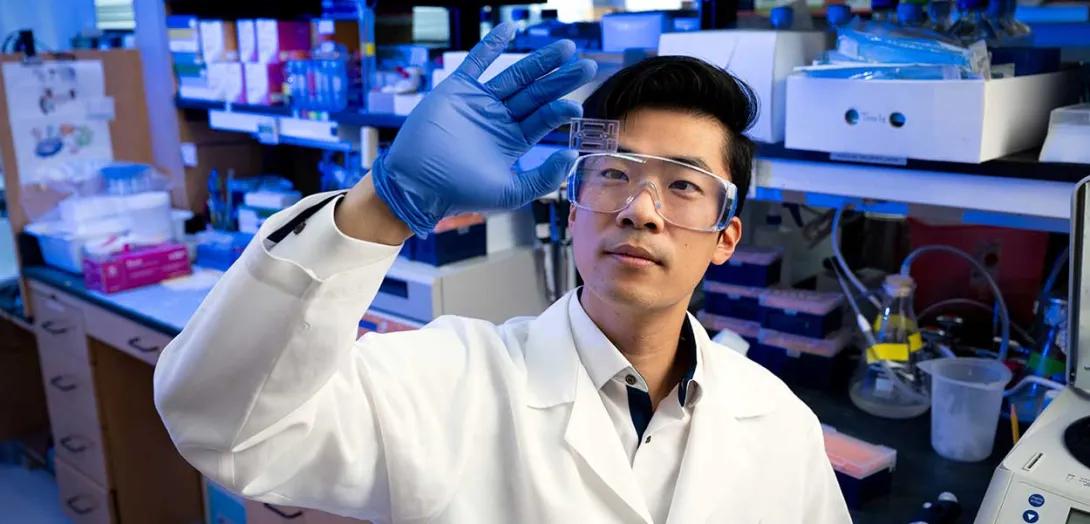
During Harrison Hiraki’s training in biomedical engineering, he was always interested in cancer. But transitioning to the Rogel Cancer Center to build models for pancreatic cancer research—with the aim to better understand cancer cell invasion and metastasis—solidified his purpose in the field.
“Leaders at the Frankel Lab reached out to the biomedical engineering department to develop a tissue model. I was actively working on a model. Now there was true biological relevance,” Hiraki says.
Hiraki joined the Frankel Lab at the U-M Department of Surgery in September 2024 as a postdoctoral fellow after completing his Ph.D. in the Department of Biomedical Engineering under Brendon Baker, Ph.D. He was tasked with engineering tissue models to investigate crosstalk between endothelial cells—the thin layer of cells lining blood vessels—and cancer. The lab has an immunology-based approach to disease progression in its work to understand the underlying processes of how the disease progresses in the body.
Pancreatic ductal adenocarcinoma (PDAC) remains difficult to treat for two reasons: the disease is resistant to therapies and spreads early. Understanding how cancer cells communicate with noncancerous cells in the tumor microenvironment provides clues on the growth, progression and spread of the disease.
“The model itself consists of engineered blood vessels adjacent to ductal structures where pancreatic cancer would arise. We gain insight from a physiologically-relevant microfluidic device and have observed crosstalk between vasculature and cancer structures. Blood vessels are communicating with cancer cells and signaling them to invade,” Hiraki says.
The Frankel Lab partners with Gift of Life Michigan to acquire and study patient-derived cell lines in addition to more generic, commercially developed lines. In addition to Hiraki’s engineered tissue models, the team performs single cell RNA sequencing to identify and study new communication pathways taking place within the pancreatic cancer microenvironment, including immune cells.
“For me, working now at the Rogel Cancer Center allows me to marry the concepts of strict engineering with core biology skills to model actual disease progression. I’m able to model cancer cells invading into the blood vessels. How exactly are these two cell types communicating? I’m hoping to answer these questions by designing these models,” Hiraki says.
In his work, Hiraki aimed to expand upon an existing microfluidic device developed by a collaborator at the University of California, San Francisco, researcher Matthew Kutys, Ph.D., that combines 3D epithelial cell migration with a physiologic engineered endothelium. He built the model to allow control over both spatial and temporal dynamics of this heterotypic cell interaction.
Using patient-derived pancreatic cancer cells, the model enables repeated live timelapse imaging of intravasation events that can be matched back to actual patient outcomes.
“We propose this microfluidic platform as a means to identify markers to predict patient cancer outcomes and to systematically identify pathways involved in cancer cell intravasation,” Hiraki says.
He is at work on a manuscript, “Microphysiologic models of cancer cell-endothelium interactions and intravasation,” that highlights both his advances in tissue engineering and the biological insights being gathered through ongoing research in the Frankel Lab.
Hiraki believes models of cancer-specific microenvironments—beyond pancreatic cancer—could be created by engineering the vasculature along with tumor structures within the microfluidic device.
Keep Reading Illuminate 2026:
- The Answers in the Epigenome
- Emerging into the Future
- Closing the Gap
- An Elegant Dance
- Helping Patients Make Longer-Term Treatment Choices During Survivorship
Learn more:
Illuminate
Articles showcasing the latest in cancer research underway at the Rogel Cancer Center
Featured News & Stories

Human Rabies Exposures Growing Across the Country
Continuing the legacy of a doctor’s doctor
Dr. Elafros Receives Global Achievement Award
Karsten Bartels, MD, earns Gladys Sessler Outcomes Research Consortium Award
Into the Current: Dr. Nate Hunt Brings Specialized Water Rescue Expertise Back to Michigan Medicine