Refining Radiation
With support from a major grant designed to translate discoveries from the lab to the clinic, Rogel researchers are reimagining what radiation can achieve for patients.
Author |
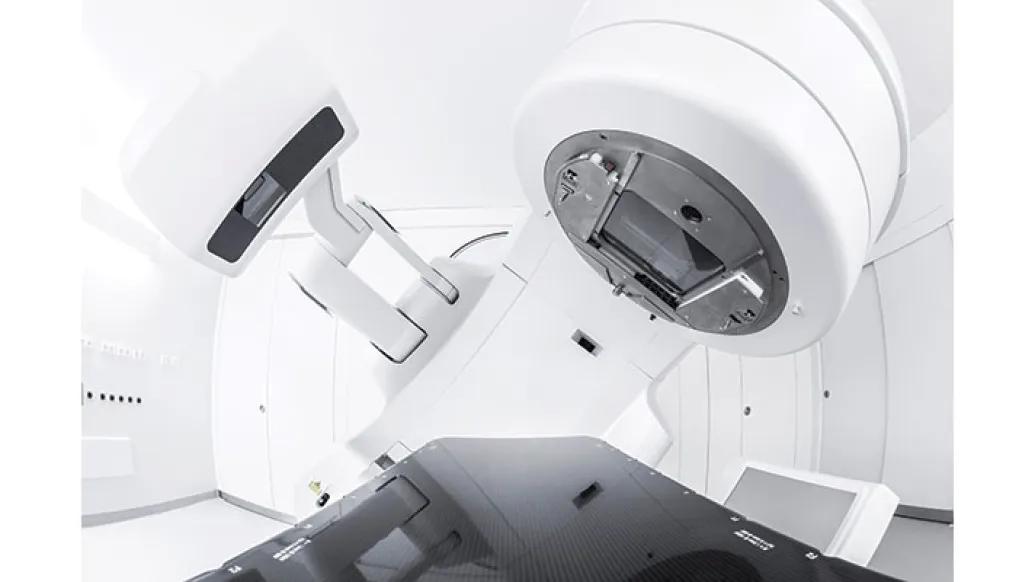
Most grants funded through the National Cancer Institute’s Specialized Program of Research Excellence, or SPORE, mechanism focus on a specific disease. But in 2023, a team of Rogel Cancer Center researchers landed one of these high-profile grants around a different theme. Their project centers around radiosensitization: how do specific drugs make radiation more effective in locally advanced pancreas, brain and breast cancers? They are looking specifically at tumors that cannot be surgically removed but are not yet metastatic, a niche that can be difficult to target with effective treatments.
The grant is led by co-principal investigators Meredith Morgan, Ph.D., and Theodore S. Lawrence, M.D., Ph.D., from Michigan Medicine’s Department of Radiation Oncology. Here, Morgan discusses what makes this SPORE special, and how the findings it funds will support patients.
Tell me about the radiosensitization SPORE grant. What does the grant focus on?
Our SPORE is a multi-investigator, multi-project grant focused on improving radiation therapy efficacy in multiple cancer types, including pancreas, breast and brain cancer. We’re exploring how specific, FDA-approved drugs make radiotherapy more effective. Our scientific strategy for improving radiation therapy in these very diverse types of cancer involves exploring three different biological mechanisms. First, we’re trying to stimulate the immune system to help fight pancreatic cancer. We’re also focused on targeting metabolism in brain tumors to improve radiation therapy. And finally, we're looking at manipulating the DNA damage response to improve radiation efficacy in breast cancer, since radiation kills tumor cells by damaging their DNA.
This is one of only a few SPORE grants that target a treatment approach and not just a specific disease, correct?
Yes! There are around 60 SPORE grants in the country. The majority focus on a single type of cancer. Only four SPORE grants focus on a theme or treatment strategy instead. We are one of those four. But, we are the first ever to focus on radiation therapy. This is super important since half of all cancer patients, at some point, receive radiation therapy as part of their care.
Given that so few SPORE grants focus on treatment strategy, how did you know that radiation therapy would be a good candidate for this funding mechanism?
One of the important aspects of SPORE grants is that it requires translation. You have to have laboratory projects that translate to clinical trials. A key feature of our SPORE is that all the radiation sensitizers are already FDA approved for clinical use, which will facilitate rapid translation of laboratory findings into clinical trials. One of the strengths of the U-M Department of Radiation Oncology is we're very good at bringing scientists and physicians together to translate their research to the clinic. We didn’t know what the outcome would be for a SPORE uniquely focused on radiotherapy, but we knew we had this strength in our favor.
What is the advantage of focusing on a treatment approach instead of an individual disease?
One advantage is it really allowed us to maximize the science we could include as well as our strength in translational research which spans multiple cancer types. We have faculty working on preclinical and clinical research in pancreas cancer, glioblastoma and breast cancer. It allowed us to be able to incorporate that science and clinical research into one grant.
The funding initiated for the SPORE in August 2023. What findings or progress can you share from the first year-and-a-half of the grant?
All three scientific projects—in pancreatic cancer, glioblastoma, and breast cancer—have active clinical trials enrolling patients. These clinical trials are supported by preclinical discoveries including:
- PARP inhibitors enhance radiation induced type I interferon to stimulate anti-tumor immune responses and sensitize to immunotherapy;
- purine metabolism and specifically GTP—a DNA nucleotide—regulates DSB break repair signaling to promote radiation resistance that can be overcome with mycophenolate mofetil; and
- CDK4/6 inhibitors have a novel function in blocking one of the two major double-strand-break repair pathways (i.e. homologous recombination) that supports their extended clinical use in combination with radiotherapy in ER+ and triple negative breast cancers.
You mentioned that half of all cancer patients will receive radiation therapy during their treatment. Is there something people might not know about the science behind radiation therapy?
Radiation is second only to surgery in treating cancer. Sometimes there's a misconception that radiation might not be used in a curative way, but radiation can actually cure cancers. It's delivered locally to the tumor and we can be very precise in the dose to the tumor.
Radiation can have two major mechanisms of action. One, is by inducing lethal DNA damage in cancer cells. It’s a very local effect. But the other thing it does is causes the cancer cell to release a signal of “I’m damaged,” which can activate a systemic anti-tumor immune response.
What are your hopes for where the radiosensitization SPORE research is heading? Where do you hope the research will be when the SPORE ends versus when it started?
I hope that by leveraging unique biological insights related to tumor immunology, metabolism, and DNA repair that we can identify rational, safe and effective drug-radiation treatment combinations that benefit patients, support continued clinical development and ultimately FDA approval. Our mechanistic insights should also be helpful in terms of patient selection strategies and biomarkers.
I also hope to continue the mentoring programs the SPORE allows us to fund. We have six developmental programs within the Department of Radiation Oncology, including a career enhancement program that supports young faculty getting ready to get their first NIH grant and a similar program for established faculty called the developmental research program. The idea is to attract faculty that have new ideas around radiation even if they have not worked on radiation before. Programs like this are built into the nature of the grant. It’s imperative to furthering the research. My goal is for at least one of these developmental to projects to become a full SPORE project in the future.
Continue reading Illuminate 2025
- Big Data, Better Cancer Care
- Nurturing High-Risk, High-Reward Ideas
- Wearing Your Heart (rate) on Your Sleeve
- The Right Chemistry to Keep Going
- The Future of Cancer Survivorship Care
- Tackling Pancreatic Cancer Care, Bench to Bedside
- Engineering Better Colorectal Cancer Outcomes
- The Role of Environmental Factors in Health
Learn more:

Illuminate
Articles showcasing the latest in cancer research underway at the Rogel Cancer Center
In This Story
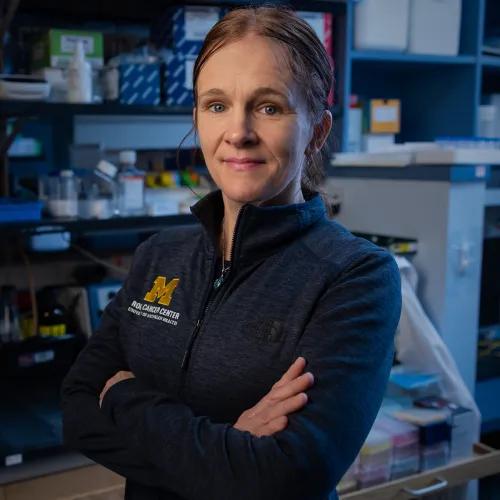
Meredith A Morgan
Professor
Featured News & Stories
Human Rabies Exposures Growing Across the Country

Continuing the legacy of a doctor’s doctor
Dr. Elafros Receives Global Achievement Award
Karsten Bartels, MD, earns Gladys Sessler Outcomes Research Consortium Award

Into the Current: Dr. Nate Hunt Brings Specialized Water Rescue Expertise Back to Michigan Medicine