The Role of Environmental Factors in Health
Justin Colacino on his path to investigating the link between environmental exposure and disease.
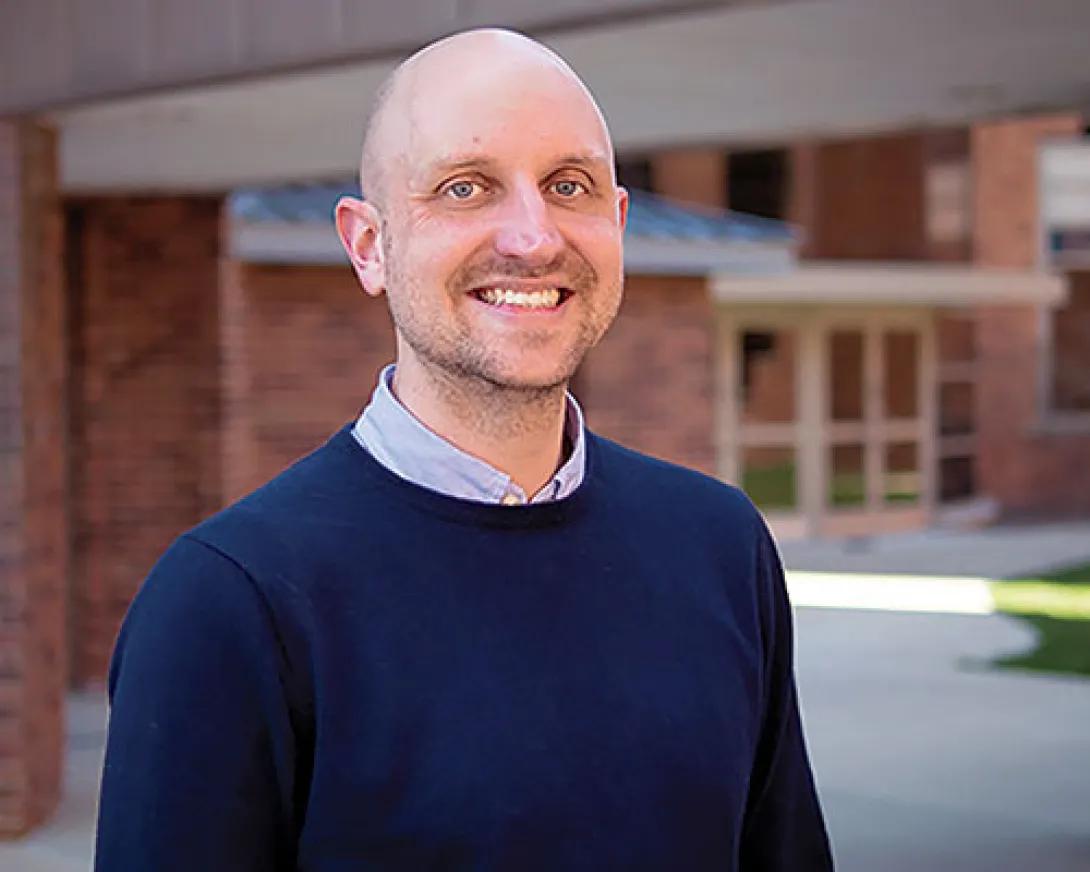
For more than a decade, Justin Colacino, Ph.D. (pictured right), has been exploring the relationship between pollution and human health. “Our lab is trying to understand how environmental factors drive the processes of diseases like cancer and Alzheimer's,” he explains.
Colacino came to the University of Michigan as a Ph.D. student but his interest in environmental health was sparked earlier, at MD Anderson Cancer Center where he worked in an ovarian cancer lab and later during his master’s studies at the University of Texas School of Public Health. These experiences deepened his interest in the intersection of disease and environmental health.
"Originally, I was just looking for a job," he laughs. "My advisor during my master’s was a big exposure assessment guy. And one of the things that got him into the field was going over to Vietnam to understand the impacts of Agent Orange exposure."
Encouraged by his advisor, Colacino began testing common grocery store food staples such as dairy products, meat, fruits and vegetables for persistent contaminants like pesticides, PCBs, dioxin, flame retardants and PFAS—compounds often called ‘forever chemicals’ due to their longevity.
"Literally, everything that I bought at the grocery store was contaminated with something or other," he explains. "These are things that you can't smell, see or taste yet could be impacting our health. So that's what initially got me into the field."
His lab work often examines how everyday exposures to preservatives in food or chemicals in personal care products can impact chronic disease processes. Compounds like parabens and phthalates, often found in personal care products, can mimic hormones and disrupt endocrine functions. Colacino emphasizes the importance of awareness and the power of making informed choices about the products we use. "We’re exposed to a ton of stuff," he says.
Now an associate professor in the School of Public Health and Environmental Health Sciences and Nutritional Sciences, as well as associate professor of the environment in the College of Literature, Science and the Arts and the School of Environment and Sustainability, Colacino describes Michigan as having a "rich industrial history." And it’s this history that makes Michigan an ideal location for studies such as the Michigan Cancer and Research on the Environment Study (MI-CARES). The study is funded by the National Cancer Institute and the National Institute of Environmental Health Sciences, and aims to recruit 100,000 participants, aged 18 to 49, from across the state. The study’s goal is to track these individuals over time to determine if environmental exposures are linked to cancer and other chronic diseases.
"We're particularly focusing on communities that have experienced environmental injustice," Colacino explains. These communities often bear a disproportionate share of pollutant exposure due to their proximity to industrial sites. He notes that these populations are more likely to include people of color and those of lower socioeconomic status, highlighting a critical intersection of environmental and social justice.
But Colacino’s work goes beyond simply identifying links between pollutants and health outcomes. It also encompasses public engagement and community partnerships. It involves actionable steps toward limiting exposure to these chemicals through changing both individual behaviors and broader regulatory actions. "In public health," he says, "understanding the link between exposure and disease allows us to mitigate that exposure."
Colacino participated in the Public Engagement Faculty Fellowship at U-M, which underscored the importance of addressing local concerns through active community involvement. "Environmental health is local," he says.
Looking ahead, Colacino is optimistic about the potential of his research to influence policy and improve public health outcomes. He hopes to provide data that can empower community members in their advocacy for a for cleaner, safer environment, and ultimately to advance public health.
"It's about understanding the exposure and doing something positive with that knowledge."
Contributed by Eric Olsen
Photo courtesy: Michigan Medicine
Continue reading Illuminate 2025
- Nurturing High-Risk, High-Reward Ideas
- Big Data, Better Cancer Care
- Wearing Your Heart (rate) on Your Sleeve
- The Right Chemistry to Keep Going
- The Future of Cancer Survivorship Care
- Tackling Pancreatic Cancer, Bench to Bedside
- Engineering Better Colorectal Cancer Outcomes
- Refining Radiation
Learn more:

Illuminate
Articles showcasing the latest in cancer research underway at the Rogel Cancer Center
Related
Engineering Better Colorectal Cancer Outcomes
Tackling Pancreatic Cancer, Bench to Bedside
Featured News & Stories

Human Rabies Exposures Growing Across the Country

Continuing the legacy of a doctor’s doctor

Dr. Elafros Receives Global Achievement Award
Karsten Bartels, MD, earns Gladys Sessler Outcomes Research Consortium Award

Into the Current: Dr. Nate Hunt Brings Specialized Water Rescue Expertise Back to Michigan Medicine