Nurturing High-Risk, High-Reward Ideas
Rogel’s Forbes Institute for Cancer Discovery helps fund bold new ideas with big potential to impact cancer treatment. In less than a decade multiple projects are already bearing fruit.
Author |
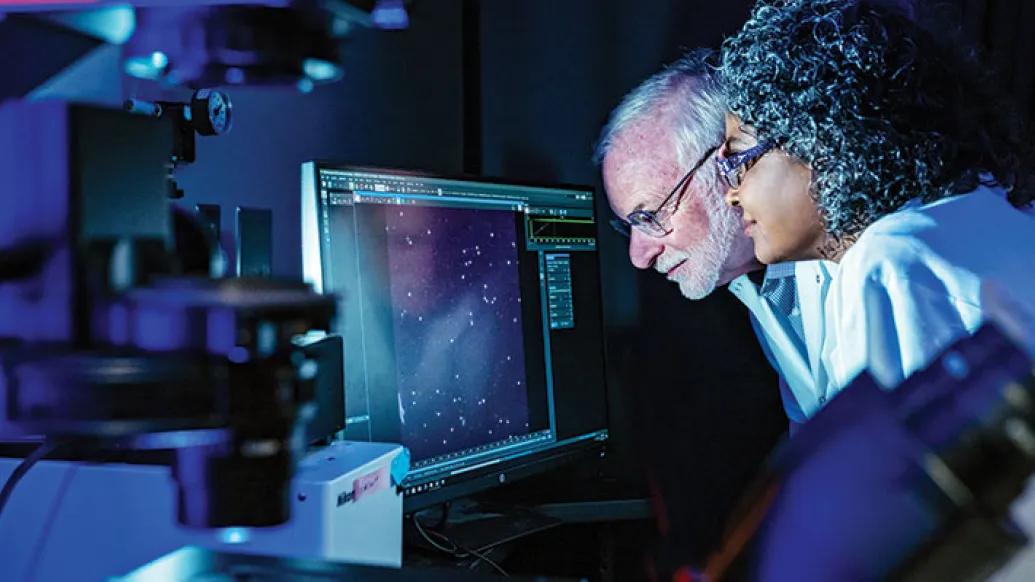
Sunitha Nagrath, Ph.D. had never heard of ductal carcinoma in situ. But when the chemical engineer started talking to breast cancer clinicians, she saw a problem she could help solve.
Why were patients diagnosed with this very early, non-invasive form of cancer developing distant metastases 20 or 30 years later?
"There was a very provocative idea in the field that these cells come into the blood early on," says Nagrath, professor of chemical engineering. "The tumor was removed early, so why are these cells re-emerging after 20 years? The cells have to come from the DCIS. But how do we connect the dots? If you look at blood from DCIS patients, do you find tumor cells in the blood?"
Nagrath had already published research findings about circulating tumor cells in the blood. She had developed microfluidic devices to sort the small number of tumor cells from the large number of white blood cells. She had the tools to begin to understand whether DCIS was shedding into the blood.
There was only one problem: Who would fund something this out-of-the-box and unproven?
"Whenever we present this work, people say, ‘That’s not even a cancer.' Why does this cell appear in the blood? It’s very much stretching our imagination in terms of science," Nagrath says.
"We could not go to traditional funding initially because it’s such a provocative idea. First, we had to convince people this is something you can find. Even though we had some preliminary data, it was not enough to for us to pursue NIH funding," Nagrath says.
Mainstream federal funding agencies like the National Institutes of Health often require extensive preliminary data before funding a project. But the Forbes Institute for Cancer Discovery, a philanthropy-fueled institute within the Rogel Cancer Center, takes aim at high-risk, high-reward concepts, providing seed funding to take a promising, bold idea forward.
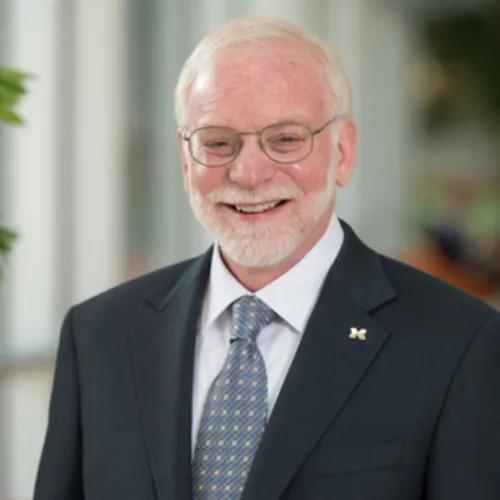
"The goal of the Forbes Institute is to fund bold ideas that may have a big clinical impact," says Max S. Wicha, M.D., Madeline and Sidney Forbes Professor of Oncology and director of the Forbes Institute.
"We have a clear metric that is a little different from other funding mechanisms. For projects funded through the institute, we look down the road: Do they take ideas from the laboratory to the clinic to directly benefit cancer patients?"
The Forbes Institute was founded in 2016 with a $17.5 million gift from Madeline and Sidney Forbes. Sidney Forbes founded The Forbes Company, a nationally recognized developer, owner and manager of luxury shopping destinations, including the Somerset Collection in Troy, Michigan.
The institute fosters cross-disciplinary collaboration, encouraging partnerships among faculty from various disciplines across the University of Michigan campus. The goal is to fuel rapid development of innovative technology and new therapies.
Nagrath was one of the initial Forbes Scholars. She had some proof-of-concept data that found circulating tumor cells in the blood of patients with DCIS and single cell analysis that showed these cells came from DCIS. With one year of funding from Forbes, Nagrath and doctoral student Neha Nagpal took a deeper dive into these cells, isolating them and examining single cell RNA transcriptome to identify DCIS-specific markers.
Tumor dormancy is emerging as a crucial issue for several cancer types, notably breast cancer. A 2017 New England Journal of Medicine paper led by Rogel researcher Daniel Hayes, M.D., reported that women with hormone sensitive breast cancer still face a substantial risk of cancer returning or spreading even 20 years after a diagnosis.
"This is an important area because it is such a big clinical problem” says Wicha, who now collaborates with Nagrath on this work. "Women with hormone receptor positive breast cancer are told they’re cured after their adjuvant therapy, but the fact is they have a risk of recurrence that remains for the rest of their lives. Up to now there’s been no real test for dormant tumor cells or therapies to get rid of these seeds of metastases before they start growing."
Nagrath and Wicha’s goal is to develop tools to identify which patients are harboring potentially aggressive dormant cells and find a way to eliminate those cells before they become metastases.
With Nagrath’s assay, survivors could potentially get regular blood draws to analyze circulating tumor cells. Another novel idea, also funded through the Forbes Institute, involves an implantable scaffold device designed to catch these circulating cells. The scaffold, which is implanted under the skin, traps immune cells, which differ in healthy tissue and tumors. The circulating cells grow on the scaffold, creating a microenvironment similar to a metastasis.
"Our approach is unique in that the implant mimics a metastatic site," says Lonnie Shea, Ph.D., Steven A. Goldstein Collegiate Professor of Biomedical Engineering. "The site is being prepared for the arrival of cancer cells, which occurs prior to the spread of disease."
The team is using the scaffold to study how factors in the microenvironment influence tumor dormancy. In a 2023 study in Nature Communications, they found that in mice with the implanted scaffold, the scaffold microenvironment recruited circulating tumor cells, mimicking a lung metastasis. Immune cells that either block cancer or promote cancer are attracted into the scaffold or the lungs and establish either active or suppressive immune environments. In the active immune environments, tumors cells are dormant. In the suppressed immune environment, aggressive metastases grow. Monitoring and tracking cells within the scaffold could help identify aggressive metastases and dormant tumors.
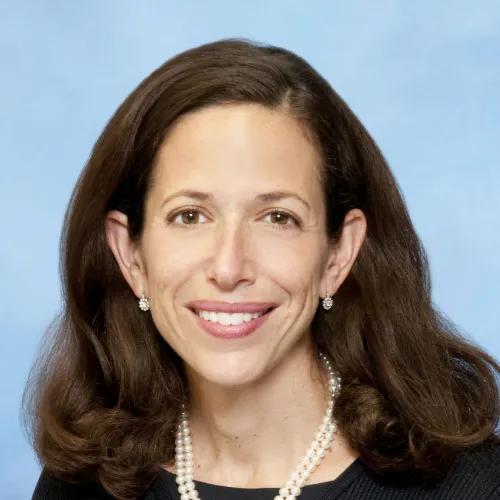
Shea and Jacqueline Jeruss, M.D., Ph.D., professor of surgery, have applied for approval from the U.S. Food and Drug Administration to implant the scaffold device in people with breast cancer.
Rogel researchers are now teaming up with three other institutions to submit a large program project grant around tumor dormancy, applying the Nagrath assay and Shea scaffold to identify dormant cells, then developing metabolic and immune therapies to try to eliminate them. The project will involve obtaining tissue and blood samples from patients undergoing surgery for DCIS.
For Wicha, it’s a prime example of how the Forbes Institute can move the needle.
"Those first funds are hard to get if you have a really novel idea. The scaffold, for example, is not the kind of thing NIH would ever consider funding," Wicha says. "With the Forbes Institute, we take a chance. We want new ideas that, if they work, will have a big impact."
From a seed of an idea to clinical trials
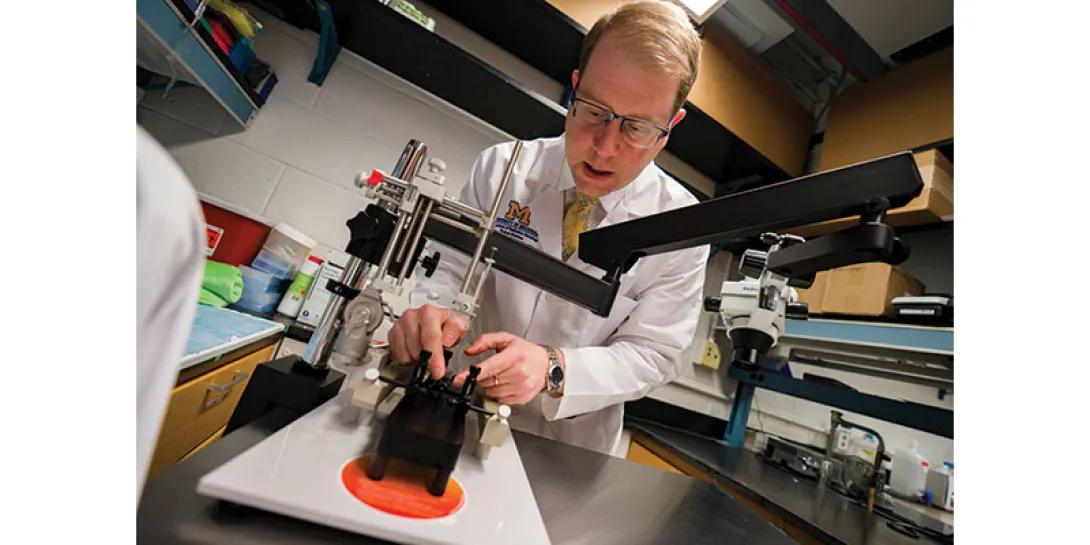
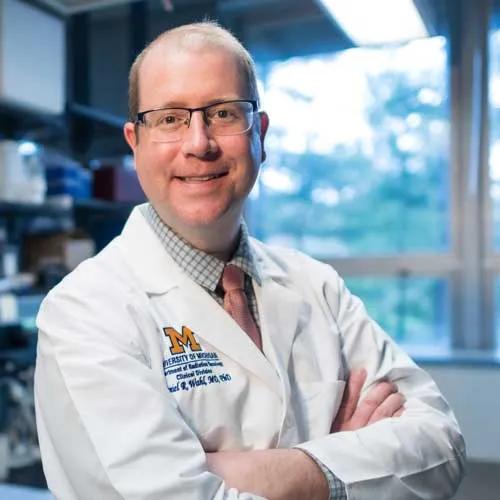
Daniel Wahl, M.D., Ph.D. (pictured above in his lab), was just a few years into his career, running bench experiments alongside a technician and a lab scientist. He felt like they were starting to uncover something interesting: metabolites, particularly the metabolite GTP, could be regulating treatment resistance in brain cancers. If it panned out, it could be huge. Glioblastoma is incredibly deadly and very little progress was being made in this disease.
"What we had was a pretty promising hint," says Wahl, associate professor of radiation oncology and neurosurgery. "We were able to measure the activity of these metabolic pathways in cell lines. But could we measure it in patients?"
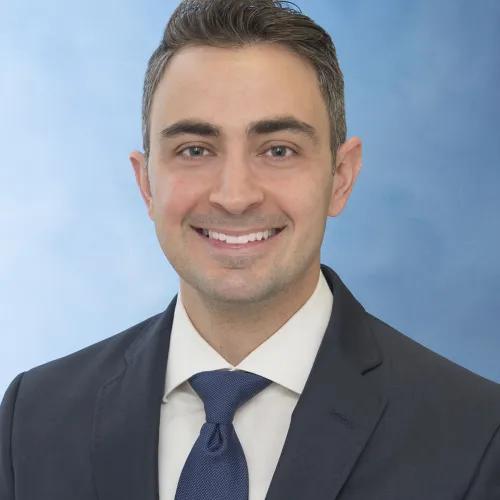
With funding from the Forbes Institute, Wahl hired a post-doctoral fellow, expanded his lab and moved the studies that had been just in the dish into mouse models and patient samples. He partnered with Wajd Al-Holou, M.D., clinical assistant professor of neurosurgery. They obtained tissue from consenting glioblastoma patients who were undergoing surgery.
"By making the measurements and finding this pathway was active in mouse brain tumors, it gave us the confidence to block the pathway in mice, which ended up working well. The Forbes funding allowed us to show, for the first time, the GTP metabolic pathway was also active in brain cancers in patients," Wahl says. "It gave us confidence that we should try to block it in people."
The research progressed to a series of clinical trials: a phase 0 trial to see if the GTP blocker made it past the blood-brain barrier into the tumor and whether it affected tumor metabolism, and two therapeutic trials—one for newly diagnosed patients, another for recurrent patients—in which patients received the GTP blocker along with standard chemotherapy or radiation.
The phase 0 trial showed the GTP inhibitor does enter the tumor and alter metabolism. Early results from the therapeutic trials look promising, although more follow up is necessary. Next is a randomized clinical trial along with Northwestern University that will enroll more than 100 patients.
Meanwhile, with another round of Forbes funding, Wahl and Deepak Nagrath, Ph.D., professor of biomedical engineering, will take the patient measurements to the next level. The initial work determined that GTP metabolism was more active in the tumor than normal brain.
"That tells you cars are moving on the road and they’re moving faster on one road than another road," Wahl says. "We don’t know the exact speed of those cars on the road. Is it 25 or is it 75? That matters if you’re trying to block all those cars. What is the raging freeway and what is the neighborhood street?"
Nagrath, who specializes in advanced computational models of metabolism, will use advanced machine learning metabolic network models to determine which patients have the most activity in these pathways and which sub-pathways are most active. The goal is to apply the concepts of personalized medicine to metabolic inhibitors. Wahl credits the Forbes Institute with getting this work off the ground and laughs at the idea of a federal agency supporting the earliest stages of this work. “We thought we could do it, but we needed someone to say, ‘We believe in you, try to make it happen.’ Without the Forbes Institute, that doesn’t really happen," Wahl says. "Forbes funding has let us do some cool science that’s benefiting patients."
Reprogramming how research is done
When Indika Rajapakse, Ph.D., started teaching classes via Zoom during the pandemic, it sparked an idea.
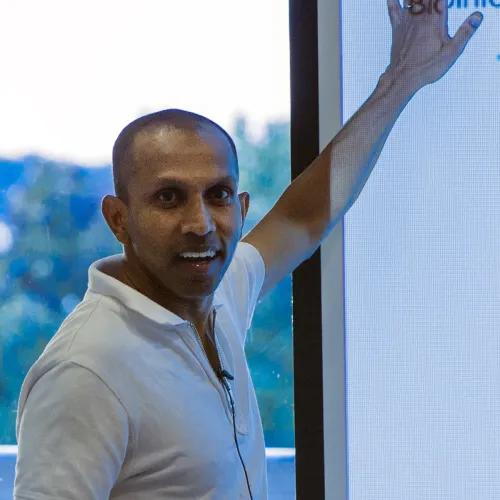
He set up an automated lab that includes the Bio Assembly Bot, or BAB—a robotic system, live cell imaging system and genome sequencer in his laboratory—to conduct experiments. A livestream camera allows him to monitor the setup remotely.
"It’s like Zoom for research," says Rajapakse, professor of computational medicine, bioinformatics and mathematics. "Everything is completely automated. I don’t need to come in to pipette, my BAB can do the pipetting, and I can see whether it’s working." Eventually, this setup will evolve into a self-driving lab.
The concept fits well with Rajapakse's background. Initially an engineer and then a mathematician, he transitioned into cancer research during his postdoctoral fellowship at the Fred Hutchinson Cancer Research Center. He focuses on using data, technology, and AI to reprogram cancer cells.
His primary question is about cell reprogramming—the idea of altering skin cells to create hematopoietic stem cells. He hopes that this technique can eventually be used in bone marrow transplants, allowing patients to be treated with their own cells rather than donor cells.
The work approaches biology from an engineering and mathematics perspective, which traditional funding sources are often hesitant to support. A grant from the Forbes Institute, along with what Rajapakse calls “Wicha’s visionary approach,” enabled him to develop and test his concepts.
As his work advanced, he founded a company, iReprogram, aimed at using cell regeneration to elevate precision oncology. Through long-time mentor Stephen Smale, Rajapakse was introduced to executives at NVIDIA, the chipmaker that is now the world’s largest company. He is currently collaborating with them to integrate AI systems into cell reprogramming. In his own lab, Rajapakse incorporates computer aided design and computer aided manufacturing into his experiments, simulating the outcomes till he develops the optimal version.
"The biggest problem in biology is reproducibility," he says. "That’s why automation can play a huge role. There’s less error. We can repeat that same experiment over and over because we have a recipe. The robotic system can execute it."
The data is available, he points out. It’s a matter of using it to inform research. He cites an example of AlphaFold, an AI tool that can demonstrate protein folding in minutes—something that would have taken a postdoc two to three years to decipher.
Rajapakse’s work is the foundation for an automated digital-physical platform for accelerating discovery in biology.
"My vision is that this platform will transcend the capabilities of non-unified approaches and, borrowing from Arthur C. Clarke, ‘venture a little way past them into the impossible.’"
Continue reading Illuminate 2025
- Big Data, Better Cancer Care
- Wearing Your Heart (rate) on Your Sleeve
- The Right Chemistry to Keep Going
- The Future of Cancer Survivorship Care
- Tackling Pancreatic Cancer Care, Bench to Bedside
- Engineering Better Colorectal Cancer Outcomes
- The Role of Environmental Factors in Health
- Refining Radiation
Learn more:
Visit the Rogel Cancer Center research site

Illuminate
Articles showcasing the latest in cancer research underway at the Rogel Cancer Center
In This Story
Lonnie Shea
Professor
Jacqueline S Jeruss, MD, PhD
Professor
Daniel R Wahl, MD, PhD
Professor
Wajd N Al-Holou, MD
Assistant Professor
Indika Rajapakse, PhD
Professor
Max S Wicha, MD
Professor
Featured News & Stories

Human Rabies Exposures Growing Across the Country
Continuing the legacy of a doctor’s doctor
Dr. Elafros Receives Global Achievement Award
Karsten Bartels, MD, earns Gladys Sessler Outcomes Research Consortium Award

Into the Current: Dr. Nate Hunt Brings Specialized Water Rescue Expertise Back to Michigan Medicine