Education at CHOP

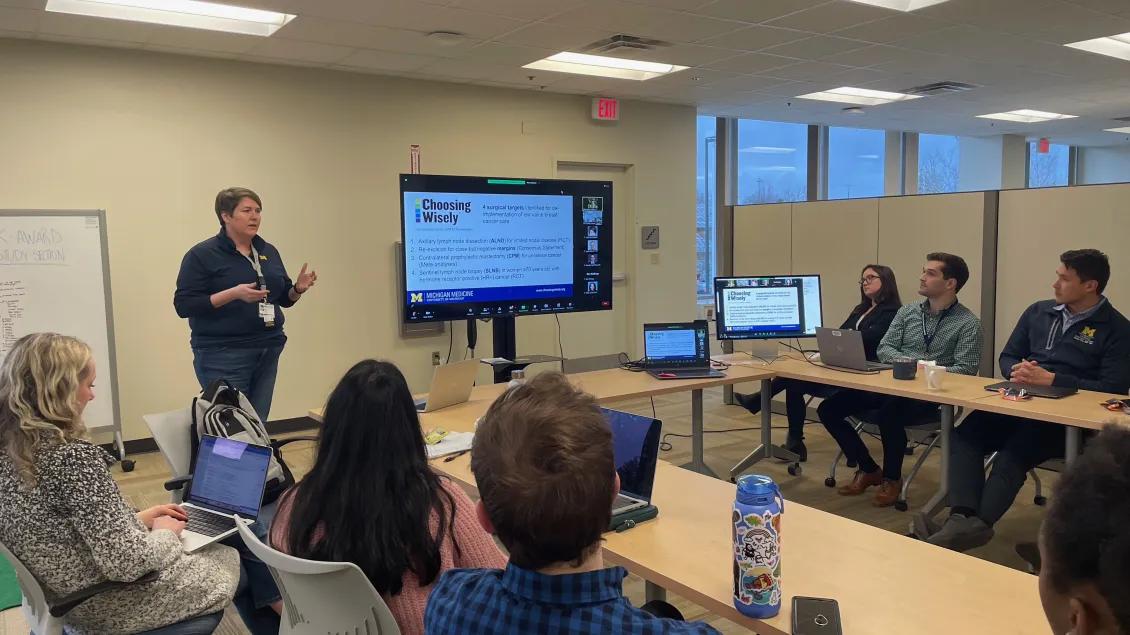
Dr. Dossett giving a presentation to a group of people sitting in a circle of desks

Training Health Services Scholars

Explore learning opportunities at CHOP.

CHOP Fellows

The postdoctoral program at CHOP provides aspiring MD and PhD scientists with an exciting opportunity to participate in groundbreaking, interdisciplinary research. CHOP’s research agenda is focused on many of the most policy-relevant and timely issues in health policy and health services research, including understanding variation and reducing disparities in quality and costs of healthcare, accountable health systems for fostering care coordination and efficiency, and public-private partnerships for accelerating quality improvement on a large scale. Fellows will also have learning opportunities such as writing workshops and research seminars during their time at CHOP.

Throughout this 8 week program over the summer, fellows will learn the fundamentals of writing a CHOP- style manuscript and gain proficiency in coding administrative claims data in STATA. We hope this will help jump start what we will know will be a successful two years for them in our center

The CHOP Fellow Exchange Program is the fellow equivalent of a visiting professorship. Each year CHOP fellows are invited to apply to be selected as a visiting fellow. The fellow has the opportunity to select which institution they visit. A fellow from the partnering institution will also visit CHOP and the University of Michigan Department of Surgery. This exciting program gives fellows a chance to network and learn more about research happening at other institutions.

Featured News & Stories

See all news
graphic drawing of hospital with road in front of it with red car driving
Health Lab

Long drives, high costs stand between rural adults and safe surgery
Rural patients face long drives for surgery, especially if they want to reach a high quality and affordable hospital.
Minding Memory with a microphone and a shadow of a microphone on a blue background
Minding Memory

Exposure to a Natural Disaster and Long-term Cognition
In this episode, Matt and Lauren speak with Drs. Elizabeth Frankenberg at the University of North Carolina at Chapel Hill and Duncan Thomas at Duke University about their research which focuses on understanding how survival and physical health evolve after exposure to large scale shocks like the 2004 Indian Ocean Earthquake and Tsunami. They will specifically speak about the STAR Study and what they’re learning about long-term effects on cognitive outcomes.
Well-Being at Michigan Medicine with Dr. Elizabeth Harry
Well-Being at Michigan Medicine

Episode 1: The Enterprise Triad

The inaugural episode of Well-Being at Michigan Medicine has Dr. Elizabeth Harry welcoming the organization’s triad leadership – Dr. Paul Lee of the U-M Medical Group, Julie Ishak, M.S.N., the chief nurse executive, and Dr. Charlie Reuland, the chief operations integration officer overseeing operations at the clinical enterprise. Some of the topics that the quartet discuss include fostering a culture of people feeling cared at work and how it can make a difference in patients’ lives, recognizing stress and structural issues and how to stave off burnout, and reducing cognitive load. Learn more about the host of Well-Being at Michigan Medicine, Dr. Elizabeth Harry. Episode guests: • Julie Ishak, M.S.N., R.N. • Paul Lee, M.D., J.D. • Charlie Reuland, Sc.D., M.H.S.
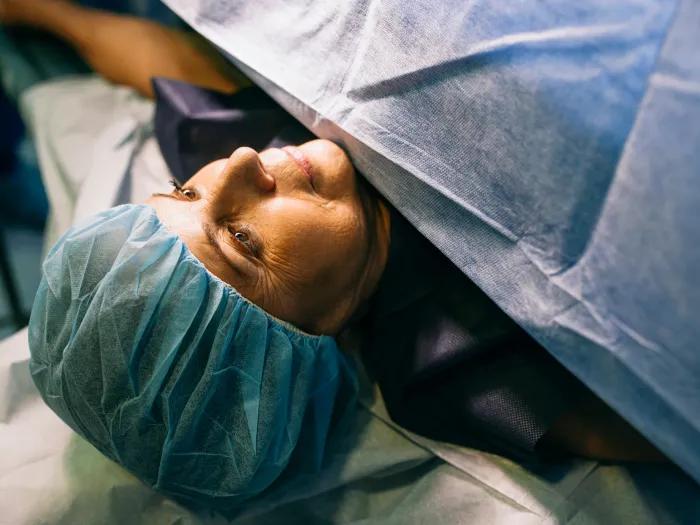
woman laying down and sheet over going into surgery
Health Lab

Older women more likely to receive heart surgery, die at low quality hospitals

Women over the age of 65 who require complex heart surgery are more likely than men to receive care at low quality hospitals — where they also die in greater numbers following the procedure, a Michigan Medicine study finds.
Blurred image of health care professionals in blue scrubs pushing a gurney down a hallway
Health Lab

Primary care scarcity linked to more surgical emergencies, problems
Patients living in areas with the worst shortages of primary care providers are more likely to have emergency surgery, surgical complications and hospital readmissions.
script on rx
Health Lab

Opioid limits didn’t change surgery patients’ experience, study shows

Surgical opioid prescription limits reduced the number of narcotic pills patients received after their operations, but didn’t lead to worse pain scores or less satisfaction.