Developing Projects
Discover Our Developing Projects
Innovation never pauses at the Judith Tam ALK Lung Cancer Research Initiative. Explore our pipeline of developing projects—each designed to push the boundaries of understanding, prevention, detection, and treatment of lung cancer. These early-stage studies and collaborations reflect our commitment to advancing new ideas and driving future breakthroughs. Stay tuned as we continue to turn promising concepts into real progress for individuals affected by ALK+ lung cancer everywhere.
The ALK Immune Environment
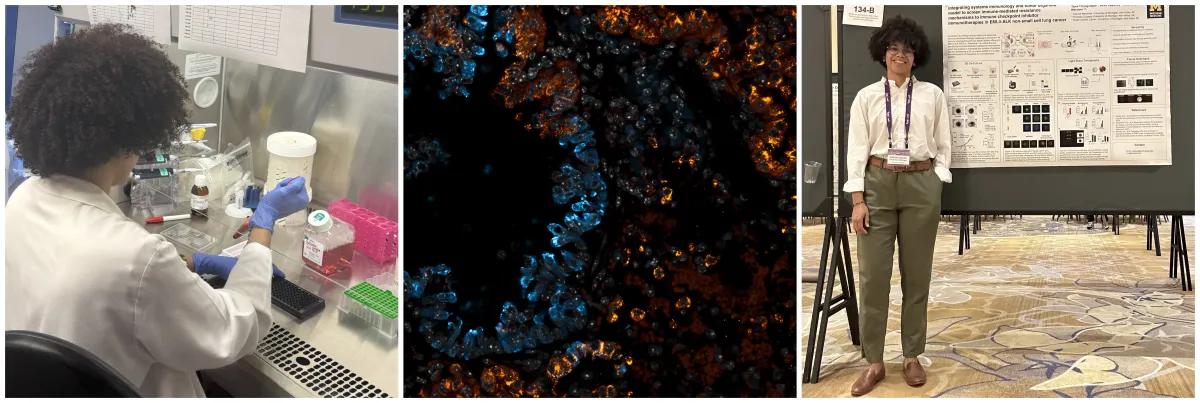
The focus of this aspect of the initiative is to determine the immunologic mechanisms by which ALK positive tumors evade traditional immune based therapies. We have been developing strategies for the collection of primary untreated lung cancer and peripheral blood mononuclear cells (PBMC), confirmed ALK-fusion patient tissue sections for multiplex IHC, and bulk RNA sequencing to identify immune cell subsets associated ALK tumor development.
OBJECTIVES
- Objective 1: Characterize the immune microenvironment in ALK NSCLC utilizing patient derived tumor tissue and identify significant differences immune populations (e.g. T-cells, neutrophils, macrophages, dendritic cells, cancer associated fibroblasts, etc.), from non-ALK mutation-driven NSCLC and non-mutation-driven NSCLC.
- Objective 2: Characterize the cytokine profiles of PBMCs in ALK NSCLC patients longitudinally, as treatments and clinical status evolve. Furthermore, we will characterize the immunologic states of various immune cells such as T-cells and circulating monocytes and neutrophils. We will compare this to PBMCs of healthy patient donors.
- Objective 3: Evaluate efficacy of current and emerging immunotherapies in ex vivo tumor organoid models and determine mechanisms of immunologic mediated tumor resistance.
Project Lead

Kiran H Lagisetty, MD
MPLAN
Clinical Associate Professor of Surgery
Medical School
Circulating Tumor Cells (CTCs) Analysis
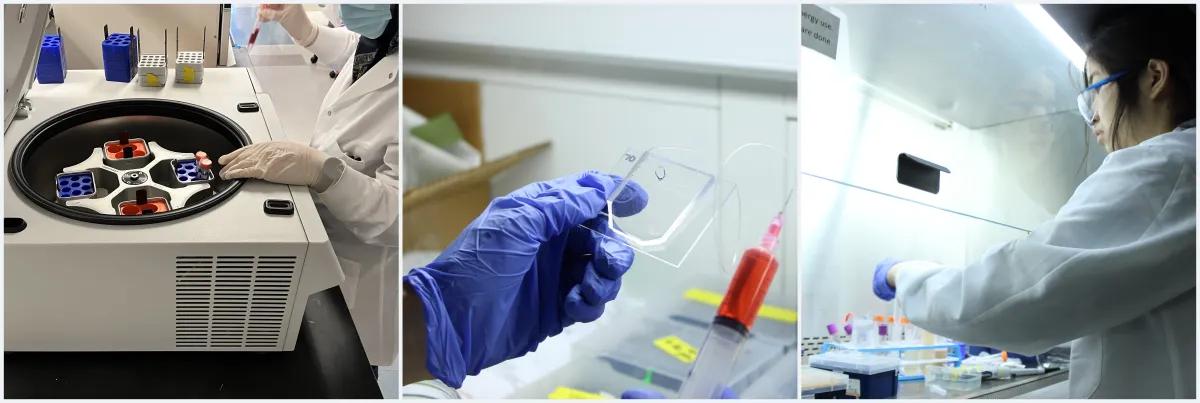
We are currently in the process of developing technologies to isolate, enrich, and expand circulating tumor cells from patient-derived samples in order to characterize tumorigenesis and metastatic potential.
OBJECTIVES
- Objective 1: Characterize the number and phenotype of circulating tumor cells in ALK NSCLC patients longitudinally, as treatments and clinical status evolve.
- Objective 2: Apply multiomic approaches to characterize the CTCs, including genomic and transcriptomic analysis. Developing workflows to characterize the CTCs at single cell level to identify heterogeneity and how it lends to treatment resistance.
- Objective 3: Expand the CTC population under conditions that preserve the phenotype and heterogeneity to fully characterize drug sensitivity and resistance.
- Objective 4: Use expanded CTCs optimize the protocols for further generation of xenograft models.
- Objective 5: Understand the brain metastatic potential of CTCs.
Project Lead

Sunitha Nagrath, PhD
Professor, Biointerfaces Institute
Professor of Biomedical Engineering
Medical School
News and Stories

Doctor helps one father’s race against lung cancer