
Judith Tam ALK Lung Cancer Research Initiative Study (JTARI)
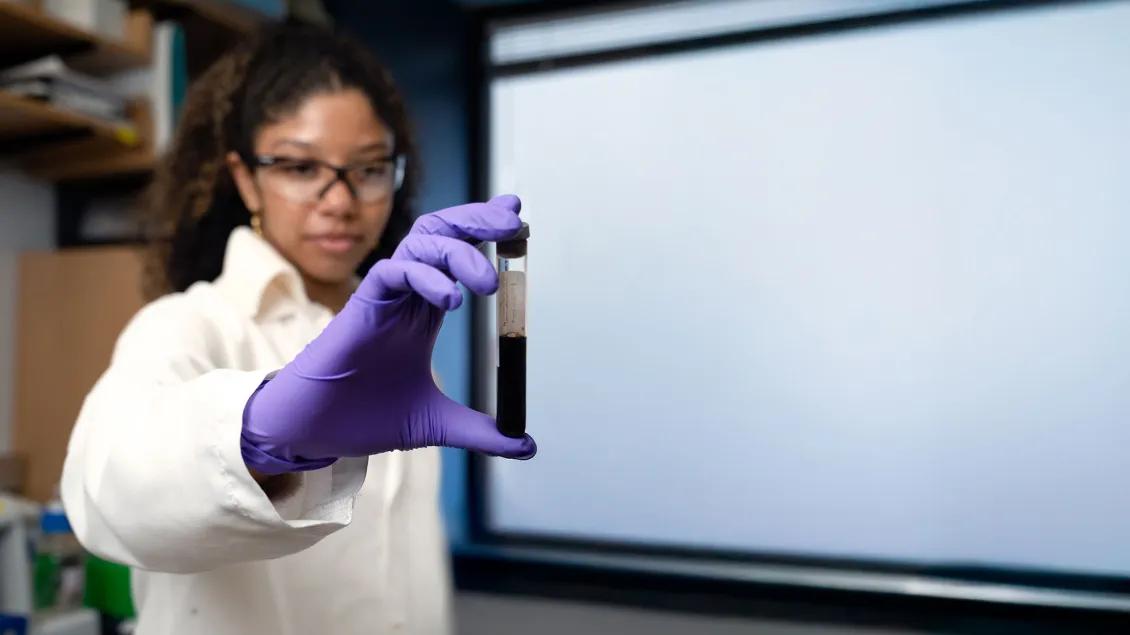
Participate in Cutting-Edge Research
For an individual diagnosed with non-small cell lung cancer that is genetically driven by an ALK (anaplastic lymphoma kinase) rearrangement, a major concern at diagnosis is whether the standard tyrosine kinase inhibitor drug they are taking will continue to be effective for a long time and what drug or drugs will be able to be taken, if progression occurs, to achieve disease control. Understanding and overcoming these concerns is the main focus of the work proposed here by this multidisciplinary lung cancer team at the University of Michigan Rogel Cancer Center.
Study Vision
The Judith Tam ALK Lung Cancer Research Initiative Study (JTARI) within the University of Michigan Health - Rogel Cancer Center has been working toward finding the necessary treatment and solutions that individuals with ALK+ lung cancer need to not only survive their diagnosis, but to live a full and robust life.
Why join our study?
Dr. Sofia Merajver has assembled a group of industry leaders from across the globe representing the fields of oncology, thoracic surgery, pathology, pharmacy, biochemistry, cellular biology, bioinformatics, and clinical science. Our team uses a multidisciplinary approach to better understand and develop treatments for ALK+ lung cancer. We aim to collaborate with an actively engaged patient community to help shape the future of cancer care. Additionally, we are in the process of obtaining CLIA certification, which will allow us to generate formal reports from sample processing to support clinical decision-making.
Study Goals
- Generate patient derived xenograft (PDX) (tumor cells transplanted into mice) and patient derived organoid (PDO) (tumor cells grown in three dimensions) models of cancer from surgical tissue, biopsied tissue, and body fluids. From these developed models, we will test how the cells respond to different therapies or a combination of therapies.
- Determine the types and specific characteristics of cancer cells that are responsible for metastases and/or therapy resistance in ALK+ lung cancer.
- Develop new treatment options and use real-time drug testing platforms to test which treatment option may be most effective.
- Open new precision medicine clinical trials in the future to share back the results of our studies to guide medical decisions for treatment options. At the current time, we are unable to share back our results to individual participants.
Who is eligible?
- Any individual suspected of having lung cancer, preferably ALK+ non-small cell lung cancer.
- 18 years of age or greater.
If you meet our eligibility criteria and would like to participate, please complete the participant intake form.
For more information and to connect with a study coordinator, please email [email protected]
Study Coordinators
Albana Grajqevci, MPH
Mary Horn, BS
Avery Rudnick, MPH, CCRP
Travel Reimbursement
Thanks to a generous donation, we can offer travel reimbursement upon request for participants who meet specific criteria. Reimbursement is available for individuals who have consented to participate in the JTARI Study, are traveling 300 miles or more, and are not currently patients of the University of Michigan Health System in Ann Arbor.
To learn more about travel reimbursement, please email the study at [email protected].
Frequently Asked Questions
Anyone, at least 18 years or older, with a lung cancer diagnosis (preferably, but not necessarily, ALK+ non-small cell lung cancer) or a suspected lung cancer diagnosis (such as a lung nodule) is eligible to participate. This includes individuals with any treatment status (i.e. pre, post, or current chemotherapies/immunotherapies) and any clinical interventions (i.e. fluid removal, surgical resection). You do not have to have disease progression to participate.
Non U-M participants are able and welcome to enroll in the study if one meets eligibility criteria. This includes those living outside of Michigan and outside of the USA. If you are screened and accepted to the study, we will work with your institution (please refer to Q11 regarding MTA – Material Transfer Agreement) to receive the necessary medical information and samples.
While we are always happy to welcome our participants to the University of Michigan campus, this is not a requirement to participate in the study. If your institution is able to accommodate, we will work directly with them to coordinate any research sample collections and have them shipped to U-M via an MTA (see Q11). If you choose to travel to U-M for any procedures, please first check with your insurance provider to find out if you have coverage at the University of Michigan as the initiative is unable to assist with costs associated with your medical care. This applies to participants who live inside and outside of the United States.
To participate, email [email protected] with your upcoming appointment and the physician you will be seeing. If you are scheduled for a surgery, biopsy, or fluid removal, you will be asked to sign an informed consent before we may receive any samples.
If you are eligible for the study and cannot travel to U-M for an initial assessment or second opinion, please email [email protected] with your contact information and any upcoming procedures. We will reach out for enrollment with an intake survey and a subsequent screening interview. Please be advised that our team may need time to set up the appropriate agreements with your institution to send samples for research. If possible, please reach out at least a month prior to any upcoming procedures.
There are 3 main types of samples collected: fluid (pleural, ascites, cerebrospinal, etc.), blood and tissue. These samples are typically collected during clinically indicated blood draws and procedures, such as paracentesis, thoracentesis, and surgical resections.
The tissue we receive does not have any impact on whether you may receive the necessary tests for diagnostic purposes. There would be no interference with your clinical care; clinical needs always supersede research activities. As such, there is also no guarantee of sufficient tissue for research purposes.
We may request up to 50 cc (50 mL, about 3 tablespoons) of blood periodically for research activities.
We will accept and process a tissue sample as small as a grain of rice. However, the larger the sample, the far greater chances of successful drug testing through various models.
Ideally, your institution would mail the sample to U-M. However, if they are unable to send a blood sample, we may accept it from you. Please check with your institution first to see if there are any regulatory restrictions that might prevent you from leaving with the blood sample. To ensure it arrives the next morning, drop off the properly packaged sample at a FedEx location on the same day it is drawn. Before a tissue/fluid sample is sent to U-M, an agreement should be established between your oncologic institution and U-M. For regulatory compliance, your institution will be responsible for sending tissue and/or fluid samples.
A material transfer agreement (MTA) is a contract governing the transfer of research samples between two institutions and is a vital step to ensure proper protocol. We are currently able to accept samples from institutions with which we have an established MTA. If your institution does not have an MTA with U-M, we will work with them to set up an MTA, or gift agreement, prior to sample procurement. Please note that establishing an MTA can take a significant amount of time, and not all attempts will necessarily be successful.
There is no additional cost to you for participating in the Judith Tam ALK Lung Cancer Research Initiative, as blood draws and other sample collections are performed during visits that are already part of your clinical care. This means that all procedures needed for your medical care will be billed to your insurance as they normally would, regardless of your participation in the research initiative. If you are coming to the United States from another country for procedures, please check with your insurance provider in advance to understand what is covered under your plan.
The Initiative will cover research-related costs associated with transporting, packaging, testing, and otherwise handling your research sample(s).
If you have any questions or concerns, please reach out early, and a coordinator will be happy to assist you.
We are happy to accept archival tissue. However, there are limitations on what can be done with the sample. Fresh tissue works best for the successful experimentation (organoid drug testing, PDX generation, etc.).
We understand that many patients receive blood draws outside of their institution for convenience. However, while we are able to receive blood from Quest or LabCorp, the cost of the draw would be your responsibility. If you would like to have blood drawn for research at an independent lab, please note that the associated costs would be your responsibility. If possible, please schedule your blood draw at an institution where an MTA is established and inform us so we may coordinate the shipping and receiving of the sample at U-M.
We are actively attempting to understand the drivers of progression for patients with changes or loss of the ALK mutation. As such, we are happy to accept any samples from you even if there is a change in your mutational status.
We are working tirelessly with regulatory and governing bodies to allow us to be able to return results. However, as it currently stands, we are unable to return any results to participants or their healthcare team, whether formally or informally. We will provide updates as the status hopefully changes.
