Consequence Exhibition
Water Place
Artist: Susan Campbell
Exhibition Dates: September 19-December 12, 2025
Artist Reception: Friday, September 19 from 5-7 pm
Location: Rotunda Gallery, Building 18, NCRC
Artists:
Susan Goethel Campbell
Halima Afi Cassells and Shanna Merola Collaboration
Sandra Osip
Clinton Snider
Leslie Sobel
This group exhibition, “The Consequence,” offers an in-depth exploration of the role of art as a powerful catalyst for environmental activism. At first glance, each of these works possesses striking beauty. However, a closer inspection reveals a profound and often unsettling depth that challenges one’s perceptions.
The artworks are imbued with multiple layers of meaning, inviting us to engage critically with the themes presented and encouraging us to reflect on our often-fraught relationship with the natural world. Through a variety of mediums and techniques, these works prompt us to confront uncomfortable truths about climate change, habitat loss and the disappearing biodiversity around us.
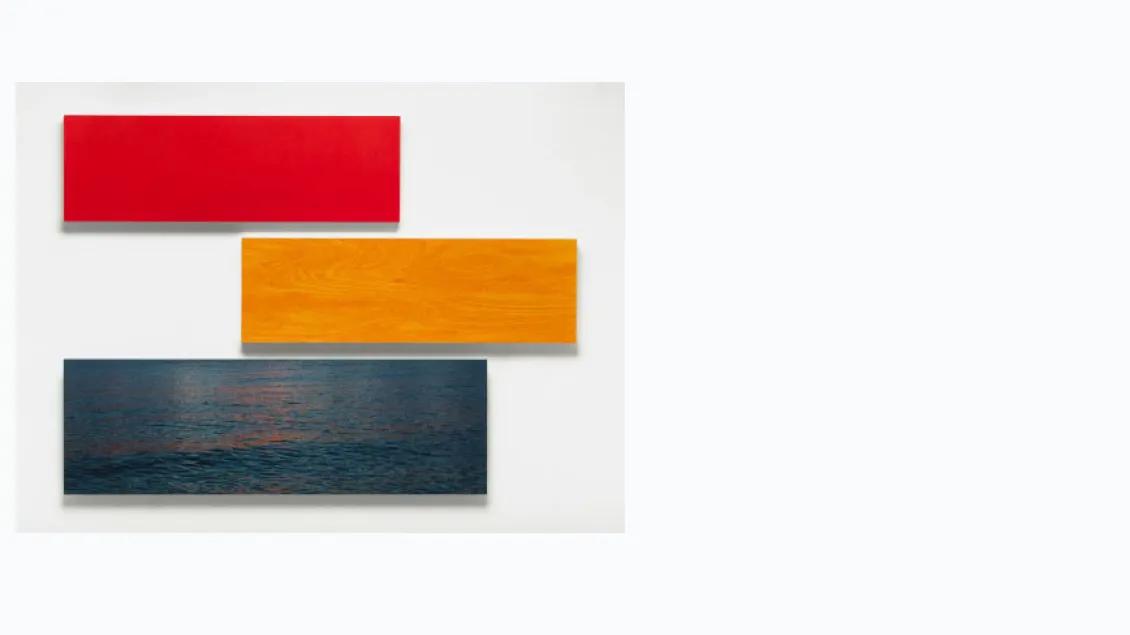
Campbell’s captivating “Heatscape” series transforms what is often an intangible concept into the tangible realm by visually translating heat distribution data to depict the impact of urban design on climate. This series offers a profound exploration of the intriguing phenomenon known as "urban heat islands”, a term that describes urban areas that absorb and radiate significantly more heat than their surrounding rural landscapes due to human activities and infrastructure.
“Heatscape” invites us to engage in a deeper reflection on the profound impact that human ingenuity has wielded over the natural world, serving as a visual reminder of our responsibility in urban design that is considerate of the environment and communities it impacts. This work challenges us to recognize the interplay between our lifestyles and the environment, urging a dialogue about sustainable practices that could mitigate the effects of these heat islands.
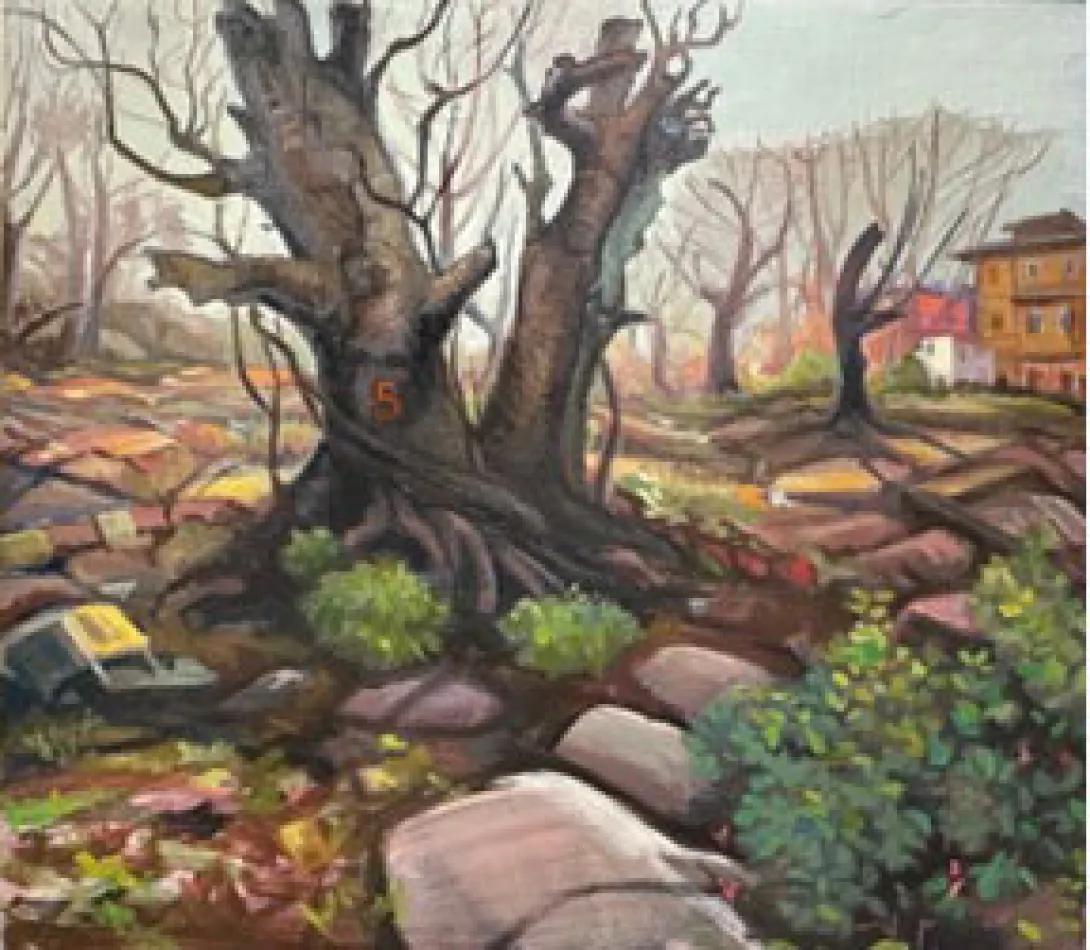
Snider’s work powerfully illustrates the remnants of industrialization, capturing the unsettling essence of its aftermath. In his art, we encounter an urban landscape that is strikingly devoid of human presence, creating an almost haunting atmosphere. This absence of people amplifies the eerie feeling and serves as a warning about the enduring consequences of industrial progress. It prompts viewers to reflect on the environmental impact and the transformations that society has undergone, urging us to consider what aspects of our world will persist in the wake of such change. Ultimately, Snider’s poignant depictions challenge us to confront the stark reality of a landscape altered by human activity, inviting contemplation on both the beauty and the desolation that can coexist in our modern environments.
Sandra Osip’s sculptures delve deeply into the juxtaposition of decay and destruction alongside the concepts of life and growth. Through her abstract structures, she illustrates the profound effects climate change has on our urban landscapes and the planet as a whole. These pieces serve as a poignant reminder of the delicate balance between nature and human impact, while Osip’s imaginative flowers evoke a sense of nostalgia and loss, symbolizing the beauty of what has been irretrievably diminished in our world. By celebrating these natural forms, she not only honors the richness of biodiversity but also raises awareness about the environmental crisis we face.
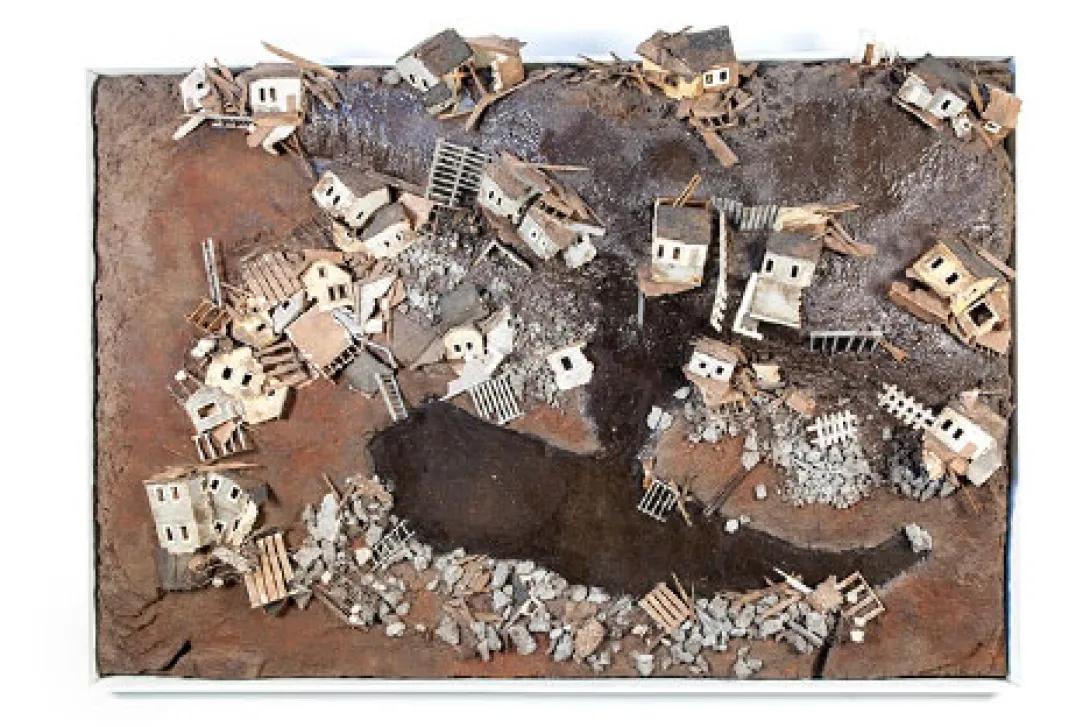
Cassells’ work not only celebrates a profound connection to nature and sustainable practices but also serves to illuminate the significant impact that climate change has on vulnerable communities. Through her art, she explores the intricate relationships between various environmental systems, highlighting their interconnectedness.
By delving into these themes, Cassells sheds light on the challenges faced by communities that often bear the brunt of climate change despite contributing the least to the problem. Her exploration encourages a deeper understanding of how environmental changes affect social structures and the lives of people in marginalized communities. In doing so, she advocates for greater awareness and action to address these issues, ultimately promoting a more sustainable and equitable future for all.
Shanna Merola is a visual artist, photographer, and legal worker. Her sculptural photo-collages are informed by the stories of environmental justice struggles, past and present. Travelling to EPA-designated Superfund sites, she has documented the slow violence of deregulation – from her own neighborhood on the Eastside of Detroit, to Chicago’s Altgeld Gardens, and Love Canal, NY. In addition to her studio practice, she has ten years of experience working in civil rights law through the National Lawyers Guild Detroit and San Francisco Chapters.
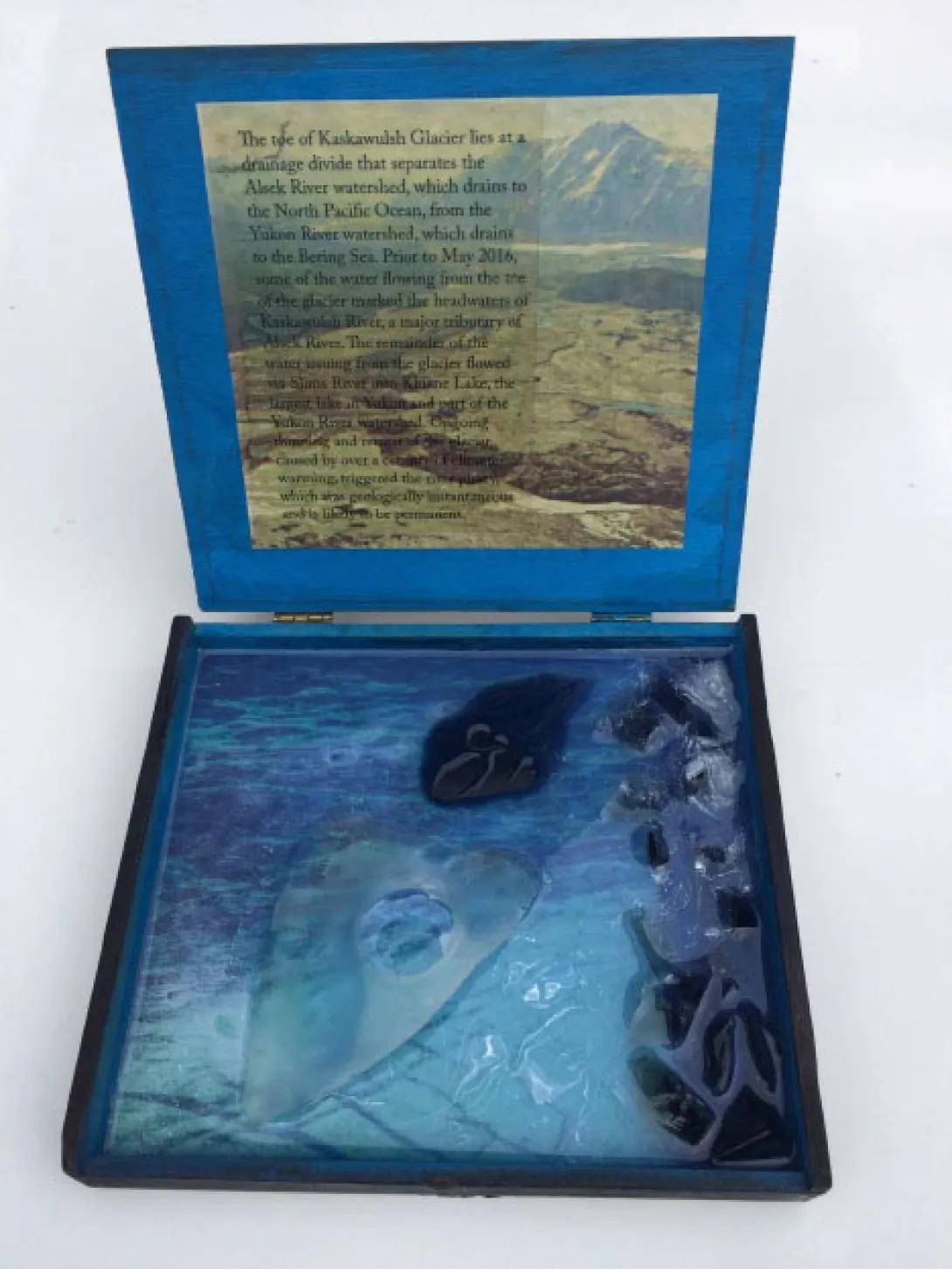
Sobel takes a more straightforward approach by helping us begin to grasp the reality of living in a world affected by climate change. Her work, described as “wilderness-based, science-inspired”, serves as a bridge, connecting viewers to experiences that might seem too distant or unfolding too slowly for most people to comprehend firsthand. In doing so, she not only raises awareness but also encourages dialogue about the pressing challenges our planet faces. Through her work, Sobel facilitates a deeper understanding of the interconnection between humanity and the environment, compelling us to reflect on our role in addressing these urgent issues.
These diverse approaches to creating art serve as powerful connections to the most critical and pressing environmental issues of our time. This engagement serves to deepen our understanding of these challenges from multiple perspectives, including cultural, social, and scientific viewpoints.
Furthermore, these approaches are not only meant to inform but also to inspire. They challenge us to reconsider our relationship with the planet and encourage us to take actionable steps toward sustainability.
Artist Bios
Susan Goethel Campbell is a multi-disciplinary artist whose work considers the contemporary landscape to be an emergent system where nature, culture and the engineered environment are indistinguishable from one another.
Central to her practice is the collection, documentation and observation of seasonal change and ephemera in both natural and artificial environments. Her work is realized in several formats, including installation, video, prints and drawings, as well as projects that engage communities to examine local and global environments.
Campbell earned an MFA in printmaking from Cranbrook Academy of Art. Her work has been exhibited internationally in Belgium, Germany, Switzerland and Slovenia and nationally throughout the US, including the National Museum of Women in the Arts, Queens Art Museum, Crystal Bridges Museum, Museum of Contemporary Art Detroit, Grand Rapids Art Museum, the Detroit Institute of Arts, The Drawing Center, and The International Print Center New York.
In 2009, she was one of 18 artists selected for the inaugural Kresge Artist Fellowship. Campbell has been awarded residencies at the Banff Centre for the Arts, Flemish Center for Graphic Arts, the Jentel Foundation, Beisinghoff Print Residency and the Print Research Institute of North Texas.
She taught studio art for 15 years at the College for Creative Studies in Detroit and has been a visiting artist in numerous institutions in the United States and abroad. Her work is in the collection of the National Museum of Women in the Arts, New York Public Library, Detroit Institute of Arts, Toledo Museum of Art and the University of Michigan Special Collections Library.
Halima Afi Cassells is an award-winning interdisciplinary community-engaged artist, mom of three, and avid gardener with deep roots in Waawiiyaataanong/Detroit, MI. Community is the heart of her work. She credits gardening as inspiring her move away from painting to a practice where she aspires to use natural, found, and up-cycled materials and processes that lend to the thriving of all (human and non-human) communities.
Halima continues to explore relationship-building and the notions of freedom and work, value and disposability in a participatory context through projects like the Free Market of Detroit, Traveling Indigo Vat, and her Tables and Thrones series.
Awarded the 2023 Kresge Arts in Detroit fellowship for interdisciplinary art, Cassells continually dives down rabbit holes seeking to understand the interconnectedness of systems and self. A self-guided student of anthropology, macroeconomics, British imperialism, common law, global corporatism, climate crisis, and psychology, she uses her art with the intent of returning to a 'right relationship.' As an advocate for artists and cultural practitioners, she has spearheaded many community processes that uplift cultural capital from often-exploited communities and creates in a collaborative context.
She has been awarded grants from: Panta Rhea Foundation, BulkSpace, WDET, Art Matters, Culture Source, Knight Foundation Arts Challenge, and Artplace America. In addition to Detroit, her work has been featured in spaces in New York, Philadelphia, Atlanta, Oakland, CA, Oaxaca, Berlin, Copenhagen, Bogota, and Harare.
Shanna Merola is a visual artist, photographer, and legal worker. The stories of environmental justice inform her sculptural photo-collages, struggles past and present. Travelling to EPA-designated Superfund sites, she has documented the slow violence of deregulation – from her own neighborhood on the Eastside of Detroit, to Chicago’s Altgeld Gardens, and Love Canal, NY. In addition to her studio practice, she has ten years of experience working in civil rights law through the National Lawyers Guild Detroit and San Francisco Chapters.
Merola has been awarded studio residencies through MacDowell, the Banff Centre for Arts + Creativity, the Studios at MASS MoCA, Foundation House, and Kala Institute of Art. She has received fellowships and grants from the Kresge Arts Foundation, the Society for Photographic Education, the Barbara Deming Memorial Fund, the Generator Arts Accelerator, the Puffin Foundation, Bulk Space, and the Virginia Museum of Fine Arts.
Shanna Merola and Halima Afi Cassells collaborated on collage and interactive installations for over five years. Researching, wandering, photographing, and creating together while interrogating the interconnectedness of environmental degradation, global corporatism and community response.
Sandra Osip was born in Detroit, Michigan and received a BS from Wayne State University, and an MFA from Cranbrook Academy of Art. She has received two Michigan Council of Arts awards and a commission titled “Progression”, for the Detroit People Mover at the Fort/Cass Station.
Osip’s artwork was represented by the Hill Gallery in Birmingham, Michigan, and the Carl Hammer Gallery in Chicago. Osip's work is featured in various art collections, including the Detroit Institute of Art, the Robert and Karen Duncan Collection, the Ray-O-Vac Collection, Cranbrook Academy of Art and the First National Bank of Chicago.
Osip moved to New York City in 1990, where her work was exhibited in Tiffany Windows, located on 5th Avenue and 57th Street. She received a prestigious award from the New York Foundation for the Arts. In 1992, she spent time at the McDonald residency in Peterboro, New Hampshire. Osip relocated back to Detroit in 2019 and currently holds a studio at Russell Industrial Center. Her work was featured in our Fall 2021 Exhibition, Ocean Body and a solo exhibition at the University of Michigan Research Center October – December 2021.
Clinton Snider earned his BA from the College for Creative Studies in 1997 (Fine Arts/Illustration). Snider has exhibited his paintings, prints, and sculptures locally, nationally, and internationally, Including The Detroit Institute of Arts, the Cranbrook Art Museum, Susanne Hilberry Gallery, David Klein Gallery, Robert Kidd Gallery, Mott College, the Kunst Werker Institute of Berlin, Think Space, Culver City, Scope Miami, and throughout Metropolitan Detroit.
Snider’s works are part of many public and private collections, including The Detroit Institute of Arts, Cranbrook Art Museum, Henry Ford Hospital, the Kresge Foundation, the Detroit Zoological Society, Susanne Hilberry Gallery, David Klein Gallery, Robert Kidd Gallery, Mott College, the Kunst Werker Institute of Berlin, Think Space in Culver City, Scope Miami and throughout Metropolitan Detroit.
Clinton Snider's works examine issues of social and environmental transformation within the ever-shifting conditions of our complex society.
Leslie Sobel is a mixed-media and environmental artist. Based in Michigan, her work reflects her connection to the natural world and her deep concern about climate change. With a background in science and art, she integrates wilderness, scientific fieldwork in remote locations with photography, data and mixed media.
Sobel has exhibited widely in more than 30 solo exhibitions and 40 group shows. In addition to her art practice, she has curated exhibitions focused on climate and social justice issues and taught both artists and scientists.
The artist residencies that have informed her work include: the University of Michigan’s Bio Station; the Arctic Circle’s exploratory residencies aboard the Tall Ship Antigua and the Polar Vessel Ortelius; the Eclipse Ice Field; and the Colorado Art Ranch. She will work in the Upper Peninsula this summer and in Antarctica in February.
Sobel holds a BFA from the University of Michigan School of Art and an MFA from the University of Hartford, as well as the coursework for a master's in Interdisciplinary Technology from Eastern Michigan University.