
Featured Projects
Featured Projects & Case Studies
Learn, Build, Transform, Repeat
RMM Lab Key Projects
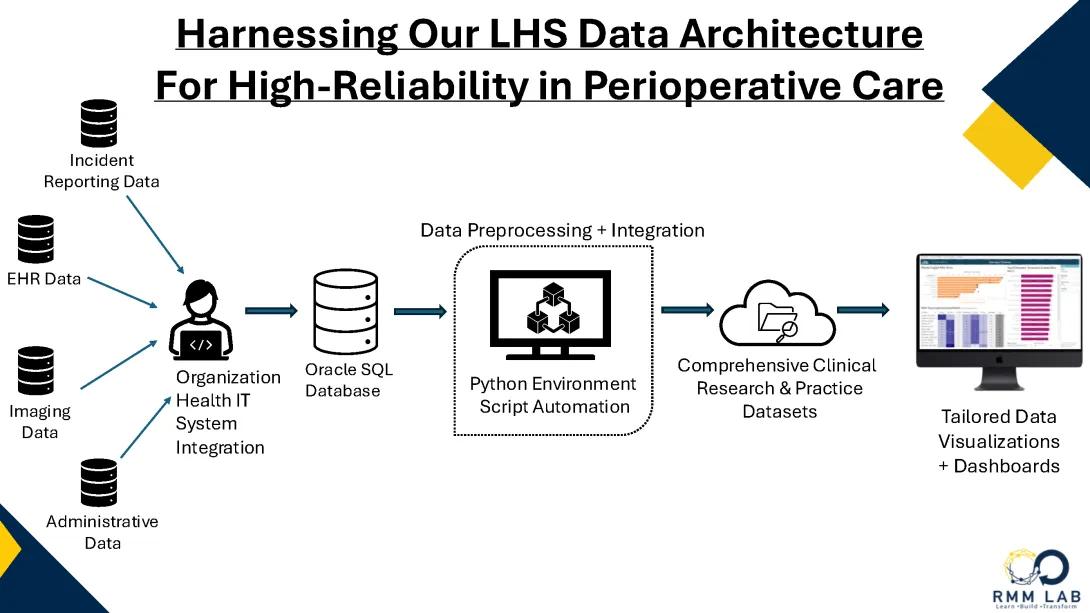
"Achieving Sustainable and Scalable Perioperative Improvement With Our LHS-Guided Data Architecture"
At the heart of our LHS is a robust data infrastructure that i) provides critical baseline information on high-priority perioperative measures, ii) facilitates effective data-driven decision-making, and iii) empowers dedicated Learning Communities to design, develop, and evaluate the impact of interventions for continuous improvement. Our data architecture is designed for scalability, enabling it to address multiple research and practice questions and catalyze various cycles of the Learning Health System.
The process unfolds in six key stages:
1) Data Collection,
2) Organizational System Integration,
3) Database Establishment,
4) Data Processing & Integration,
5) Creation of Datasets for Research & Practice,
6) and Data Visualization.
Core activities in this project include optimizing data quality, ensuring actionable insights, and bridging the divide between knowledge and action.
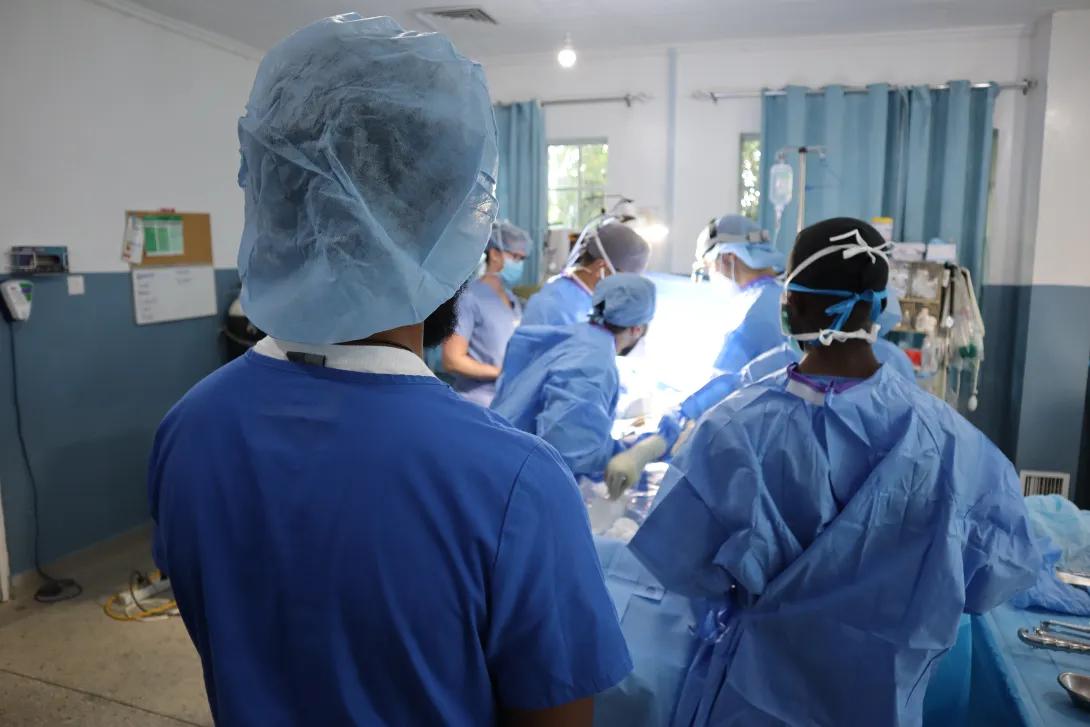
"Advancing Surgical Safety – Global Lessons for Local U.S. Impact"
This project explores the challenges of implementing surgical safety protocols in high-turnover Mission Clinics, including issues related to communication, cultural adaptation, and sustainability of practices. By leveraging insights gained from these global experiences, we seek to co-create and implement effective and contextually-relevant strategies that improve surgical safety worldwide. Additionally, our goal is to apply these learnings to enhance care delivery in low-resourced communities in the U.S., ensuring that all patients benefit from safer surgical practices, no matter their location.
Photo:
Observing the surgical procedure with deep focus — the atmosphere is intense yet fluid as the volunteers from diverse countries come together to navigate the complexities of their first case of day 2 as a team.
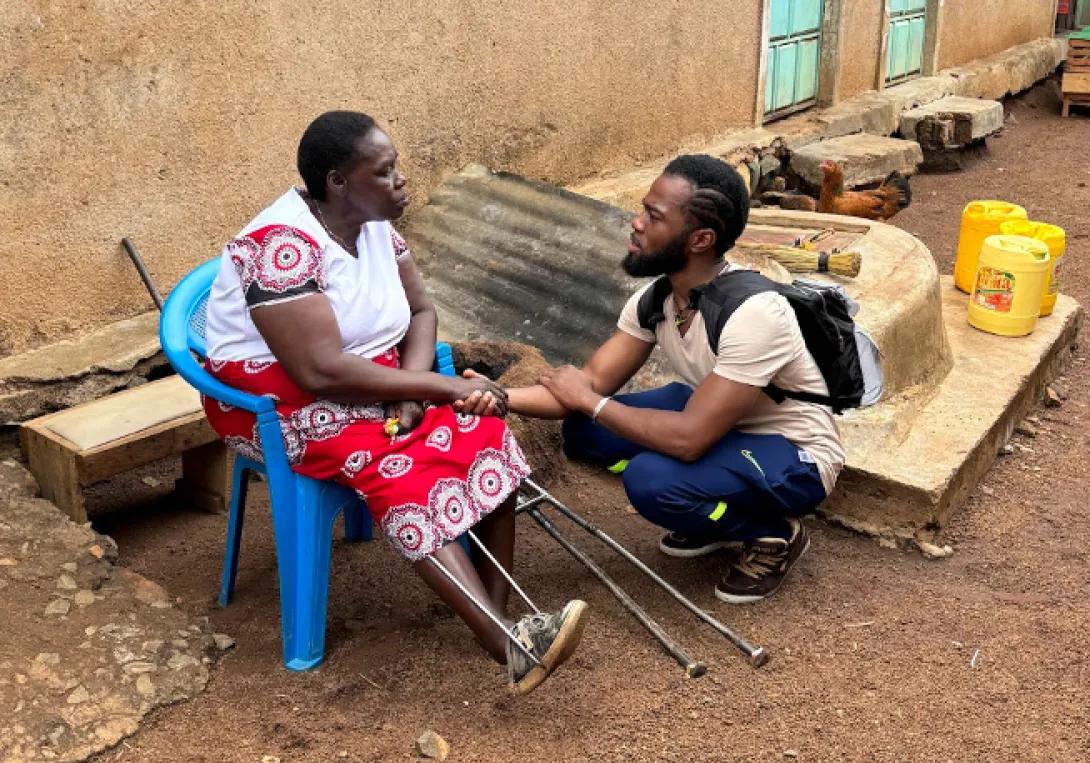
"Patient Safety & Quality in Sub-Saharan Africa – Exploring Cultural Perspectives on Surgical Safety"
This study investigates how patient safety is understood in middle- and low-resource contexts, focusing on insights gathered from interviews in Nairobi and Kawangware by Tong Suo, LS&A Cultural Psychology Doctoral Candidate and RMM-Lab Graduate Research Fellow. By examining public expectations and cultural differences in the perception of safety, we aim to challenge the idea that patient safety is a universally defined concept, especially in non-WEIRD contexts where cultural factors significantly shape understanding and expectations.
Photo:
In a moment of connection, a local mother living with polio shares her thoughts in Swahili with RMM. This interaction emphasizes the significance of understanding patient experiences through a cultural lens, illustrating how language and empathy can bridge gaps in healthcare.
"Using Technology to Strengthen Engagement in Surgical Count Documentation and Reporting"
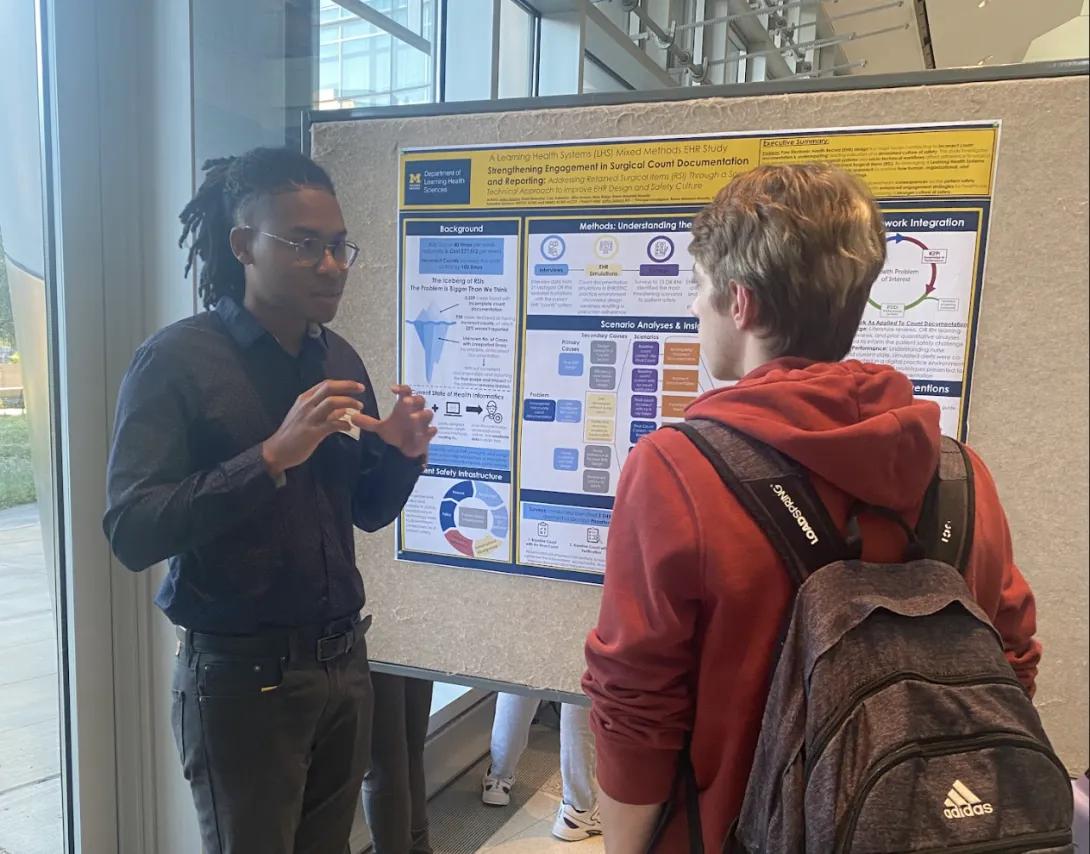
This project addresses the critical issue of unintentionally Retained Surgical Items (RSIs) by investigating the interplay between Electronic Health Record (EHR) design and surgical workflows. Through a mixed-methods approach, including interviews, simulations, and prototyping, we identified key oversights in current documentation practices and co-designed EHR embedded countermeasures to enhance its functionality. By integrating frontline user feedback, our goal is to improve surgical count accuracy and foster a culture of safety and high-reliability in surgical settings.
Photo:
Project Lead, Justus Dobson presents our research at The Program in Biomedical Sciences (PIBS) 25th Anniversary conference, showcasing the innovative development of an embedded EHR solution aimed at improving surgical count documentation and reducing unintentionally retained surgical items. His work highlights our LHS problem solving approach in action and the importance of user-centered design in enhancing patient safety.
"Enhancing Clinical Documentation and Reporting among Providers"
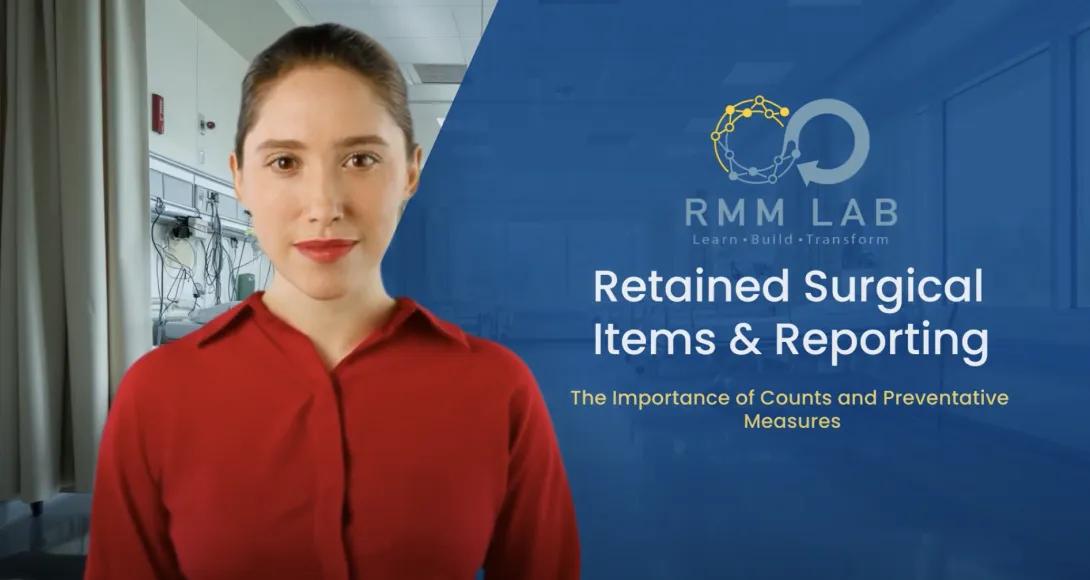
Clinical documentation errors and incomplete incident reporting negatively impacts data quality, making it harder to track trends, identify risks, and improve practices. This project aims to strengthen both documentation accuracy and reporting behaviors through a targeted education intervention, ensuring that what we learn translates into better data, safer practices, and improved patient outcomes.
Our interactive and evidence-based training modules — codesigned alongside frontline and lead nursing educators — reinforces best practices for surgical counts and error reporting. Furthermore, by integrating performance data from electronic health records (EHR) and incident reporting data, we aim to evaluate how targeted education can improve real-world adherence to documentation protocols. Our mission is to empower healthcare professionals with the knowledge and tools they need to prevent RSIs, and fostering a culture of safety and continuous improvement.
Watch the video: https://www.youtube.com/watch?v=JzrVpz4A4WM
Work with the RMM Lab
Collaborate With Us on a Project
Collaborators & Partners
Interactive Carousel Coming Soon....
