
Research

Interdisciplinary Innovation in Action
Transforming Healthcare Together Across Boundaries
The RMM Lab is an interdisciplinary team of researchers, healthcare providers, administrators, patients, and students – dedicated to transforming ambitious ideas into actionable solutions. By operationalizing learning systems theory, we help healthcare organizations adapt and evolve in response to the challenges they face. Whether it's improving patient outcomes, optimizing system efficiencies, or learning from and preventing adverse events, our research aims for systemic change, sustainably and at scale.
Our Approach
Central to our efforts is the RMM Lab’s innovative approach to problem-solving within Learning Health Systems (LHS). Currently under publication review, this approach forms our foundation for making LHS’s real, practical and effective in healthcare settings.
Methodological Highlights:
- We draw on current research frameworks in Learning Health Systems (LHS) and Implementation Science by introducing new concepts and methods for assessing infrastructure.
- We combine community-centered design thinking with a structured, multilevel problem-solving approach.
- Our methods are adaptable for both high-resource and low-resource healthcare settings.
- We focus on promoting learning and fostering transformation.
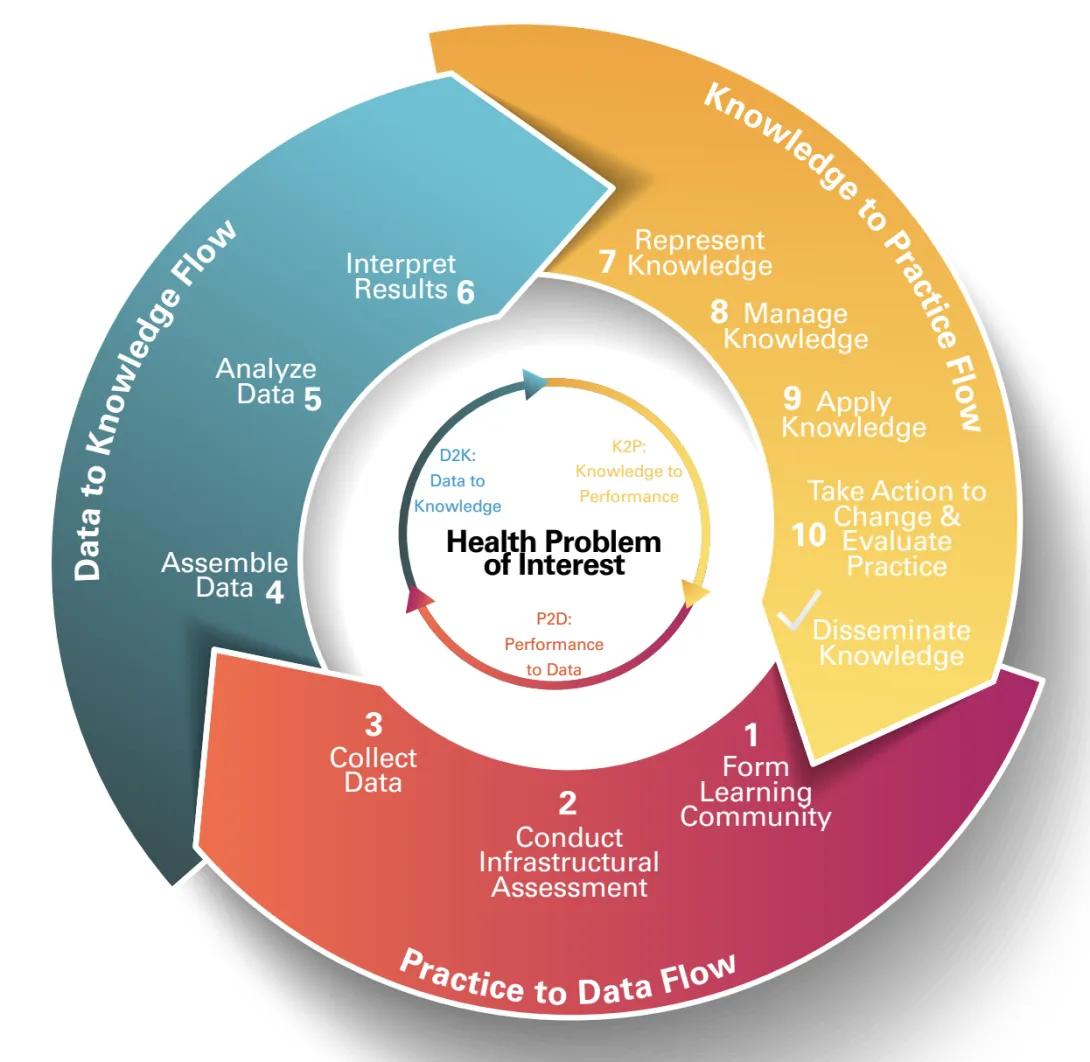
© Rama Mwenesi Musalia || RMM-Lab (2023); Image by Dr. Rama Mwenesi Musalia. Original concept by Charles Friedman; Image adapted with permission from Friedman et al. Yearb Med Inform. 2017; 26: 16-23 [57]; Image design by Nicole Fairchild-Azevedo
Health Problem of Interest Cycle: Performance to Data (P2D), Data to Knowledge (D2K), Knowledge to Performance (K2P)
Practice to Data Flow:
1. Form Learning Community
2. Conduct Infrastructural Assessment
3. Collect Data
Data to Knowledge Flow:
4. Assemble Data
5. Analyze Data
6. Interpret Results
Knowledge to Practice Flow
7. Represent Knowledge
8. Manage Knowledge
9. Apply Knowledge
10. Take Action to Change & Evaluate Practice
✓ Disseminate Knowledge
Note: We encourage the proper citation of our work and images. If you wish to use any content from this website, please contact us for permission and to ensure compliance with copyright regulations. Proper attribution is essential to support the integrity of our work and the creative community. Thank you for respecting our intellectual property.
Problem Representation
To effectively tackle healthcare challenges, it is essential to start with a clear understanding of the problem. Our approach highlights the complex nature of healthcare's wicked problems by focusing on the interconnected factors involved. We explore and untangle these factors at different levels: individual behaviors, organizational systems, and infrastructural foundations. This way, we make sure to consider all aspects of a health problem from the onset.
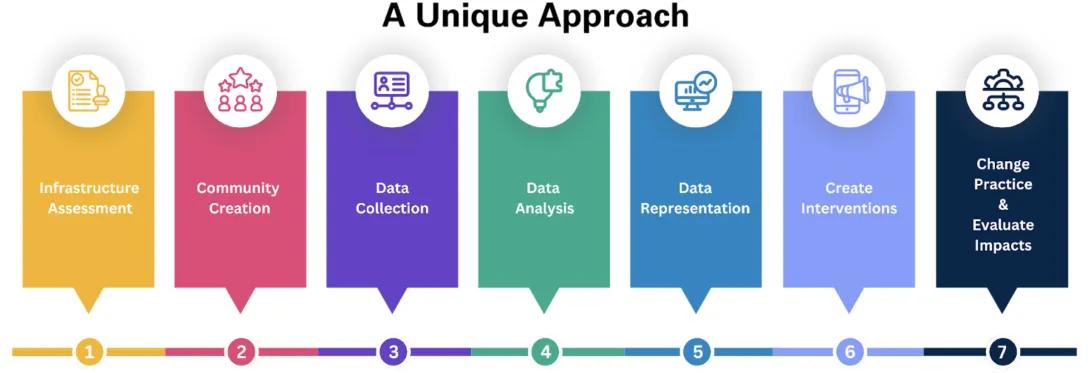
© Rama Mwenesi Musalia || RMM-Lab (2023); Image concept and development by Dr. Rama Mwenesi Musalia; Image design by Nicole Fairchild-Azevedo
"Our Phased Approach"
1. Infrastructure Assessment
2. Community Creation
3. Data Collection
4. Data Analysis
5. Data Representation
6. Create Interventions
7. Change Practice & Evaluate Impacts
Quality Improvement, Implementation Science & Learning Health Sciences Integration
By combining the structured improvement strategies of Quality Improvement with the adaptive learning of Learning Health Sciences and the practical application focus of Implementation Science, our approach empowers healthcare improvement teams with the tools for transformation.
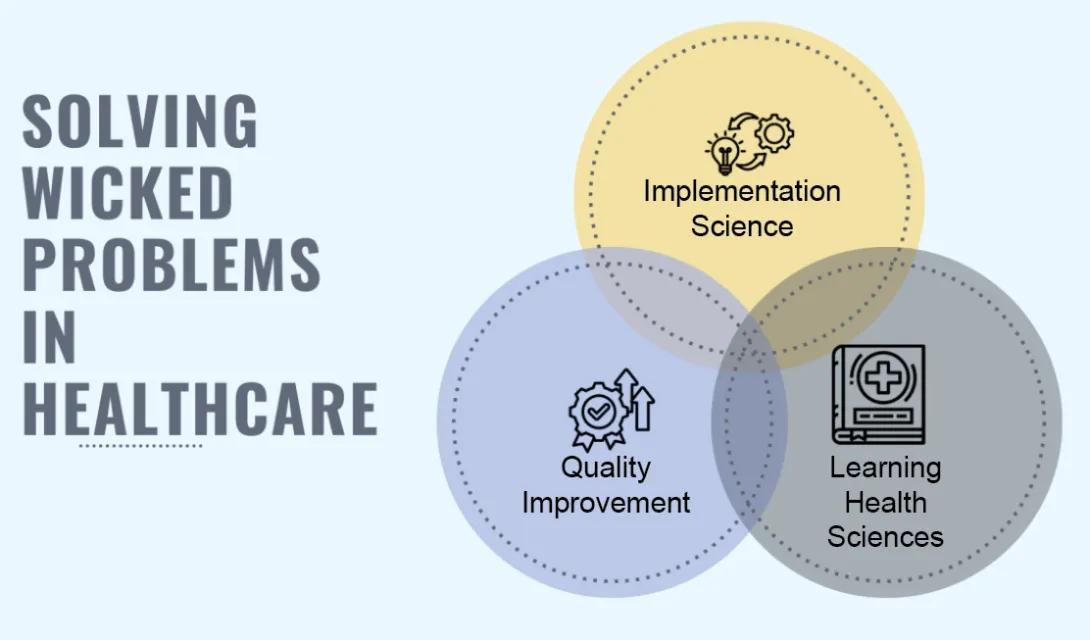
© Rama Mwenesi Musalia || RMM-Lab (2023); Image concept and development by Dr. Rama Mwenesi Musalia; Image design by Nicole Fairchild-Azevedo
Solving Wicked Problems in Healthcare: A Venn Diagram showcasing our unique and intersectional approach to improvement — illustrating the overlap between Learning Health Sciences, Quality Improvement, and Implementation Science
Robust Data Infrastructure
In today's healthcare landscape, the power of data lies not in its volume, but in its relevance and timeliness. Our approach advocates for building robust data infrastructures that intelligently filter and process data to deliver the most critical insights, and take UX design principals to heart creating readable, sharable, understandable data. This approach produces results which empower healthcare leaders and frontline providers to make proactive, appropriate and data-driven decisions.
Our Grand Challenge
How might we leverage "The Art & Science of Learning Health Systems" to transform healthcare both locally and globally?
How might we empower improvement teams to systematically tackle wicked problems in healthcare, particularly in surgery?
