Department of Molecular & Integrative Physiology

One of the top NIH-funded Physiology Programs in the US

Join us in pursuing answers to fundamental questions in physiology within a supportive and collaborative community.

A researcher in a lab coat and safety goggles carefully using a pipette with gloved hands, surrounded by laboratory equipment.

Leaders Empowering Leaders

While we are proud to be one of the top NIH-funded physiology departments in the country, we are prouder of our scientists' impact on their fields. The U-M Medical School Department of Molecular & Integrative Physiology pushes boundaries through ground-breaking research, education, and service.   Our mission is to use scientific discovery to improve human health and advance knowledge of how our bodies work.  

Our academic and training programs for undergraduate and graduate (PhD and MS) students and postdoctoral fellows are focused on developing future leaders in science and medicine through engaged mentorship and a strong focus on personalized career development.

Contact Us

Department of Molecular & Integrative Physiology
7744 MS II
1137 E. Catherine St.
Ann Arbor, MI 48109-5622

About

Read about our department’s history pioneering lab testing and education, health and disease at a molecular level.

Education

Learn about our PhD and Master's programs and opportunities for postdoctoral fellows and undergraduates.

Research

Discover our nationally-recognized research programs in basic and translational aspects of physiology.

People

Meet our determined community of faculty, staff, learners and fellows.

Events

Stay up-to-date with our department's lectures, conferences and more.

Giving

Support our work in education, research and empowering the next generation of leaders in physiology.

med student talking to young students in a classroom

Outreach Programs

Our department's science is vital for understanding organism health and disease, yielding knowledge and potential cures. Equally important is promoting community science through programs like SEEK (Science Education and Engagement for Kids), which arose from Physiology PhD students' visits to local schools. SEEK, featuring hands-on activities about bodily systems, has grown through word-of-mouth and now includes participants from various Michigan programs. 
  • Learn more about SEEK
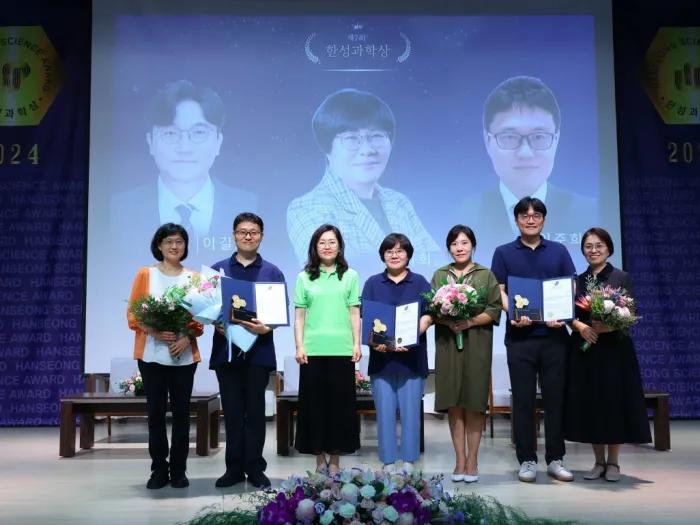
  • 2024 hanseong science award winners
    Spotlight On

    Professor Jun Hee Lee

    Congratulations to Jun Hee Lee for receiving the 2024 Hanseong Science Award in Life Sciences from the Hanseong Son Jae-Han Scholarship Foundation for his development of SeqScope.

    Featured News & Stories

    See all news
    Alarm clock sitting on a white dinner plate with blue and yellow flowers on the rim and a fork and knife positioned on either side of the plate.
    Health Lab

    Intermittent fasting can reverse diabetes in mice, study finds

    Study shows intermittent fasting and meal timing can help reverse type 2 diabetes by resting pancreatic beta cells
    2026 Faculty and Staff Awards
    Medical School News

    Nine from Medical School honored as part of annual Faculty and Staff Awards
    Michigan Medicine recently announced its 2026 Faculty and Staff Awards. This year’s recipients include nine winners with Medical School appointments, including seven faculty and two staff members. This year’s Faculty and Staff Awards ceremony will be Dec. 3 at the Jack Roth Stadium Club in Michigan Stadium
    cells close up blue and green background microscope
    Health Lab

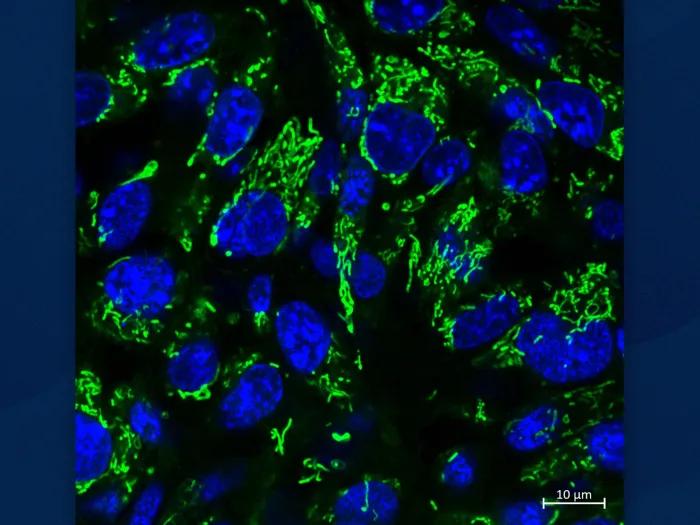
    Engineered nanoparticles sensitize gliomas to radiotherapy
    University of Michigan researchers discovered a new pathway that sensitizes mIDH1 gliomas to radiation in human and mouse mIDH1 glioma cells and mouse models, paving the way for phase 1 clinical trials in humans
    microbes inside gut yellow
    Health Lab

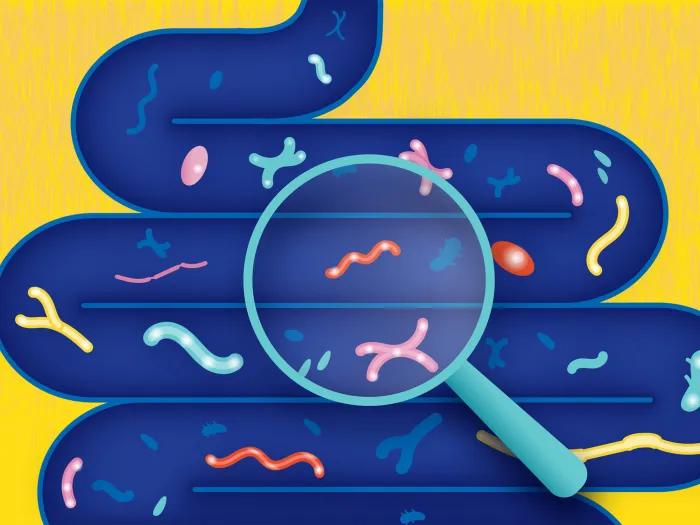
    New oral nanomedicine boosts effectiveness of cancer immunotherapies
    University of Michigan researchers developed an oral drug that can increase the ability of T cells to attack tumors. The drug uses the microbial metabolite 3,4-dihydroxybenzoic acid, which is derived from dietary fiber.
    purple yellow red cells up close
    Health Lab

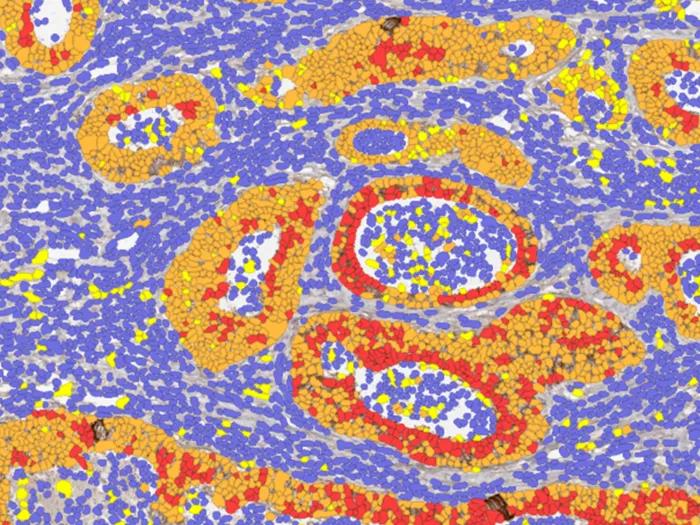
    Study explains how colorectal cancer cells maintain high iron levels

    How colorectal cancer cells maintain high iron levels, according to Michigan Medicine research.
    Groups of people stand together. These are the 2026 EBS awardees.
    Medical School News

    Celebrating outstanding teaching and research at the 2026 Endowment for Basic Sciences Awards

    The 2026 Endowment for Basic Sciences Awards recognized nine faculty and nine research staff members for their accomplishments in teaching and research.