
ProAct Platform for Family Communication of Genetic Cancer Risk

A digital intervention supporting patients and families in understanding and acting on hereditary cancer risk.
Overview
CHCR partnered with the University of Michigan and Stanford University to design and develop ProAct, a mobile-optimized web platform that helps patients communicate genetic cancer risk to their families.
The platform supports both patients and their relatives through education, communication tools, and guided pathways for genetic testing and follow-up.
The Need
Patients identified with hereditary cancer risk often need to inform family members who may also be at risk.
However, this process is challenging because:
- Patients may not know how to communicate complex genetic information
- Family outreach is inconsistent or incomplete
- Relatives may not understand their risk or next steps
- Testing is often delayed or not pursued
A structured, supportive system was needed to guide both patients and families through this process.
What We Built
CHCR designed and developed a complete, end-to-end digital intervention supporting both patients (probands) and their family members.
Patient Experience (Probands)
- Digital consent and onboarding
- Educational modules explaining genetic risk
- Family tree input and management
- Tools to invite and re-invite family members
- AI-assisted letter generation, allowing patients to edit and personalize outreach
- Dashboard to track which family members have engaged
Family Member Experience
- Invitation into the platform
- Digital consent and onboarding
- Educational content tailored to their situation
- Guided next steps for genetic testing
- Randomization to receive free or reduced-cost testing
How It Works
Patients begin by enrolling in the platform and completing educational content.
They then:
- Enter family information
- Generate and customize outreach messages
- Invite family members directly through the platform
Family members:
- Receive an invitation
- Join the platform and complete their own education
- Are guided through testing options and next steps
This creates a structured pathway from patient diagnosis to family awareness and action.
AI-Enabled Features
The platform includes AI-assisted letter generation that helps patients communicate genetic risk clearly and effectively, while still allowing for personalization before messages are sent.
Impact
- Active multi-institutional study between U-M and Stanford
- Supports both patient and family engagement
- Improves communication of hereditary cancer risk
- Enables more consistent follow-through on genetic testing
Project Details
Project type: Mobile-optimized web application
Primary users: Patients and family members
Focus: Cancer genetics, communication, and decision support
Capabilities: UX design, full-stack development, AI integration, intervention design
Project Gallery
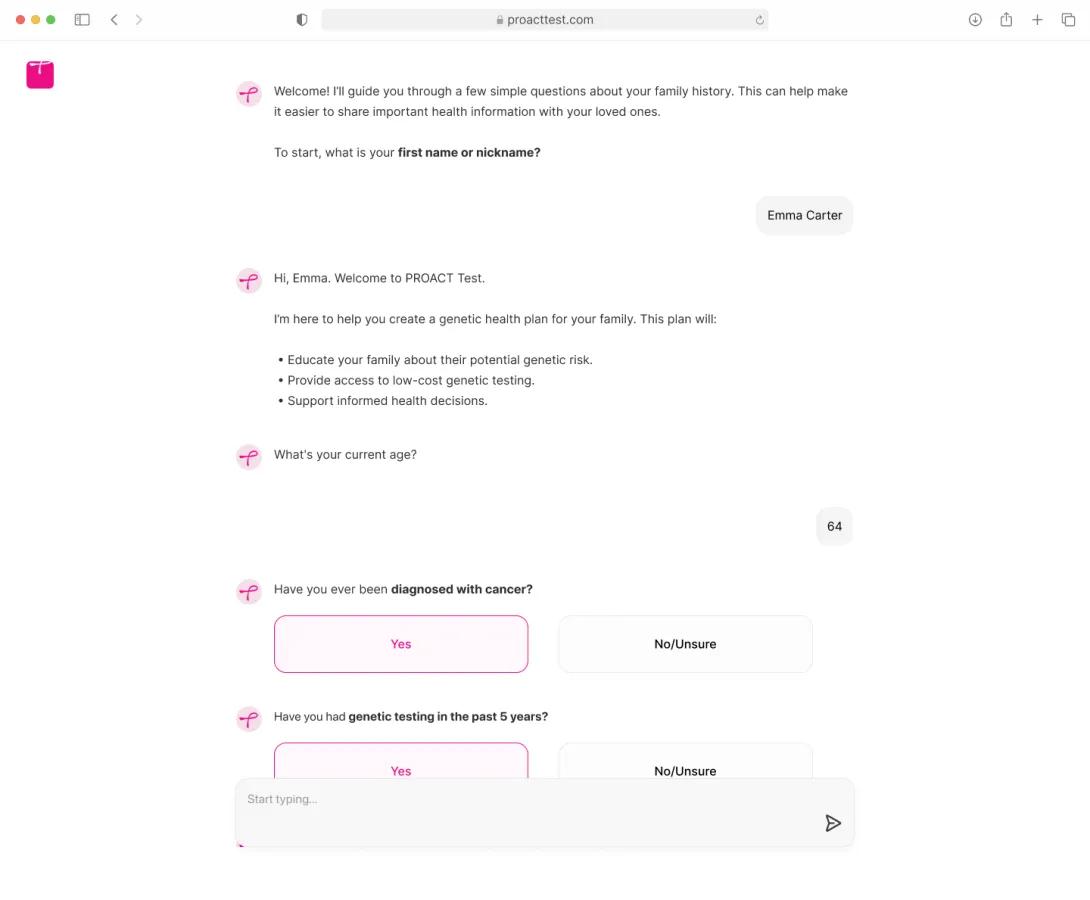
Conversational Intake Experience
An interactive chat-based experience designed to guide participants through health history collection and personalized family risk assessment.
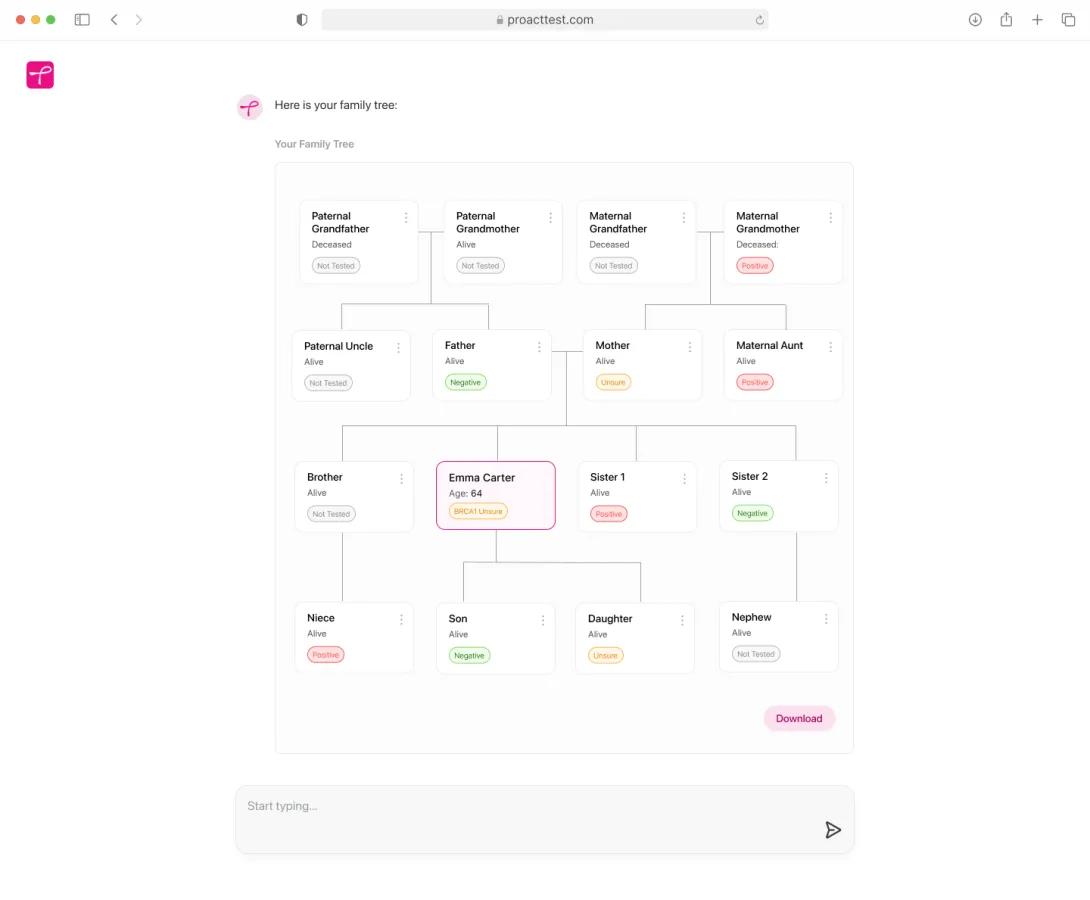
Interactive Family Tree
A dynamic family history tool that helps participants visualize hereditary relationships and document genetic risk information within the experience.
