
MADC Research
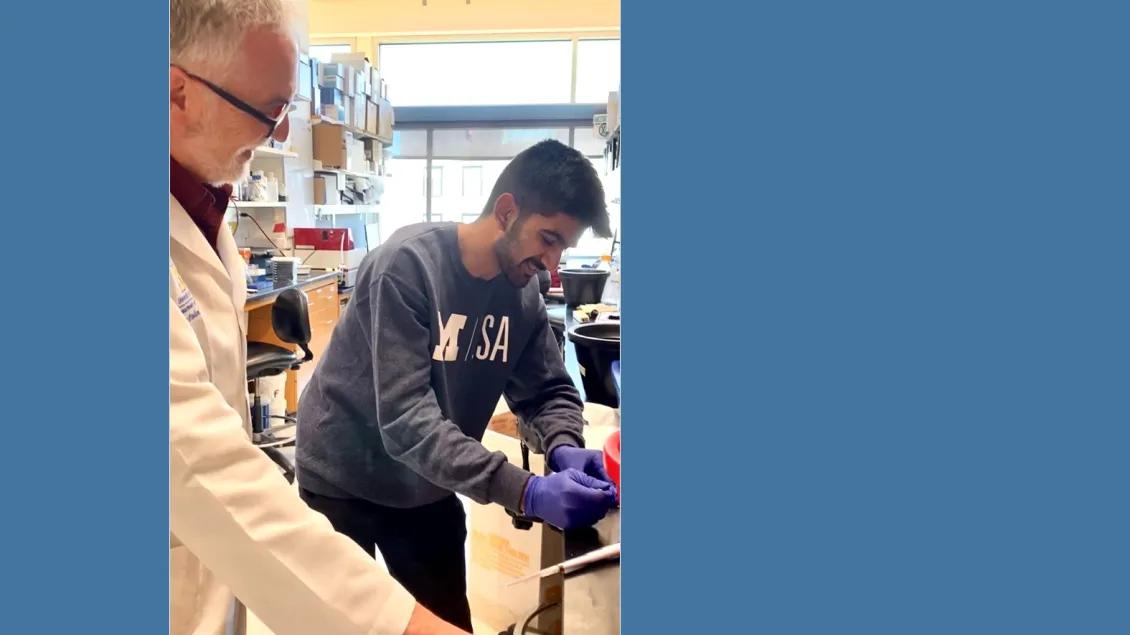
Join one of our many studies focused on brain health and aging well.
Investigator & Researcher Quick Links
What is an ADRC?
An ADRC, or Alzheimer’s Disease Research Center, is a National Institute on Aging (NIA)-designated center focused on the research of Alzheimer’s disease and related dementias. In addition to advancing cutting-edge research, the centers provide a resource to investigators and the public by offering the opportunity for all populations to participate in clinical studies and research registries, help with obtaining a diagnosis and medical management, information about the disease, services, and resources, and support groups or other special programs.
Part of a National Network
Over four decades, NIA-funded ADRCs have played a central role in national research efforts to address Alzheimer’s disease and related dementias (AD/ADRD). The NIA funds ADRCs at major medical institutions across the United States. Researchers at these centers are conducting cutting-edge research to better understand disease and symptom heterogeneity, increase research utilization of real world clinical information, identify early risk and protective factors, and accelerate translational research advances to clinical practice.
NIA ADRCs are Congressionally designated NIH Centers of Excellence. Established in 1984, the ADRCs were the first of only six such centers to be mandated by statute.
Although each center has its own area of emphasis, the ADRCs also enhance research on Alzheimer’s disease as a network that shares new research ideas and approaches as well as data (through the National Alzheimer’s Coordinating Center), biological samples (through NCRAD) and genetic information (through ADGC). The network also provides an infrastructure to facilitate NIA signature programs like ADNI and the Alzheimer’s Clinical Trials Consortium.
Beyond Amyloid
The Michigan ADRC has a “beyond amyloid” research theme. This research theme encompasses:
- The myriad factors that underly Alzheimer’s disease independent of ß-amyloid deposition
- The causes of dementia distinct from Alzheimer’s disease, including frontotemporal dementia (FTD), Lewy body dementia (LBD), limbic predominant age-related TDP43 encephalopathy (LATE), and vascular contributions to cognitive impairment
Areas of Discovery
- Mechanisms of disease beyond Alzheimer's disease (including frontotemporal dementia and others)
- Results disclosure
- Environmental exposures and their contribution to disease
- Caregiver burden
Connecting the State
The Michigan ADRC is unique among ADRCs in that it connects the University of Michigan, Michigan State University, and Wayne State University in a statewide effort to advance research related to Alzheimer’s disease and related dementias. By connecting these three universities, the Michigan ADRC brings together the state’s experts in dementia research and extends across the entire state with outreach, education, and support programs.

Research Cores
Led by Henry Paulson, MD, PhD, and Bruno Giordani, PhD, the Administrative Core is responsible for developing and implementing structural improvements within our center, as well as managing staffing, finances, and research-related resources. This core plays a crucial role in providing administrative support for the numerous research studies and programs we conduct.
The Biomarker Core, housed at Michigan State University’s Grand Rapids campus, is led by Nicholas Kanaan, PhD (Lead), and David Morgan, PhD (Co-Lead). It focuses on providing measurements of established blood-based biomarkers for identifying Alzheimer’s disease and related dementias. Another aim of the Biomarker Core is to develop and implement new biomarker measurements using novel biomarker antibodies that facilitate disease diagnosis and risk prediction. The Biomarker Core also is leveraging existing interests and ongoing projects with collaborators within and outside of the Michigan ADRC to facilitate biomarker analyses that extend beyond amyloid and include multiple types of dementia.
The Clinical Core forms the backbone of the Michigan ADRC and plays a crucial role in evaluating and diagnosing research participants. The core supports a range of observational and interventional studies, especially both pharmacologic and non-pharmacologic treatment trials. The Clinical Core is central for acquiring data tied to the U-M Memory and Aging Project (UM-MAP), which currently follows several hundred participants on an annual basis. Drs. Judith Heidebrink and Bruno Giordani co-lead the Clinical Core and are eager to support and create new opportunities for innovative and cutting-edge human subject research.
The Data Management and Statistical Core, led by Kelly Bakulski, PhD, helps maintain our center's academic and research productivity by integrating and disseminating data to our research investigators. The data core manages our data privacy, analyzes our data for specific research projects, and facilitates data sharing nationally with the National Alzheimer’s Coordinating Center. For example, some recent research analysis projects include handling missing data in multidimensional longitudinal studies, machine learning techniques to improve clinical diagnostic classification using biomarker data, and participant management process development and optimization for research studies employing personal health information.
The Neuroimaging Core, led by Douglas Noll, PhD, utilizes cutting-edge MRI and PET imaging techniques to support research on the transitions from normal aging to mild cognitive impairment (MCI) and early-stage Alzheimer’s disease (AD). The core collects, processes, and shares high-quality imaging data, including markers of neurovascular health, amyloid plaque burden, tau neurofibrillary tangles, and neurodegeneration. It collaborates with investigators nationwide, offering expertise in imaging protocol development, data quality assurance, and advanced analyses. Additionally, the core is exploring novel imaging markers to enhance our understanding of cognitive aging and neurodegenerative disorders.
The Neuropathology Core facilitates our brain donation program. Andrew Lieberman, MD, PhD, serves as lead, with Kyle Conway, MD, JD and Emile Pinarbasi, MD, PhD, as co-investigators at the University of Michigan and Scott Counts, PhD, as co-investigator at Michigan State University. They work in partnership with the University of Michigan Brain Bank, directed by Sami Barmada, MD, PhD, to provide autopsy services to participating families at death and store and disseminate brain tissue resources to investigators nationwide.
The Outreach, Recruitment, and Engagement (ORE) Core leads education and outreach efforts across the state, implemented by an interdisciplinary team across three universities. This core, led by Scott Roberts, PhD of the University of Michigan and Annalise Rahman-Filipiak, PhD of Wayne State University, helps maintain successful relationships with community partners, including patients and participants, families, and a variety of professional and lay community organizations (e.g., the Alzheimer’s Association, Michigan Dementia Coalition). The ORE Core promotes community education, support, and empowerment around topics critical to older adults, including Alzheimer’s disease and related dementias, caregiving, and mental health. As part of these efforts, the ORE Core provides a variety of wellness programs and support groups to those living with cognitive impairment, and their loved ones. The ORE Core also conducts recruitment science – the data-driven investigation of how best to recruit and retain diverse participants in aging research. As part of these efforts, ORE Core investigators are interested in providing research participants with access to their individual research results that hold clinical significance (e.g., results from neuropsychological or biomarker testing) and understanding the psychological and behavioral impact of disclosing such results.
Led by Ana Daugherty, PhD of Wayne State University and co-led by Catherine Kaczorowski, PhD of the University of Michigan and Irving Vega, PhD of Michigan State University, the Research Education Component is dedicated to supporting the next generation of dementia researchers. This component provides resources that support career development in interdisciplinary dementia research and enhanced mentoring and education events to support junior investigators.

Consider joining the Michigan Neurological Data Set, or MiNDSet Registry
Are you interested in learning about ongoing research opportunities? Sign up to be notified about studies you may qualify for.
University of Michigan Memory and Aging Project
Join a national project that investigates memory and aging changes to improve diagnosis, care, treatment and prevention for Alzheimer's disease and related dementias.

Research Studies
We offer more than 20 studies including medication trials, memory training studies, neuroimaging and biomarker studies, lifestyle intervention studies, and caregiver studies.
Funding Sources
The Michigan Alzheimer's Disease Center is funded by generous donors and the National Institutes of Health (P30AG072931).
