
Stem Cell Therapy | Neuronetwork
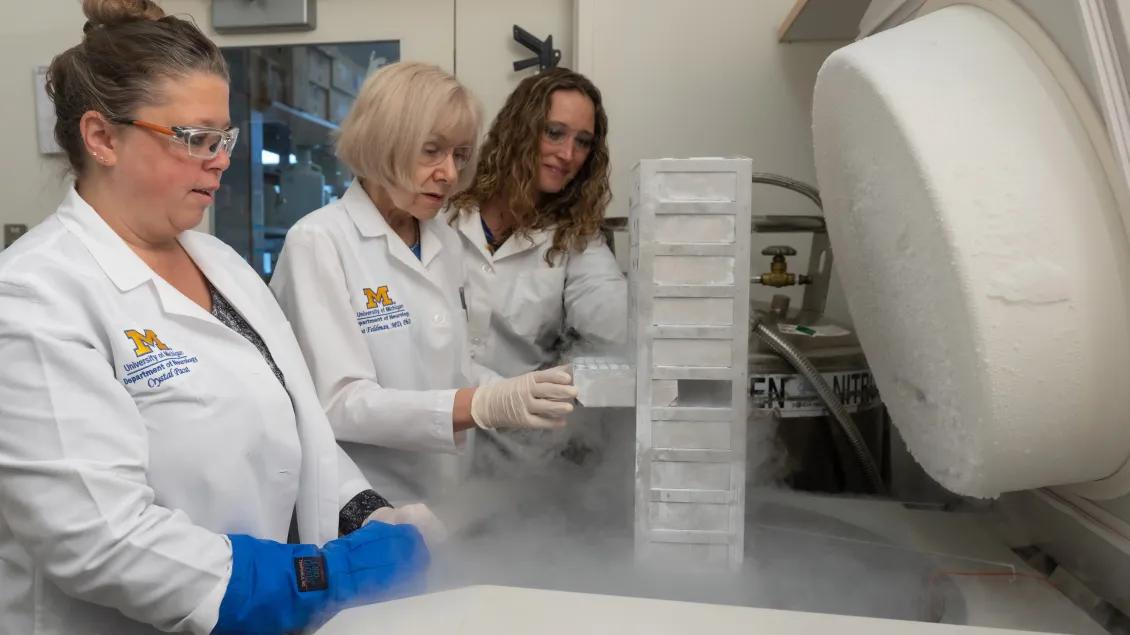
Looking into stem cells as treatments for neurologic diseases.
Why stem cells and neurodegenerative disease?
Neurodegenerative diseases like amyotrophic lateral sclerosis (ALS) and Alzheimer’s disease lack effective drug treatments. The loss of neurons in the spinal cord and brain is likely due to a complex interplay of factors, making it challenging for a single drug to address all the underlying causes. Stem cell therapy offers a unique strategy to reverse neuron loss as stem cells can interact with diseased neurons in multiple ways simultaneously. Over the past 20 years, we have explored the potential of stem cells as an effective therapy for ALS. We are now using our experience in translating stem cell therapy from the laboratory to clinical trials for ALS to develop stem cell-based treatments for other neurodegenerative diseases, such as Alzheimer’s disease.
Our key discoveries
ALS preclinical studies
To evaluate the use of stem cells as a therapy for ALS, we began by demonstrating their feasibility in animal models. We developed an optimized immunosuppressive protocol that significantly improved the survival of human spinal stem cells after they were transplanted into the spinal cord of animal models. Additionally, we showed that targeted cell injection to the spinal cord using a novel stabilization and injection device is both feasible and safe and achieves clinically acceptable levels of stem cell survival, distribution, and density.
ALS Phase I
We were the first laboratory to lead an FDA-approved clinical trial to evaluate the feasibility, safety, and appropriate dosage of injecting stem cells into the lumbar spinal cords of patients with ALS. All patients tolerated the treatment well, with no long-term complications, confirming the safety of this therapeutic approach. Encouraged by these positive results, we advanced the trial to include injections into the cervical spinal cord, aiming to protect the motor neurons that control breathing, which could potentially extend the lives of ALS patients.
ALS Phase II
Building on the success of our Phase I trial, we progressed to a Phase II clinical trial, where we again injected stem cells into the spinal cords of patients with ALS. The study results showed improved survival and function compared to historical patient datasets, and the treatment was once again well-tolerated.
Alzheimer’s disease preclinical studies
We successfully transplanted stem cells that produce insulin-like growth factor 1 (IGF-1), a hormone that promotes metabolism and growth, into the brains of mice with Alzheimer’s disease. This treatment improved cognitive function and memory in mice. Using spatial transcriptomics – a cutting-edge technology that maps gene expression within tissue – we analyzed brain regions near the implanted stem cells to assess their impact on surrounding tissues. Our findings revealed that stem cell transplantation normalized genes disrupted by Alzheimer’s disease. This analysis of dysregulated genes and their pathways provides valuable insights into the mechanisms underlying Alzheimer’s disease.
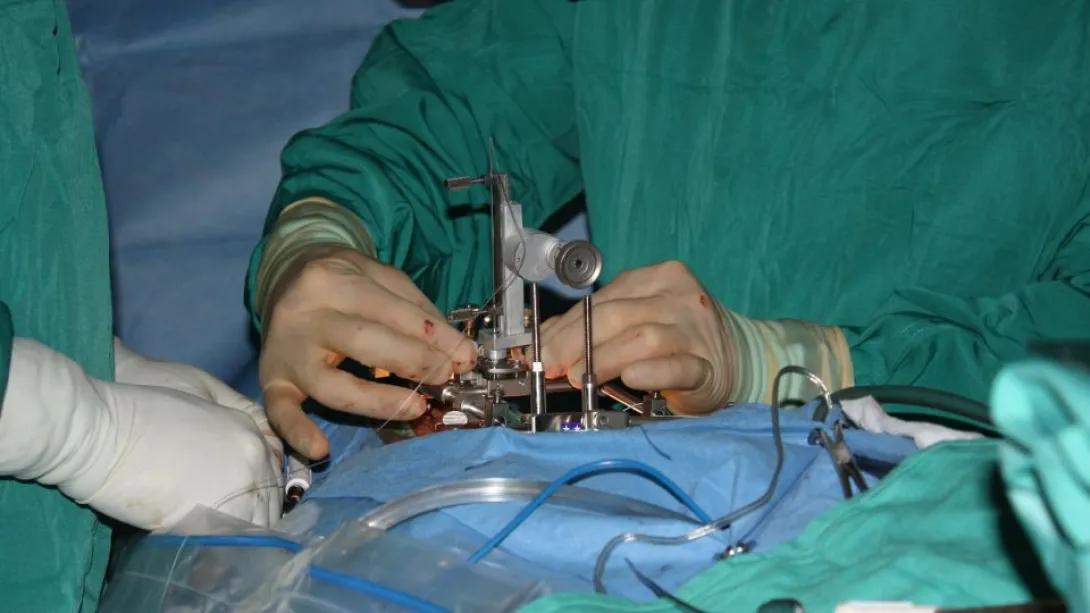
The operating room during the ALS clinical trials. Photo courtesy of CNN.
