
Interneurons | Neuronetwork

The connectors between sensory and motor neurons.
What are interneurons?
Interneurons are specialized nerve cells in the central nervous system that act as the regulators of neural activity. They play a crucial role in processing information and coordinating responses within the brain and spinal cord. By relaying signals, interneurons help brain and spinal cord networks identify and process signals and complex behavior.
Why interneurons and brain health?
Normally, interneurons help regulate the excitatory firing of neuronal networks. However, loss of interneuron inhibition is observed in early cases of Alzheimer’s disease, which leads to overactivity in the brain, seizures, and trouble with learning and memory. This excessive activity also increases levels of a protein called amyloid β, which is linked to Alzheimer’s disease, while restoration of interneuron regulation promotes amyloid β clearance. However, we still don’t fully understand why interneurons start malfunctioning, and this gap in knowledge makes it challenging to develop new treatments for Alzheimer’s disease and related diseases. We are trying to address two fundamental questions.
What causes interneuron dysfunction, and how does it lead to Alzheimer’s disease?
What can we do to change it?
Gaining a better understanding of how interneurons work and what goes wrong in disease states will help develop specific treatment strategies, such as the use of growth factors like insulin-like growth factor 1 (IGF1) or the restoration of damaged interneurons by stem cell transplantation. This knowledge will lay the groundwork for translational studies and move towards much-needed, meaningful Alzheimer’s disease therapies.
Key Areas:
Gene expression changes with Alzheimer’s disease
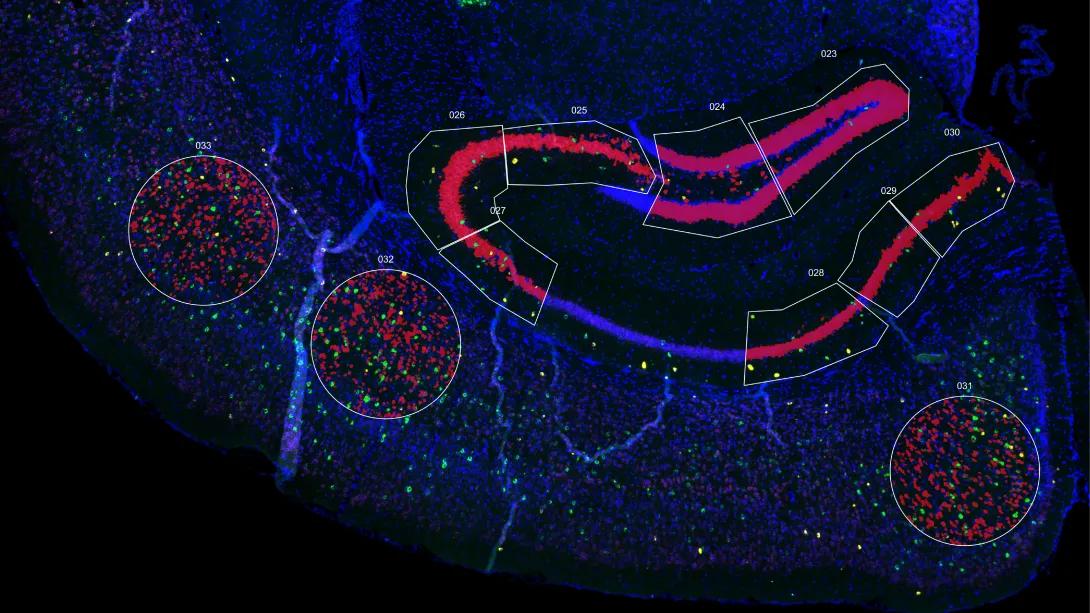
We don’t know what drives interneuron dysfunction or how different subtypes of these cells are affected. We are using spatial transcriptomics, a technique that allows us to examine gene expression changes in specific areas of a tissue sample, to study gene expression in interneurons from brain regions involved in memory and learning in individuals with Alzheimer’s disease. Using mouse models of Alzheimer’s disease, we have already found that early disease-stage interneurons display changes in pathways related to neurodegeneration, energy metabolism, and protein processing. Completion of this research will map out changes in interneuron gene expression during disease progression and identify specific targets to reduce brain overactivity and improve cognitive function in Alzheimer’s disease.
In vitro modeling
In vitro models of disease provide a controlled setting to understand disease mechanisms and test new treatments before advancing to more complex systems. Currently, there is no in vitro model of human Alzheimer’s disease interneurons. To address this, we are generating interneurons from induced pluripotent stem cells derived from individuals with Alzheimer’s disease. We will use this model to define Alzheimer’s disease interneuron deficits and test potential restorative approaches.
Stem cell transplantation
We are also testing the impact of interneuron transplantation in an Alzheimer’s disease mouse model. We believe that transplanting healthy stem cell-derived interneurons into the brains of these mice will enhance inhibitory regulation in neural circuits, leading to improved cognitive performance. This work will lay the preclinical foundation for novel Alzheimer’s disease therapies that will eventually be translated and applied to human studies.
