
Lifestyle Interventions | Neuronetwork

How exercise and diet affect nerves and the brain.
What are lifestyle interventions?
Lifestyle interventions refer to changes or adjustments in daily habits and routines to improve overall health and well-being. These can include adopting a healthier diet, increasing physical activity, reducing stress through relaxation techniques, and avoiding harmful behaviors like smoking. The goal of these interventions is to prevent or manage chronic conditions and enhance quality of life.
Why lifestyle interventions and neurological health?
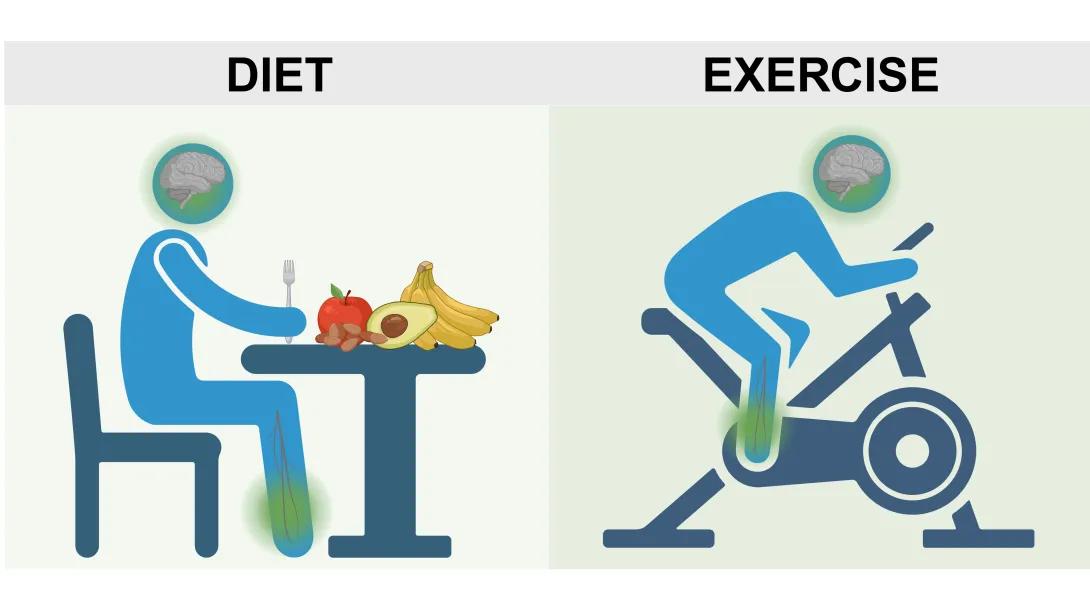
Although neurological complications like peripheral neuropathy and cognitive impairment are becoming increasingly prevalent due to rising rates of obesity, prediabetes, and type 2 diabetes (T2D), effective therapies to mitigate or reverse nerve and brain injury remain scarce. The American Diabetes Association now recommends non-pharmacological lifestyle interventions, such as diet regimens and exercise, to prevent peripheral neuropathy in prediabetes and T2D. Growing evidence also indicates that changes in diet and exercise can improve cognitive function as well. However, the precise mechanisms by which these lifestyle changes enhance neurological health are still unclear, as is the relative effectiveness of different interventions. We are trying to address two fundamental questions:
Which lifestyle interventions prevent or improve neurological damage?
What are the underlying neuroprotective mechanisms?
A deeper understanding of these interventions and the mechanisms through which they promote nerve and brain health could lead to the development of novel treatment strategies and personalized interventions tailored to individual patient needs, thereby improving therapeutic efficacy and outcomes. Ultimately, our goal is to pioneer novel therapeutics and preventative measures, which would represent a critical step toward combating these neurological disorders.
Key Areas:
Ketogenic diet
A ketogenic diet is a high-fat, low-carbohydrate diet designed to shift the body’s metabolism away from glucose and toward fat as the primary energy source. This diet is often used for weight loss and improved blood sugar control and has been studied for its potential benefits in metabolic disorders and various neurological conditions. By studying the ketogenic diet, we aim to determine its effectiveness in preventing and reversing metabolically acquired peripheral neuropathy and cognitive impairment and the mechanisms through which it achieves these effects.
Using a mouse model of obesity and prediabetes, we have found that switching mice from a high-fat diet to a ketogenic diet improves metabolic dysregulation, peripheral neuropathy, and cognitive impairment induced by a high-fat diet. We also use bioinformatic approaches to investigate how a ketogenic diet influences gene expression in peripheral nerves and the hippocampus, the brain’s learning and memory center. This allows us to identify underlying mechanisms and potential therapeutic targets.
Exercise preclinical studies
Exercise is a common, affordable therapeutic strategy to increase energy expenditure and preserve overall metabolic health. As obesity and T2D are well-established risk factors for peripheral neuropathy and cognitive impairment, we hypothesized that interventions that improve systemic metabolic health, such as exercise, may also improve nerve and brain health. In 2022, we were awarded a large grant from the National Institutes of Health (NIH) to evaluate how exercise impacts nerve cells and overall nerve health. We are examining changes in gene activity within individual nerve cells and how these changes affect the energy use, metabolism, and function of whole nerves. We hope to understand how nerve metabolism and communication between nerve cells and their supporting cells contribute to peripheral neuropathy.
So far, we have demonstrated that adding an exercise regimen improves peripheral neuropathy and cognitive impairment in mice fed a high-fat diet. Furthermore, we have identified molecular pathways and genes in peripheral nerves and the brain hippocampus that are altered in response to exercise. This research will be highly impactful as it will reveal how exercise enhances nerve function and reducing peripheral neuropathy.
Exercise clinical studies
Alongside our preclinical research, we secured funding from NIH for a Phase II trial to compare the effects of bariatric surgery, a surgical intervention, with those of high-intensity interval training (HIIT), an exercise regimen that alternates intense activity with brief periods of rest or lower-intensity activity, on nerve and brain health outcomes in human subjects. To do so, we randomly assign patients who qualify for bariatric surgery to a HIIT or routine exercise counseling group. Within the HIIT group, some patients will opt for bariatric surgery, while others will not, and the same applies to those in the routine exercise counseling group. This design allows us to compare the effects of surgery alone versus HIIT alone and the combined impact of surgery with HIIT versus surgery alone. We anticipate that this Phase II trial could pave the way for a Phase III trial, potentially leading to novel disease-modifying therapies for nerve and brain health outcomes.
Comparing the effectiveness of different lifestyle interventions
Existing studies often examine dietary and exercise interventions in isolation. However, understanding the comparative benefits and potential synergies between diet and exercise is crucial for developing optimized, evidence-based recommendations for individuals with or at risk for peripheral neuropathy and/or cognitive impairment. We directly compare these interventions to identify the most effective strategies for enhancing nerve and brain health, tailor treatments to individual needs, and improve overall health outcomes.
