
Schwann Cells | Neuronetwork

Support cells in the peripheral nerves.
What are Schwann cells?
Schwann cells are specialized cells in the peripheral nervous system that insulate and protect nerve fibers by forming myelin sheaths around them. They also support neurons metabolically by providing essential nutrients and removing metabolic waste, ensuring optimal nerve function.
Why Schwann cells and peripheral nerve health?
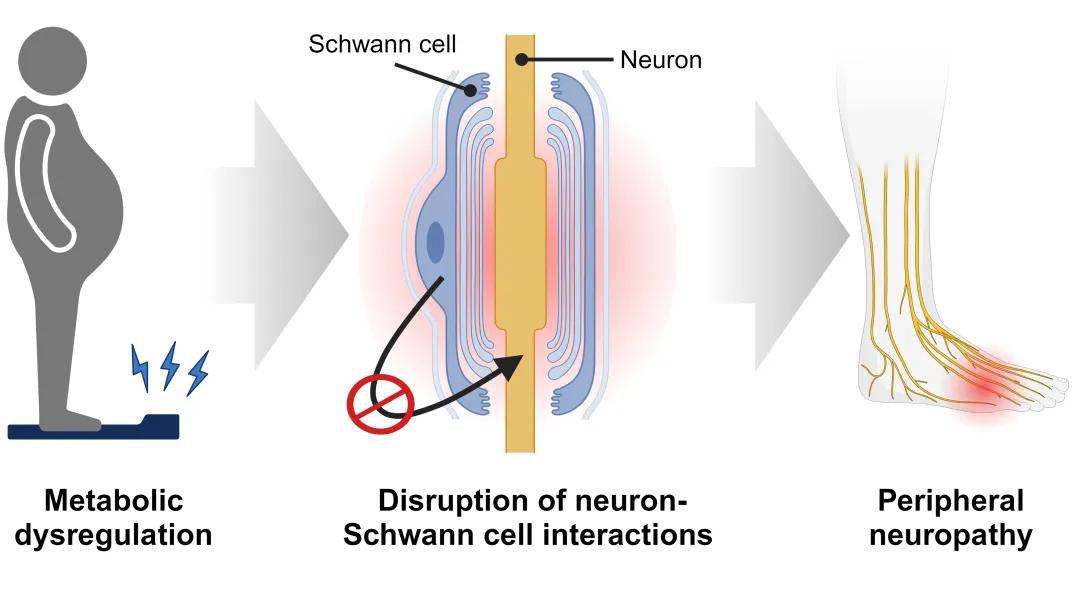
Under normal conditions, Schwann cells support peripheral nerves by providing essential substrates to meet their energy demands. Recent research suggests that metabolic dysregulation, such as obesity or type 2 diabetes (T2D), disrupts Schwann cell function, leading to nerve damage and peripheral neuropathy. However, the contributions of Schwann cells to metabolically acquired peripheral neuropathy progression have not been thoroughly investigated. Using cell culture and mouse models of T2D and obesity, as well as high-throughput sequencing techniques and novel bioinformatic approaches, we are exploring Schwann cell-peripheral nerve metabolic crosstalk to discover and evaluate new therapeutic targets for peripheral neuropathy.
Key Areas:
Insulin signaling
Studies suggest that under conditions of metabolic dysregulation Schwann cells develop insulin resistance with loss of insulin signaling. This leads to a shutdown of normal metabolic pathways and an increase in toxic byproducts, which can subsequently lead to nerve injury. However, it is unknown how systemic metabolic changes affect Schwann cell insulin signaling and Schwann cell-axon metabolic communication. Our goal is to assess the contribution of Schwann cell insulin resistance on peripheral neuropathy and its potential as a therapeutic target.
Extracellular vesicles
Under normal conditions, the transfer of extracellular vesicles (EVs) from Schwann cells to neurons helps maintain peripheral nerve health. However, in the case of obesity or diabetes, Schwann cells may release EVs that contribute to nerve injury and peripheral neuropathy. In support of this, we recently found that Schwann cell dysfunction promotes secretion of EVs carrying a particular microRNA (miR-15b), which leads to axonal damage and peripheral neuropathy. We continue to investigate how metabolic dysregulation affects the contents of Schwann cell-derived EVs and the potential role these EVs play in metabolically acquired peripheral neuropathy.
Lifestyle interventions
Recent evidence suggests that lifestyle interventions, such as diet and exercise, prevent or improve peripheral neuropathy in prediabetes and T2D. The positive impacts of diet and exercise on nerve health may be partly due to their effects on Schwann cells and the metabolic crosstalk between Schwann cells and peripheral nerves. We are examining the impact of lifestyle interventions on Schwann cell gene expression, metabolic health, and EV release.
